Golf course grass falls into two families. Cool-season grasses, such as creeping bentgrass, poa annua, ryegrass and fine fescue, cover courses in the North and on the West Coast. Warm-season grasses, mainly bermudagrass, zoysia and seashore paspalum, cover the South, the desert and the tropics. The choice decides how greens roll and fairways play.
You can play golf for years without thinking about grass, but it’s quietly behind many things golfers notice: why a putt in Florida breaks toward the setting sun, why Arizona courses close for three weeks every autumn, why Pebble Beach’s greens get bumpy in spring, and why Augusta National is green in April when half the South is still brown. Grass is also why the same green fee buys very different conditions in different months.
This guide covers the main types of golf course grass, where each grows in the United States, what the most famous courses use, and what it means for your game and your booking.
How we built this. Grass-type facts come from the USGA’s Green Section, the Golf Course Superintendents Association of America (GCSAA) and university turfgrass research. The course examples draw on published reporting by the USGA, golf trade publications and the courses themselves; closure dates come from each course’s own website, checked in September 2026. The people who make these choices are the course’s superintendent and maintenance crew; our guides to golf course maintenance and what a golf course superintendent does go behind the scenes. We’re golfers, not agronomists, so where the science is more nuanced than a sentence allows, we say so and point to the experts.
At a glance
- Two families: cool-season grasses (bentgrass, poa annua, Kentucky bluegrass, perennial ryegrass, fine fescue) and warm-season grasses (bermudagrass, zoysia, seashore paspalum, kikuyu)
- Most common green grasses: creeping bentgrass and poa annua in cooler climates; ultradwarf bermudagrass in the South
- Most common fairway grasses: bermudagrass in the South and desert; bentgrass, bluegrass and ryegrass in the North
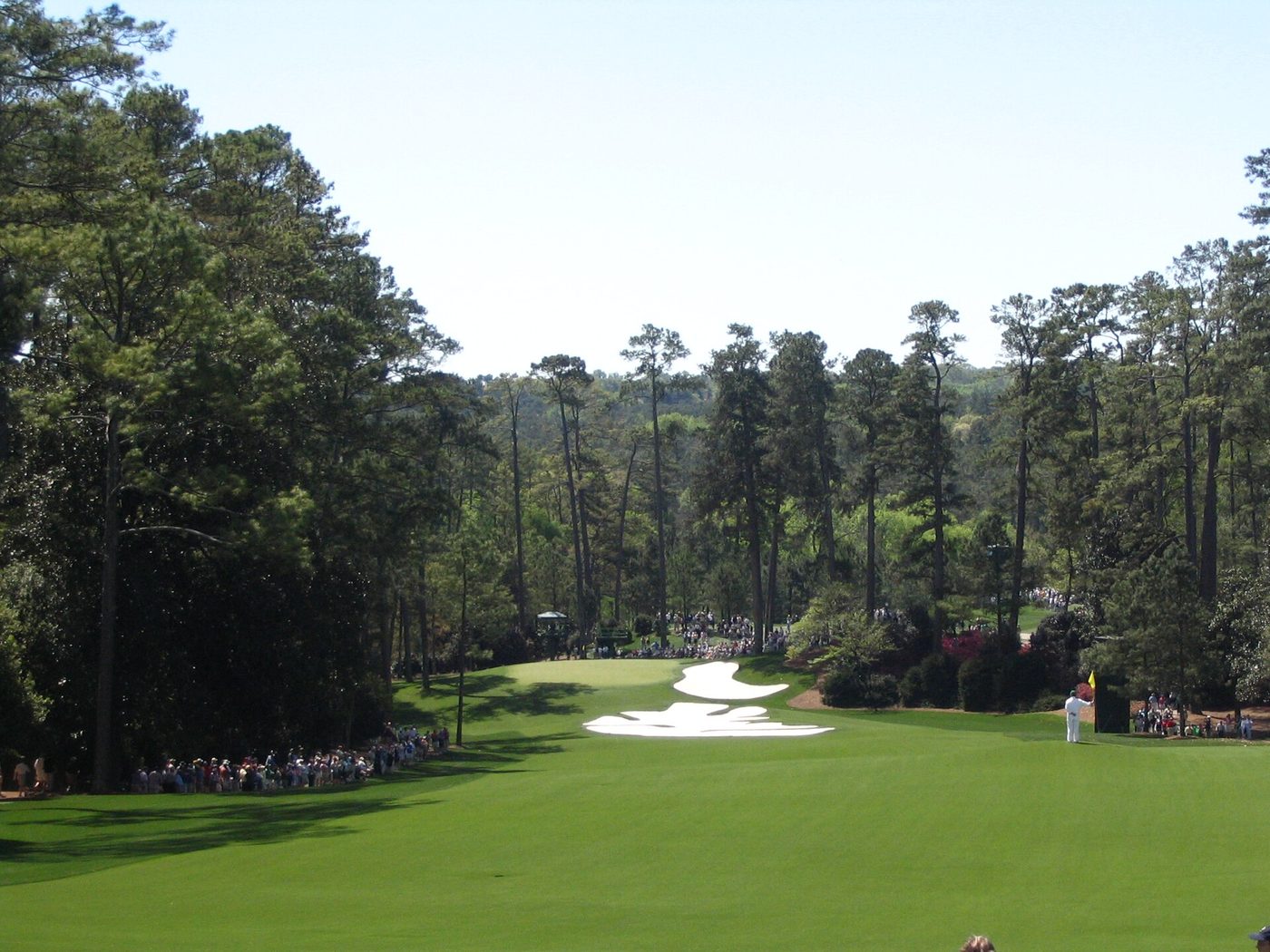
- Augusta National: bentgrass greens since the course switched after the 1980 Masters; bermudagrass fairways overseeded with ryegrass
- Pinehurst No. 2: greens converted from bentgrass to Champion ultradwarf bermudagrass after the 2014 U.S. Opens
- Kiawah Island’s Ocean Course: salt-tolerant seashore paspalum on greens and fairways
- Arizona overseeding, 2026: most desert courses close for two to three weeks between mid-September and early November
- Water: U.S. golf facilities applied about 1.68 million acre-feet of water in 2020, 29% less than in 2005, according to the GCSAA
What grass is used on golf courses?
Most American golf courses use creeping bentgrass or poa annua on greens in cool climates and ultradwarf bermudagrass in warm ones. Fairways are usually bermudagrass in the South and desert, and bentgrass, Kentucky bluegrass or perennial ryegrass in the North. Coastal and tropical courses often use seashore paspalum.
There’s no single “golf course grass”. Superintendents choose a grass for each part of the course, and the right one depends mainly on climate: how hot the summers are, how cold the winters get, how much water is available and whether the course is near salt water. Greens need grass that tolerates being mown extremely short. Fairways need grass that recovers from divots and handles traffic. Rough needs grass that grows thicker and taller.
Here’s how the main grasses compare:
| Grass | Family | Where it grows best | Used on | How it plays |
|---|---|---|---|---|
| Creeping bentgrass | Cool-season | North, Pacific Northwest, mountains, some transition-zone greens | Greens, tees, fairways | Smooth, fast, true putting; soft fairway lies |
| Poa annua (annual bluegrass) | Cool-season | West Coast, North, Northeast | Greens (often invasive, sometimes deliberate) | Fast and smooth in summer; bumpy when it seeds in spring |
| Kentucky bluegrass | Cool-season | North, Midwest, mountains | Fairways, rough | Firm lies; thick, grabby rough |
| Perennial ryegrass | Cool-season | North; winter overseeding in the South and desert | Fairways, tees, rough; winter cover on bermuda | Good lies; green winter colour |
| Fine fescue | Cool-season | Links-style courses, cool coasts | Fairways, rough, some greens | Firm, fast, bouncy; wispy rough |
| Bermudagrass (hybrid and ultradwarf) | Warm-season | South, Southwest, desert, Hawaii | Greens (ultradwarfs), fairways, tees, rough | Grainy greens; tight, firm fairway lies; dormant brown in winter |
| Zoysia | Warm-season | Transition zone and South | Fairways, tees | Ball sits up well; dense and springy |
| Seashore paspalum | Warm-season | Coasts, tropics, salty water | Greens, fairways | Sticky, grainy; very green |
| Kikuyu | Warm-season | Coastal Southern California | Fairways, rough | Ball sits down in rough; heavy, spongy lies |
Summarised from USGA Green Section and university turfgrass extension guidance. Individual courses use many cultivars and mixes.
What grass do famous golf courses use?
Augusta National has bentgrass greens and bermudagrass fairways overseeded with ryegrass. Pinehurst No. 2’s greens are Champion ultradwarf bermudagrass. Pebble Beach and Oakmont have poa annua greens. The Ocean Course at Kiawah Island uses seashore paspalum, and Bandon Dunes fine fescue.
The best way to understand the grasses is to see them on courses you know:
| Course | Greens | Fairways | Why it matters for your round |
|---|---|---|---|
| Augusta National (Georgia) | Bentgrass (since switching after the 1980 Masters) | Bermudagrass overseeded with perennial ryegrass | Green and firm in April, when the Masters is played |
| Pinehurst No. 2 (North Carolina) | Champion ultradwarf bermudagrass (after the 2014 U.S. Opens) | Bermudagrass | Grainy, firm greens that hold up in Carolina summer heat |
| Pebble Beach (California) | Poa annua | Poa annua and bentgrass mix | Smooth in summer and autumn; bumpier in spring |
| Oakmont (Pennsylvania) | Poa annua | Cool-season mix | Famously fast, sloping greens |
| Kiawah Island Ocean Course (South Carolina) | Seashore paspalum | Seashore paspalum | Tolerates salt spray; grainy, sticky chipping |
| Bandon Dunes (Oregon) | Fine fescue-based | Fine fescue | Firm and fast; the ball runs along the ground |
| We-Ko-Pa, Saguaro (Arizona) | Bermudagrass, overseeded in winter | Bermudagrass overseeded with ryegrass | Closes for overseeding October 12 to 29, 2026 |
| Torrey Pines South (California) | Poa annua and bentgrass | Kikuyu in the rough | Heavy rough: the ball sits down |
Grass types as widely reported by the USGA, the courses and golf trade publications; Pinehurst and Augusta conversion dates from the USGA Green Section Record, Golf Course Industry and the PGA Tour; Kiawah from local reporting; overseeding dates from We-Ko-Pa’s website, September 2026.
Cool-season vs warm-season grasses: why climate decides everything
Cool-season grasses grow best in moderate temperatures and stay green through cold winters but struggle in hot, humid summers. Warm-season grasses thrive in heat and drought but go dormant and turn brown when it gets cold. That single difference explains most of what you see on American golf courses.
Cool-season grasses do most of their growing in spring and autumn and slow down in summer heat. They stay green through a mild winter and recover from frost. In the hottest, most humid places, bentgrass greens can thin out and die in summer without heavy management, which is why Southern courses have moved away from them.
Warm-season grasses grow fastest in summer heat and handle drought and traffic well. When temperatures fall in autumn, they slow down, stop growing and turn a straw-brown colour. They’re not dead; they come back when the weather warms. Courses that want green grass through the winter overseed them with a cool-season grass, usually perennial ryegrass.
The transition zone is the band across the middle of the country, roughly from Virginia and North Carolina’s Piedmont through Kentucky, Tennessee and Missouri to Kansas and Oklahoma, where summers are too hot for cool-season grasses to be easy and winters too cold for warm-season grasses to be easy. It’s the hardest place in America to grow golf grass, and courses there mix both families, with bentgrass or bermuda greens, zoysia or bermuda fairways and cool-season rough.
Here’s how the main regions compare:
| Region | Typical greens | Typical fairways | Winter look |
|---|---|---|---|
| Northeast, Midwest, Great Lakes | Bentgrass, poa annua | Bentgrass, bluegrass, ryegrass | Closed or snow-covered |
| Pacific Northwest and coastal Oregon | Bentgrass, poa annua, fescue | Fescue, bentgrass, ryegrass | Green, wet |
| Coastal California | Poa annua, bentgrass | Poa annua, ryegrass, kikuyu | Green |
| Transition zone (Virginia to Oklahoma) | Bentgrass or ultradwarf bermuda | Zoysia or bermudagrass | Brown fairways, green greens |
| Southeast and Texas | Ultradwarf bermuda | Bermudagrass | Brown dormant bermuda, or green if overseeded |
| Florida | Ultradwarf bermuda, some paspalum | Bermudagrass, some paspalum | Mostly green; some overseeding |
| Desert Southwest | Bermuda, overseeded; some bentgrass | Bermudagrass overseeded with ryegrass | Green after overseeding |
| Hawaii and coastal resorts | Bermudagrass, seashore paspalum | Bermudagrass, seashore paspalum | Green all year |
General patterns; individual courses vary, especially at high-end clubs and high elevations.
Creeping bentgrass
Creeping bentgrass is the classic putting green grass of cooler climates. It spreads by above-ground runners, tolerates mowing to a fraction of an inch and produces the smooth, fast, true surface most golfers picture when they think of a great green.
Where you’ll find it. Greens, tees and often fairways at courses across the North, the Midwest, the Northeast, the Pacific Northwest and the mountains, and on greens at some transition-zone courses. Augusta National switched its greens from bermudagrass to bentgrass after the 1980 Masters, and keeping bentgrass perfect through a Georgia spring takes a level of investment few courses can match.
How it plays. Bentgrass greens have little grain, so putts break mostly with the slope. On fairways, bentgrass gives soft lies where the ball sits up nicely but takes a divot easily.
Its weak spot. Heat and humidity. In a hot Southern summer, bentgrass greens can thin out, which is why so many Southern courses, including Pinehurst No. 2, have switched to ultradwarf bermudagrass. We compare the two in our guide to bermuda vs bentgrass greens.
Poa annua (annual bluegrass)
Poa annua is a cool-season grass that many superintendents consider a weed, because it invades bentgrass greens, and many others manage as their main putting surface. It dominates greens on the West Coast and at many old Northeastern clubs, including Pebble Beach and Oakmont.
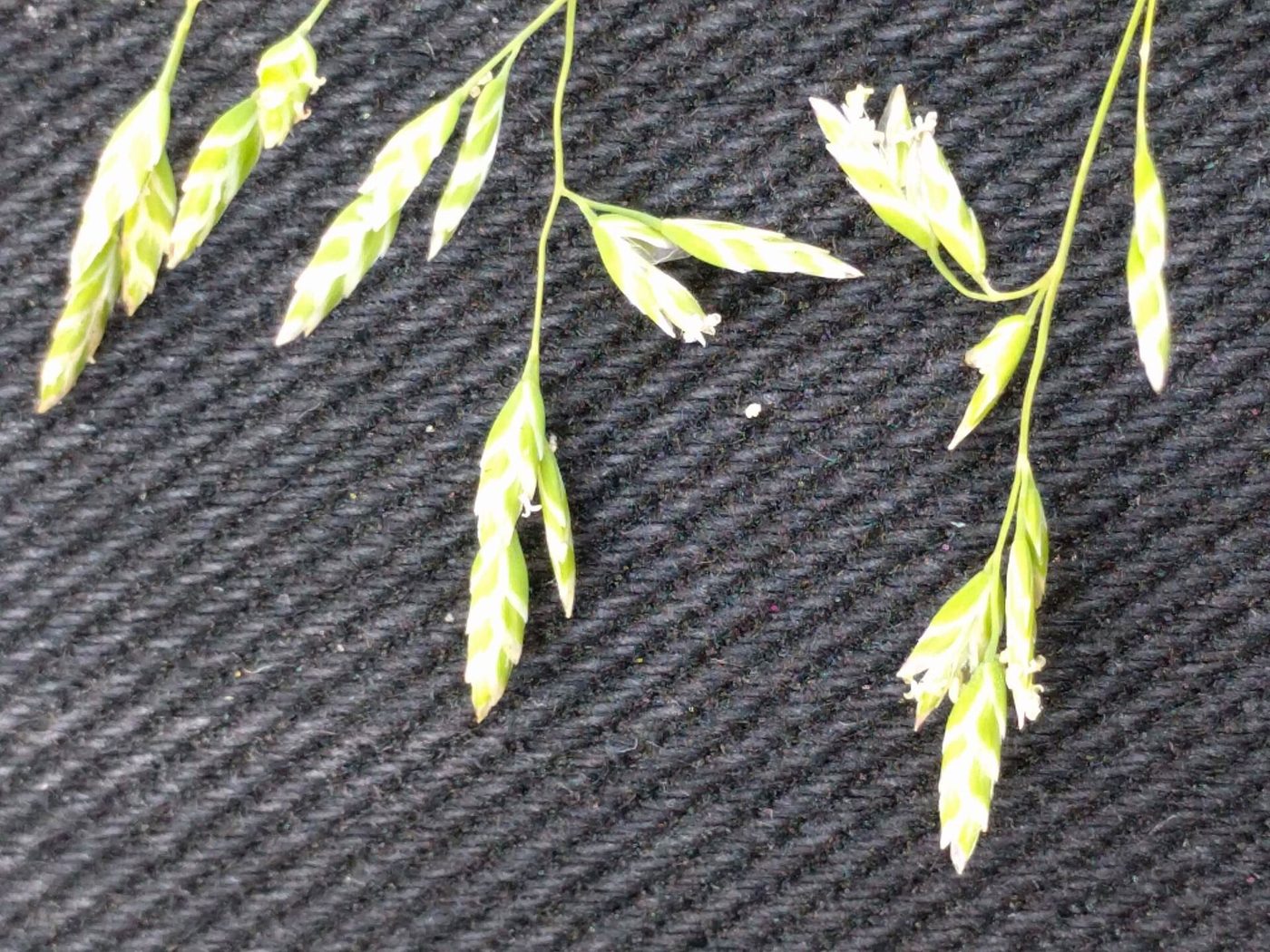
How it plays. Well-kept poa greens can be very fast and smooth, and Oakmont’s are among the fastest in the world. The catch is its seedheads: in spring, poa produces lots of small seedheads that make putts bounce and wobble, especially late in the day as the grass grows. Many courses use growth regulators to suppress seeding.
What it means for your booking. If you want Pebble Beach or another poa course at its smoothest, the seedhead period is the time to avoid; late spring can be bumpier than summer and autumn.

Kentucky bluegrass, perennial ryegrass and fine fescue
These three cool-season grasses cover most fairways and rough in the northern half of the country, and ryegrass does a second job in the South every winter.
Kentucky bluegrass is a common fairway and rough grass in the North and the Midwest. It forms dense turf and recovers from damage by spreading underground. As rough, it can grow thick and grab the club, which is why many U.S. Open setups use it.
Perennial ryegrass germinates fast and gives good lies, so it’s used on northern fairways and tees and, most importantly, as the grass that overseeds dormant bermudagrass in the South and the desert. When you play an Arizona course in January and the fairways are bright green, you’re usually hitting off ryegrass.
Fine fescues are the grasses of links golf. They need little water and fertiliser, stay firm and fast, and let the ball run along the ground. Bandon Dunes’ courses in Oregon are built on fescue, and so are many links-inspired American courses. Fescue rough grows wispy and golden; you can find your ball, but it’s hard to advance.
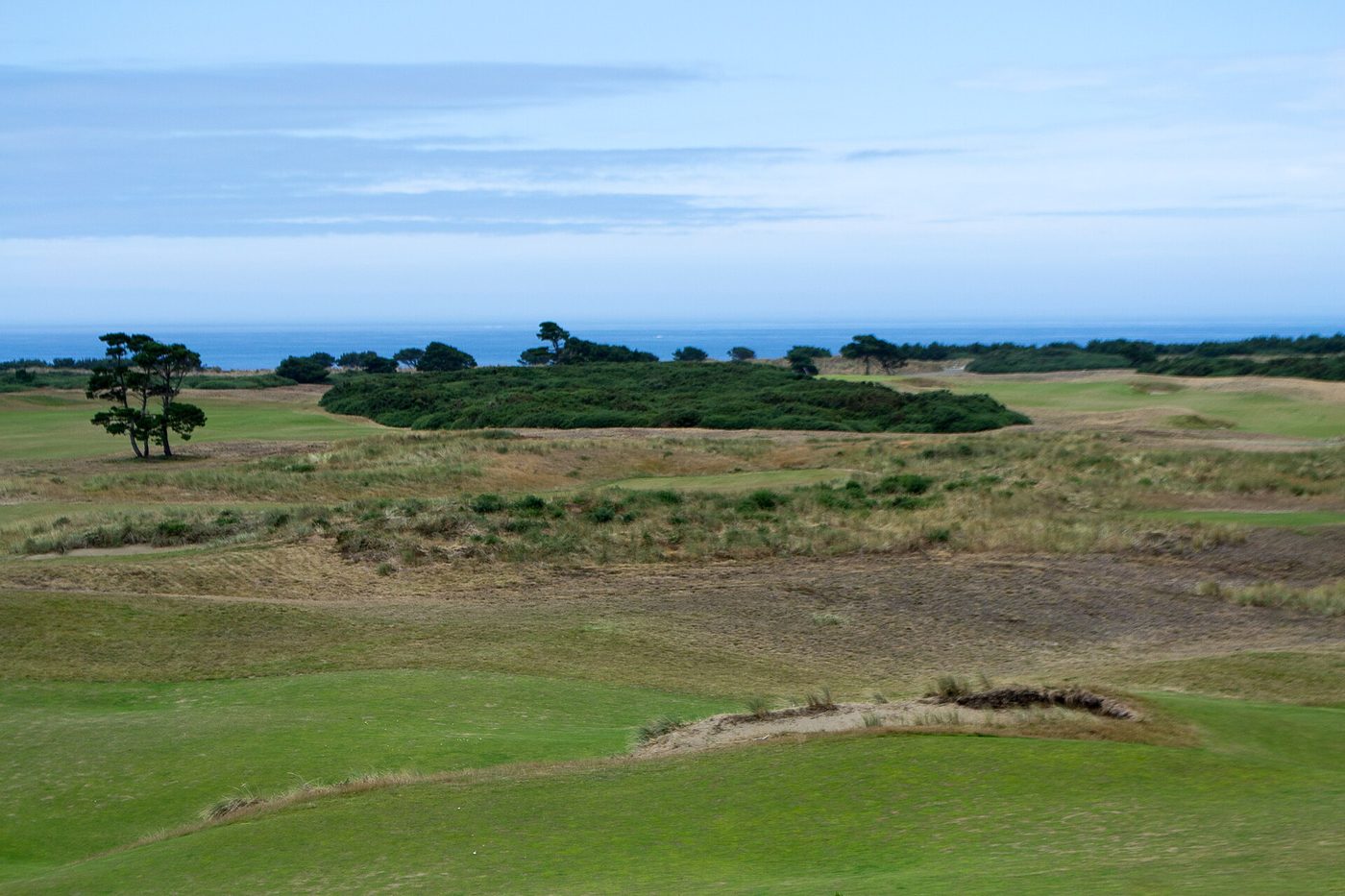
How they play. Fescue fairways are the firmest and fastest of all, which is why links golf rewards low shots that land short and run. Bluegrass and ryegrass fairways are softer and more receptive.
Bermudagrass and ultradwarf greens
Bermudagrass is the dominant golf course grass of the American South, the desert Southwest, Texas and Hawaii. It loves heat, handles drought and traffic, and recovers from divots fast. Special hybrid varieties, called ultradwarfs, can be mown low enough for fast putting greens.
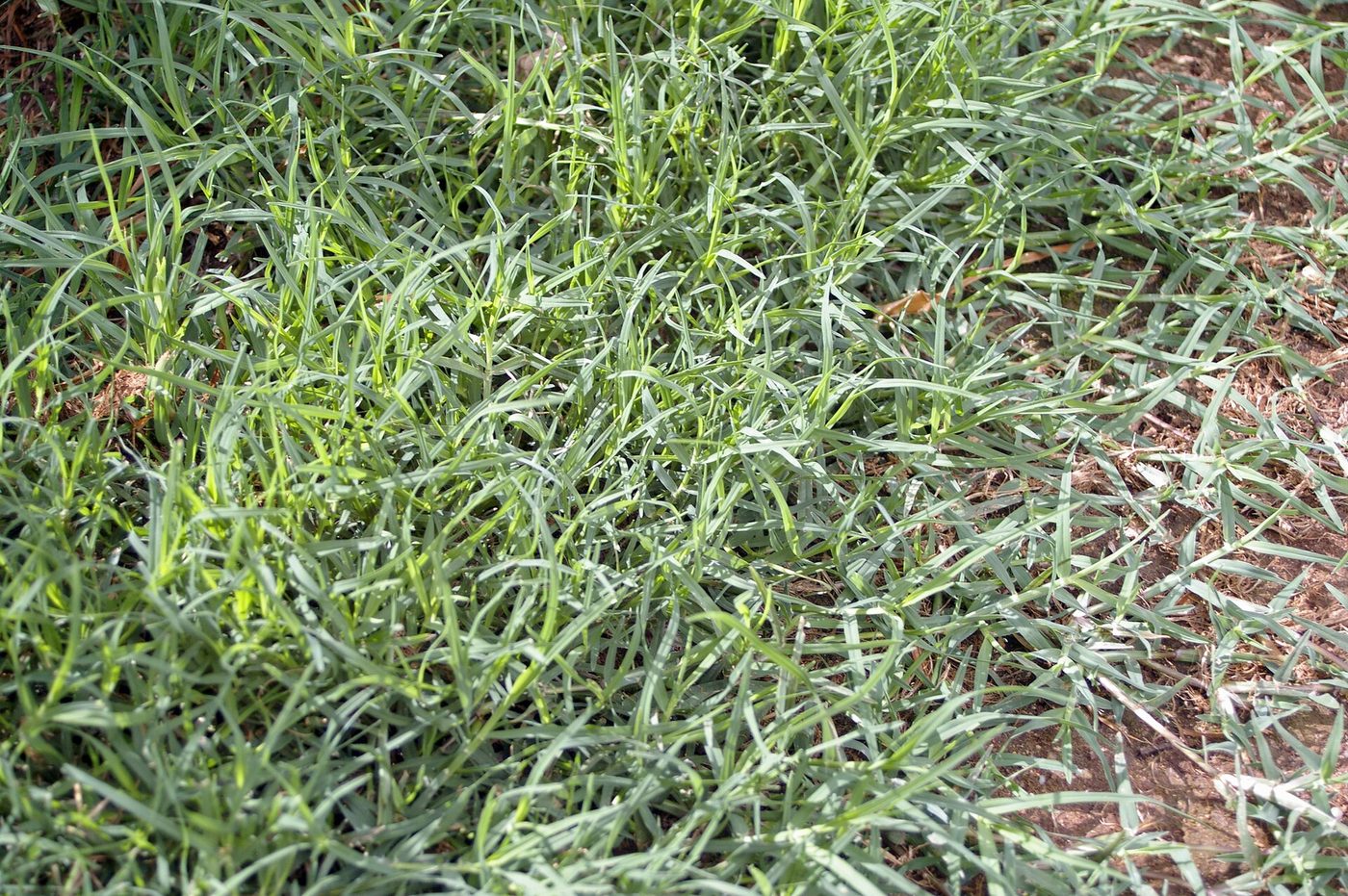
On fairways and tees, hybrid bermudagrass gives tight, firm lies where the ball sits down on the surface. It’s easy to pick the ball clean, but it punishes heavy contact. Bermuda rough is wiry and grabs the hosel of the club.
On greens, ultradwarf bermudagrasses, such as Champion, TifEagle and MiniVerde, have transformed Southern golf over the last 25 years. They can be kept fast and smooth through the hottest summers, which bentgrass can’t do reliably. Pinehurst No. 2 converted its greens from bentgrass to Champion ultradwarf bermudagrass after hosting both the men’s and women’s U.S. Opens in 2014, so the 2024 U.S. Open was played on bermuda greens.
Grain. Bermuda greens have grain: the blades lean in the direction they grow, often toward the setting sun, toward water or downhill. Putting down-grain is faster; into the grain is slower. A shiny look usually means down-grain, a dull one into it. Around the green, grain makes chips jump or check depending on direction.
Winter. Bermudagrass goes dormant and brown when it gets cold. Courses either leave it brown, which gives firm, fast winter golf, or overseed it with ryegrass.
Zoysia, seashore paspalum and kikuyu
These three warm-season grasses are less common than bermudagrass, but each has a place.
Zoysia is a dense, slow-growing warm-season grass that tolerates cold and shade better than bermudagrass, so it’s popular for fairways and tees in the transition zone. The ball sits up on zoysia’s stiff, springy blades, which makes fairway shots easy to hit cleanly. Its downside is slow recovery from divots.
Seashore paspalum is a warm-season grass that tolerates salt, including brackish irrigation water and sea spray, which makes it the choice for oceanfront and tropical courses. The Ocean Course at Kiawah Island replaced its bermudagrass greens with paspalum in 2003, using a salt-tolerant strain originally found growing wild on nearby Sullivan’s Island and developed with the University of Georgia, and now uses paspalum on fairways too. It’s also common in Hawaii and the Caribbean. It’s strikingly green and plays sticky around the greens.
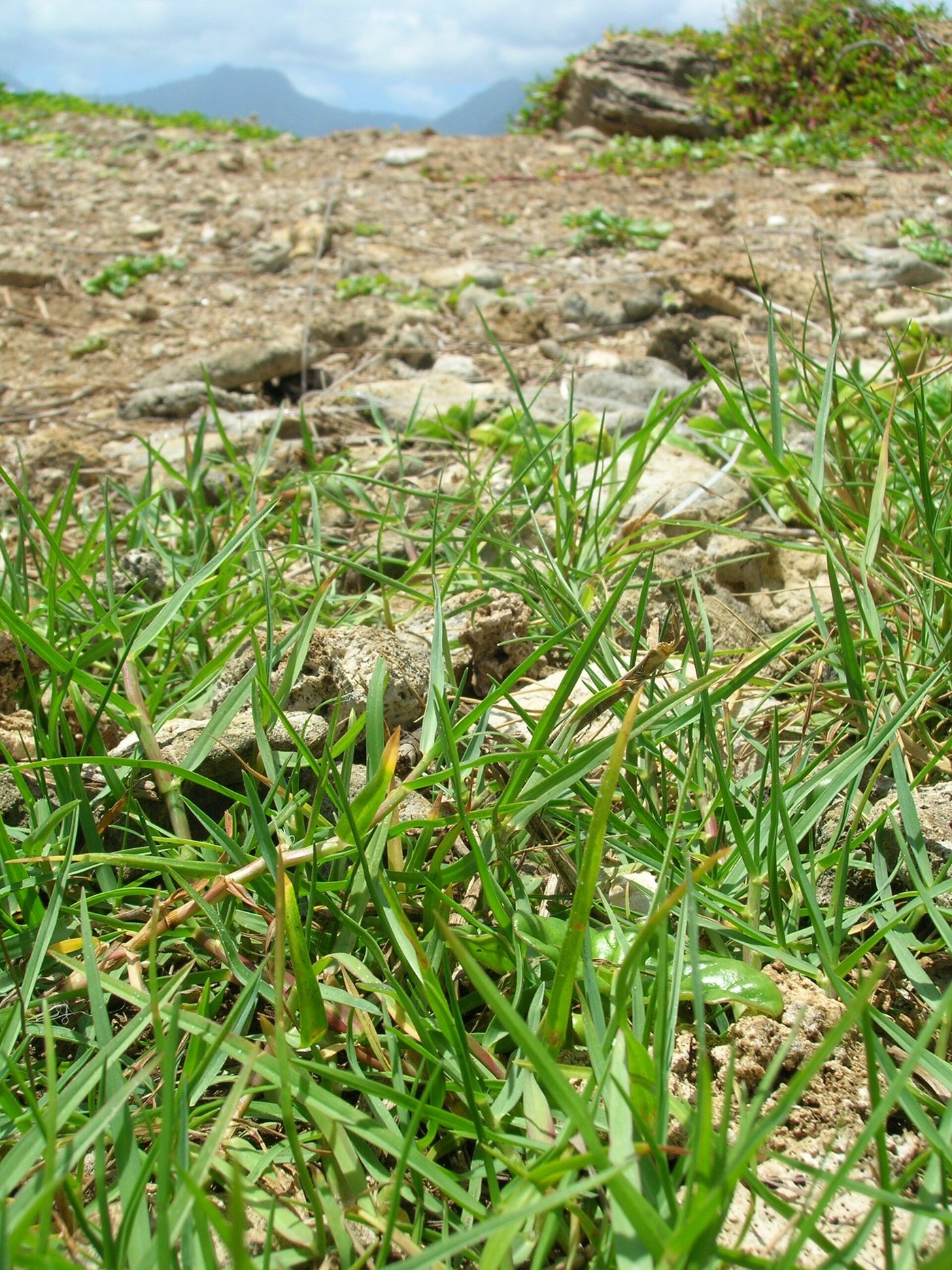
Kikuyu is an aggressive warm-season grass from Africa that took hold on many coastal Southern California courses. It’s thick and spongy, and in rough the ball sinks to the bottom. Torrey Pines’ kikuyu rough is one reason the South Course plays so hard for tournament golfers. Our guide to Hawaii’s best courses explains how paspalum and bermuda greens play in the trade winds.
When is golf course grass at its best? A booking calendar
Grass has seasons, and the same course can play very differently from one month to the next. If you’re paying a big green fee, it’s worth timing the round for when the grass is at its best rather than when the weather looks nicest on a brochure.
| Region and grass | Best months for conditions | Watch out for | Why |
|---|---|---|---|
| North and Midwest (bentgrass, poa, bluegrass) | June to early October | Spring aeration; late-summer heat stress; spring poa seedheads | Cool-season grasses peak in mild weather and recover fastest in spring and autumn |
| Coastal California (poa annua, kikuyu) | Late summer and autumn | Poa seedheads in spring | Poa is smoothest once seeding ends; kikuyu grows hardest in summer heat |
| Pacific Northwest and Oregon coast (fescue, bent, poa) | July to September | Soft, wet winter turf | Dry summers make fescue at its firmest and fastest |
| Transition zone (bent or bermuda greens, zoysia) | May to June, September to October | Midsummer stress on bentgrass; dormant zoysia and bermuda in winter | Both grass families are comfortable in late spring and early autumn |
| Southeast and Texas (bermudagrass) | May to October | Summer aeration; brown dormant fairways in winter if not overseeded | Bermuda grows most vigorously in heat |
| Florida (ultradwarf bermuda, paspalum) | November to April for weather; conditions good all year | Summer aeration; afternoon storms | Mild winters keep bermuda growing slowly; summer brings fast growth and maintenance |
| Desert Southwest (bermuda overseeded with ryegrass) | November to April | Overseeding closures (mid-September to early November); spring transition in May and June | The ryegrass is established by late autumn and the bermuda takes over again in summer heat |
| Hawaii (bermuda, paspalum) | All year | Periodic aeration closures, such as Manele, September 21 to 28, 2026 | Warm, steady temperatures year-round |
General patterns drawn from USGA and university turfgrass guidance; individual course maintenance calendars vary.
Two practical rules follow. First, in cool-season regions, the late-summer and early-autumn window, after the heat breaks and before aeration, is usually the best of the year, and many northern courses move to shoulder-season rates once summer ends. Second, in warm-season regions, the best value is often the week or two after a course reopens from overseeding or aeration, when rates are discounted and conditions are improving daily. Ask the pro shop how the greens are healing before you commit.
How grass changes the shot you should play
The grass under your ball should change the club you pick and the way you swing it.
- From tight bermuda or fescue fairways, the ball sits down on a firm surface. Play it slightly back in your stance, make ball-first contact and expect the ball to run after landing.
- From zoysia or ryegrass fairways, the ball sits up. You can sweep it more, and a fairway wood is easier to hit.
- From bermuda rough, the wiry grass twists the club. Grip firmer, open the face slightly and take one more club with more loft than you think.
- From kikuyu or heavy bluegrass rough, the ball sits down deep. Take a wedge or a short iron and get back to the fairway.
- Around bermuda and paspalum greens, the grass grabs the leading edge of the club. A bump-and-run with a less lofted club, or a putter from the fringe, is safer than a delicate lob.
- Around bentgrass greens, the collar is smooth and the ball runs out. A lofted chip lands softly; a putter from off the green works well.
What is overseeding, and why do courses close for it?
Overseeding means planting a cool-season grass, usually perennial ryegrass, into dormant warm-season bermudagrass in autumn so a course stays green all winter. Courses in Arizona and other warm regions close for about two to three weeks while the new grass germinates, then open with softer, cart-restricted conditions for a few weeks.
How it works. In September or October, the superintendent scalps (mows very low) the bermudagrass, spreads ryegrass seed, and waters heavily to germinate it. For two or three weeks, the course is closed or plays on temporary greens. When it reopens, the young ryegrass is soft and fragile, so carts are often kept on paths.
Spring transition. When temperatures rise in late spring, the ryegrass dies back and the bermudagrass takes over again. The weeks when both are fighting for space, usually May or June in the desert, can bring thin, patchy conditions.
Arizona’s 2026 overseeding closures, from the courses’ own websites:
| Course | Closed for overseeding (2026) |
|---|---|
| TPC Scottsdale (Champions) | September 14 to 30 |
| The Boulders (South) | September 14 to October 11 |
| Troon North (Pinnacle) | September 20 to October 9 |
| Quintero | September 21 to October 15 |
| Talking Stick (O’odham) | September 27 to October 15 |
| TPC Scottsdale (Stadium) | September 28 to October 18 |
| Troon North (Monument) | October 4 to 25 |
| We-Ko-Pa (Cholla) | October 5 to 22 |
| We-Ko-Pa (Saguaro) | October 12 to 29 |
| Grayhawk (Raptor) | October 12 to 30 |
Dates from each course’s website, checked September 2026.
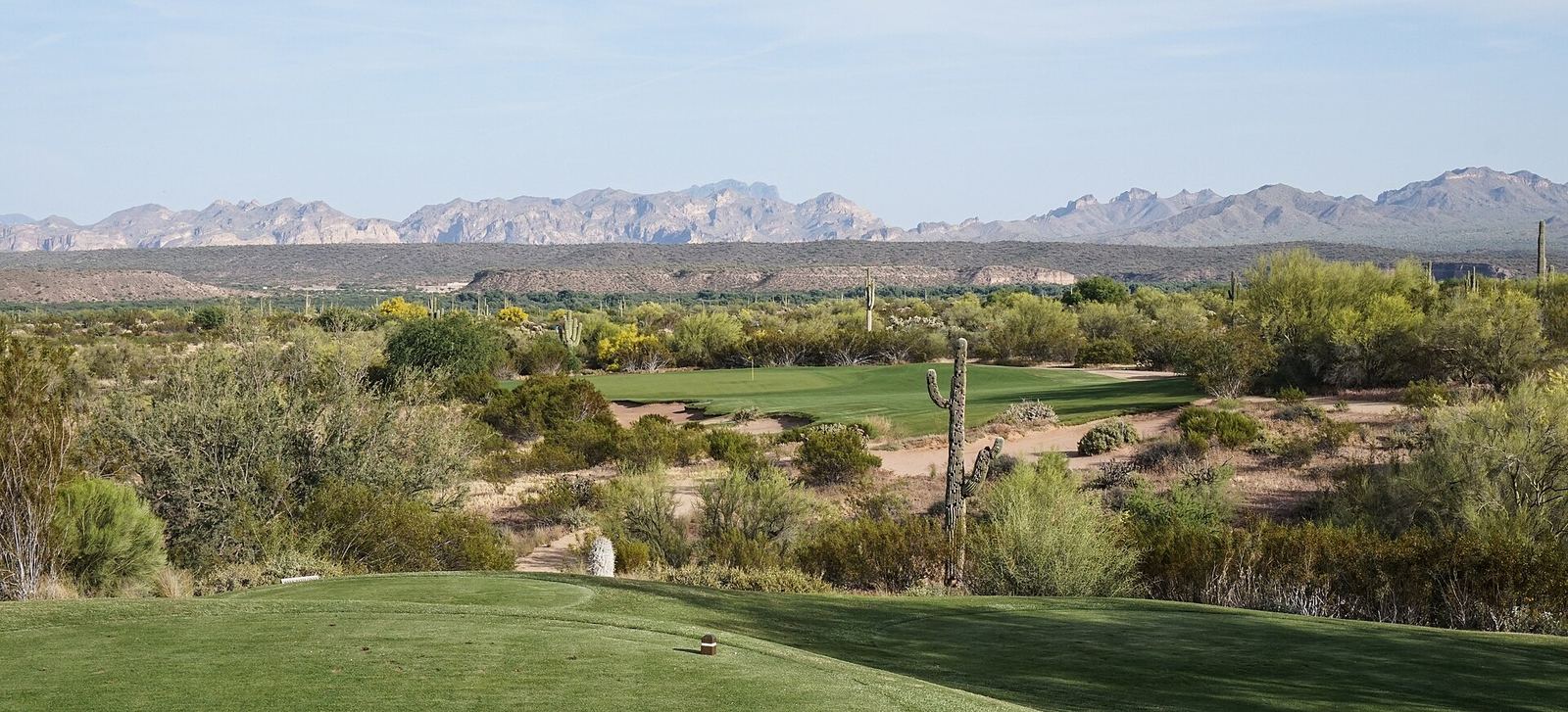
Courses stagger their closures so there’s always somewhere open. Not every warm-climate course overseeds: many in Texas, the Carolinas and parts of Florida leave bermuda dormant, which gives brown but firm, fast winter golf. Our guide to Arizona’s best courses has the full overseeding calendar, and we explain the process in more detail in our guide to how overseeding works.
Why do golf courses aerate greens?
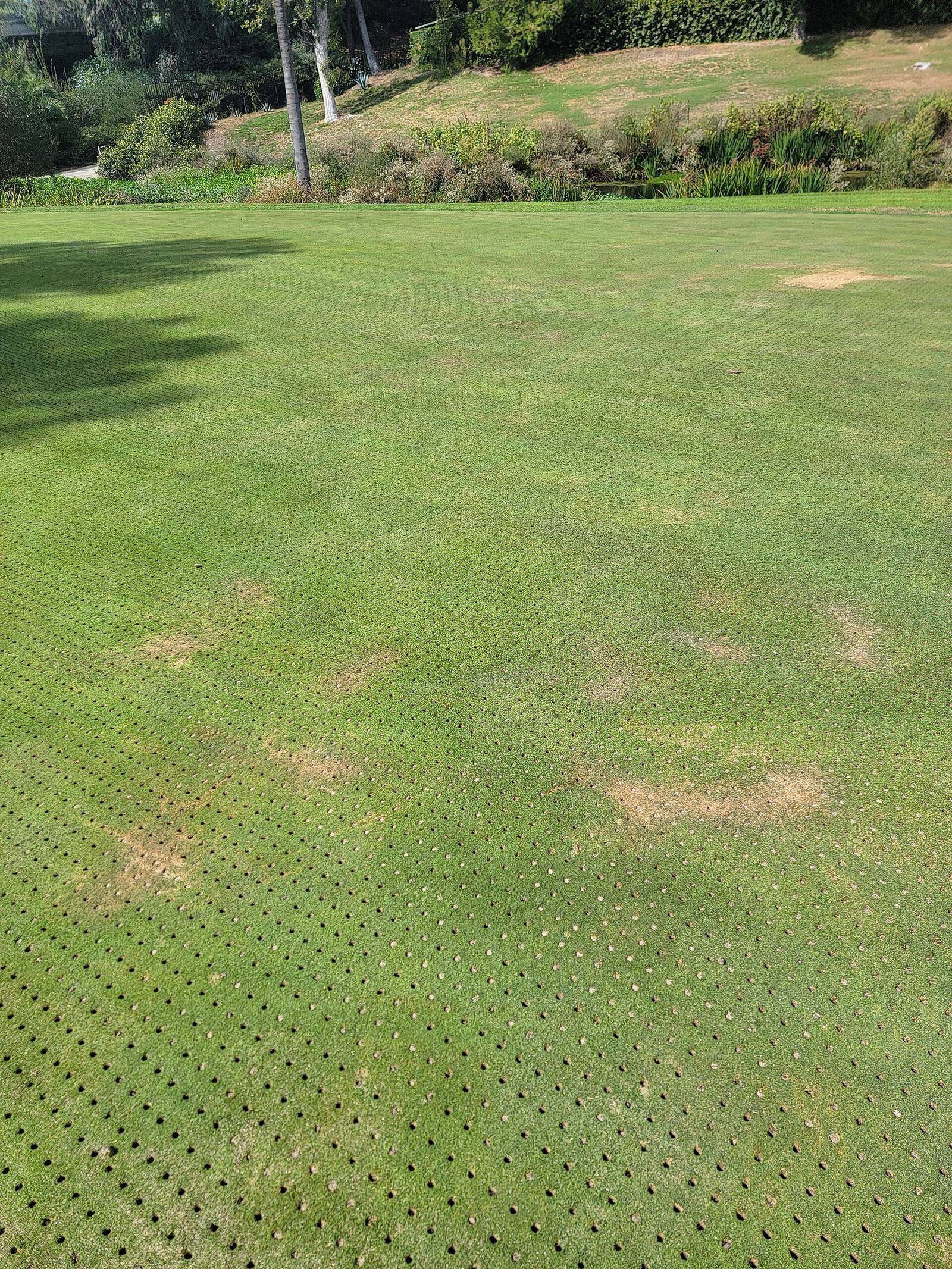
Golf courses aerate greens to relieve soil compaction, let air, water and nutrients reach the roots and control the layer of thatch and organic matter under the surface. Core aeration punches small holes and removes plugs of soil, and the holes are filled with sand. Greens are bumpy for one to three weeks while they heal.
Aeration is the maintenance golfers hate most, and one of the most important for healthy greens. Thousands of rounds a year compact the soil under a green, and without aeration, roots weaken, water pools and disease follows.
When it happens. Most courses aerate greens once or twice a year. Cool-season courses often aerate in spring and late summer or autumn, when bentgrass and poa recover fastest. Warm-season courses usually aerate in summer, when bermudagrass grows most vigorously. Many courses discount green fees for a week or two afterwards.
What it means for your booking. Ask the pro shop whether the greens have been punched recently before you book an expensive round. Course websites increasingly publish aeration dates: Mauna Kea in Hawaii, for example, lists closures on September 8 and 9, 2026, and Manele on Lanai is closed for aeration from September 21 to 28, 2026. Our guide to why golf courses aerate has a month-by-month calendar.
How fast should greens be? The Stimpmeter explained
Green speed is measured with a Stimpmeter, a USGA-designed ramp that releases a ball at a set speed; the average distance it rolls on a flat part of the green, in feet, is the green’s speed. Everyday public greens often run around 8 to 10 feet, and tournament greens commonly 12 or more.
How it works. A superintendent rolls balls down the Stimpmeter’s grooved bar in both directions on a flat area and averages the distances. A reading of 10 means the ball rolled 10 feet.
What affects speed. Grass type, mowing height, rolling, moisture, weather and time of day. Bentgrass and poa greens can be kept very fast; ultradwarf bermuda greens can be kept fast too, but grain affects the roll. Slopes matter as much as speed: a green that’s reasonable at 10 on a flat site can be nearly unplayable at 13 with severe contours.
What it means for your game. Don’t expect your home course’s speed at a resort, or tournament speed at a muni. Hit a few long putts on the practice green before every round. Our guide to the Stimpmeter and green speed gives typical speeds by type of course.
How to tell what grass you’re playing on
You don’t need to be an agronomist to read the grass. Before a round on a new course, run through these steps:
- Check the region and season. A Florida or Arizona course in winter is almost certainly bermudagrass, possibly overseeded with ryegrass; a Michigan course in summer is almost certainly cool-season.
- Look at the greens’ colour and texture. Bentgrass and poa are fine and uniform; bermuda looks slightly coarser, and paspalum is an intense, almost blue-green.
- Look for seedheads. Small white specks on a spring green usually mean poa annua, and putts may wobble late in the day.
- Check the grain on warm-season greens. Shiny means down-grain and faster; dull means into the grain and slower. Look at the cup’s edge: the ragged side is often the down-grain side.
- Feel the fairway lie. Tight and firm, with the ball sitting down, suggests bermuda or fescue; sitting up suggests zoysia or ryegrass.
- Test the rough. Wiry and grabby suggests bermuda; thick and deep suggests bluegrass; spongy with the ball sunk to the bottom suggests kikuyu.
- Ask the pro shop. They’ll tell you the grass, the green speed and when the greens were last aerated.
How much water does a golf course use?
Golf courses use a lot of water, but less than they did. The GCSAA’s national survey found U.S. golf facilities applied about 1.68 million acre-feet of water in 2020, 29% less than in 2005, and a December 2025 GCSAA release reported a 31% reduction in its latest survey.
Water use depends mostly on climate and grass. Desert courses, where every blade of grass is irrigated, use far more per acre than courses in the rainy Northeast. Much of the reduction has come from more efficient irrigation systems, smaller irrigated areas, drought-tolerant grasses and more use of recycled water. Desert “target golf” courses grass only the playing corridors and leave native desert between the holes, which cuts irrigated acreage sharply. We look at the numbers in detail in our guide to how much water a golf course uses.
Common mistakes golfers make about grass
- Reading bermuda greens like bentgrass. Ignore the grain and you’ll misjudge speed and break.
- Chipping the same way on every grass. Paspalum and bermuda grab the club; bentgrass collars let the ball run.
- Thinking brown means dead. Dormant bermuda in winter is healthy and often plays firmer and faster.
- Booking the desert in October without checking overseeding dates. You might get temporary greens.
- Booking a big round the week after aeration. Check with the pro shop first.
- Expecting poa greens to be smooth in spring. Seedheads make them bumpy, especially in the afternoon.
- Trying to muscle a ball out of kikuyu or bluegrass rough. Take more loft and get back to the fairway.
Frequently asked questions
What grass is used on golf course greens?
In cooler climates, most greens are creeping bentgrass or poa annua; Pebble Beach and Oakmont have poa annua greens. In the South, most are ultradwarf bermudagrass, such as Champion or TifEagle; Pinehurst No. 2 converted to Champion after 2014. Coastal and tropical courses sometimes use seashore paspalum.
What grass does Augusta National use?
Augusta National’s greens are bentgrass, switched from bermudagrass after the 1980 Masters. The fairways and rough are bermudagrass overseeded with perennial ryegrass, which keeps the course green for the Masters in April.
What is the difference between bermuda and bentgrass greens?
Bentgrass is a cool-season grass that gives smooth, fast greens with little grain but struggles in hot, humid summers. Bermudagrass is a warm-season grass that thrives in heat; ultradwarf varieties make fast greens, but they have more grain, which affects speed and break.
Why do golf courses overseed?
Warm-season bermudagrass goes dormant and turns brown in cool weather. Courses that want green grass in winter overseed with perennial ryegrass in autumn, usually closing for two to three weeks. In Arizona in 2026, closures run from mid-September to early November, staggered across courses.
What is poa annua?
Poa annua, or annual bluegrass, is a cool-season grass common on greens on the West Coast and in the North. It can make fast, smooth greens, but in spring it produces seedheads that make putts bumpy. Many superintendents fight it; others, including at Pebble Beach and Oakmont, manage it as the main green grass.
Why is golf course grass so green?
Because it’s carefully chosen, mown, fertilised and irrigated, and in warm climates often overseeded with ryegrass in winter. Some grasses, such as seashore paspalum, are naturally a very deep green, and mowing patterns create the stripes golfers see on television.
What grass is best for a golf-course-style lawn at home?
In cool climates, Kentucky bluegrass or a bluegrass and ryegrass mix is the practical choice; true bentgrass lawns need very low, frequent mowing. In warm climates, hybrid bermudagrass or zoysia gives the closest look. Our guide to getting a golf course lawn at home explains the equipment and maintenance involved.
How often do golf courses aerate their greens?
Most courses core-aerate greens once or twice a year, often in spring and autumn for cool-season grasses and in summer for bermudagrass. Greens usually recover within one to three weeks, depending on grass and weather. Many courses publish dates or discount green fees afterwards.
Our verdict
Golf course grass is the part of the game golfers see on every shot and think about least. But it explains why a course plays the way it does: why bermuda greens break toward the setting sun, why poa greens wobble in spring, why links fescue lets the ball run and why desert courses close in October.
For everyday golfers, three lessons matter. Read the grain on warm-season greens. Check aeration and overseeding dates before you pay a big green fee. And match your expectations to the grass and the season, not the television picture. For how grass fits with bunkers, tees and greens, see our guide to the parts of a golf course. The architects who design those courses choose grasses as carefully as routings; our guide to golf course architects looks at their work, and our guide to living on a golf course covers what the grass means next door to your home.
Sources
- Know Your Turf, USGA, July 2024
- Pinehurst No. 2: The Same But Different, USGA Green Section Record
- Pinehurst No. 2 reopens after greens conversion, Golf Course Industry
- Nine things to know: Augusta National Golf Club, PGA Tour
- Agricultural highlights of the Augusta National golf course, University of Georgia Extension
- Strain of Sullivan’s Island grass makes Kiawah’s Ocean Course, ABC News 4
- Landscape of Legends: Kiawah Island’s Ocean Course, Kiawah Island
- Golf courses reduce water usage by 29 percent according to national survey, GCSAA, July 26, 2022
- Golf courses reduce water usage by 31 percent according to national survey, GCSAA, December 30, 2025
- A continued study of turfgrass use on U.S. golf courses, GCM
- Rates and packages, We-Ko-Pa Golf Club
- Stadium Course, TPC Scottsdale
- Golf, Mauna Kea Resort
- Golf, Four Seasons Resort Lanai
Image credits
| Image | Photographer | Licence | Source |
|---|---|---|---|
| Putting green after core aeration (featured image) | Votpuske | CC BY-SA 4.0 | Wikimedia Commons |
| Bermudagrass (Cynodon dactylon) | Bidgee | CC BY-SA 3.0 | Wikimedia Commons |
| Poa annua seedheads | Michel Langeveld | CC BY-SA 4.0 | Wikimedia Commons |
| Seashore paspalum (Paspalum vaginatum) | Forest & Kim Starr | CC BY 3.0 | Wikimedia Commons |
| Augusta National, 10th hole | Mbrooks | public domain | Wikimedia Commons |
| Pebble Beach Golf Links, 18th green | WilliamFMeyer | CC BY-SA 4.0 | Wikimedia Commons |
| We-Ko-Pa Golf Club, Saguaro Course, 15th hole | Bernard Gagnon | CC BY-SA 3.0 | Wikimedia Commons |
| Bandon Dunes Golf Resort | Visitor7 | CC BY-SA 3.0 | Wikimedia Commons |