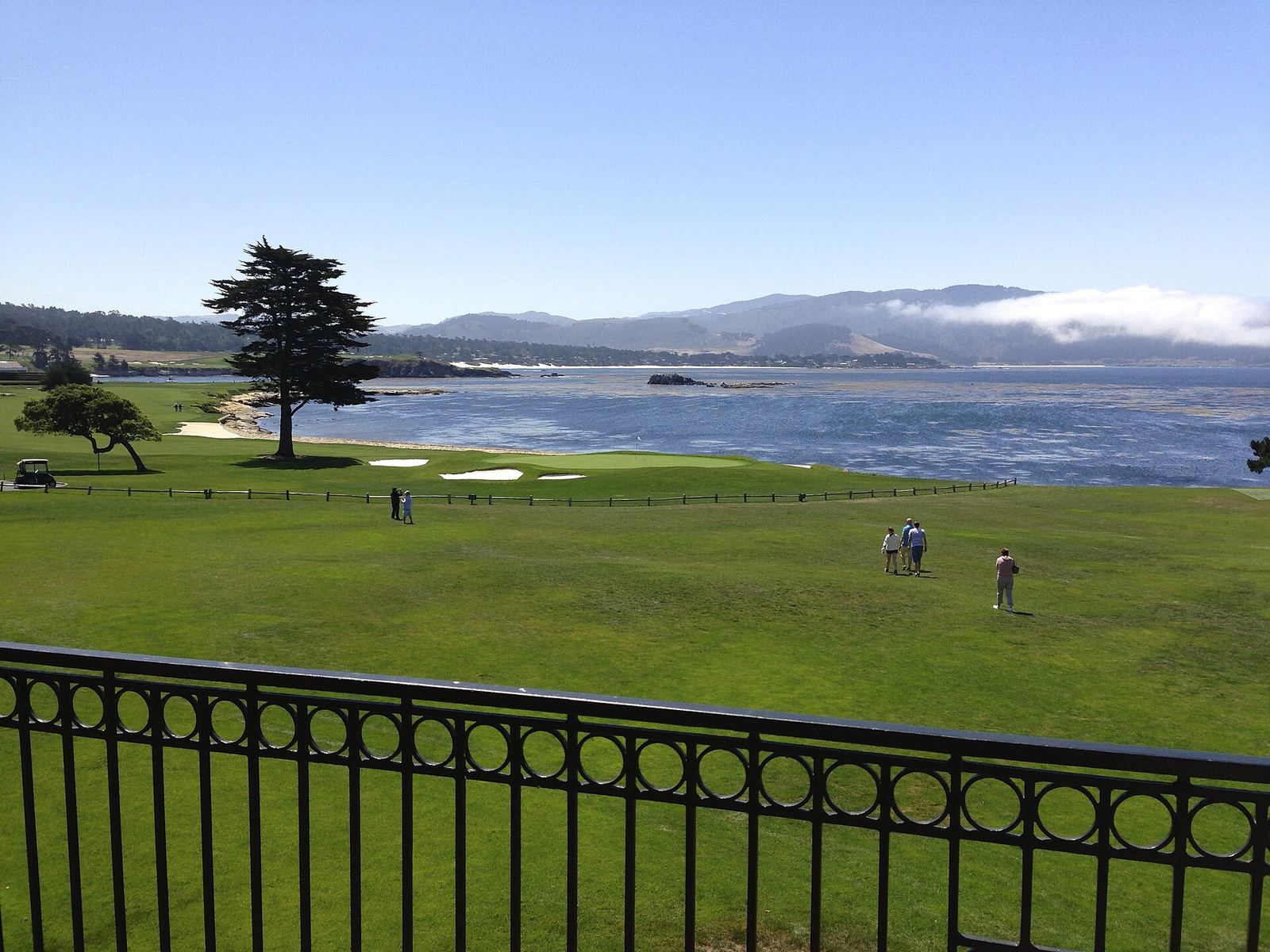
Pine Valley Golf Club in New Jersey is the best golf course in the country when you average the four major top-100 rankings, a whisker ahead of Cypress Point in California. Shinnecock Hills, National Golf Links of America and Augusta National complete the top five, and all five are private. Of the best golf courses in America, the highest-ranked one you can actually book is Pebble Beach.
That last point is the one the magazines bury. Every publication runs its own list, the lists rarely agree, and none of them tells you which courses will take your money. Golf Digest has Augusta National second; LINKS, whose voters are working golf course architects, has it seventh. So rather than pick a favourite, we lined up Golf Digest, GOLF, LINKS and Top100GolfCourses, averaged each course’s position into one consensus ranking, added Golfweek’s separate classic and modern lists for context, flagged every course the public can play and priced the ones you can.
How we built this. We used the current edition of each list as it stood on September 10, 2026 (editions and methods are in the comparison table below). A course missing from a list scores 101 for that list, or 71 for Top100GolfCourses, where we recorded the top 70, so a course has to be rated highly everywhere to finish near the top. Green fees come from each course’s own rate page or booking engine and are dated. We have not played most of the private clubs on these lists; for those, the notes lean on the rankings, the clubs’ histories and their architecture rather than our own scorecards.
At a glance
- Consensus No. 1: Pine Valley Golf Club, New Jersey, with an average position of 1.5 across four lists
- Top-ranked course you can book: Pebble Beach Golf Links, California, consensus No. 10 ($695 green fee)
- Public-access courses in the consensus top 25: three: Pebble Beach, Pacific Dunes and Pinehurst No. 2
- Public or resort courses that appear on at least one of the four lists: 28
- State with the most courses on the LINKS 100 U.S.: New York with 14, then California with 13
- Most expensive ranked course you can play: Shadow Creek, a reported $1,250 (MGM hotel guests only)
- Cheapest top-40 course: Bethpage Black, $70 on weekdays for New York residents, $140 for everyone else
Best golf courses in America: the consensus top 25
The table puts the four overall lists side by side. “Avg” is the mean of a course’s four positions; lower is better. Access is what a non-member can expect: private means members and their guests only, resort means you can book, usually with better access for hotel guests, and public means anyone can book.
| # | Course | State | Access | Golf Digest | GOLF | LINKS | Top100 | Avg |
|---|---|---|---|---|---|---|---|---|
| 1 | Pine Valley | NJ | Private | 1 | 1 | 2 | 2 | 1.50 |
| 2 | Cypress Point | CA | Private | 3 | 2 | 1 | 1 | 1.75 |
| 3 | Shinnecock Hills | NY | Private | 4 | 3 | 4 | 3 | 3.50 |
| 4 | National Golf Links of America | NY | Private | 7 | 4 | 3 | 4 | 4.50 |
| 5 | Augusta National | GA | Private | 2 | 6 | 7 | 8 | 5.75 |
| 6 | Oakmont | PA | Private | 5 | 5 | 10 | 5 | 6.25 |
| 7 | Sand Hills | NE | Private | 8 | 7 | 5 | 6 | 6.50 |
| 8 | Merion (East) | PA | Private | 6 | 8 | 11 | 7 | 8.00 |
| 9 | Chicago Golf Club | IL | Private | 11 | 12 | 6 | 12 | 10.25 |
| 10 | Pebble Beach | CA | Resort | 9 | 9 | 9 | 14 | 10.25 |
| 11 | Fishers Island | NY | Private | 10 | 11 | 14 | 10 | 11.25 |
| 12 | Friar’s Head | NY | Private | 14 | 15 | 17 | 11 | 14.25 |
| 13 | Prairie Dunes | KS | Private | 25 | 16 | 8 | 15 | 16.00 |
| 14 | Winged Foot (West) | NY | Private | 13 | 18 | 16 | 18 | 16.25 |
| 15 | Riviera | CA | Private | 18 | 14 | 19 | 16 | 16.75 |
| 16 | Crystal Downs | MI | Private | 15 | 23 | 13 | 17 | 17.00 |
| 17 | Los Angeles CC (North) | CA | Private | 16 | 10 | 35 | 9 | 17.50 |
| 18 | Pacific Dunes | OR | Resort | 23 | 19 | 21 | 13 | 19.00 |
| 19 | Seminole | FL | Private | 12 | 17 | 31 | 27 | 21.75 |
| 20 | Pinehurst No. 2 | NC | Resort | 32 | 13 | 23 | 29 | 24.25 |
| 21 | San Francisco Golf Club | CA | Private | 33 | 22 | 25 | 21 | 25.25 |
| 22 | Oakland Hills (South) | MI | Private | 20 | 20 | 54 | 23 | 29.25 |
| 23 | Old Town Club | NC | Private | 39 | 32 | 28 | 20 | 29.75 |
| 24 | Shoreacres | IL | Private | 47 | 25 | 22 | 25 | 29.75 |
| 25 | The Country Club | MA | Private | 17 | 21 | 36 | 46 | 30.00 |
Sources: Golf Digest America’s 100 Greatest Golf Courses (2025-26), GOLF Top 100 Courses in the U.S. (2024-25), The LINKS 100 U.S. (2026) and Top100GolfCourses’ USA ranking, all checked September 10, 2026. Ties are broken by the better best-single-list position.
Three things stand out once the lists sit together. First, the top is remarkably settled: eight courses, Pine Valley, Cypress Point, Shinnecock Hills, NGLA, Augusta National, Oakmont, Sand Hills and Merion, make the top 11 on all four lists. Second, age wins. Nine of the consensus top ten were laid out before 1935; Sand Hills, built by Bill Coore and Ben Crenshaw in the mid-1990s, is the only modern course in the group. Third, you can play three of the top 25, and only one of the top 17, Pebble Beach, opens its tee sheet to the public, which is why the second half of this guide is about those three and the two dozen other ranked courses you can book.
What is the No. 1 golf course in America?
Pine Valley Golf Club in New Jersey is No. 1 on the current Golf Digest and GOLF lists, and on Golfweek’s 2026 list of classic courses. Cypress Point in California is No. 1 on the LINKS 100 U.S. and on Top100GolfCourses. Averaged across the four overall rankings, Pine Valley edges Cypress Point by a quarter of a place, 1.50 to 1.75.
The split tells you something about what each group values. Pine Valley (Pine Valley, N.J. · private · George Crump with H.S. Colt, 1918 · consensus 1.50) is the purest test in the country. Crump, a Philadelphia hotelier, carved it out of the sandy pine barrens of South Jersey and died before it was finished. Its style is what architects call penal: every fairway and green is an island of grass in a sea of sand and scrub, and a miss is not a lie in the rough but a recovery from wasteland. There is almost nowhere to bail out. Magazine panels, which ask raters to weigh challenge and shot values alongside beauty, have kept it at or near No. 1 for decades.
Cypress Point (Pebble Beach, Calif. · private · Alister MacKenzie, 1928 · consensus 1.75) wins with variety. In 18 holes it moves from pine forest into white sand dunes and then out onto the rocks above the Pacific. Its 16th is the most photographed par 3 in American golf: a full carry over an ocean inlet to a green on a headland, with a fairway to the left for anyone who would rather lay up and pitch. The architects who vote in the LINKS poll put it first, and it is easy to see why a designer would. It is proof that one routing can make great holes out of three completely different kinds of land.
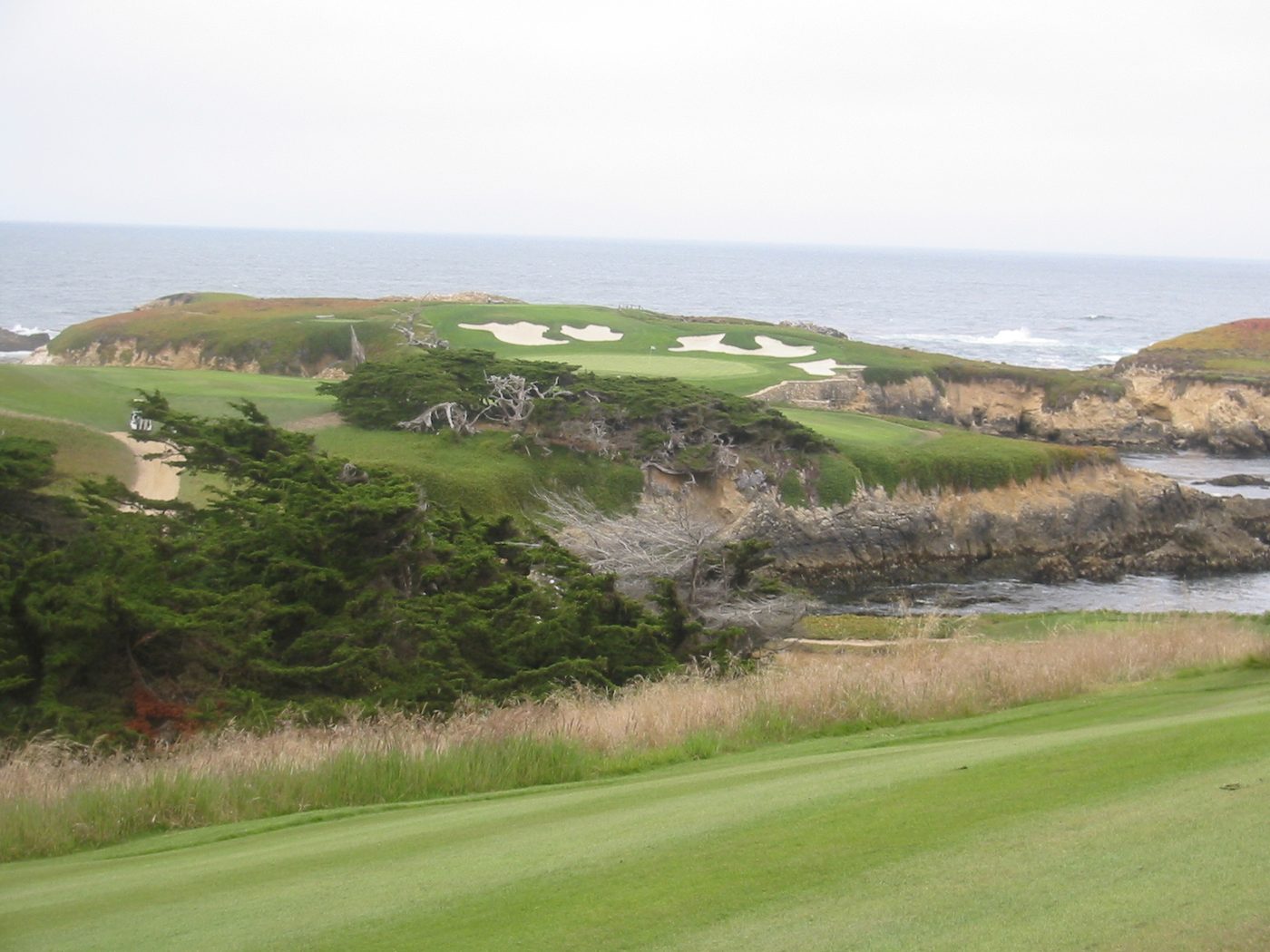
Neither course sells tee times, and neither will reply to a request from a stranger. If you want to know how people who aren’t members get on, it’s covered further down.
The rest of the consensus top 10
For the private clubs we skip green fees, which don’t exist, and course rating and slope, which are published in the USGA’s database but are no use to a golfer who can’t book. Each line gives location, access, the original architect and year, and the consensus average.
Shinnecock Hills Golf Club
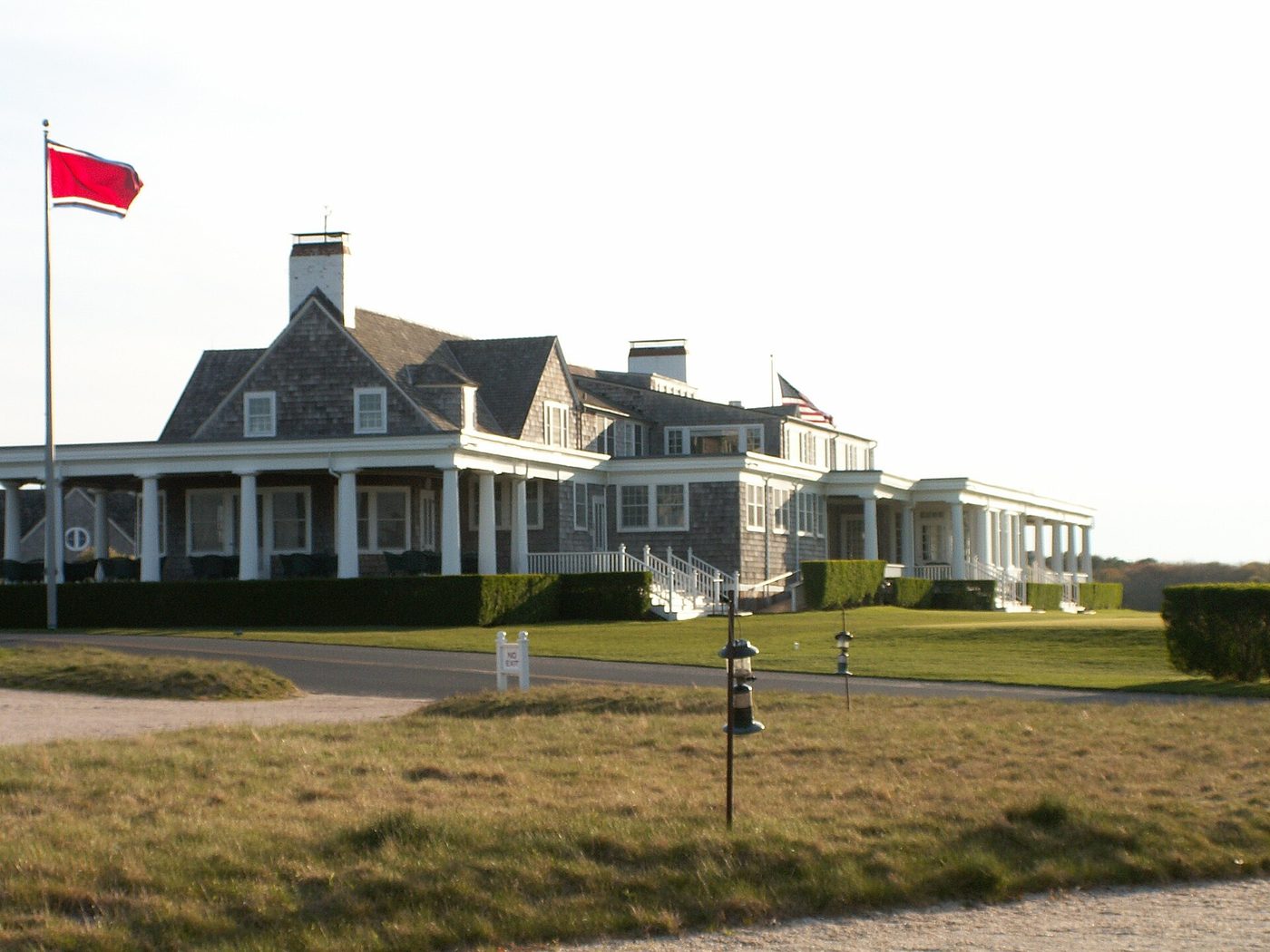
Southampton, N.Y. · Private · William Flynn (1931 layout; club founded 1891) · Consensus 3.50
Shinnecock was one of the five clubs that founded the USGA, hosted the second U.S. Open in 1896 and hosted it again in June 2026, with 2036 already on the calendar. The course that earns the ranking is Flynn’s 1931 layout, rolling across open, windswept ground near the eastern end of Long Island. It plays firm and fast, and the greens shed anything that isn’t struck well. The wind decides everything: the same par 4 can be driver and wedge one day and driver and 4-iron the next. It is ranked third or fourth on every list, and it is the most consistent course on any of them.
National Golf Links of America
Southampton, N.Y. · Private · C.B. Macdonald (1911) · Consensus 4.50
Next door to Shinnecock, NGLA is where American golf architecture began. Charles Blair Macdonald studied the great holes of Scotland and England and built his own versions of them. These template holes have names you will meet again on courses you can play. A Redan is a par 3 whose green angles away from you, so the smart shot lands short and right and runs left onto the green. An Alps is a hole with a blind approach over a hill. The Road is modelled on the 17th at St Andrews. The course has hosted the Walker Cup twice, in 1922 and 2013. Architects rank it third, the magazines between fourth and seventh.
Augusta National Golf Club
Augusta, Ga. · Private · Alister MacKenzie and Bobby Jones (1933) · Consensus 5.75
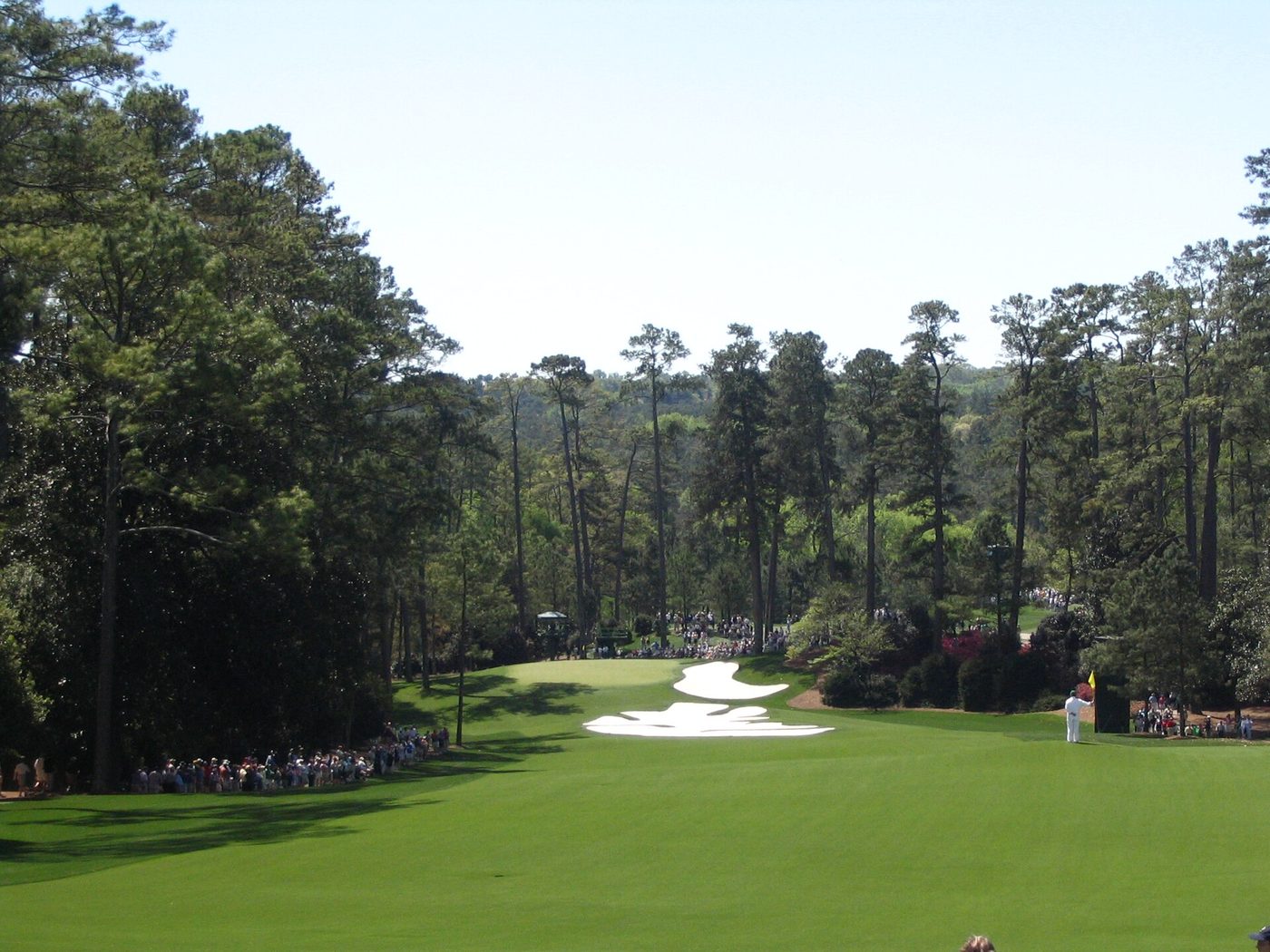
Augusta National has hosted the Masters every April since 1934, and it is the biggest disagreement in the top ten: Golf Digest ranks it No. 2 and LINKS No. 7. The gap is about change. The course has been lengthened and reshaped many times to keep up with the modern professional, and architect voters tend to mark down a course that has moved a long way from its original design. Television hides the thing that surprises first-time visitors most, which is how steep it is. The 10th, Camellia, falls sharply from tee to green. The only public way through the gate is a Masters ticket, sold by an annual application and random draw on the tournament’s website.
Oakmont Country Club
Oakmont, Pa. · Private · Henry Fownes (1904) · Consensus 6.25
If Pine Valley is the hardest course to get on, Oakmont may be the hardest to play. Henry Fownes built it outside Pittsburgh to punish poor shots, and his son William kept adding bunkers. The most famous is the Church Pews, a long bunker between the 3rd and 4th fairways cut by rows of grassy ridges. The greens are some of the fastest and most sloping in championship golf. Oakmont hosted its tenth U.S. Open in 2025, more than any other course, and has three more booked: 2033, 2042 and 2049.
Sand Hills Golf Club
Mullen, Neb. · Private · Bill Coore and Ben Crenshaw (mid-1990s) · Consensus 6.50
Sand Hills is the course that changed modern architecture. Coore and Crenshaw found holes already sitting in the dunes of central Nebraska and moved very little earth, which proved that remote, natural land could produce a top-ten course. That lesson led directly to Bandon Dunes, Sand Valley and most of the best public courses built in the last 25 years, so everyday golfers owe it something even though they will almost certainly never play it. It is hours from a major airport and strictly private. It is No. 1 on Golfweek’s 2026 list of modern courses.
Merion Golf Club (East)
Ardmore, Pa. · Private · Hugh Wilson (1912) · Consensus 8.00
Merion’s East Course is short by championship standards and shows how much a small property can hold. The pins carry wicker baskets instead of flags, so you can’t read the wind off them, and its 18th is where Ben Hogan hit the 1-iron in the 1950 U.S. Open that became golf’s most famous photograph. The 2013 U.S. Open proved a short course can still hold a major, and the USGA is going back in 2030 and 2050.
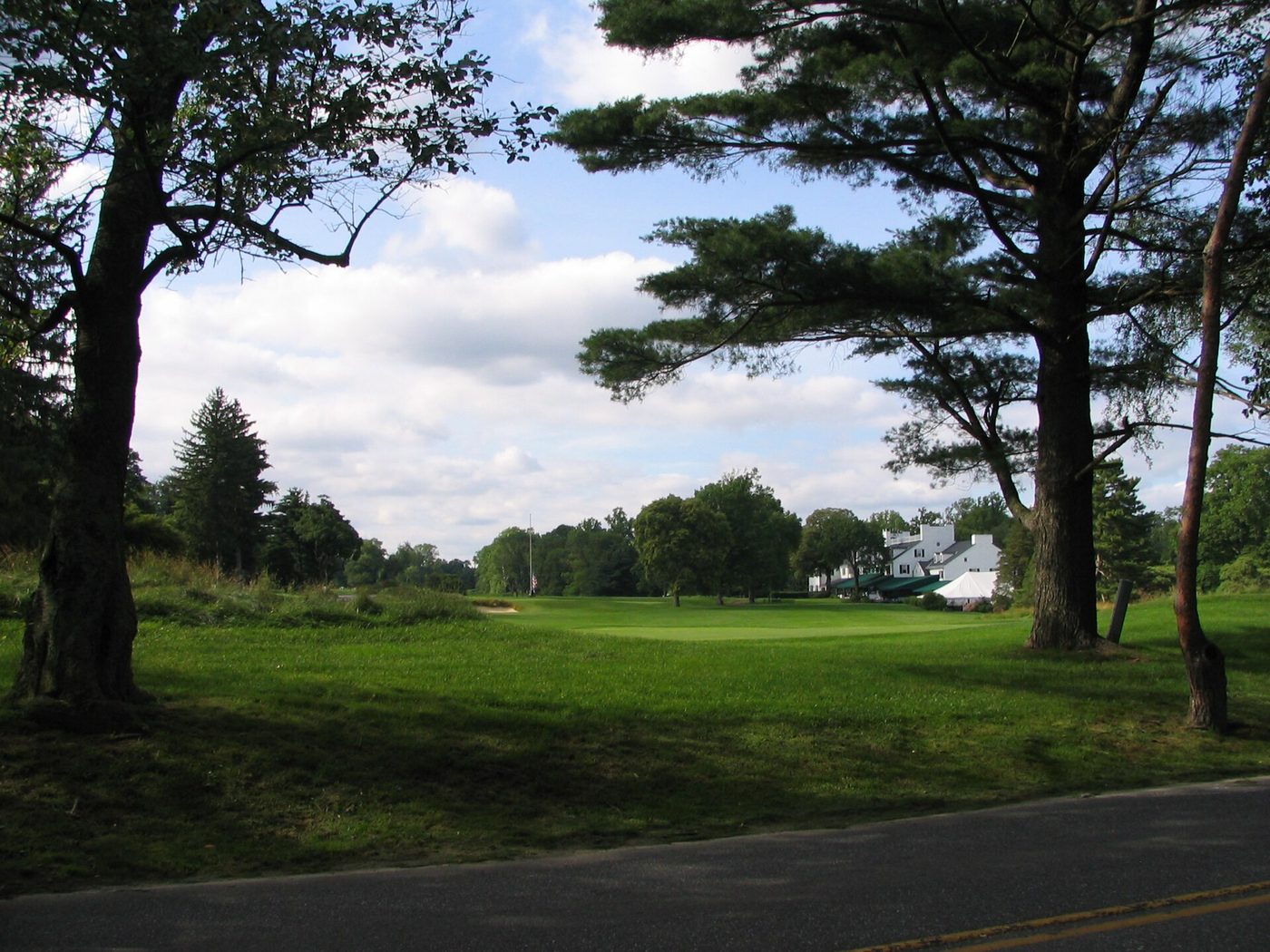
Chicago Golf Club
Wheaton, Ill. · Private · C.B. Macdonald (1895), rebuilt by Seth Raynor (1923) · Consensus 10.25
Another founding member of the USGA and another Macdonald course full of template holes, Chicago Golf Club is the course architects love more than raters do: sixth on the LINKS list, 11th and 12th on the magazine lists. It is flat prairie land made interesting by bold, geometric greens and bunkers, which is exactly the kind of craft an architect notices and a casual visitor might miss. It is also among the most private clubs in the country.
Pebble Beach Golf Links
Pebble Beach, Calif. · Resort (open to the public) · Jack Neville and Douglas Grant (1919) · Consensus 10.25 · $695 green fee
Pebble is the only course in the consensus top ten you can book, and the only one in the top ten of Golf Digest, GOLF and LINKS. That makes it the most important course on this page for most readers. The full notes on how it plays and what it costs are in the next section but one.
How the five major rankings compare
Golfers talk about “the Top 100” as if there were one. There are at least five that matter in the U.S., and they are built very differently.
| List | Current edition | Who votes | What they judge | How often | No. 1 |
|---|---|---|---|---|---|
| Golf Digest, America’s 100 Greatest | 2025-26 | A national panel of course raters; more than 1,700 panelists and nearly 88,000 evaluations over a ten-year cycle | Six criteria: shot options, challenge, layout variety, aesthetics, conditioning and character, with shot options and layout variety counted double | Every two years | Pine Valley |
| GOLF, Top 100 Courses in the U.S. | 2024-25 (published November 2024) | 127 panelists worldwide, handicaps from +5 to 15 | Overall architectural merit, ranked by each panelist’s own judgment | Every two years, alternating with its world list | Pine Valley |
| Golfweek’s Best | 2026 (Modern list June 1, Classic June 8) | A panel of Golfweek raters | Separate lists for Classic (built before 1960) and Modern (1960 and later) courses | Annual | Pine Valley (Classic); Sand Hills (Modern) |
| The LINKS 100 U.S. | 2026 (first U.S. edition, Winter 2026 issue) | Golf course architects: members of the ASGCA, EIGCA and SAGCA | Scored votes from a 400-course ballot; nobody votes on their own designs | New list | Cypress Point |
| Top100GolfCourses, USA | Continuously updated | The site’s editors and reviewer network | Editorial ranking informed by reviews | Rolling | Cypress Point |
Golfweek’s split lists are worth seeing on their own, because they are the only major ranking that keeps old and new courses apart:
| Rank | Golfweek’s Best 2026: Classic (before 1960) | Golfweek’s Best 2026: Modern (1960 and later) |
|---|---|---|
| 1 | Pine Valley (NJ) | Sand Hills (NE) |
| 2 | Cypress Point (CA) | Friar’s Head (NY) |
| 3 | Augusta National (GA) | Pacific Dunes (OR) |
| 4 | National Golf Links of America (NY) | Ohoopee Match Club (GA) |
| 5 | Shinnecock Hills (NY) | Ballyneal (CO) |
| 6 | Oakmont (PA) | Whistling Straits (WI) |
| 7 | Merion East (PA) | Wade Hampton (NC) |
| 8 | Chicago Golf Club (IL) | Bandon Trails (OR) |
| 9 | Fishers Island (NY) | Muirfield Village (OH), tied |
| 10 | Pebble Beach (CA) | Sebonack (NY), tied at 9 |
The modern list is where public golfers do best: Pacific Dunes, Whistling Straits and Bandon Trails are all in its top eight.
Two practical notes on the table. Each magazine also runs a public-only list: Golf Digest’s America’s 100 Greatest Public Courses (2025-26), GOLF’s Top 100 Courses You Can Play (2024-25) and Golfweek’s Best Courses You Can Play (2026). All three put Pebble Beach first, and Pacific Dunes is in the top three of both Golf Digest’s and GOLF’s. They are useful shortcuts, but each reflects only one panel’s view. And Top100GolfCourses’ public ranking pages carry sponsored course placements in among the ranked entries. They are labelled, but you should know which is which before you trust a scroll.
Why do golf course rankings disagree?
Because they ask different people different questions. Golf Digest scores six criteria, including conditioning and challenge. GOLF’s panel votes on overall merit. LINKS polls working architects. Golfweek splits classic and modern courses. Architects tend to reward original design and craft, while magazine panels reward the complete experience of a round.
You can see the fingerprints of each voting pool in the numbers:
- Architects love Pete Dye. The LINKS voters put Kiawah Island’s Ocean Course 12th, Whistling Straits 15th and TPC Sawgrass 20th, and they are the only list with Harbour Town (33rd) and the private Pete Dye Golf Club in West Virginia (24th) in its top 40. The magazines have Kiawah between 30th and 45th, Whistling Straits as low as 55th and Sawgrass as low as 66th. Dye’s courses are visually and strategically daring, which appeals to designers.
- Magazine panels love a championship pedigree. Augusta is No. 2 for Golf Digest and No. 7 for LINKS. Los Angeles Country Club’s North Course, fresh from hosting the 2023 U.S. Open, is ninth and tenth for Top100GolfCourses and GOLF but 35th for the architects. Seminole is 12th for Golf Digest and 31st for LINKS.
- Scoring windows smooth out change. Golf Digest’s 2025-26 ranking draws on nearly 88,000 evaluations collected over a ten-year cycle, so a big restoration takes several editions to show up fully. A newer list reacts faster.
- Access shapes the panel. Raters have to play a course to rate it, and private clubs control how many raters they host each year. Bigger panels mean more evaluations of more courses. Smaller, specialist panels mean more depth on fewer.
- Categories change the question. Golfweek will not rank Pine Valley against Sand Hills at all; they sit on different lists. That is a fair choice. Comparing a 1918 course with a 1995 one is partly comparing the eras they were built in.
Worked example: how the average reshapes the order. Prairie Dunes in Kansas is 25th for Golf Digest, a middling spot for a top course. LINKS has it eighth, GOLF 16th and Top100GolfCourses 15th. Its average of 16.00 puts it 13th in our consensus, above Winged Foot West, which never finishes lower than 18th anywhere but never higher than 13th either. Averaging rewards a course that at least one serious group of experts rates as elite, without letting any single list decide.
The best golf courses in America you can actually play
This is the list most golfers actually need. We took every public, resort and semi-private course that appears on at least one of the four overall lists, 28 in all, and kept their consensus order.
| # | Course | State | Access | Overall consensus | 2026 green fee (18 holes) | Walking |
|---|---|---|---|---|---|---|
| 1 | Pebble Beach Golf Links | CA | Resort | 10 | $695 (+$60 cart for non-guests) | Carts or caddies |
| 2 | Pacific Dunes (Bandon Dunes) | OR | Resort | 18 | $130-$375 resort guests; $180-$425 day guests | Walking only |
| 3 | Pinehurst No. 2 | NC | Resort | 20 | Resort package only; No. 2 adds $250 | Walk (caddie optional) or ride |
| 4 | Ocean Course, Kiawah Island | SC | Resort | 26 | Not published (about $480 for resort guests, reported) | Walking any time; carts available |
| 5 | Whistling Straits (Straits) | WI | Resort | 30 | Not published; quoted by date | Walking only; caddie optional |
| 6 | Bethpage Black | NY | Public (state park) | 31 | $70-$80 NY residents; $140-$160 non-residents | Walking only |
| 7 | TPC Sawgrass (Players Stadium) | FL | Resort/public | 39 | $550 (Jun-Aug) to $775+ (Sep-May) | Cart included; walking needs a $130 caddie |
| 8 | Bandon Dunes | OR | Resort | 40 | Same rates as Pacific Dunes | Walking only |
| 9 | Bandon Trails | OR | Resort | 43 | Same rates as Pacific Dunes | Walking only |
| 10 | Shadow Creek | NV | Resort (MGM hotel guests) | 53 | $1,250 (reported) | Caddie with every group |
| 11 | The Lido (Sand Valley) | WI | Resort guests only, Sunday-Thursday | 55 | Not published | Walking only |
| 12 | Pasatiempo | CA | Semi-private | 64 | $465 walking / $515 riding | Walk or ride |
| 13 | Harbour Town Golf Links | SC | Resort/public | 65 | $378-$651 (dynamic pricing, sample 2026 dates) | Cart included; one forecaddie per group |
| 14 | Erin Hills | WI | Public | 69 | $395-$495 | Walking only |
| 15 | Old Macdonald (Bandon Dunes) | OR | Resort | 77 | Same rates as Pacific Dunes | Walking only |
Green fees as of September 2026 from each course’s rate page or booking engine; ranges run from off-peak to peak. The other 13 ranked courses you can book are Pete Dye Course at French Lick (IN), Sand Valley and Mammoth Dunes (WI), Spyglass Hill (CA), Streamsong Red (FL), the Cascades at the Omni Homestead (VA), Kapalua’s Plantation Course (HI), Pinehurst No. 10 (NC), Lawsonia Links (WI), Chambers Bay (WA), Blackwolf Run’s River Course (WI), The Greenbrier’s Old White TPC (WV) and Gamble Sands (WA).
Before the course notes, a word about how this changes the picture. Golf Digest’s top 100 includes 15 courses you can book, GOLF’s 18 and LINKS’s 25. Golf Digest, GOLF and LINKS each have exactly one in their top ten, and it is Pebble Beach every time.
Pebble Beach Golf Links
Pebble Beach, Calif. · Resort · Jack Neville and Douglas Grant (1919) · Par 72 · White tees 71.7/135 · Green fee $695 plus a $60 cart fee for non-guests (as of September 2026) · Resort guests book 18 months ahead, everyone else 24 hours
What you are paying for is the run from the 4th to the 10th, the finest stretch of coastal holes anyone can book in this country. The 7th is barely 100 yards, a downhill flick to a tiny green with the Pacific behind it that becomes a punch shot in the wind. The 8th asks for a second shot across a chasm to a green perched on the far cliff, and the 18th is a par 5 that curves along the sea wall on Carmel Bay. The greens are small and the fairways are generous; this is not Oakmont. A 15-handicap who keeps the ball in play from the middle tees can score. It is the scale of the place, not the difficulty, that knocks you over.
Getting on: The $695 green fee runs from April 1, 2026 to March 31, 2027 and is the same for resort guests and outsiders, but non-guests also pay a $60 cart fee, so a round starts at $755 before any caddie or tip. A caddie is $175 for a single bag, or you can add a forecaddie at $62.50 a player. Resort guests who meet the minimum stay can book up to 18 months out; everyone else can book only 24 hours ahead, which in practice means checking for gaps the day before. From the white tees the USGA rates it 71.7 with a slope of 135: long enough to matter, and well within reach of a mid-handicapper.
Verdict: Worth it once, if the budget allows. No other course you can book has this many holes you will remember for the rest of your life. It is not good value in any normal sense, and demand around the 2027 U.S. Open in June will make tee times even scarcer that year.
Pacific Dunes (and the rest of Bandon Dunes)
Bandon, Ore. · Resort · Tom Doak (2001) · Par 71, 6,633 yards · Green tees 70.8/135 · Green fee $130-$375 for resort guests, $180-$425 for day guests (as of September 2026) · Walking only, caddies $125 a bag
Pacific Dunes is the highest-ranked course in America that anyone can book without extra conditions attached, and it sits at a resort where four other courses are nearly as good. Bandon Dunes (David McLay Kidd, 1999), Bandon Trails (Coore and Crenshaw, 2005), Old Macdonald (Doak and Jim Urbina, 2010, a tribute to C.B. Macdonald’s template holes) and Sheep Ranch (Coore and Crenshaw, 2020) all share the same rate card. The golf is played on firm fescue on sandy ground above the ocean, and the ball runs. The bump-and-run is often the right shot, and the summer wind off the Pacific can add several clubs. It is walking only, which suits the courses. Use a caddie your first time around.
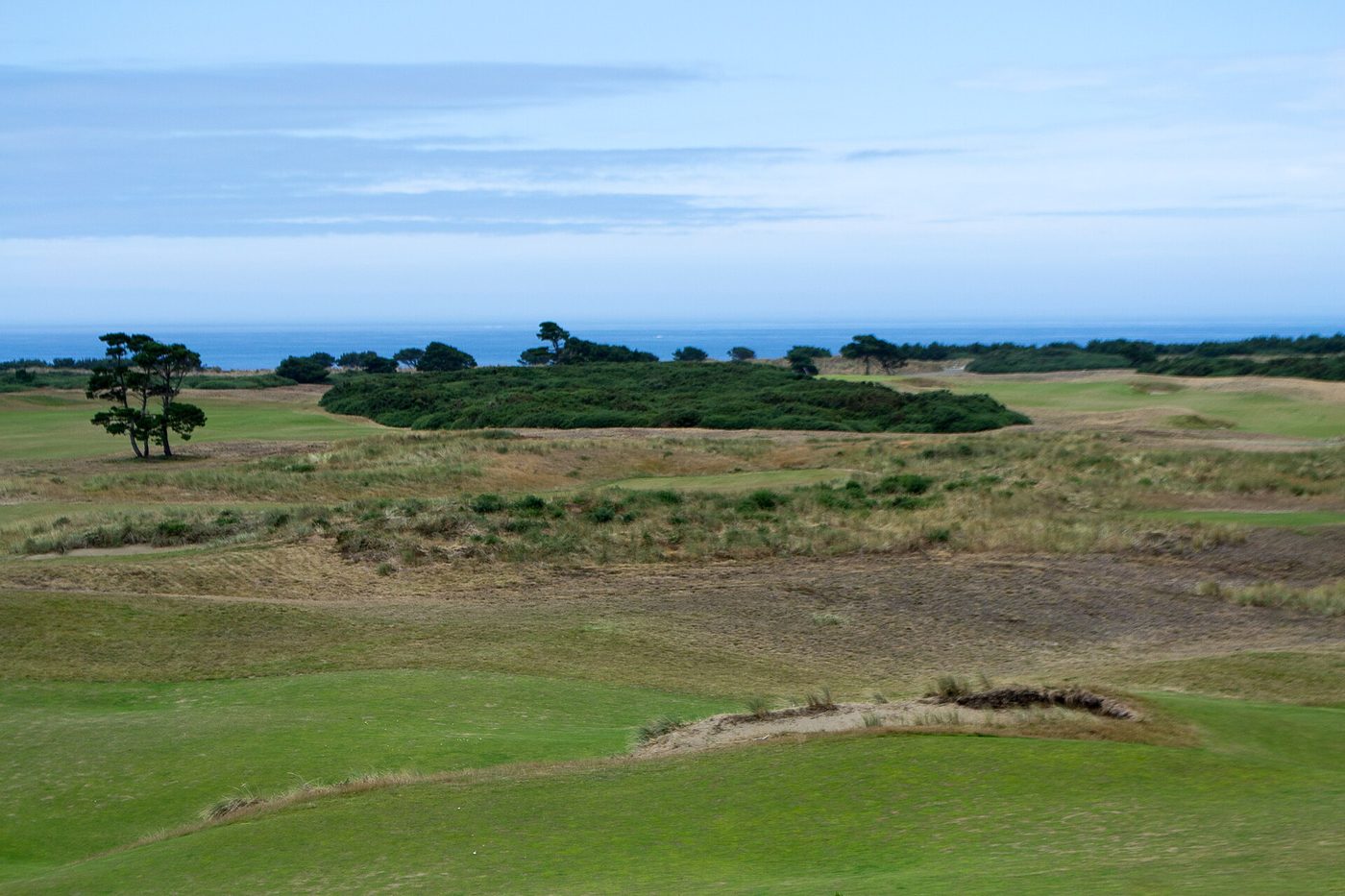
Getting on: One rate card covers every 18-hole course at the resort. Resort guests pay $130 in January and December and $375 from June through September; day guests pay $180 to $425 and can book 21 days out, or earlier if they pay the premium day-guest rate of up to $475. Caddies are $125 a bag plus tip. From the green tees Pacific Dunes is rated 70.8 with a slope of 135, which is modest on paper. The wind is what the numbers leave out.
Verdict: The best value among America’s highly ranked courses, especially in the shoulder months. If you can only make one pilgrimage, this is the one we would choose over Pebble. In peak season a resort guest pays $375 a round, barely half of Pebble’s $695, and the other four courses share the same rate card.
Pinehurst No. 2
Pinehurst, N.C. · Resort (stay required) · Donald Ross (1907, refined by Ross until 1948; restored by Coore and Crenshaw, 2011) · Par 72, 6,961 yards from the blue tees (par 70 and 7,588 yards for the U.S. Open) · Rating/slope not published · No stand-alone green fee; No. 2 adds $250 to a resort package (as of September 2026)
No. 2 is the U.S. Open course you can play. It has hosted the championship in 1999, 2005, 2014 (men’s and women’s in back-to-back weeks) and 2024, and it will again in 2029, 2035, 2041 and 2047. Ross’s famous crowned greens are shaped like upturned saucers, so an approach that is slightly off the middle rolls away into a collection area. From there you have a chip, a putt or a bump with a hybrid, and choosing correctly is the whole challenge. The Coore and Crenshaw restoration removed the rough and brought back the sandy wasteland and wiregrass that Ross originally played through. You will rarely lose a ball here. You will often make bogey from a spot five yards off a green.
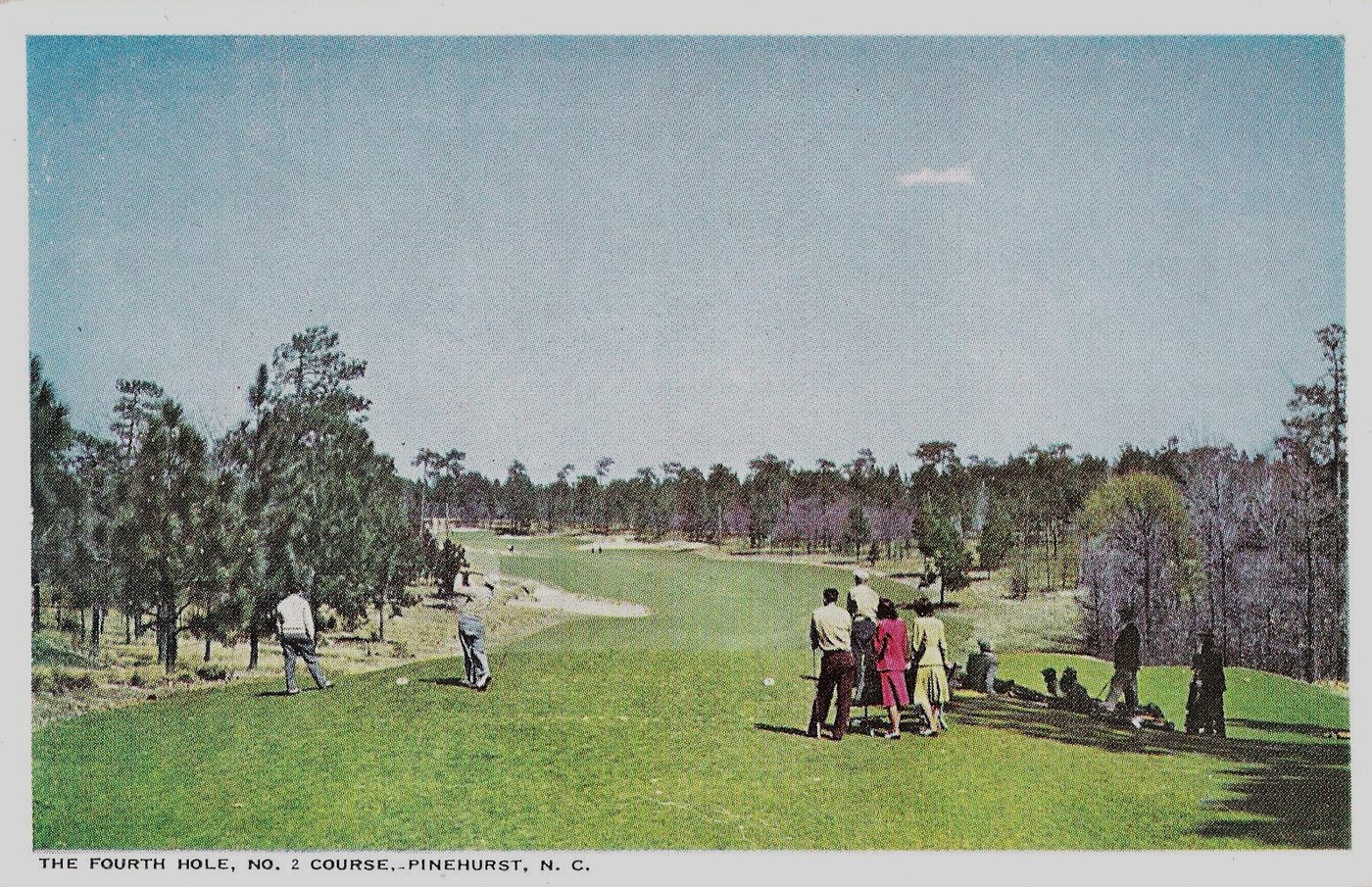
Getting on: You have to stay. Pinehurst’s own FAQ says courses No. 2, 4, 6, 7, 8, 9, 10 and 11 are for members and resort guests, packages carry a two-night minimum, and No. 2 adds a $250 premium to a package. There is no stand-alone green fee. Caddies are optional at $85 a bag, forecaddies $45. Pinehurst does not publish rating and slope for No. 2.
Verdict: Worth it for anyone who follows the majors, and a better round than it looks on television. If No. 2 isn’t in the budget, No. 4 (Gil Hanse, 2018) and No. 10 (Tom Doak, 2024, and already on GOLF’s top 100) give you a different kind of Sandhills golf without the No. 2 premium.
The Ocean Course at Kiawah Island
Kiawah Island, S.C. · Resort · Pete Dye (1991) · Par 72, 7,385 yards · Gold tees 74.7/150 · Green fee not published by the resort (about $480 for resort guests, reported March 2026) · Non-guests book up to 60 days ahead
Dye built the Ocean Course for the 1991 Ryder Cup. It has since hosted the 2012 and 2021 PGA Championships, the second won by Phil Mickelson at 50, and it gets the 2031 edition. The holes run along the dunes with the Atlantic in view, and the wind is the course’s main defence. On a calm morning it is a big but fair test; on a breezy afternoon, carries over the sandy waste areas that were a 5-iron become a 3-wood. This is the course where your tee choice matters more than anywhere else on this list. Move up at least one set from where you normally play.
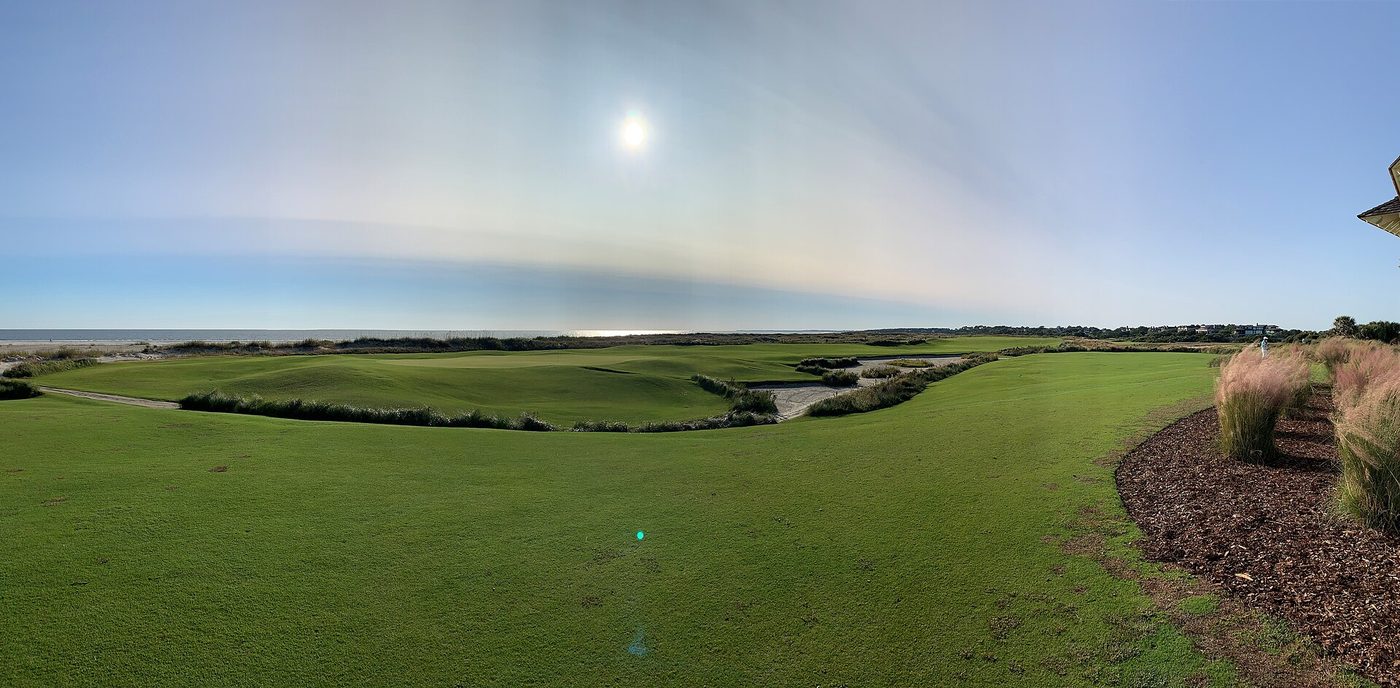
Getting on: The resort does not publish a rack rate for the Ocean Course; a resort-guest rate of about $480 was reported in March 2026. Non-guests can book no more than 60 days ahead. You can walk at any time, and the resort charges no caddie fee but suggests tips of $120 for a caddie or $60 for a forecaddie. From the gold tees it is rated 74.7 with a slope of 150, close to the USGA’s maximum of 155.
Verdict: Worth it for strong players and anyone who loves wind golf. Mid- and high-handicappers will have more fun on the resort’s other courses and should play the Ocean Course only from the forward tees.
Whistling Straits (Straits Course)
Haven, Wis. · Resort · Pete Dye (1998) · Par 72, 7,790 yards · Blue tees 74.2/145 · Green fee not published (quoted by date in the booking engine) · Walking only, caddie optional
Nothing about Whistling Straits is natural. The site was a flat former army airfield on Lake Michigan, and Dye moved enormous amounts of earth to build a mock Irish dunescape along two miles of shoreline, with hundreds of bunkers and roaming sheep. The result has hosted three PGA Championships (2004, 2010 and 2015) and the 2021 Ryder Cup. It is long, the lake wind is constant, and the bunkering is designed to intimidate rather than to be escaped from. It is also a spectacle you won’t find anywhere else in the Midwest.
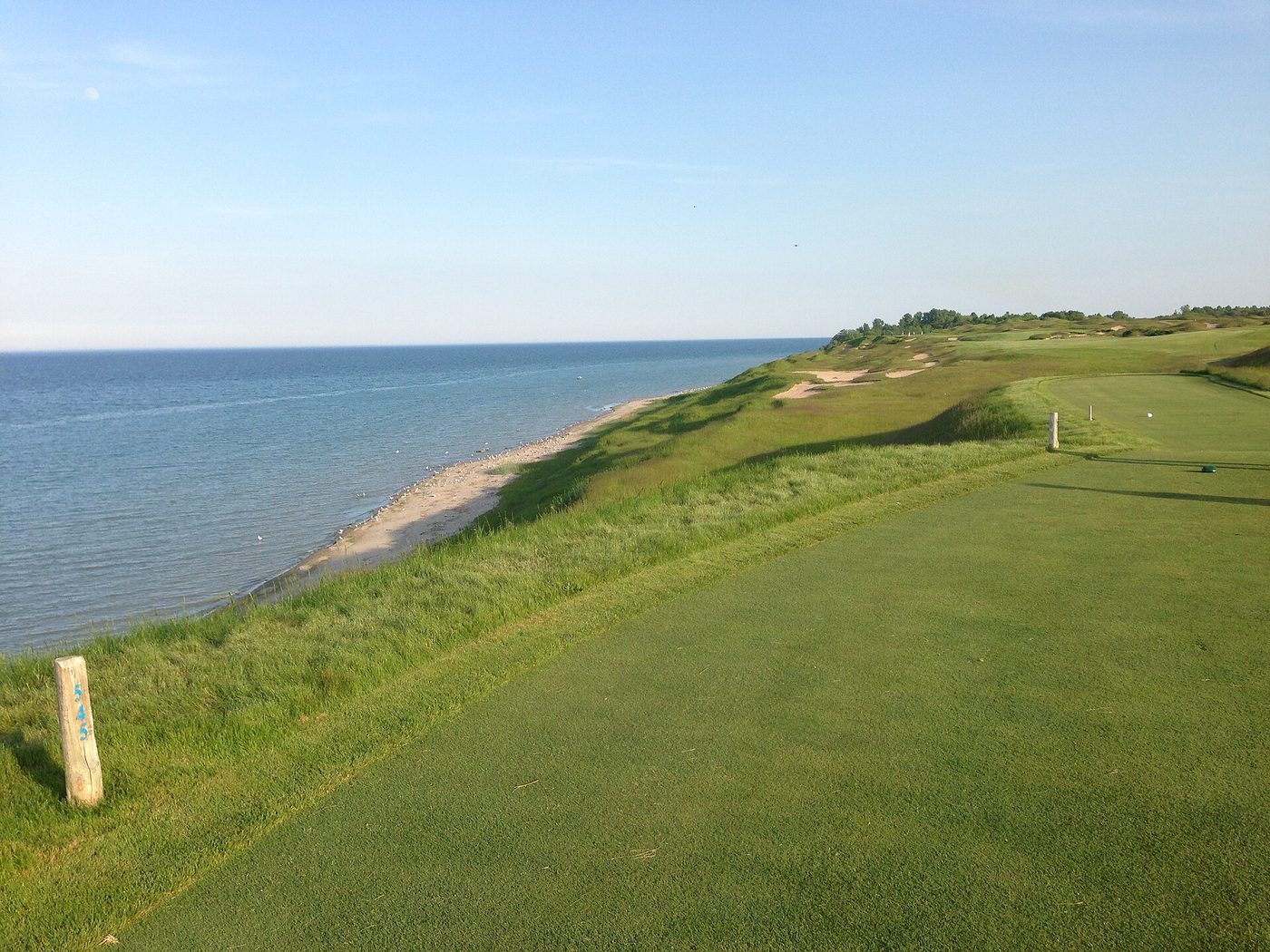
Getting on: Kohler does not publish a rack rate for the Straits Course; the price comes from its booking engine and moves with the date, so price your dates before you plan around them. It is walking only. Caddies are optional at $90 plus tip, and worth it for a first round. From the blue tees it is rated 74.2 with a slope of 145; from the black tees it stretches to 7,790 yards.
Verdict: Worth it for the setting and the championship history. Play it alongside Erin Hills and Sand Valley, which are both in the state and both on these lists, and Wisconsin becomes the best week of public golf in the Midwest.
Bethpage Black
Farmingdale, N.Y. · Public (New York State park) · A.W. Tillinghast (1936) · Par 71, 7,468 yards · Rating/slope not published by the park · Green fee $70-$80 for New York residents, $140-$160 for non-residents, plus a $5 reservation fee (April 2026 price list) · Walking only
Bethpage Black is the reason public golf in America has a seat at the top table. It is a state-park course that hosted the U.S. Open in 2002 and 2009, the PGA Championship in 2019 and the Ryder Cup in 2025, and it gets the PGA Championship again in 2033. It is long, the rough is thick and the greens sit up on plateaus guarded by deep bunkers. The sign at the first tee is not a joke.
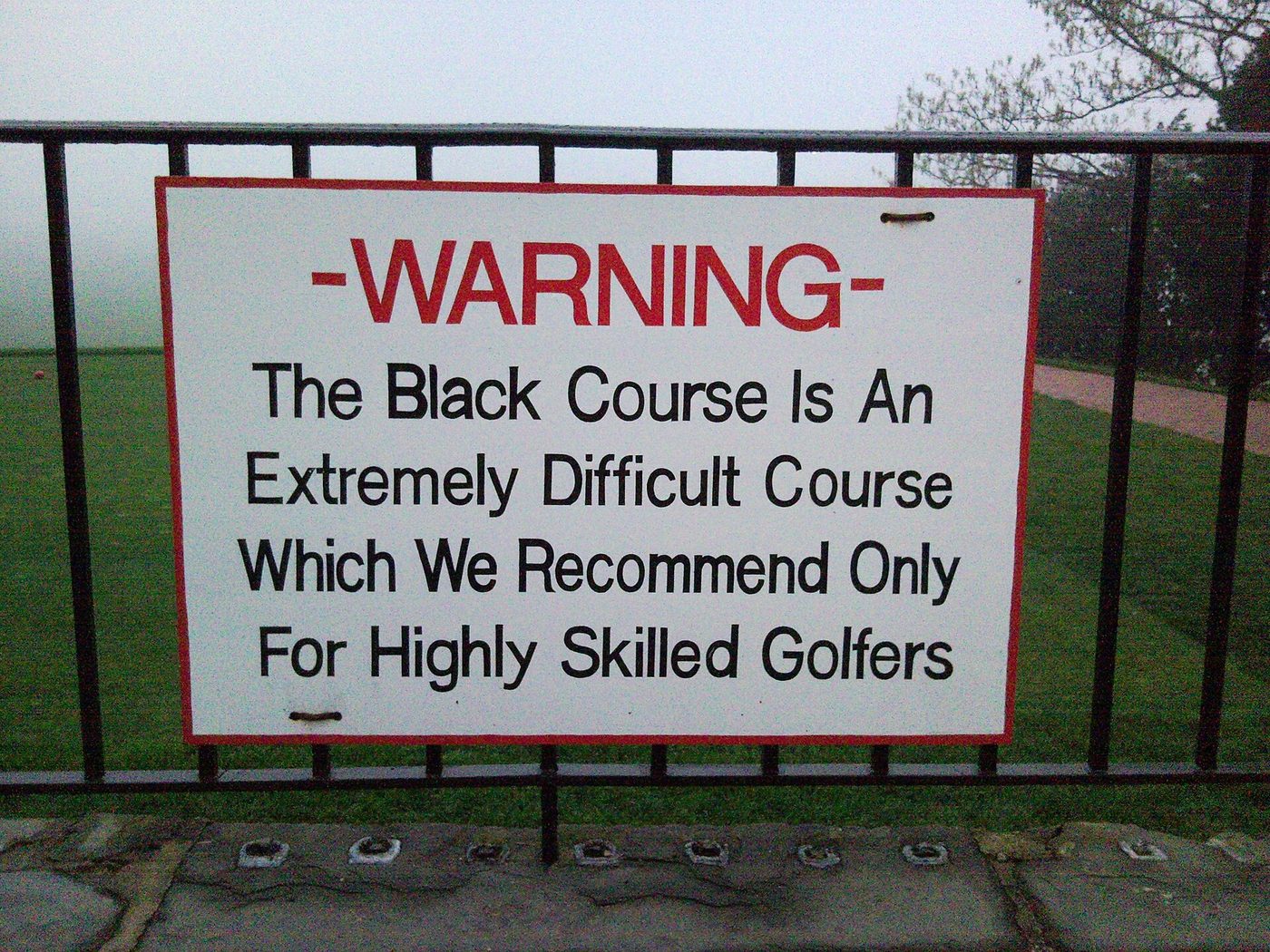
Getting on: It is the cheapest great course in America: $70 on weekdays and $80 at weekends for New York residents, $140 and $160 for everyone else, plus a $5 reservation fee (New York State Parks price list, April 2026). Residents can book seven days ahead and non-residents five, with times released at 7 p.m. You can play the Black only once every 28 days. It is walking only, and from the back tees it measures 7,468 yards.
Verdict: The best value on this page by a distance. For a New York resident it is among the cheapest top-100 rounds in the world. Be honest about your game: this is not a course for a 25-handicap, and walking it is a serious day.
TPC Sawgrass (Players Stadium Course)
Ponte Vedra Beach, Fla. · Resort/public · Pete Dye (1980) · Par 72, 7,352 yards · Blue tees 73.9/148 · Green fee $550 (June-August) to $775 and up (September-May), cart, forecaddie and range balls included (current rates, September 2026)
Home of the Players Championship every March, Sawgrass is the course where the average golfer can stand where the pros stand and face the same shot. The 17th, the island green usually credited to Alice Dye, needs only a wedge or short iron, but there is nowhere to miss, and a drop zone waits for anyone whose ball finds the water. The rest of the course is more than one hole: the par-5 16th and the lake-lined 18th make it one of the most dramatic finishes you can book.
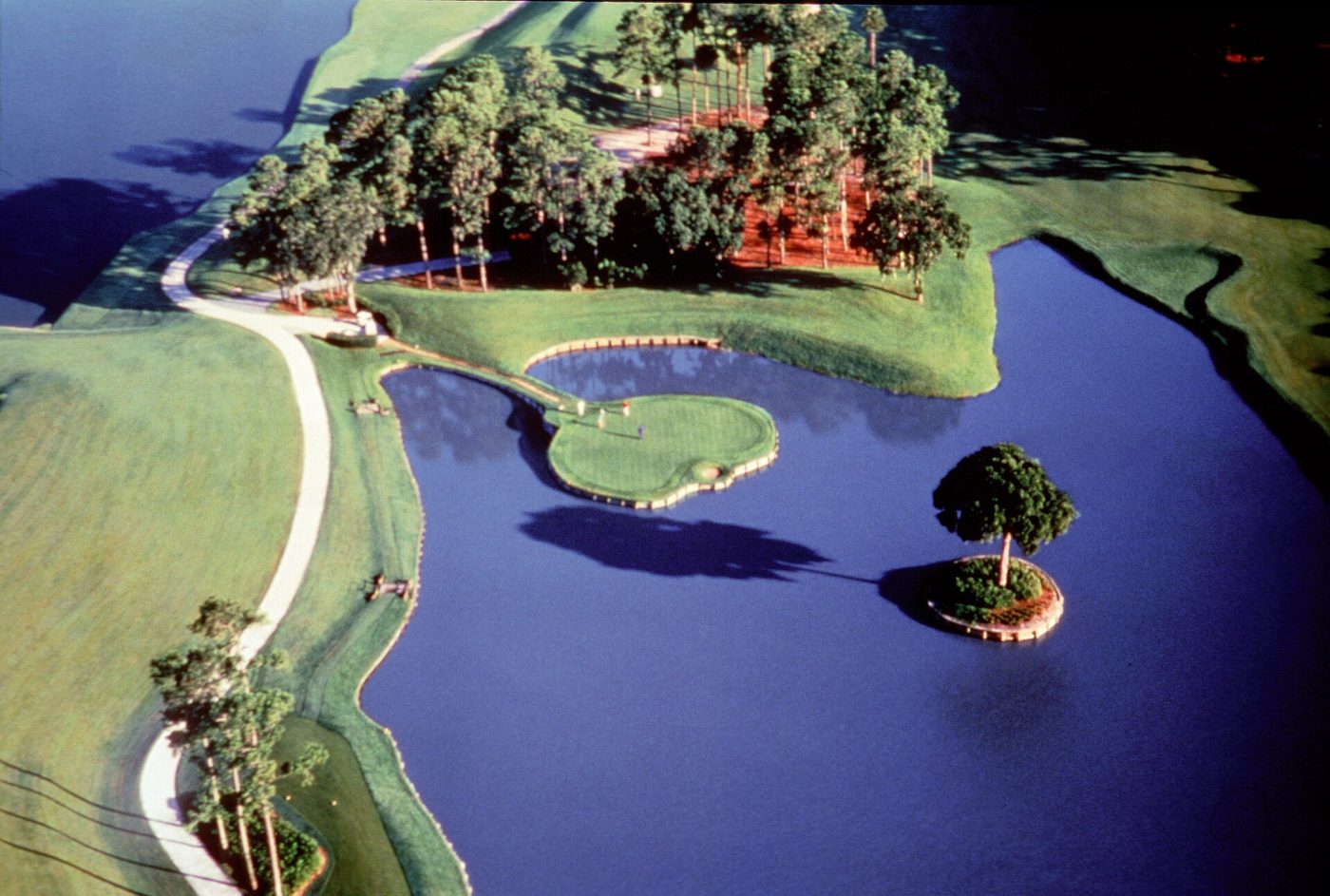
Getting on: Current rates start at $775 from September through May and drop to $550 from June through August, with a cart, forecaddie and range balls included. Stay at qualifying lodging and you can book 12 months out; otherwise you get 14 days. Walking means a $130 caddie upgrade. From the blue tees it is rated 73.9 with a slope of 148.
Verdict: Worth it for Players fans, and the 17th is a genuine experience. As pure architecture it is ranked well below Pebble, Bandon and Pinehurst, and the peak price is hard to justify on the golf alone. Go in summer, when the rate drops.
Shadow Creek
North Las Vegas, Nev. · Resort (MGM Resorts hotel guests) · Tom Fazio (1990) · Par 72, 7,560 yards · Back tees 73.2/138 (reported) · Green fee $1,250 (reported April 2026), limousine included
Steve Wynn had Tom Fazio build a forest in the desert: thousands of transplanted trees, streams and lakes on a flat, featureless patch of Nevada. Golf Digest ranks it 24th; GOLF has it 80th. That split is the whole story. It is extraordinary as a piece of construction and immaculate in condition, and the architects are unimpressed. Access is limited to guests at MGM’s Las Vegas hotels.
Getting on: The fee was a reported $1,250 in 2026, including a limousine transfer, and a caddie, paid separately, goes out with every group. You must be staying at an MGM Resorts property in Las Vegas to book. From the back tees it is 7,560 yards, reported at 73.2 with a slope of 138.
Verdict: Not worth it at that price unless money is no object. For the same money you could play Pacific Dunes about three times in peak season.
Can you play the private courses on these lists?
Almost always only as a member’s guest. Pine Valley, Cypress Point, Augusta National and the rest of the private top 10 sell no public tee times. The realistic ways in are an invitation from a member, a charity event the club agrees to host, or a spectator ticket when it holds a championship.
In order of how likely each is for an ordinary golfer:
- Buy a ticket to a championship. It is not a round, but it is how most people see these courses. Masters tickets are sold through an annual application and random draw. Upcoming U.S. Opens at private venues include Merion in 2030, Oakmont in 2033 and Shinnecock Hills in 2036.
- Know a member. Most private clubs require the member to play with you; a few allow unaccompanied guests on restricted days. There is no shortcut, and cold emails to the pro shop do not work.
- Play qualifying or amateur events. USGA and state golf association qualifiers are sometimes held at ranked private clubs. You need a Handicap Index low enough to enter.
- Charity auctions. Foursomes at ranked private clubs appear at charity auctions, usually hosted by a member, and they rarely go cheap.
- Play the public course built in the same style. This is the option you control, and it is better than it sounds.
| If you can’t get on… | Play this instead | Why |
|---|---|---|
| Cypress Point | Pebble Beach, Spyglass Hill or Pasatiempo | The same Monterey coast. Pasatiempo is also Alister MacKenzie (1929); he lived beside its 6th fairway |
| National Golf Links / Chicago Golf Club | Old Macdonald (Bandon) or The Lido (Sand Valley) | Both are built from C.B. Macdonald’s template holes; The Lido recreates his lost 1914 course on Long Island |
| Sand Hills | Bandon Trails, Sand Valley or Streamsong Red | All three are Coore and Crenshaw courses on natural sandy ground |
| Shinnecock Hills | The Cascades at the Omni Homestead | Another William Flynn design (1923), ranked 79th by LINKS |
| Oakmont | Bethpage Black | The hardest championship test that sells a public tee time |
| Seminole | Pinehurst No. 2 | Donald Ross at his best, and it takes public bookings |
Which state has the most top-ranked golf courses?
New York, with 14 courses on the LINKS 100 U.S., one more than California’s 13. New Jersey and Wisconsin have six each. Count only the courses you can book, though, and the picture flips: all six Wisconsin courses are public or resort courses. Of New York’s 14, only one is: Bethpage Black.
| State | Courses on the LINKS 100 U.S. | Bookable by the public | The bookable ones |
|---|---|---|---|
| New York | 14 | 1 | Bethpage Black |
| California | 13 | 3 | Pebble Beach, Spyglass Hill, Pasatiempo (semi-private) |
| New Jersey | 6 | 0 | none |
| Wisconsin | 6 | 6 | Whistling Straits, Erin Hills, Blackwolf Run (River), Sand Valley, Mammoth Dunes, The Lido |
| Pennsylvania | 5 | 0 | none |
| Massachusetts | 5 | 0 | none |
| Ohio | 5 | 0 | none |
| Oregon | 4 | 4 | Pacific Dunes, Bandon Dunes, Bandon Trails, Old Macdonald |
| South Carolina | 4 | 2 | Kiawah Island (Ocean), Harbour Town |
| Florida | 4 | 2 | TPC Sawgrass, Streamsong Red |
Counted from The LINKS 100 U.S., 2026 edition. In all, 31 states have at least one course on the list.
That is the most useful fact on this page if you are choosing where to spend a golf budget. The Northeast holds the greatest concentration of great golf, and almost all of it is private. The Midwest and the Pacific Northwest hold the greatest concentration of great golf you can play. Wisconsin, with Kohler’s courses on Lake Michigan and Sand Valley in the center of the state, has more bookable courses on the LINKS 100 than any other state.
The best courses by type: links, oceanfront, desert and mountain
Rankings lump every kind of course together, but most golfers choose by type as well as quality.
Links and links-style. A true links is the sandy, treeless strip of coast that “links” the beach to farmland, the ground where golf began in Scotland. The turf is firm fescue, the ball runs and the wind shapes every shot. America has very little true links land. The closest thing you can play is Bandon Dunes, where the five courses sit on sand dunes above the Pacific. Chambers Bay near Tacoma, built in a former sand and gravel quarry and host of the 2015 U.S. Open, plays like links. Whistling Straits looks like links but was built by machine. Sand Valley delivers the same firm, sandy golf in the middle of Wisconsin, a long way from any sea.
Oceanfront. Pebble Beach, Cypress Point, Pacific Dunes, the Ocean Course at Kiawah and Monterey Peninsula Country Club’s Shore Course lead this group; of those, Cypress Point and the MPCC Shore Course are private. Kapalua’s Plantation Course on Maui (Coore and Crenshaw, 1991) is the ranked oceanfront course you can play in Hawaii.
Desert. The ranked desert courses are mostly private: Estancia Club in Scottsdale and The Quarry at La Quinta both appear on Golf Digest’s list. Shadow Creek sits in the desert but was built to look like anywhere but. Gamble Sands in central Washington, a David McLay Kidd course on wide, rolling high-desert sand, is the one to book, and it made GOLF’s top 100.
Mountain. The ranked mountain courses are almost all private too: Gozzer Ranch in Idaho, Castle Pines and Cherry Hills in Colorado, Wade Hampton in North Carolina and Rock Creek Cattle Company in Montana. For a mountain round you can book, the Cascades at the Omni Homestead in Virginia and The Greenbrier’s Old White TPC in West Virginia are both historic resort courses, and both are ranked. At altitude the ball flies noticeably farther in the thinner air, so a Denver round needs yardage adjustments that a sea-level golfer will not expect.
The hardest, oldest and most expensive courses on the lists
The hardest. Difficulty is measured by the USGA’s Course Rating, the score a scratch golfer is expected to shoot, and its Slope Rating, which measures how much harder the course plays for a bogey golfer than for a scratch player. Slope runs from 55 to 155, and 113 is standard. Oakmont, Pine Valley, Bethpage Black, Kiawah’s Ocean Course and Whistling Straits are the courses on these lists with the fiercest reputations, and the published ratings of the three you can book show why: Kiawah plays 74.7/150 from the gold tees and Whistling Straits 74.2/145 from the blue. Here is what those ratings mean in strokes. Your Course Handicap is your Handicap Index × (Slope ÷ 113) + (Course Rating − Par). A golfer with a 15.0 Index gets 15 strokes on a course of standard difficulty rated at par. At Pebble Beach from the white tees (71.7/135, par 72) that becomes 18. At Kiawah’s Ocean Course from the gold tees (74.7/150, par 72) it becomes 23, eight more than on an average course, before the wind blows at all.
The oldest. Several clubs on these lists date from the 1890s. Chicago Golf Club (1895), The Country Club in Brookline (1895), Newport Country Club (1894), Myopia Hunt Club (1894), Shinnecock Hills (1891) and Maidstone (1891) were all founded before 1900. “Oldest golf course in America” is a contested title that turns on whether you mean the oldest club, the oldest course in continuous play or the oldest original layout. Among the ranked courses you can book, Pinehurst No. 2 (1907) is the oldest, and The Greenbrier’s Old White (1914) is next.
The most expensive. Shadow Creek, at a reported $1,250 including a limousine transfer, is the most expensive ranked course you can play, followed by TPC Sawgrass (from $775 in season, cart and forecaddie included) and Pebble Beach ($695, plus $60 for a cart if you aren’t a resort guest). Budget for the extras: a caddie at a walking-only course typically adds $90 to $175 per bag before a tip.
The newest. The Lido at Sand Valley opened in 2023 and Pinehurst No. 10 in 2024, and both are already on at least one national list. Among private clubs, Ohoopee Match Club and Congaree (both 2018) and Nebraska’s CapRock Ranch are the youngest courses near the top of the lists.
The famous holes. Pebble’s 7th, Cypress Point’s 16th, the 12th at Augusta (Golden Bell, the middle of Amen Corner), Sawgrass’s 17th and the Church Pews at Oakmont are the most famous single holes on these lists. Two of the five are on courses you can book.
How to choose which top-ranked course to play
Here is how we would choose, by what kind of golfer you are:
- One round, budget no object: Pebble Beach. It has the most memorable holes you can book, and it is the only public-access course in the top 10 of three major lists.
- Best golf for the money: Bandon Dunes. Five ranked courses, walking only, and the same rate card for all of them. Go in the shoulder season.
- Best value, full stop: Bethpage Black. A major championship course at state-park prices, if your game is up to it.
- For architecture lovers: Pinehurst No. 2, then Old Macdonald and The Lido for Macdonald’s template holes, and Pasatiempo for MacKenzie.
- For the hardest test: Kiawah’s Ocean Course on a windy afternoon, or Bethpage Black from the back tees.
- For a Tour fan: TPC Sawgrass, for the chance to stand on the 17th tee you have watched every March.
- For a Midwest week: Wisconsin. Whistling Straits, Erin Hills and Sand Valley’s courses put six ranked courses within a few hours’ drive.
- For a mid- or high-handicapper: the Bandon courses and Pinehurst No. 2 are more playable than their rankings suggest, because a lost ball is rare. Bethpage Black and the Ocean Course are not.
What do the top-ranked public courses cost?
As of September 2026, 18 holes at the ranked courses you can book costs anywhere from $70, a weekday round at Bethpage Black for a New York resident, to a reported $1,250 at Shadow Creek. Pebble Beach is $695 plus a $60 cart fee for non-guests, and TPC Sawgrass starts at $775 in season.
| Course | Green fee (as of September 2026) | What’s included | Hidden extras |
|---|---|---|---|
| Pebble Beach | $695 | Green fee; non-guests add a $60 cart fee | Caddie $175 a bag or forecaddie $62.50, plus tip |
| Bandon Dunes courses | $130-$375 resort guests; $180-$425 day guests | Green fee (walking only) | Caddie $125 a bag plus tip |
| Pinehurst No. 2 | No stand-alone fee | $250 premium on a resort package (two-night minimum) | Caddie $85 (optional), forecaddie $45 |
| Kiawah Ocean Course | Not published (about $480 for resort guests, reported) | No caddie fee | Suggested tips: $120 caddie, $60 forecaddie |
| Whistling Straits | Not published; quoted by date | Walking only | Caddie $90 plus tip (optional) |
| Bethpage Black | $70-$80 residents; $140-$160 non-residents | Green fee | $5 reservation fee; one Black round per 28 days |
| TPC Sawgrass | $550-$775+ | Cart, forecaddie, range balls | $130 caddie upgrade to walk; forecaddie tip |
| Shadow Creek | $1,250 (reported) | Limousine transfer | MGM hotel stay required; caddie paid separately |
Green fees at resort courses change by season and sometimes by day, so treat these as the range to expect and confirm on the course’s own site before you book.
How to book a tee time at a top-100 public course
- Decide whether you’ll stay at the resort. At most of these courses, hotel guests book months ahead and outsiders book days ahead or take what’s left. Pebble Beach lets resort guests book 18 months ahead and everyone else 24 hours ahead; TPC Sawgrass gives qualifying lodging guests 12 months and everyone else 14 days; Bandon’s day guests get 21 days.
- Put the moment the window opens in your calendar. Bethpage releases times at 7 p.m.; be online when it does.
- Go off-season or midweek. Bandon’s resort-guest rate falls from $375 in summer to $130 in winter, and TPC Sawgrass drops from $775 to $550 in its summer season. Availability opens up too.
- Travel as a single or a twosome if you can. Filling a gap in someone else’s group is far easier than finding four open spots.
- Ask about replay rates. Erin Hills, for one, sells a same-day second round for $295 against a $495 peak green fee. That second round is often the best-value golf of the trip.
- Check the championship calendar. Courses close for weeks around big events. Pebble hosts the 2027 U.S. Open in June, and Sawgrass closes around the Players each March.
- Book the caddie with the tee time at walking-only courses. On a first visit, a good caddie is worth several shots and most of the stories.
Frequently asked questions
What is the best golf course in America?
Pine Valley Golf Club in New Jersey, by consensus. It is No. 1 on Golf Digest’s and GOLF’s current lists and second on LINKS and Top100GolfCourses, which both put Cypress Point first. Across all four lists, Pine Valley’s average position is 1.50 to Cypress Point’s 1.75.
What is the best public golf course in America?
Pebble Beach Golf Links. It is the only public-access course in the top 10 of Golf Digest, GOLF and LINKS, and it is consensus No. 10 overall. Pacific Dunes at Bandon Dunes (18th) and Pinehurst No. 2 (20th) are the next-highest you can book.
How many of the top 100 golf courses in America are public?
It depends on the list: 15 of Golf Digest’s top 100, 18 of GOLF’s and 25 of the LINKS 100 U.S. can be booked by the public, counting resort and semi-private courses. Only one course you can book, Pebble Beach, makes the top 10 of those three lists.
Which golf course ranking is the most respected?
There is no single answer. Golf Digest’s America’s 100 Greatest, published since 1966, is the oldest and draws on the most evaluations. GOLF’s and Golfweek’s are the other long-running magazine lists. The LINKS 100 U.S. is the only one voted on solely by golf course architects. Reading them together, as we do above, is more reliable than trusting any one.
Can you play Augusta National?
Not unless a member invites you. Augusta National is private and sells no tee times. The public way to see it is a Masters ticket, sold through an annual application and random draw on the tournament’s website.
What is the most expensive golf course to play in the US?
Shadow Creek in North Las Vegas, at a reported $1,250 a round including a limousine transfer, and you must be staying at an MGM Resorts hotel to book it. Among courses with no lodging requirement, TPC Sawgrass (from $775 in peak season) and Pebble Beach ($695 plus a $60 cart fee for non-guests) are the most expensive.
Which state has the most top 100 golf courses?
New York, with 14 on the LINKS 100 U.S., followed by California with 13. For courses you can book, Wisconsin leads: all six of its courses on that list take public tee times.
How often are golf course rankings updated?
Golf Digest and GOLF each publish a new U.S. list every two years. Golfweek’s Best is annual. Top100GolfCourses updates its rankings on a rolling basis. We re-check this page against every new edition within two weeks of it being published.
Is Pebble Beach worth the green fee?
Once, if you can afford it. Nothing else you can book matches holes 4 through 10 on the Pacific. On pure value, Bandon Dunes and Bethpage Black offer far more golf per dollar, and Pacific Dunes is ranked almost as highly by the same panels.
Our verdict
The best golf courses in America are, overwhelmingly, private clubs laid out between 1895 and 1935. Pine Valley and Cypress Point are the two names every list agrees on, and nothing you can book will change that. But the gap between the private top ten and the best you can play is narrower than the price of a membership suggests. Pebble Beach sits inside every major top ten. Pacific Dunes and Pinehurst No. 2 are in the consensus top 20. Bethpage Black puts a major-championship course on a state-park rate card.
If you are planning one great round, pick Pebble Beach. If you are planning a great week, go to Bandon Dunes. And if you live within reach of Long Island and your game is ready, Bethpage Black is the best golfing value in the country.
Sources
- America’s 100 Greatest Golf Courses, 2025-26, Golf Digest
- Top 100 Courses in the U.S., 2024-25, GOLF
- The LINKS 100 U.S., LINKS Magazine
- Golfweek’s Best 2026 Modern (June 1, 2026) and Classic (June 8, 2026) lists, as republished by USA TODAY Network outlets
- What exactly are Course Rating and Slope Rating?, USGA
- America’s 100 Greatest Public Golf Courses, 2025-26, Golf Digest
- Top 100 Courses You Can Play in the U.S., 2024-25, GOLF
- Introducing The LINKS 100 U.S. (methodology), LINKS Magazine
- Rates and FAQs, Pebble Beach Resorts; rating and slope from the USGA Course Rating and Slope Database
- Green fees, Bandon Dunes Golf Resort
- FAQs, Pinehurst Resort
- Bethpage State Park, New York State Parks (2026 golf price list)
- Ocean Course FAQ, Kiawah Island Golf Resort
- FAQ, TPC Sawgrass
- Golf rates and policies, Destination Kohler
- The Lido, Sand Valley
- Rates, Pasatiempo Golf Club; rates and fees, Erin Hills; Harbour Town Golf Links, Sea Pines Resort
- How much does it cost to play Shadow Creek?, The Golf News Net, April 2, 2026
- Masters tickets, Augusta National Golf Club
- Top100GolfCourses USA ranking (top100golfcourses.com), checked September 10, 2026
Image credits
| Image | Photographer | Licence | Source |
|---|---|---|---|
| Pebble Beach Golf Links, 18th green (featured image) | WilliamFMeyer | CC BY-SA 4.0 | Wikimedia Commons |
| Cypress Point Club, 16th hole | schnaars | CC BY-SA 2.0 | Wikimedia Commons |
| Shinnecock Hills Golf Club clubhouse | Roger Rowlett | CC BY-SA 2.5 | Wikimedia Commons |
| Augusta National Golf Club, 10th hole (Camellia) | Mbrooks | public domain | Wikimedia Commons |
| Merion Golf Club, Ardmore, Pennsylvania | Mark E. Wangerin | public domain | Wikimedia Commons |
| The fourth hole, Pinehurst No. 2 (postcard) | State Archives of North Carolina | no known restrictions | Wikimedia Commons |
| Bandon Dunes Golf Resort, Oregon | Visitor7 | CC BY-SA 3.0 | Wikimedia Commons |
| Ocean Course at Kiawah Island, 18th green | N75746 | CC BY-SA 4.0 | Wikimedia Commons |
| Whistling Straits, par 5 along Lake Michigan | Baybay1901 | CC BY-SA 4.0 | Wikimedia Commons |
| Bethpage Black warning sign | E S Lee | CC BY 2.0 | Wikimedia Commons |
| TPC Sawgrass 17th hole | unknown photographer | public domain | Wikimedia Commons |