Whistling Straits’ Straits Course in Haven, a public Pete Dye course on Lake Michigan, is the highest-ranked of the best golf courses in Wisconsin: No. 26 on Golf Digest’s 2025-26 list of America’s 100 Greatest and No. 4 on its public list. Erin Hills, The Lido at Sand Valley, Blackwolf Run’s River Course and Sand Valley’s other courses come next.
That first sentence is the whole story of Wisconsin golf. In most states, the course at the top of the rankings is a private club you’ll never see. Here it’s a course you can book, and so is the next one, and the one after that. Wisconsin has seven courses in the top 50 of Golf Digest’s 2025-26 public list and eight in the top 30 of GOLF’s 2024-25 list of courses you can play. No other state has as many courses in the top 30 of GOLF’s list, and almost all of them sit within a three-hour drive of Milwaukee.
The National Golf Foundation counts 528 golf courses in Wisconsin, and 88% of them are open to the public. That’s a higher share than golf-mad Michigan. The famous names aren’t cheap, and the season is short, but the depth is extraordinary, and the city and county courses around Milwaukee and Madison are some of the best-value golf in the Midwest.
How we built this. The rankings come from Golf Digest’s America’s 100 Greatest and 100 Greatest Public Courses (2025-26), GOLF’s Top 100 Courses in the U.S. and Top 100 Courses You Can Play (2024-25), and Golfweek’s Wisconsin lists (2024 edition), which we compare nationally in our guide to every major golf course ranking. Green fees come from each course’s own rate page where one is published, checked in October 2026, at the end of the 2026 season. Two of the biggest names, Kohler’s courses and Sand Valley, sell most tee times through booking engines rather than public rate cards; where that’s the case we say so, and where a figure comes from a third party we say “reported”. We haven’t played every course here. Where a note leans on rankings, published data and the architecture rather than our own scorecards, we say so.
At a glance
- Best golf course in Wisconsin: Whistling Straits (Straits Course), Haven, public; No. 26 on Golf Digest’s America’s 100 Greatest and No. 4 on its public list; walking only, caddie $90 plus tip
- Best course with a published price: Erin Hills, the 2017 U.S. Open venue, $495 in peak season and $395 in the shoulder months, walking only
- Hardest course to get on: The Lido at Sand Valley, a recreation of a lost 1917 masterpiece, for resort guests only, Sunday to Thursday
- Best value among the ranked courses: Lawsonia Links, a 1930 course on Green Lake, $140 in summer and $70 to $85 in spring and late autumn
- Best walking resort: Sand Valley, five courses and a short course on sand in the middle of the state, walking only, about $295 to $325 in peak season
- Cheapest good round: Madison’s city courses, $51 to $56 walking, and Milwaukee County’s Brown Deer Park, where Tiger Woods made his professional debut, from $52 in autumn
- Best months: mid-June to mid-September for conditions; May and late September to October for shoulder rates
The best golf courses in Wisconsin at a glance
The table puts the national top-100 courses first, then the best of the rest by region. “Access” is what a golfer without a membership can expect: private means members and their guests only; resort means the course belongs to a resort but outside golfers can book; guests only means you need a room; public means anyone can book; “muni” marks a city- or county-owned course.
| Course | Region | Access | Architect (year) | Green fee (Oct 2026) | Ranking or note |
|---|---|---|---|---|---|
| Whistling Straits (Straits) | Kohler / Haven | Resort | Pete Dye (1998) | Not published (booking engine); caddie $90 | GD U.S. No. 26; GD public No. 4; GOLF you-can-play No. 10 |
| Erin Hills | Erin | Public | Michael Hurdzan, Dana Fry and Ron Whitten (2006) | $395-$495; replay $295 | GD U.S. No. 49; GD public No. 10 |
| The Lido | Sand Valley | Guests only (Sun-Thu) | Tom Doak and Brian Schneider, after C.B. Macdonald (2023) | Not published; caddie required | GD U.S. No. 69; GOLF you-can-play No. 4 |
| Blackwolf Run (River) | Kohler | Resort | Pete Dye (1988) | Not published (booking engine) | GD public No. 17 |
| Sand Valley | Sand Valley | Resort | Bill Coore and Ben Crenshaw (2017) | About $295-$325 peak | GD public No. 21; GOLF you-can-play No. 20 |
| Mammoth Dunes | Sand Valley | Resort | David McLay Kidd (2018) | About $295-$325 peak | GD public No. 25; GOLF you-can-play No. 26 |
| Lawsonia Links | Green Lake | Public | William Langford and Theodore Moreau (1930) | $70-$140 | GOLF U.S. No. 89; GOLF you-can-play No. 16 |
| Milwaukee Country Club | Milwaukee | Private | Harry Colt and Charles Alison (1929) | Members’ guests only | GD U.S. No. 97; GOLF U.S. No. 78 |
| SentryWorld | Stevens Point | Public | Robert Trent Jones Jr. (1982) | $375 with cart, range and food | GD public No. 49; 2023 U.S. Senior Open |
| Whistling Straits (Irish) | Kohler / Haven | Resort | Pete Dye (2000) | Not published (booking engine) | Golfweek WI public No. 8 |
| University Ridge | Madison | Public | Robert Trent Jones Jr. (1991) | $75-$145 with cart | Golfweek WI public No. 11 |
| Brown Deer Park | Milwaukee | Muni (county) | George Hansen (1929) | $52-$81; county cardholders less | Tiger Woods’ pro debut, 1996 |
| Geneva National | Lake Geneva | Resort | Palmer, Player and Trevino courses (1991) | Hotel guests $80-$215 | Three signature courses |
Rankings: Golf Digest America’s 100 Greatest and 100 Greatest Public (2025-26); GOLF Top 100 in the U.S. and Top 100 You Can Play (2024-25); Golfweek’s Best Wisconsin lists (2024). Fees checked October 2026 from each course’s rate page; “about” figures for Sand Valley come from its FAQ.
Three things jump out. First, four of the six courses at the top of the table are at two resorts, Kohler and Sand Valley, so a Wisconsin golf trip mostly means choosing between them, or doing both. Second, the state’s best private club, Milwaukee Country Club, ranks below three public courses nationally, which almost never happens. Third, the price gap is enormous: you can pay $495 at Erin Hills on a Saturday in July and $51 to walk Yahara Hills in Madison the next morning, and both are good golf.
What is the best golf course in Wisconsin?
Whistling Straits’ Straits Course, a public Pete Dye design on Lake Michigan near Kohler, is the best golf course in Wisconsin: No. 26 on Golf Digest’s 2025-26 national ranking, No. 4 on its public list and No. 1 on Golfweek’s Wisconsin public list. Erin Hills and The Lido are next.
The full Straits write-up is in the Kohler section below. What makes Wisconsin unusual is that its private clubs, excellent as they are, sit behind the public courses in every national ranking. We don’t list green fees or ratings for private clubs, since none sells tee times; the notes below lean on the rankings and the clubs’ histories.
Milwaukee Country Club
River Hills, north of Milwaukee · private · Harry Colt and Charles Alison (1929); restoration by Tom Doak’s team · Golf Digest America’s 100 Greatest No. 97; GOLF Top 100 in the U.S. No. 78; Golfweek Wisconsin private No. 1 · members and their guests only
Milwaukee Country Club is a Golden Age parkland course by Harry Colt and Charles Alison, the English partnership behind some of the best inland courses on both sides of the Atlantic, set along the Milwaukee River north of the city. Tom Doak and Don Placek’s recent work has brought back the width and bunker style of the original design, and it’s the best traditional course in the state. You need a member.
Golfweek’s Wisconsin private list continues with Blue Mound in Wauwatosa, a Seth Raynor course that hosted the 1933 PGA Championship, won by Gene Sarazen; Green Bay Country Club; Pine Hills in Sheboygan; and Oneida in Green Bay. In Door County, Horseshoe Bay in Egg Harbor is private, though partner-hotel guests can get access; ask when you book your room.
Which of Wisconsin’s top-ranked courses can you play?
Nearly all of them. Whistling Straits, Erin Hills, Blackwolf Run, Sand Valley, Mammoth Dunes, Lawsonia Links and SentryWorld take outside bookings. The Lido at Sand Valley is the exception: it’s for resort guests only, Sunday to Thursday. Milwaukee Country Club and Blue Mound are private.
The national lists agree on the order more than usual. Golf Digest’s 2025-26 public list has Whistling Straits No. 4, Erin Hills No. 10, The Lido No. 12, Blackwolf Run’s River No. 17, Sand Valley No. 21, Mammoth Dunes No. 25 and SentryWorld No. 49. GOLF’s 2024-25 list of courses you can play has The Lido No. 4, Whistling Straits No. 10, Lawsonia Links No. 16, Sand Valley No. 20, Erin Hills No. 21, Sedge Valley No. 22, Mammoth Dunes No. 26 and Blackwolf Run No. 29. Golfweek’s Wisconsin public list goes 15 deep, from Whistling Straits down to the Club at Lac La Belle in Oconomowoc.
Every course with its own heading below gets a data line: location, who can play, architect and year, par and yardage, course rating and slope from a named tee where one is published, the green fee with the date we checked it, and walking and booking details. Course rating is what a scratch golfer is expected to shoot; slope measures how much harder the course plays for a bogey golfer, on a scale where 113 is average. The USGA explains both.
Why is Wisconsin so good for public golf?
Wisconsin has 528 golf courses and 88% are public, according to the National Golf Foundation’s March 2026 figures, against 72% nationally. Its best courses are public because two families, the Kohlers and the Keisers, built destination resorts on cheap, dramatic land: a lakeside airfield and an inland sand barren.
The Kohler story starts in the 1980s, when Herbert Kohler Jr., the head of the plumbing company, hired Pete Dye to build Blackwolf Run along the Sheboygan River near the company village. Then he gave Dye a flat former military airfield on Lake Michigan and asked for Ireland. Dye moved enough earth to create the dunes of Whistling Straits, which opened in 1998 and has since held three PGA Championships and the 2020 Ryder Cup, played in 2021.
The Sand Valley story is newer. Mike Keiser, who built Bandon Dunes in Oregon, and his sons bought a huge sand barren in the middle of the state, a relic of a glacial lake, and turned it into a walking-only resort with courses by Coore and Crenshaw, David McLay Kidd and Tom Doak. Add Erin Hills, a public course built to host a U.S. Open, and you get a state where the best golf is sold by the round, not by the membership. Our guide to Michigan’s best courses tells a similar public-golf story on the other side of the lake.
Kohler: Whistling Straits and Blackwolf Run
Kohler’s four courses sit a few miles apart near Sheboygan, about an hour north of Milwaukee: two at Blackwolf Run in the village of Kohler and two at Whistling Straits on the lake at Haven. All four are Pete Dye designs, and all are sold through Destination Kohler’s booking system rather than a public rate card. Our guide to Kohler golf courses compares all four, and a separate Whistling Straits green fee guide explains how to get a Straits tee time.
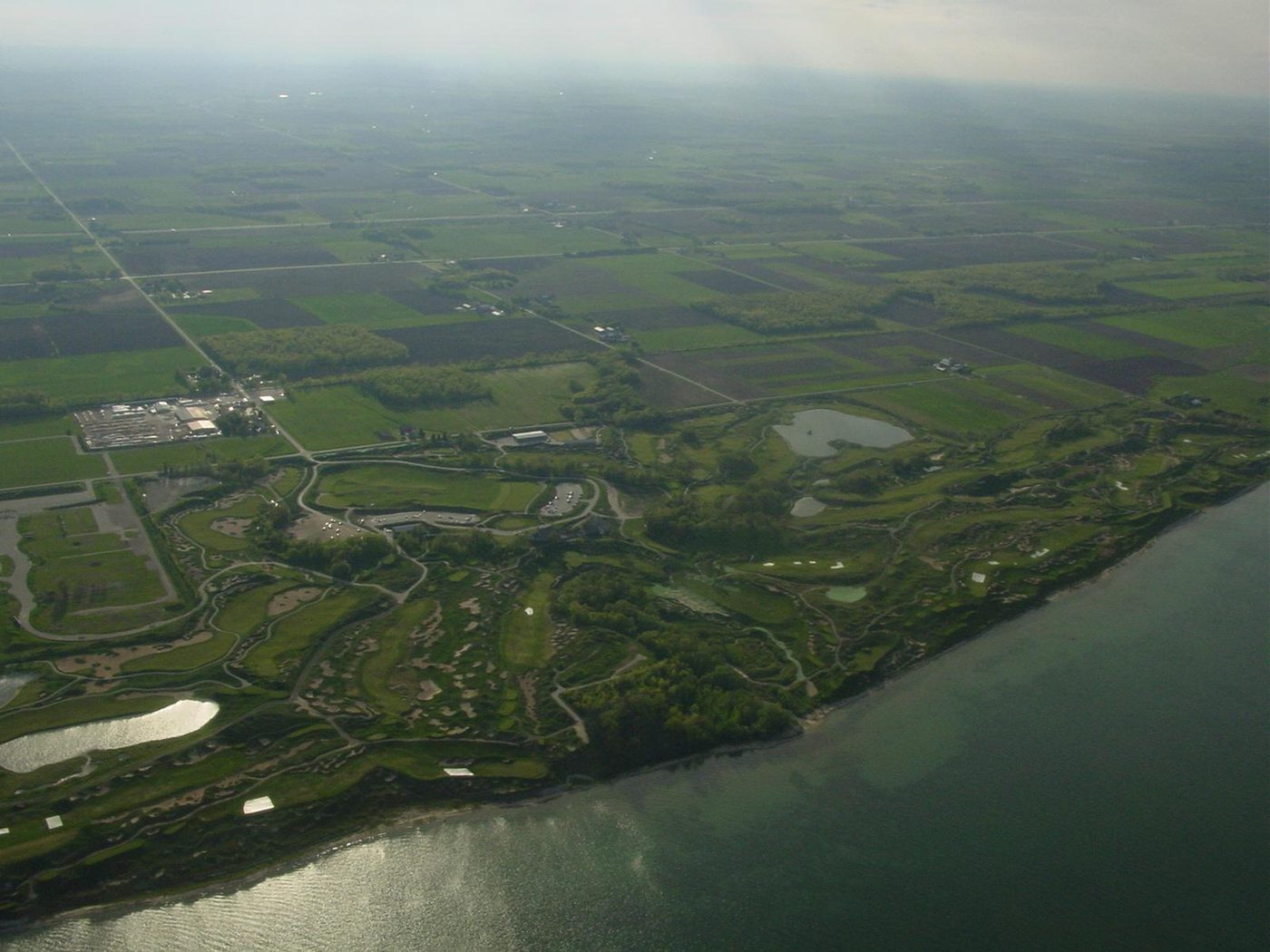
Whistling Straits (Straits Course)
Haven, near Kohler · resort course open to the public · Pete Dye (1998) · Par 72, 7,790 yards; 74.2/145 (Blue) · Green fee not published (booking engine only) · walking only; caddie $90 plus tip (Kohler rates and policies, September 2026)
The Straits is Pete Dye’s most spectacular course, a two-mile run along the Lake Michigan bluffs with every hole in sight of the water and hundreds of sandy bunkers scattered through man-made dunes. It’s built to look like a links in Ireland, and on a grey, windy day it feels like one. The championship pedigree is unmatched in the state: PGA Championships in 2004, 2010 and 2015, the 2007 U.S. Senior Open and the 2020 Ryder Cup, played in September 2021. It’s also where Dustin Johnson grounded his club in a sandy patch on the 72nd hole of the 2010 PGA, not realising it counted as a bunker, and lost his place in the playoff.
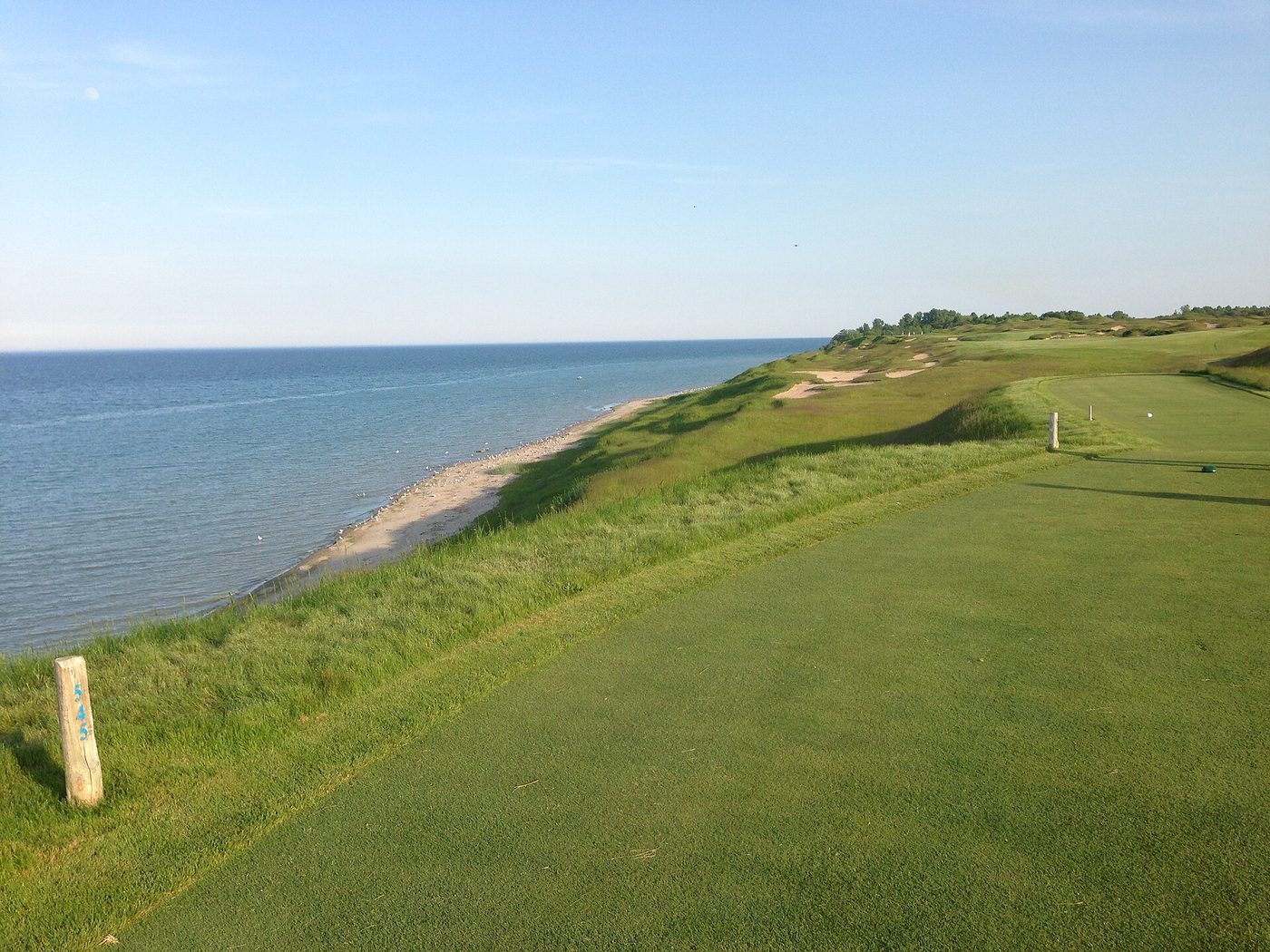
Which tees: don’t let pride choose. A 10-handicap should play around 6,300 to 6,500 yards; an 18 around 5,800 to 6,000; a 25 the forward tees. The wind off the lake routinely adds two or three clubs.
Verdict: one of the handful of American public courses worth a dedicated trip. Take a caddie, since you have to walk anyway and the lines through the dunes aren’t obvious. Kohler doesn’t publish the price, so ask for the full cost of the round, caddie and tip included, before you commit.
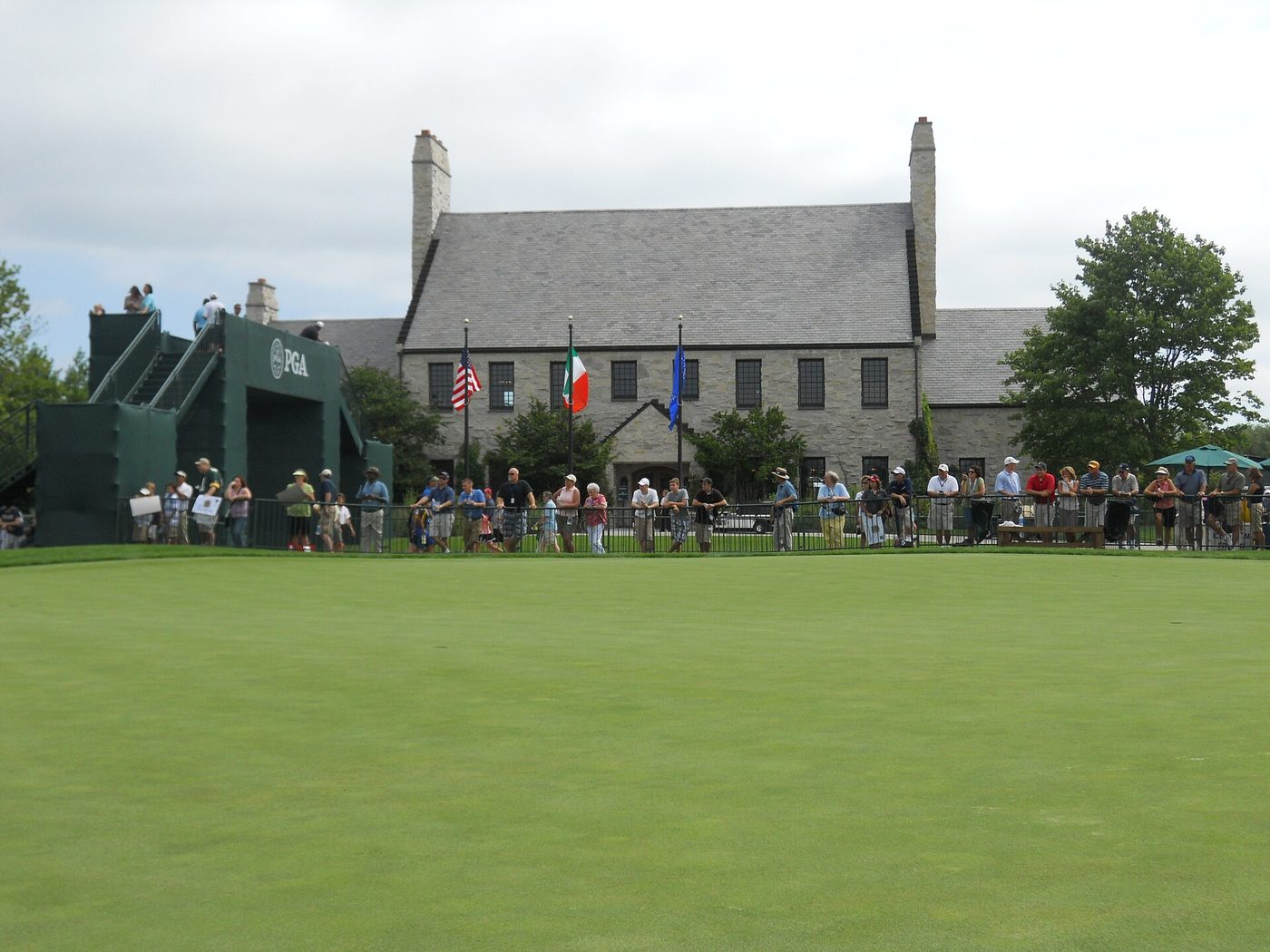
Whistling Straits (Irish Course)
Haven · resort course open to the public · Pete Dye (2000) · Par 72 · Rating and slope not published on the pages we checked · Green fee not published (booking engine only) · walking and cart policy not published
The Irish Course, the Straits’ inland sibling, has the same dunes, fescue and bunkers on ground set back from the bluffs, with a few lake views and streams in play. It’s No. 8 on Golfweek’s Wisconsin public list, and it’s an easier tee time to get than the Straits.
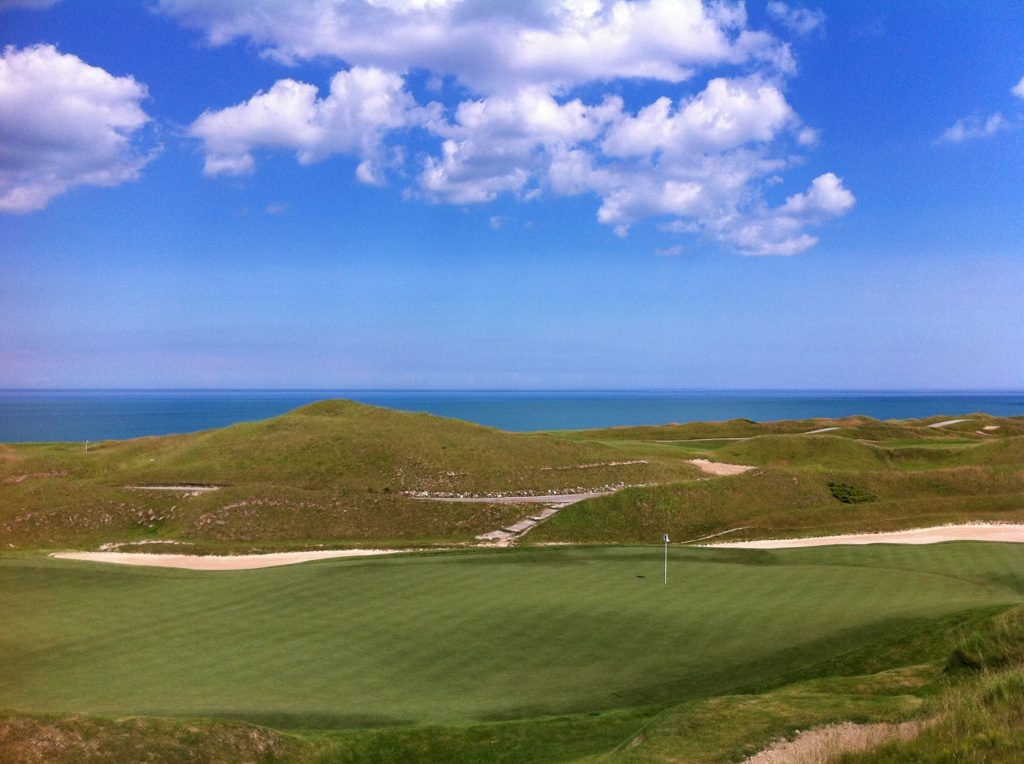
Verdict: a very good course in its own right, and the smart second round of a Kohler trip if the Straits is your one big splurge.
Blackwolf Run (River and Meadow Valleys)
Kohler · resort courses open to the public · Pete Dye (1988; reconfigured into two 18s) · Ratings not published on the pages we checked · Green fees not published (booking engine only) · Kohler also lists The Baths, a 10-hole par-3 course
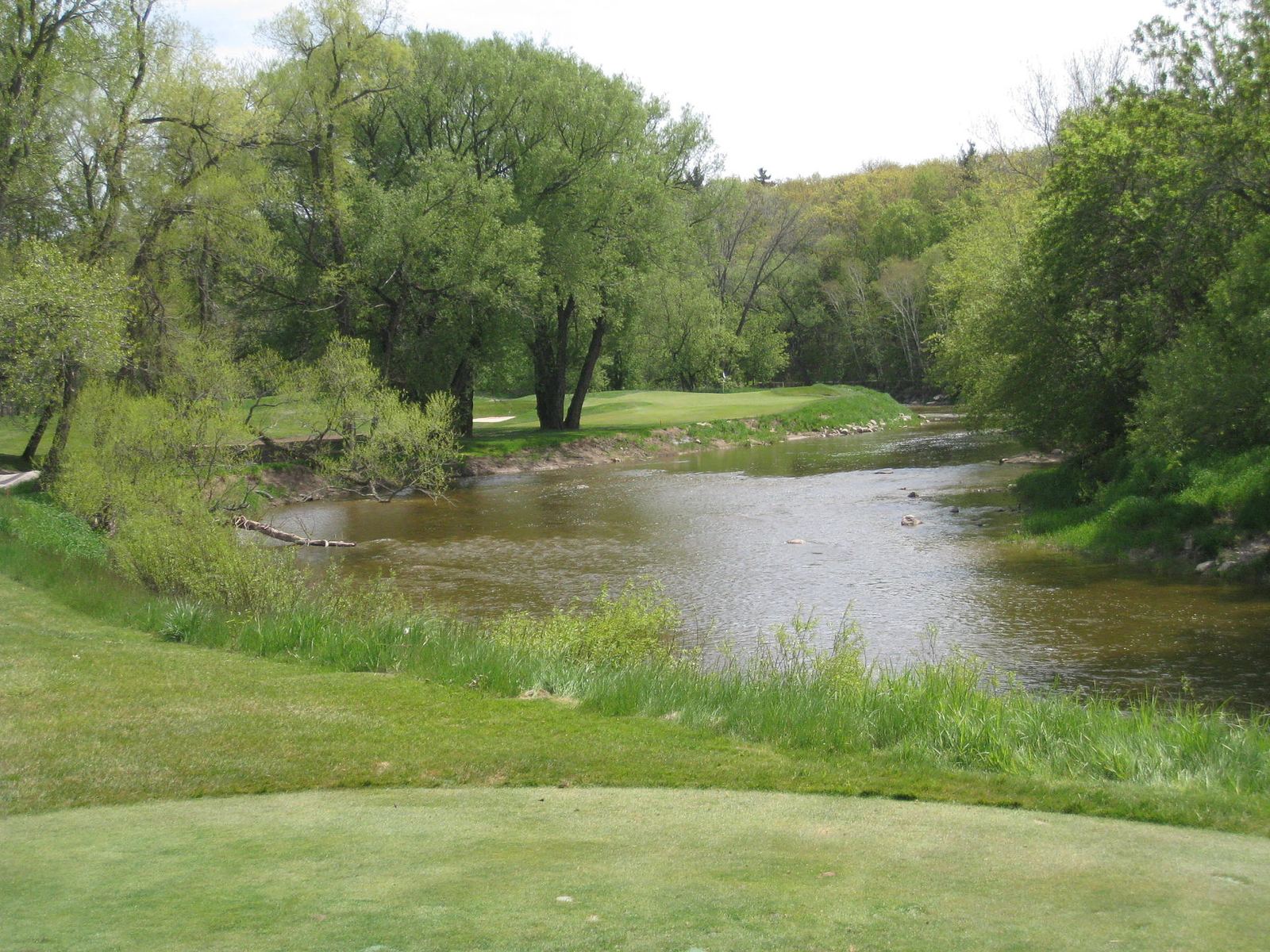
Blackwolf Run’s River Course is the original Kohler course and, for many players, the better test than the Straits: the Sheboygan River winds through it, the greens are fiercely contoured, and Dye’s angles punish anyone who tries to overpower it. It hosted the U.S. Women’s Open in 1998, when Se Ri Pak won in a playoff, and again in 2012. Golf Digest ranks it No. 17 on its public list. The Meadow Valleys course, its partner, plays over more open ground and is No. 12 on Golfweek’s Wisconsin public list.
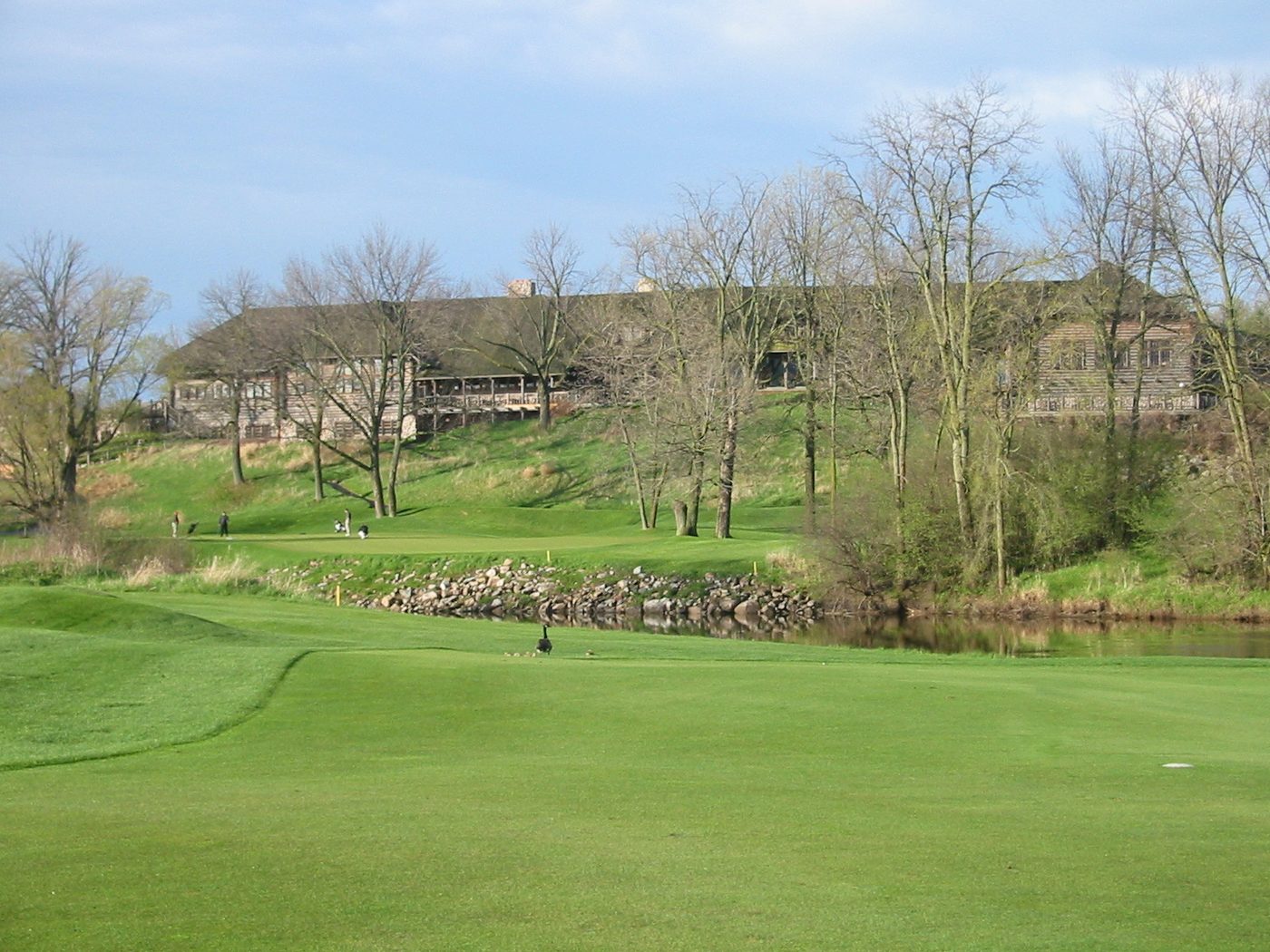
Which tees: the River is all about carries and angles. Play one set forward of what your handicap suggests; Dye built it to reward position over length.
Verdict: the River belongs on any Kohler itinerary. If you’re choosing between it and the Irish for your second round, take the River. Our guide to Pete Dye golf courses puts both Kohler properties alongside his other public work.
Nearby, The Bull at Pinehurst Farms in Sheboygan Falls, a Jack Nicklaus design from 2003, is reported at about $110 to $154 with a cart on booking sites, and it’s No. 13 on Golfweek’s Wisconsin public list. It’s the value alternative if Kohler’s rates are too rich.
Sand Valley and central Wisconsin
Sand Valley sits near Nekoosa, about two hours north of Madison, on sand left behind by Glacial Lake Wisconsin, which drained at the end of the last ice age. It’s walking only, built on the Bandon Dunes model, and in under a decade it has become one of the best golf resorts in America. Our guide with every Sand Valley course ranked compares them in detail.
The rules are simple. Every course is walking only; pull carts cost $10 a day, mobility carts are available on request, and caddies cost $100 a bag plus tip. Sand Valley’s FAQ puts peak-season green fees, June to October, at about $295 to $325. Resort guests get the first and longest booking window; day guests can book the main courses, but not The Lido.
The Lido
Sand Valley, Nekoosa · resort guests only, Sunday to Thursday, by reservation · Tom Doak and Brian Schneider (2023), recreating Charles Blair Macdonald’s Lido (1917) · 7,027 yards; 75.2/149 (Navy) · Green fee not published · walking only; caddie required, $100 plus tip (2026, official)
The Lido is the most remarkable golf project of the past decade. Charles Blair Macdonald, the father of American golf architecture, built the original Lido on Long Island in 1917, and it was thought to be one of the best courses in the world before it disappeared in the 1940s. Working from Macdonald’s plans, old photographs and a digital reconstruction, Tom Doak and Brian Schneider rebuilt it hole by hole on Wisconsin sand, including the famous fourth, the Channel hole, which came from a design competition won by a young Alister MacKenzie. It went straight into the national top 100s: No. 69 on Golf Digest’s America’s 100 Greatest, No. 30 on GOLF’s U.S. list and No. 4 on GOLF’s list of courses you can play.
Several Lido holes are versions of the template holes Macdonald used across America. A template hole borrows the strategy of a famous original; the best known is the Redan, a par 3 whose green falls away behind a deep front bunker.
Verdict: if you can book a Sand Valley stay that includes a Lido round, do it. It’s the best course at the resort and one of the most important in the country, but you need a room, a caddie and a Sunday-to-Thursday date.
Sand Valley
Nekoosa · resort course; outside golfers can book · Bill Coore and Ben Crenshaw (2017) · 6,938 yards; slope 134 (back tees) · Green fee about $295 to $325 in peak season, June to October (Sand Valley FAQ, September 2026) · walking only; caddie $100 plus tip
Coore and Crenshaw’s course is the resort’s original, routed over big, open sand ridges with natural blowout bunkers and red pines. It’s wide, firm and strategic, more about the angle into each green than the carry off the tee, and the ball runs a long way on the sandy turf. Golf Digest has it No. 21 on its public list, and GOLF No. 20 among courses you can play.
Which tees: consider moving back one set from your usual, since the firm ground adds run to every drive. A 10-handicap will enjoy it from about 6,400 yards.
Verdict: the purest walk at the resort, and the course that proved Sand Valley would work.
Mammoth Dunes
Nekoosa · resort course; outside golfers can book · David McLay Kidd (2018) · 6,988 yards; 74.1/141 (Black) · Green fee about $295 to $325 in peak season (Sand Valley FAQ) · walking only; caddie $100 plus tip
Kidd built Mammoth Dunes to be fun first. The fairways are enormous, the greens are big and bold, and a mid-handicapper can play their own ball all day without hunting for it. It’s No. 25 on Golf Digest’s public list and No. 26 on GOLF’s list of courses you can play.
Verdict: the most enjoyable big course at Sand Valley for most 15- to 25-handicaps. If your group has mixed abilities, start here.
The rest of Sand Valley’s golf is just as good in its way. Sedge Valley, Tom Doak’s short 18-hole course (5,829 yards; 68.7/130 from the back), is No. 22 on GOLF’s list of courses you can play; The Sandbox is Coore and Crenshaw’s 17-hole par-3 course, reported at about $30 to $65; and the Commons is a 12-hole short course. The 2025 season ended on October 19, so check closing dates before planning an autumn trip.
SentryWorld
Stevens Point · public; book 90 days ahead; closed Mondays · Robert Trent Jones Jr. (1982; renovated by Jones, 2015) · Rating and slope not published on the pages we checked · Green fee $375 for day guests, with cart, range balls and food (May 29 to September 30, 2026, official) · walking allowed, $10 less
SentryWorld, owned by the Sentry insurance company, is best known for its 16th, the Flower Hole, a par 3 framed by tens of thousands of flowers. It hosted the 2023 U.S. Senior Open, won by Bernhard Langer, and it’s No. 49 on Golf Digest’s public list and No. 9 on Golfweek’s Wisconsin list. The course had closed for the 2026 season when we checked.
Verdict: a polished championship round less than an hour from Sand Valley, and the price includes food. If you’re paying your own way, though, Sand Valley’s courses give you more for the money.
Near Sand Valley, Lake Arrowhead in Nekoosa has two courses, the Pines and the Lakes, reported at about $74 on booking sites; it’s a solid budget round between resort days.
Erin Hills, Milwaukee and the southeast
Southeast Wisconsin has the state’s biggest cities, its best private clubs and two of its most important public courses: Erin Hills, about 35 miles northwest of Milwaukee, and Brown Deer Park, inside the county.
Erin Hills
Erin · public · Michael Hurdzan, Dana Fry and Ron Whitten (2006) · Par 72, 7,715 yards; 77.9/145 (Black, per the scorecard) · Green fee $495 in peak season (May 26 to September 27, 2026) and $395 in the shoulder season to October 17; replay $295; military $285; juniors $210 (official) · walking only; caddie $65 plus a suggested tip of $75 or more
Erin Hills was built on rolling glacial ground, the kettles and ridges the last ice age left behind, and it was designed with one aim: to host a U.S. Open. It got there in 2017, when Brooks Koepka won at 16 under, and it held the U.S. Women’s Open in 2025. It’s a huge, open course with tall fescue, blind shots and rugged bunkers, and in the wind it’s one of the hardest public tests in America. Golf Digest ranks it No. 49 on America’s 100 Greatest and No. 10 on its public list.
Which tees: ignore the 7,715 yards; there are tees for every level. A 10-handicap should play around 6,400 yards, an 18 around 5,800 to 6,000, a 25 the forward tees. The fescue, not the length, is what will cost you.
Verdict: worth it once at $495 if championship golf is the point, and better value at the $395 shoulder rate or the $295 replay. There’s a putting course, the Drumlin, for after the round. Our Erin Hills green fee guide breaks down every rate.
Brown Deer Park Golf Course
Milwaukee (Milwaukee County Parks) · public · George Hansen (1929) · Par 71, 6,759 yards; rating and slope not published · Green fee $81 standard in season and $52 from September 28; Milwaukee County discount cardholders $47 in season and $43 in autumn (2026, official) · walking allowed; carts path-only on some days
Brown Deer is the best county course in Wisconsin, a tree-lined parkland course that was the PGA Tour’s Milwaukee stop for more than a decade. Its big moment came in 1996, when a 20-year-old Tiger Woods made his professional debut at the Greater Milwaukee Open here. It isn’t flashy, and it doesn’t need to be.
Verdict: a former Tour course for $52 in autumn, and the best-value round in Milwaukee.
Also worth knowing in the southeast: Washington County Golf Course in Hartford, a county-owned course reported at about $49 to $66 with a cart; The Bog in Saukville, an Arnold Palmer design from 1995 (par 72, 7,221 yards), reported at about $77 to $107; and the Club at Lac La Belle in Oconomowoc, No. 15 on Golfweek’s Wisconsin public list.
Geneva National
Lake Geneva · resort with public tee times, bookable online up to 60 days ahead · three courses by Arnold Palmer, Gary Player and Lee Trevino (1991) · Ratings not published on the pages we checked · Hotel-guest rates $215 in peak season (May 15 to October 4, 2026), $110 on weekdays and $130 at weekends from October 5 to 31, then $80 and $100 from November 1, GPS cart included; public rates not published (official)
Geneva National is unusual: three full courses, each by a different major champion, around a resort and housing community near Lake Geneva, about 90 minutes from Chicago. That makes it a sensible base for a group that wants three different courses without changing hotels.
Verdict: good resort golf at fair prices, especially from October, when guest rates drop to $110.
Down the road, Grand Geneva has The Brute and The Highlands, both cart-only, with dynamic rates reported at about $83 to $172, plus a new 11-hole short course, the Wee Nip, from 2026.
Green Lake, Madison and the Wisconsin Dells
South-central Wisconsin has the best old public course in the state, a strong university course and a cluster of resort courses in the Dells. Our guide to the best golf courses in the Wisconsin Dells covers that area in detail.
Lawsonia Links
Green Lake · public · William Langford and Theodore Moreau (1930) · Rating and slope not published on the pages we checked · Green fee $140 in summer (May to September), $125 in October, $70 in early spring and $85 in late autumn; $99 on Tuesdays (2026 rate page) · walking allowed
Lawsonia Links is the best Golden Age public course in the Midwest, a reminder of how good American golf was before the Second World War. Langford and Moreau built it in 1930 with huge, abrupt mounds, deep bunkers and raised, steep-sided greens. The par-3 7th, played to a green perched on a hill, is the famous one; the story goes that a railway boxcar is buried underneath it. GOLF ranks Lawsonia No. 89 among all U.S. courses and No. 16 among courses you can play, which makes it one of the best-value top-100 courses in America. Its sister course, the Woodlands, is a later, tighter design through trees, and is reported to be cart-only.
Which tees: Lawsonia isn’t long. Play the tees that leave you long and mid-irons into the raised greens, because missing them is where the strokes go.
Verdict: the course we’d play first in Wisconsin if architecture matters to you. At $70 in early spring, it’s absurd value.
University Ridge
Verona, near Madison · public; the University of Wisconsin’s course · Robert Trent Jones Jr. (1991) · Ratings not published on the pages we checked · Green fee $75 to $145, dynamic, with a cart (2026, official) · walking reported as allowed; groups book from early February, singles 7 days ahead
University Ridge moves from open, rolling ground into hardwoods, and it’s home to the Badgers’ golf teams and No. 11 on Golfweek’s Wisconsin public list. Irrigation work began in April 2026, with one hole closed each day and rates adjusted, so check the current setup before you book.
Verdict: a championship course at a university price. The best round in the Madison area.
Madison’s own courses are terrific value. Odana Hills tops out at $56 to walk 18 holes ($51 with the city’s loyalty card) and Yahara Hills at $51 ($46), with carts $20 a rider and push carts $5. There’s no resident premium, tee times open 14 days ahead, and the city’s season ends on November 1, 2026.
In the Wisconsin Dells, Wild Rock at the Wilderness Resort (par 72, 7,414 yards from the Black tees), No. 14 on Golfweek’s Wisconsin public list, was reported at about $82 to $85 with a cart on a booking site in August; its nine-hole par-30 short course, The Woods, costs $29 to $35. Trappers Turn, a 27-hole course by Andy North and Roger Packard, is reported at about $87 on weekdays and $97 at weekends, and has a 12-hole par-3 course called 12North.
Northern Wisconsin, Door County and the west
Northern Wisconsin’s golf is more about lakes and woods than rankings, and most of it is honest resort and daily-fee golf at prices well below Kohler or Sand Valley. Our guide to the best golf courses in Northern Wisconsin covers the Northwoods and Door County.
Peninsula State Park Golf Course in Fish Creek, inside a state park on the shore of Green Bay, is the classic Door County round (par 71, 6,308 yards), with dynamic rates, online tee times from April 1 and a six-hole par-3 course for $10. Up in Hayward, Big Fish Golf Club is one of the best-known Northwoods courses. And on the Minnesota border, near the Twin Cities, Troy Burne in Hudson is No. 10 on Golfweek’s Wisconsin public list.
Where are the best-value and municipal golf courses in Wisconsin?
Wisconsin’s best-value rounds are Madison’s city courses ($51 to $56 walking), Milwaukee County’s Brown Deer Park ($52 in autumn, $81 in season), Lawsonia Links ($70 to $140), Washington County ($49 to $66 with a cart, reported) and University Ridge ($75 to $145 with a cart).
| Course | Region | Green fee (Oct 2026) | Why it’s good value |
|---|---|---|---|
| Yahara Hills | Madison | $46-$51 walking | City course, no resident premium |
| Odana Hills | Madison | $51-$56 walking | City course, 14-day booking |
| Brown Deer Park | Milwaukee | $43-$81 | Former PGA Tour venue |
| Washington County | Hartford | $49-$66 with cart (reported) | County-owned |
| Lawsonia Links | Green Lake | $70-$140 | GOLF U.S. top 100 |
| University Ridge | Madison | $75-$145 with cart | The university’s championship course |
| Geneva National in October | Lake Geneva | $110-$130 for hotel guests | Three signature courses |
| Peninsula State Park par 3 | Door County | $10 for six holes | Family-friendly short course |
Fees from each course’s official rate page, October 2026, except where marked “reported”.
Wisconsin is also full of short courses, the cheapest way to see a big-name property and the best place to start a beginner. Kohler has The Baths, a 10-hole par-3 course; Sand Valley has The Sandbox and the Commons; Wild Rock has The Woods ($29 to $35); Trappers Turn has 12North; Grand Geneva added the Wee Nip in 2026; and Peninsula State Park’s six-hole course costs $10.
For the long list of public courses across the state, including the ones outside the rankings, see our guide to the best public golf courses in Wisconsin. For city-owned courses nationally, see the best municipal golf courses in America.
When is the best time to play golf in Wisconsin?
Mid-June to mid-September brings the best conditions and the highest prices: Erin Hills charges $495 from May 26 to September 27. May, late September and October are cheaper and quieter. Most courses close by early November; Madison’s city season ends on November 1, and Sand Valley closed on October 19 in 2025.
| Region | Best months | Shoulder season | Notes |
|---|---|---|---|
| Kohler and the Lake Michigan shore | July to September | May and June; October | The lake keeps spring cool and autumn mild; expect wind |
| Sand Valley and central Wisconsin | June to September | May; October | Sand drains fast after rain; the 2025 season ended October 19 |
| Milwaukee, Erin Hills, Lake Geneva | June to September | April and May; October | Erin Hills’ peak rate runs May 26 to September 27 |
| Madison, Green Lake, the Dells | June to September | April and May; October | Madison’s city courses close November 1 |
| Northern Wisconsin and Door County | July and August | June; September to early October | Shortest season; autumn colour from late September |
General seasons; individual courses vary.
Two practical tips. First, the shoulder season is where the value is: Lawsonia drops from $140 to $70 to $85, Erin Hills from $495 to $395, and Geneva National’s guest rate from $215 to $110. Second, Wisconsin courses grow cool-season grasses, fescue and bentgrass, which are at their firmest and fastest in late summer and early autumn. Our guide to golf course grass explains why that changes how a course plays.
How much does it cost to play the best courses in Wisconsin?
Erin Hills costs $395 to $495, SentryWorld $375 with cart and food, and Sand Valley’s courses about $295 to $325 in peak season; Kohler doesn’t publish its rates. Lawsonia Links costs $70 to $140, and Madison’s and Milwaukee County’s courses $43 to $81.
| Price band | Courses (October 2026) |
|---|---|
| Over $250 | Erin Hills ($395-$495; replay $295); SentryWorld ($375 with cart, range and food); Sand Valley and Mammoth Dunes (about $295-$325 in peak season); Whistling Straits and Blackwolf Run (not published; Straits caddie $90 plus tip) |
| $100-$250 | Geneva National (hotel guests $80-$215); Lawsonia Links in summer ($140); University Ridge ($75-$145); The Bull (about $110-$154, reported); Grand Geneva (about $83-$172, reported) |
| $60-$100 | The Bog (about $77-$107, reported); Trappers Turn (about $87-$97, reported); Wild Rock (about $82-$85, reported); Brown Deer in season ($81); Lake Arrowhead (about $74, reported) |
| Under $60 | Madison city courses ($46-$56 walking); Brown Deer in autumn ($43-$52); Washington County (about $49-$66, reported); The Sandbox (about $30-$65, reported); Wild Rock’s Woods ($29-$35); Peninsula State Park par 3 ($10) |
Budget for caddies at the walking-only resorts as well: $90 plus tip at the Straits, $100 plus tip at Sand Valley (required at The Lido) and $65 plus a suggested $75 tip at Erin Hills. Our guide to how much to tip a caddie has the etiquette, and our guide to how much a round of golf costs explains the national picture.
How do you book tee times at Kohler, Sand Valley and Erin Hills?
Book Kohler’s courses through Destination Kohler, Sand Valley through its own site (resort guests first; The Lido is guests-only, Sunday to Thursday) and Erin Hills directly. SentryWorld opens 90 days ahead, Geneva National 60, Madison’s city courses 14, and University Ridge 7 days for singles.
- Choose Kohler or Sand Valley first. They’re about two and a half hours apart. Kohler has the history and the Straits; Sand Valley has the better walking golf and more courses for the money. Do both only if you have five or more days.
- Book a room if you want The Lido. It’s for resort guests, Sunday to Thursday, with a caddie required.
- Plan to walk. The Straits, every Sand Valley course and Erin Hills are walking only. Hire a caddie at least once; our guide to walking-only golf courses explains how it works.
- Use the shoulder season. Erin Hills is $100 cheaper after September 27, Lawsonia drops to $70 to $85, and Geneva National’s October guest rate is $110.
- Fill extra rounds with value. Lawsonia, University Ridge, Brown Deer and Madison’s city courses cost a fraction of the resorts.
- Check autumn closing dates. Sand Valley closed on October 19 in 2025, SentryWorld at the end of September, and Madison’s courses on November 1.
- Ask for the all-in price at Kohler. With no public rate card, ask what the round costs with the caddie and tip before you confirm.
Our full guide to how to book a tee time explains booking windows at more than 50 courses.
How to choose which Wisconsin course to play
- For the best course you can book: Whistling Straits’ Straits Course, with a caddie.
- For U.S. Open golf: Erin Hills; our list of U.S. Open courses you can play has the rest.
- For architecture: The Lido if you can get a room, and Lawsonia Links if you can’t.
- For the best walking resort: Sand Valley, starting with Mammoth Dunes.
- For value: Lawsonia in spring, University Ridge, Brown Deer and Madison’s city courses.
- For a group with mixed abilities: Mammoth Dunes, Geneva National or the short courses.
- For a beginner or a family: The Sandbox, The Baths or Peninsula State Park’s par 3.
Whistling Straits is often called a links, and it looks like one, but it was built on a flat airfield on a bluff; our guide to links golf courses in America explains which courses really qualify. For the wider region, see the best golf courses in the Midwest; for the courses worth crossing the country for, our bucket-list golf courses guide; and for how Wisconsin compares with every other state, the best golf courses by state.
Frequently asked questions
What is the best golf course in Wisconsin?
Whistling Straits’ Straits Course in Haven, near Kohler, is No. 26 on Golf Digest’s 2025-26 list of America’s 100 Greatest Courses and No. 4 on its public list. Erin Hills (No. 49 nationally) and The Lido at Sand Valley (No. 69) are next, and all three are public in some form.
Can the public play Whistling Straits?
Yes. Both Whistling Straits courses, the Straits and the Irish, take public tee times through Destination Kohler’s booking system. The Straits is walking only, with an optional caddie at $90 plus tip. Kohler doesn’t publish a public rate card, so ask for the full price when you book.
How much does it cost to play Erin Hills?
$495 in peak season (May 26 to September 27, 2026) and $395 in the shoulder season to October 17, with a $295 replay rate, $285 for military and $210 for juniors. Erin Hills is walking only; a caddie costs $65 plus a suggested tip of $75 or more.
Can you play The Lido at Sand Valley?
Only as a resort guest. The Lido takes Sand Valley guests by reservation, Sunday to Thursday, and a caddie is required at $100 plus tip. It’s No. 69 on Golf Digest’s America’s 100 Greatest and No. 4 on GOLF’s list of courses you can play.
Is Sand Valley walking only?
Yes. Every course at Sand Valley is walking only; pull carts cost $10 a day, caddies $100 a bag plus tip, and mobility carts are available on request. Peak-season green fees were about $295 to $325 in 2026, according to the resort’s FAQ.
What is the best golf course in Wisconsin under $100?
Lawsonia Links, a 1930 Langford and Moreau course on GOLF’s top-100 list, costs $70 in early spring, $85 in late autumn and $99 on Tuesdays. University Ridge starts at $75 with a cart, Brown Deer Park at $52 in autumn, and Madison’s city courses at $46 to $56 walking.
How many golf courses are in Wisconsin?
About 528, according to the National Golf Foundation’s March 2026 figures, and 88% of them are open to the public, one of the highest shares in America; nationally, about 72% of courses are public.
When is golf season in Wisconsin?
Roughly April or May to late October. Peak rates run from late May or June to mid-September; Erin Hills’ peak season, for example, ran from May 26 to September 27 in 2026. Madison’s city courses close on November 1, and Sand Valley’s 2025 season ended on October 19.
Is Whistling Straits a true links course?
Not strictly. A links is sandy coastal ground between the sea and farmland, shaped by nature. Whistling Straits sits on a bluff above Lake Michigan and was built on a flat former airfield, with dunes Pete Dye created. It’s a links-style course, and a spectacular one.
Our verdict
The best golf courses in Wisconsin are, unusually, courses you can book. That makes this one of the easiest states in America to plan around, if not always the cheapest.
If you can play only one course, make it the Straits, with a caddie and a forecast that promises wind. If you have three days, pick Kohler or Sand Valley rather than rushing both: Sand Valley is the better value and the better walk, Kohler has the history. Play Erin Hills if U.S. Open golf is the point, and Lawsonia Links if you want the best $140 in the Midwest. And when you need a cheap round, Madison and Milwaukee County have some of the best-value public golf in the country.
Sources
- America’s 100 Greatest Golf Courses, 2025-26, Golf Digest
- The best golf courses in Wisconsin, Golf Digest
- Top 100 public golf courses: state breakdown, GOLF
- The best public-access and private golf courses in Wisconsin, ranked, Golfweek via Yahoo Sports, July 4, 2024
- State(s) of Public Golf, National Golf Foundation, March 20, 2026
- What exactly are Course Rating and Slope Rating?, USGA
- Whistling Straits, Destination Kohler
- Blackwolf Run, Destination Kohler
- The Lido, Sand Valley
- Mammoth Dunes, Sand Valley
- FAQ, Sand Valley
- Rates and fees, Erin Hills
- Tee times and rates, SentryWorld
- Rates, Lawsonia
- Rates, University Ridge
- The Woods tee times, Wild Rock Golf Club
- Trappers Turn Golf Club
- The Bog Golf Club
- Golf, Grand Geneva Resort
- Green fees, Geneva National
- Milwaukee County Parks golf
- Golf rates and passes, City of Madison
- Rates, Peninsula State Park Golf Course
- Big Fish Golf Club
Image credits
| Image | Photographer | Licence | Source |
|---|---|---|---|
| Blackwolf Run, River Course, 13th hole (featured image) | Dan Perry from Atlanta, USA | CC BY 2.0 | Wikimedia Commons |
| Whistling Straits from the air | ZimZalaBim at en.wikipedia | public domain | Wikimedia Commons |
| Whistling Straits clubhouse, 2010 PGA Championship | KevinTR | public domain | Wikimedia Commons |
| Whistling Straits, Irish Course, 12th hole | Jasonbook99 | CC BY-SA 3.0 | Wikimedia Commons |
| Blackwolf Run clubhouse, Kohler | David Hilgart from Grayslake, IL, USA | CC BY-SA 2.0 | Wikimedia Commons |
| Whistling Straits par 5 on Lake Michigan | Baybay1901 | CC BY-SA 4.0 | Wikimedia Commons |