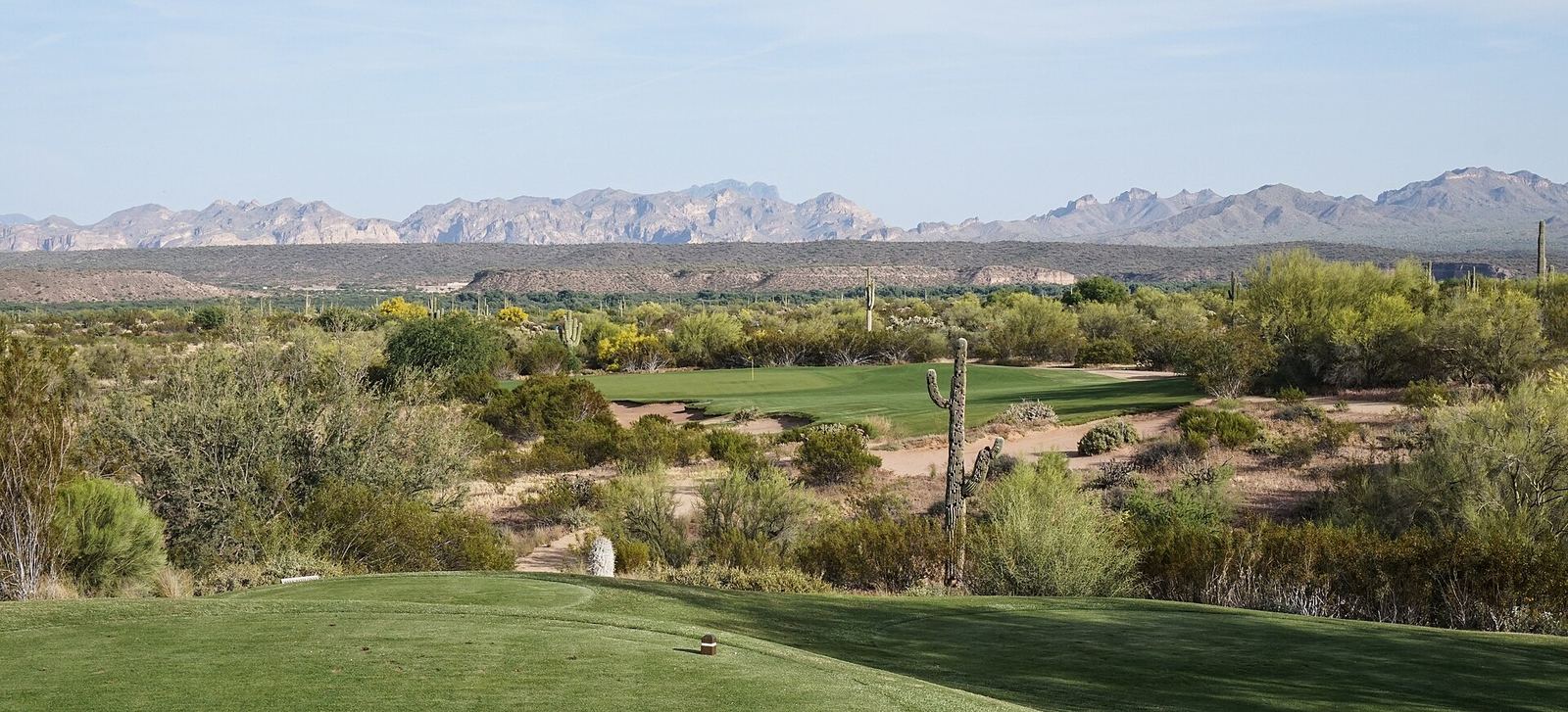
Scottsdale National’s Other Course is No. 1 on GOLF’s current Arizona ranking, but it is private, and so are 13 of the 15 courses on that list. Of the best golf courses in Arizona that you can actually book, start with We-Ko-Pa’s Saguaro Course, Talking Stick’s O’odham Course and the Stadium Course at TPC Scottsdale, with winter green fees from about $150 to $550.
Arizona golf runs on two clocks. The first is the season: from January to April the Phoenix and Tucson courses are the most in-demand in the country, and they charge like it, while in July the same tee sheets sell for a fraction of the price at 6 am because it will be 110 degrees by noon. The second is the grass: almost every desert course closes for two or three weeks between mid-September and early November to “overseed”, planting winter ryegrass into its summer bermuda. Get those two clocks right and Arizona is one of the best-value golf states in America. Get them wrong and you pay $500 to putt on sand-topped temporary greens.
How we built this. The rankings come from GOLF’s Best Golf Courses in Arizona for 2024-25, published in December 2024, and from the national lists we compare in our guide to every major national ranking. Green fees and overseeding dates come from each course’s own site where they are published and are dated September 2026. Most Scottsdale courses use dynamic pricing and don’t publish a rate card, so for those we give the published or reported range and say “reported”. We haven’t played every course here; where a note leans on the rankings, published data and the architecture rather than our own scorecards, we say so.
At a glance
- Best golf course in Arizona: Scottsdale National (The Other Course), private, No. 1 on GOLF’s 2024-25 Arizona list
- Best course you can book: We-Ko-Pa’s Saguaro Course, No. 6 on the same list, about $309 in peak season and about $99 in summer (Arizona residents $219 and $69)
- Most famous public course: the Stadium Course at TPC Scottsdale, home of the WM Phoenix Open, reported at $436 to $550 in peak season
- Best value: Talking Stick’s O’odham Course, a Coore and Crenshaw design, reported from about $25 in summer to $261 in peak
- Cheapest good round: the City of Phoenix’s courses, Papago, Encanto and Aguila, reported from $18 to $74
- Overseeding closures, 2026: from September 14 (TPC Scottsdale’s Champions Course) to November 1 (The Boulders’ North Course)
- Best months: February to April for conditions and atmosphere; June to August for price, if you tee off at dawn
The best golf courses in Arizona at a glance
The table lists the ranked courses first, then the best public and resort courses by region. “Access” is what a golfer without a membership can expect: private means members and their guests only; resort guests means you need to book a room; resort/public means anyone can book, usually with better rates or access for hotel guests; public means anyone can book, and “city” marks a municipally owned course.
| Course | Region | Access | Architect (year) | Green fee (Sept 2026) | Ranking or note |
|---|---|---|---|---|---|
| Scottsdale National (The Other Course) | Scottsdale | Private | Jackson Kahn | Members’ guests only | GOLF AZ No. 1 |
| Forest Highlands (Canyon) | Flagstaff | Private | Tom Weiskopf and Jay Morrish (1988) | Members’ guests only | GOLF AZ No. 2 |
| Estancia | Scottsdale | Private | Tom Fazio (1995) | Members’ guests only | GOLF AZ No. 3; Golf Digest U.S. No. 70 |
| Desert Forest | Carefree | Private | Robert “Red” Lawrence (1962) | Members’ guests only | GOLF AZ No. 4 |
| Whisper Rock (Upper and Lower) | Scottsdale | Private | Lower: Phil Mickelson and Gary Stephenson (2001) | Members’ guests only | GOLF AZ No. 5 and No. 7 |
| We-Ko-Pa (Saguaro) | Fort McDowell | Public | Bill Coore and Ben Crenshaw (2006) | About $99-$309 | GOLF AZ No. 6 |
| Talking Stick (O’odham) | Scottsdale | Public | Bill Coore and Ben Crenshaw (1997) | About $25-$261 (reported) | GOLF AZ No. 10 |
| TPC Scottsdale (Stadium) | Scottsdale | Public | Tom Weiskopf and Jay Morrish (1986) | About $303-$550 (reported) | WM Phoenix Open |
| Troon North (Monument and Pinnacle) | Scottsdale | Public | Tom Weiskopf and Jay Morrish (1990 and 1996) | $220-$325 in peak | Book up to 90 days ahead |
| Grayhawk (Raptor) | Scottsdale | Public | Tom Fazio (1995) | About $100-$450 (reported) | Slope 143 from the back |
| The Boulders (South) | Carefree | Resort/public | Jay Morrish (1980s) | About $159-$329 (reported) | North course members only |
| We-Ko-Pa (Cholla) | Fort McDowell | Public | Scott Miller (2001) | $69-$349 | Saguaro’s sister course |
| Ak-Chin Southern Dunes | Maricopa | Public | Lee Schmidt and Brian Curley with Fred Couples (2002) | About $33-$286 (reported) | Best summer bargain |
| Quintero | Peoria | Public | Rees Jones (2001) | Not published | West Valley’s best |
| Arizona Biltmore | Phoenix | Resort/public | Estates: Tom Lehman redesign (2023) | Links about $229 (reported) | Historic resort |
| Papago | Phoenix | Public (city) | William “Billy” Bell (1963) | About $37-$74 (reported) | Best muni in Phoenix |
| Ventana Canyon | Tucson | Resort guests | Tom Fazio (1984) | Packages only | Best in Tucson |
| Omni Tucson National (Catalina) | Tucson | Resort/public | Not verified | $165-$230 for non-guests (reported) | Tour history |
| Randolph North | Tucson | Public (city) | William P. Bell | $60-$70 in peak (reported) | Tucson’s best muni |
Rankings: GOLF’s Best Golf Courses in Arizona for 2024-25 (December 16, 2024) and Golf Digest’s America’s 100 Greatest Golf Courses (2025-26). Fees checked September 2026; see each course’s section for what’s included and where the figure came from. Most Scottsdale-area fees exclude sales tax and a water surcharge of around 5%.
Three things stand out. First, the gap between Arizona’s best private and public golf is wide: 13 of GOLF’s top 15 are private, most of them in the gated desert communities north of Scottsdale. Second, the two public courses that do make the list, We-Ko-Pa’s Saguaro and Talking Stick’s O’odham, are both by Bill Coore and Ben Crenshaw, both on tribal land, and both among the best-value courses in the state. Third, almost nothing in Arizona is old. Desert Forest (1962) and the Phoenix city courses are the exceptions; nearly everything else on this page was built after 1984.
What is the best golf course in Arizona?
Scottsdale National’s Other Course is No. 1 on GOLF’s 2024-25 Arizona ranking, ahead of Forest Highlands’ Canyon Course in Flagstaff and the Estancia Club in Scottsdale. All three are private. The best course you can book is We-Ko-Pa’s Saguaro Course, No. 6 on the same list.
The top of the Arizona list belongs to private clubs, and there’s no back door into most of them. We don’t list green fees or ratings for the clubs below: none sells tee times or publishes rates, so the notes lean on the rankings, the clubs’ histories and their architecture. If a member invites you, go.
Scottsdale National (The Other Course)
Scottsdale · private · Jackson Kahn · GOLF Arizona No. 1 · members and their guests only
Scottsdale National is the private club owned by Bob Parsons, the founder of GoDaddy, and it has three courses: the Mine Shaft, the Other Course and a short course. The Other Course, by Jackson Kahn, is the one the GOLF panel rates highest in the state. It is big, bold desert golf, with dramatic green sites and bunkering built to be photographed. The club is famously exclusive and famously expensive to join, and there is no public access of any kind.
Forest Highlands (Canyon Course)
Flagstaff · private · Tom Weiskopf and Jay Morrish (1988) · GOLF Arizona No. 2 · members and their guests only
Forest Highlands is the course that proves Arizona golf isn’t all cactus. The Canyon Course sits at around 7,000 feet among ponderosa pines, oaks and aspens outside Flagstaff, and it plays like mountain golf anywhere: cool summer air, big elevation changes and a ball that flies noticeably farther in the thin air. It’s a summer club, busiest when the desert courses are baking. The club added a second course, the Meadow, in 1999.
The Estancia Club
Scottsdale · private · Tom Fazio (1995) · GOLF Arizona No. 3 · Golf Digest U.S. No. 70 · members and their guests only
Estancia wraps around Pinnacle Peak in north Scottsdale, and Fazio used the mountain’s boulders and slopes to give the course a sense of height and drama that most flat desert sites can’t match. Golf Digest’s current national list has it at No. 70.
Desert Forest Golf Club
Carefree · private · Robert “Red” Lawrence (1962) · GOLF Arizona No. 4 · members and their guests only
Desert Forest matters more than its ranking suggests, because it is widely credited as the first true desert course. Red Lawrence, building it in 1962, grassed only the playing corridors and left the native desert, saguaros, palo verdes and all, between the holes. That style, sometimes called “target golf” because you’re hitting from one island of grass to the next, became the template for nearly every course on this page. Desert Forest is still one of the purest examples, with no houses in play and very little water.
Whisper Rock Golf Club
Scottsdale · private · Lower Course: Phil Mickelson and Gary Stephenson (2001) · GOLF Arizona No. 5 (Upper) and No. 7 (Lower) · members and their guests only
Whisper Rock is the club where Tour players live and practise in the winter, and its membership list reads like a Ryder Cup team room. Phil Mickelson co-designed the Lower Course, and both courses are among the best in the state. There is no public access.
Below them on GOLF’s list are Desert Highlands, the Jack Nicklaus design in north Scottsdale that reopened after a restoration in November 2025; three courses at Desert Mountain; Troon Country Club; Stone Canyon in Oro Valley; and Pine Canyon in Flagstaff. All are private.
Which of Arizona’s top-ranked courses can you actually play?
Two of the 15 on GOLF’s 2024-25 Arizona list sell tee times to anyone: We-Ko-Pa’s Saguaro Course at No. 6 and Talking Stick’s O’odham Course at No. 10. TPC Scottsdale, Troon North and Grayhawk don’t make that list but are the best-known public courses in the state.
That’s the unusual thing about Arizona. In most states, the best public courses are the resort courses. Here, the two best are daily-fee courses on tribal land, owned by the Fort McDowell Yavapai Nation and the Salt River Pima-Maricopa Indian Community, with no hotel attached to the first tee and no housing along the fairways. Both are by Coore and Crenshaw, both reward a ground game, and both cost less than TPC Scottsdale.
The sections below take the public and resort courses region by region. Every course with its own heading gets a data line: location, who can play, architect and year, par and yardage, course rating and slope from a named tee where one is published, the green fee with the date we checked it, and the walking and overseeding details. Course rating is what a scratch golfer is expected to shoot; slope measures how much harder the course plays for a bogey golfer, on a scale where 113 is average. The USGA explains both.
Scottsdale and the north Valley
Scottsdale is the centre of Arizona golf, with more courses per square mile than almost anywhere in the country. Most of the famous public courses are in the north of the city, where the desert rises toward the McDowell Mountains and Pinnacle Peak. Scottsdale’s full line-up of public courses gets its own guide; these are the ones worth planning around.
TPC Scottsdale (Stadium Course)
Scottsdale · public · Tom Weiskopf and Jay Morrish (1986); Weiskopf renovation (2014) · Par 71, 7,266 yards · back tees 74.7/142 · Green fee about $436 to $550 in peak season and about $303 in summer, cart included, tax and water fee extra (reported, September 2026) · closed for overseeding September 28 to October 18, 2026
The Stadium Course is where the WM Phoenix Open is played every February, the best-attended event in golf, and the reason most people want to play it is the 16th: a short par 3 that becomes a fully enclosed stadium during tournament week, with tens of thousands of fans cheering or booing every tee shot. For the rest of the year it’s a plain par 3 surrounded by empty ground where the grandstands go, but you can still stand on the tee and imagine it. The 17th, a drivable par 4 with water left, and the 18th, with water down the left off the tee, finish the round as well as any public course in the state.
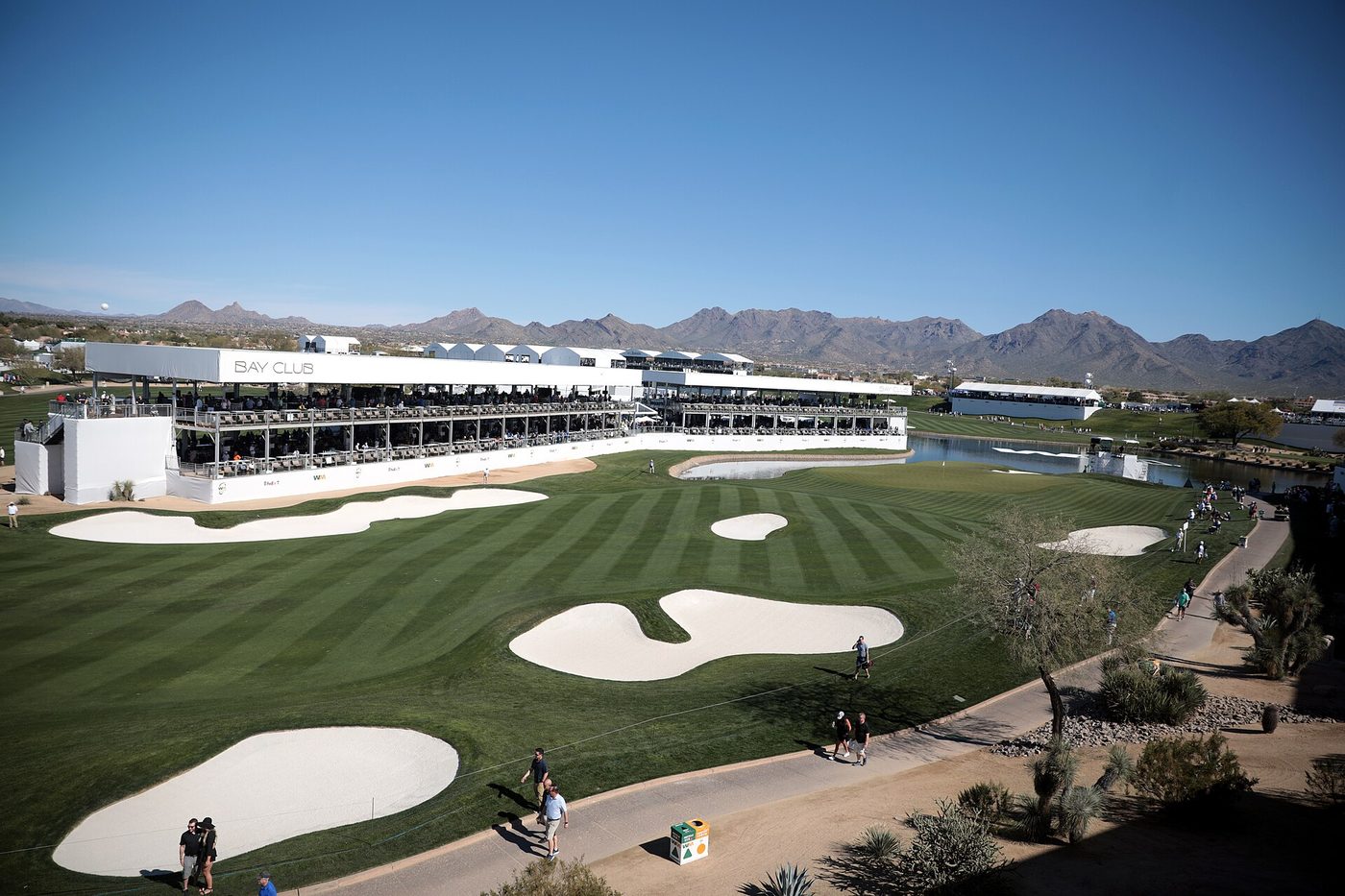
As architecture, it’s a wide, fair course built for spectators, with few forced carries and big greens. It isn’t in GOLF’s Arizona top 15, and it doesn’t need to be; people play it for the tournament.
Which tees: a 10-handicap will have plenty from about 6,500 yards; an 18 should be around 6,000; a 25 should play the forward set. It’s a birdie course for the pros and a very playable one for everyone else.
TPC Scottsdale’s Champions Course, the second course on the property (redesigned by Randy Heckenkemper in 2015), is reported at $139 to $249 in peak season and under $100 in summer, and it closes earlier for overseeding, from September 14 to 30, 2026.
Verdict: worth it once for Phoenix Open fans, ideally in summer at around $300. At $550 in March, you’re paying for a TV hole; We-Ko-Pa’s Saguaro is better golf for about $250 less.
Troon North (Monument and Pinnacle)
Scottsdale · public · Tom Weiskopf and Jay Morrish (Monument 1990, Pinnacle 1996) · Monument par 72, 7,044 yards; Pinnacle par 72, 7,207 yards · Rating and slope not published · Green fee: Monument $250 to $315 and up in peak season (January 18 to April 26); Pinnacle $220 to $325; summer rates well below that; plus a 5% water fee (September 2026) · book up to 90 days ahead · overseeding: Monument October 4 to 25, Pinnacle September 20 to October 9, 2026
Troon North is the course that made north Scottsdale famous. Monument, named for the huge boulder that sits in the middle of the third fairway, is set in the high desert under Pinnacle Peak, with granite outcrops, saguaros and views across the Valley. Pinnacle, the second course, runs higher into the boulders and is the more dramatic of the two. Both are classic desert target golf: you have to hit the grass, because the desert between the holes will usually eat your ball.
Verdict: a quintessential Scottsdale round, and the 90-day booking window helps in peak season. At $300 in March it’s expensive; the rates fall sharply in summer and in the shoulder weeks either side of peak.
Grayhawk Golf Club (Raptor Course)
Scottsdale · public · Tom Fazio (1995) · Par 72, about 7,135-7,221 yards (sources vary) · back tees 74.1/143 · Green fee about $270 to $450 in peak season and about $100 in summer (reported, September 2026) · walking permitted · closed for overseeding October 12 to 30, 2026
Raptor is Grayhawk’s championship course, a Fazio design with wide fairways, deep bunkers and big greens. The slope of 143 from the back tees tells you it’s harder than it looks; the length and the bunkering around the greens are what get you. It is also one of the few north Scottsdale courses that is comfortably walkable.
Verdict: a good, well-run course and one of the better summer deals in Scottsdale at around $100. At the top of the peak range, you’re paying resort prices for a course that isn’t better than Troon North.
The Boulders Club (South Course)
Carefree · resort/public (the North Course is members only) · Jay Morrish (1980s) · South par 71, 6,917 yards; North par 72, 6,959 yards · Rating and slope not published · Green fee about $329 in peak season and about $159 in summer, dynamic (reported, September 2026) · overseeding: South September 14 to October 11, North October 12 to November 1, 2026
The Boulders is named for the giant granite boulder piles that rise out of the desert around the resort, and the courses weave through them. Several holes play directly toward or around the rock formations, and the setting is the reason to go. The South Course is the one the public can book; the North is reserved for members.
Verdict: one of the most beautiful settings in Arizona golf, and a good summer round at around $159. In peak season, the golf alone doesn’t justify $329, but the setting almost does.
Talking Stick Golf Club (O’odham Course)
Scottsdale · public (Salt River Pima-Maricopa Indian Community) · Bill Coore and Ben Crenshaw (1997) · Par 70, 7,133 yards · back tees 72.7/125 · Green fee about $150 to $261 in peak season and as little as $25 to $93 in summer (reported, September 2026) · closed for overseeding September 27 to October 15, 2026
O’odham (formerly the North Course) is Coore and Crenshaw’s first Arizona course, and it is nothing like the rest of Scottsdale. It is flat, wide and open, with almost no cactus, and it gets its challenge from angles, firm ground and big, subtly contoured greens, the way a links does. That makes it one of the best courses in Arizona for a mid-handicapper: you’ll rarely lose a ball, but you’ll have to think on every approach. It’s No. 10 on GOLF’s Arizona list.
Which tees: a slope of 125 from the back means this is the course where a 10-handicap can play the full 7,133 yards and enjoy it. An 18 should play around 6,400 and a 25 around 5,600.
Verdict: the best value in Scottsdale, and in summer the best value in America for a course of this quality. If you want Coore and Crenshaw golf but can’t get to We-Ko-Pa, play here.
The Phoenician, the resort at the foot of Camelback Mountain, has the most classic resort look in Scottsdale, with water, palms and desert mixed together. It prices through its booking engine rather than publishing a rate card.
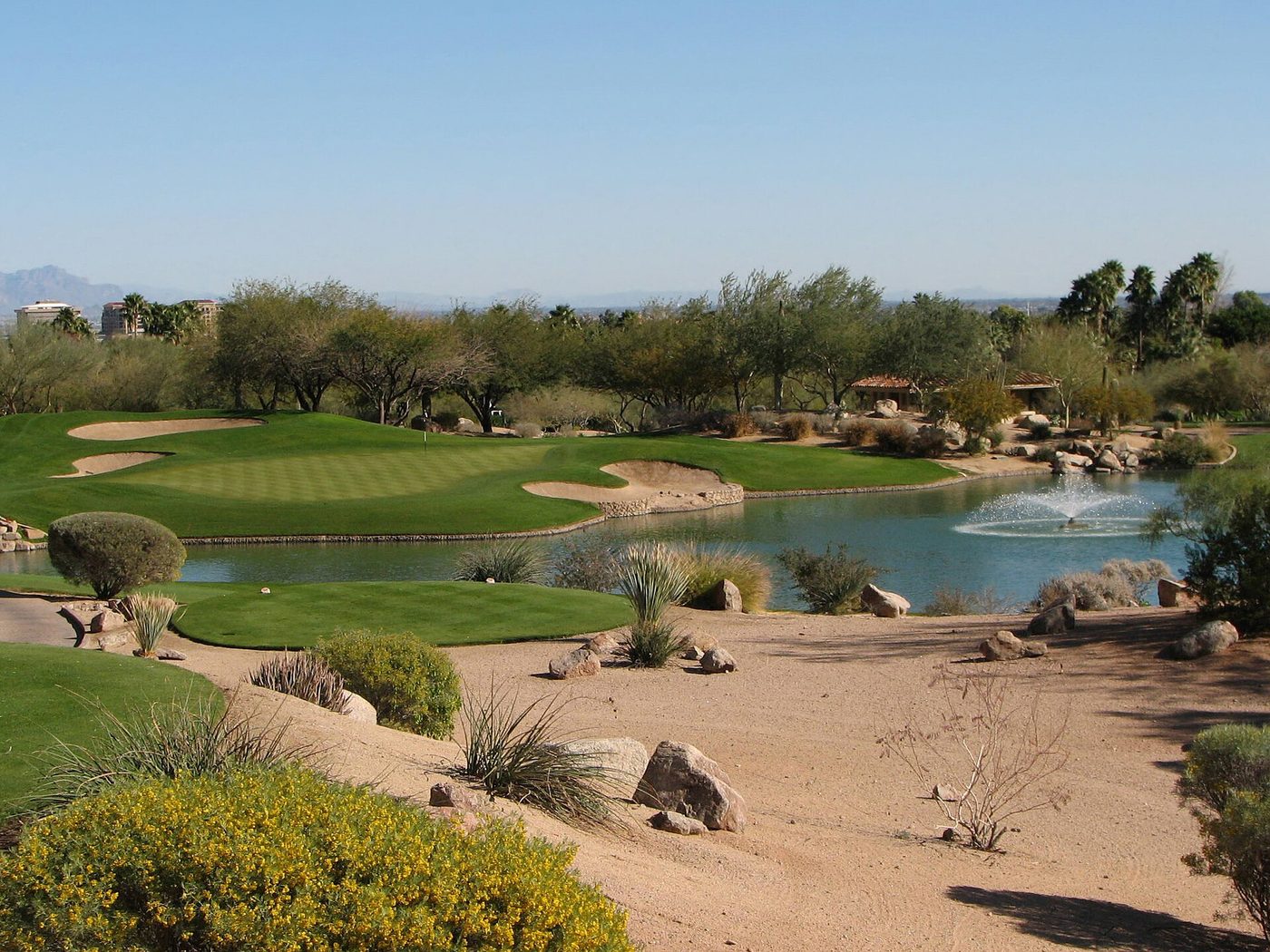
If budget matters more than prestige, we also cover cheap golf in Scottsdale separately, including the courses that drop below $50 in summer.
Fort McDowell and the East Valley: We-Ko-Pa and the southern desert
East of Scottsdale, on the Fort McDowell Yavapai Nation, is the best public golf in Arizona. South of Phoenix, on the Ak-Chin reservation, is the state’s best summer bargain.
We-Ko-Pa Golf Club (Saguaro and Cholla)
Fort McDowell · public (Fort McDowell Yavapai Nation) · Saguaro: Bill Coore and Ben Crenshaw (2006), par 71; Cholla: Scott Miller (2001), par 72 · Rating and slope not published · Green fee: Saguaro about $309 in peak season (Arizona residents $219) and about $99 in summer ($69), cart and range balls included; Cholla $69 to $109 in summer and up to $309 to $349 in winter peak (We-Ko-Pa rates, September 2026) · walking welcome, with free push carts · overseeding: Saguaro October 12 to 29, Cholla October 5 to 22, 2026
We-Ko-Pa is the best public golf in Arizona, and its Saguaro Course, No. 6 on GOLF’s Arizona list, is the one to play if you play one course in the state. It is set in open, rolling desert with the Four Peaks and McDowell Mountains around it and not a single house in sight, which is almost unheard of in the Valley. Coore and Crenshaw built it to be walked, with short green-to-tee distances and wide fairways that leave room for a running shot, and the course encourages it with free push carts.
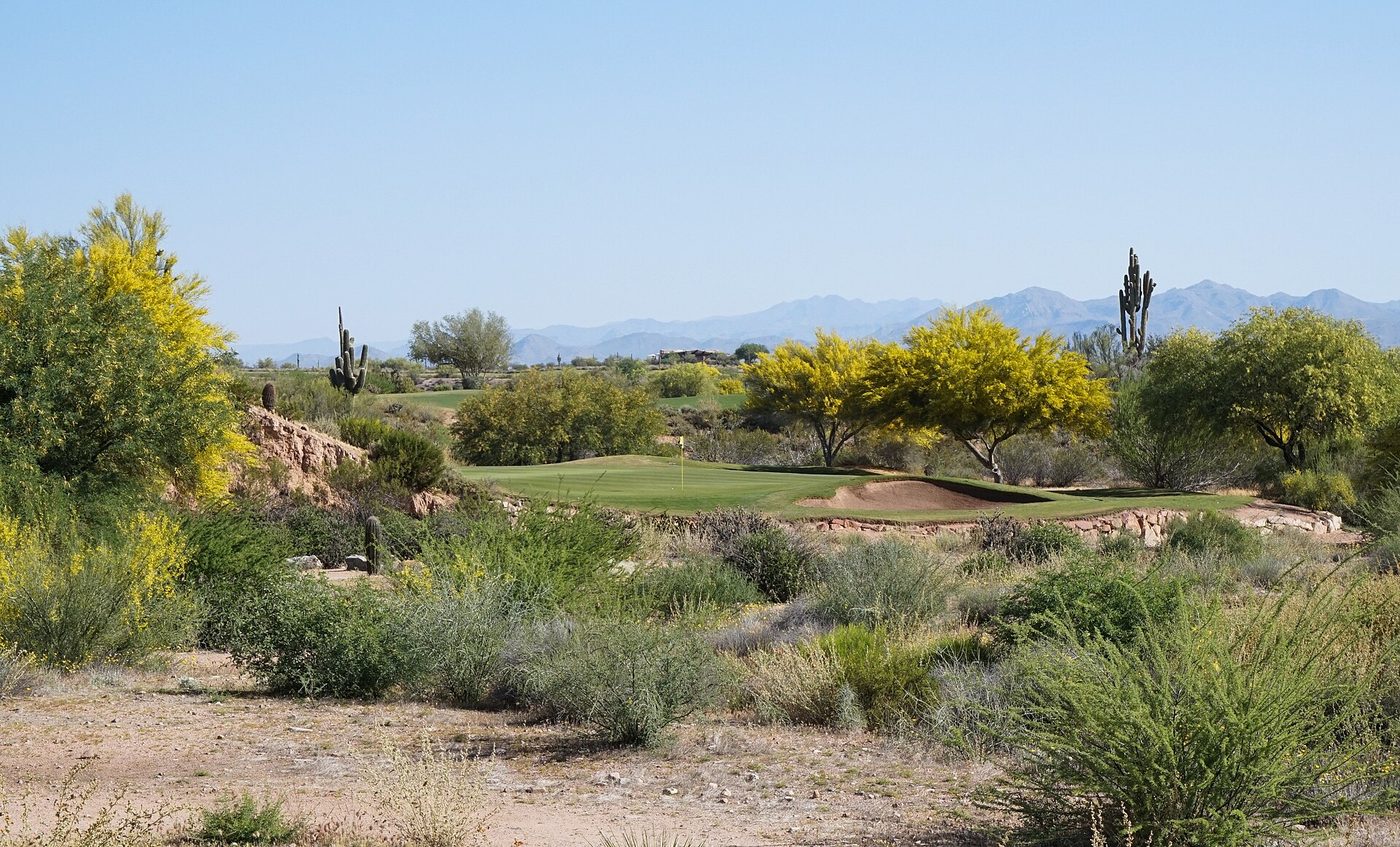
Cholla, the older course, is a more conventional desert course by Scott Miller, with more forced carries and more drama off the tee. It’s a very good course that gets overshadowed by its neighbour, and it’s the better choice for anyone who likes target golf.
Which tees: Saguaro has plenty of room, so play one set longer than usual if you hit it straight. On Cholla, where the carries are real, a 10-handicap should play about 6,400 yards, an 18 about 5,900 and a 25 the forward tees.
Verdict: the best course you can book in Arizona and, at $99 in summer or $219 for residents in peak, a bargain. Play both courses in one day if you can; walk Saguaro.
Ak-Chin Southern Dunes Golf Club
Maricopa · public · Lee Schmidt and Brian Curley with Fred Couples (2002) · Rating and slope not published · Green fee reported from about $33 in summer to $286 in peak season (September 2026)
Southern Dunes is 35 minutes south of Phoenix on the Ak-Chin Indian Community, and it’s the best course in Arizona that most visitors have never heard of. It’s big, wide and firm, with large sandy waste areas and bold bunkering, set in open desert. GOLF rated it the fifth-best course you can play in Arizona in 2016, as Visit Phoenix still notes.
Verdict: the best summer deal in the state if the reported $33 rate holds when you book. Worth the drive at any time of year for a player who likes big, open courses.
Gold Canyon, farther east under the Superstition Mountains, is the other East Valley name to know: its Dinosaur Mountain course, a Ken Kavanaugh design, climbs into the foothills and is reported at $110 to $270, plus a 5.5% water fee.
Phoenix and the West Valley
Phoenix itself has less of the dramatic desert golf and more of the historic and municipal kind. The City of Phoenix runs its own golf division, with five 18-hole courses and three nine-holers, and they’re some of the best-value golf in the West.
Papago Golf Course
Phoenix · public (city-owned) · William “Billy” Bell (1963) · Par 72 · Rating and slope not published · Green fee reported at about $37 to $52 on weekdays and $47 to $74 at weekends, walking or riding (September 2026) · walking allowed
Papago is the best municipal course in Phoenix, and one of the best in the West. It was designed by William Francis “Billy” Bell, the architect behind Torrey Pines in San Diego, and it sits in Papago Park, with the park’s red sandstone buttes in view, between Phoenix and Tempe. It’s a proper championship-length par 72, which is more than most city courses can say.
Verdict: the best-value round in the Phoenix area, and a better course than several resorts charging four times as much. Walk it.
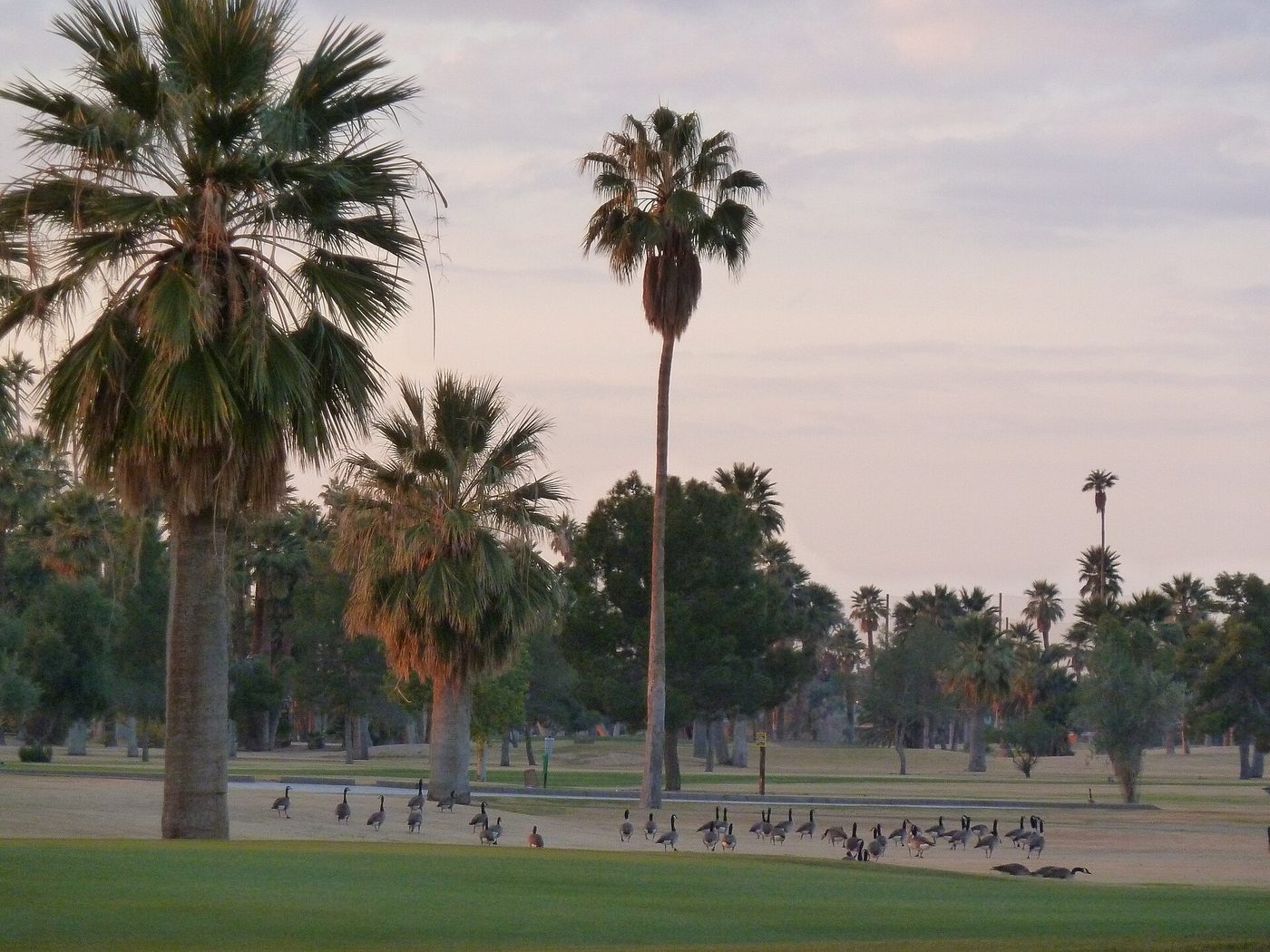
Phoenix’s best public courses beyond Papago include Encanto, a 1935 William Bell design in the middle of the city, reported at $18 to $62, and Aguila in Laveen, a Gary Panks design from 2000, reported at $18 to $55. Both are flat and simple but well kept, and both are ideal for a beginner or a quick round.
Quintero Golf Club
Peoria · public (daily fee) · Rees Jones (2001) · Par 72, 7,249 yards · Rating and slope not published · Green fee not published on the club’s site; Arizona residents get a discount · closed for overseeding September 21 to October 15, 2026
Quintero, an hour northwest of central Phoenix near Lake Pleasant, is the best course in the West Valley and one of the most dramatic in the state. Rees Jones routed it through canyons and ridges, with elevated tees and long carries over desert washes. It is remote enough that a weekday round can feel like you have the place to yourself.
Verdict: worth the drive for the scenery and the course, but check the dynamic rate before you commit, since the club doesn’t publish one.
Arizona Biltmore Golf Club
Phoenix · resort/public · Links Course par 71, 6,300 yards; Estates Course, a Tom Lehman redesign of the old Adobe course, opened November 2023 · Rating and slope not published · Green fee: Links about $229 (reported, September 2026) · Links closed for overseeding September 28 to October 18, 2026
The Arizona Biltmore is the historic resort of Phoenix, and its golf club is next door. The Links is short, at 6,300 yards from the back; the Estates is the old Adobe course rebuilt by Tom Lehman. Neither is a destination course, but both are convenient and pleasant, and the resort is a landmark.
Verdict: convenient if you’re staying in central Phoenix, but at $229 it’s poor value against Papago down the road.
West of Phoenix, the Wigwam in Litchfield Park has three courses, the best of them the Gold, a Robert Trent Jones Sr. design. It doesn’t publish a rate card; the Gold closes for overseeding from October 5 to 25, 2026.
Tucson and southern Arizona
Tucson is higher, greener and cooler than Phoenix, with the Santa Catalina Mountains behind the city and more saguaros on the courses. It has fewer famous courses, but the best of them are very good. We cover the rest of Tucson’s courses in their own guide.
Ventana Canyon Golf Club
Tucson · lodge guests and club members (the Mountain and Canyon courses alternate daily) · Tom Fazio (1984) · Mountain Course par 72, 6,898 yards · Rating and slope not published · Green fee not published; access is through golf packages at the Lodge at Ventana Canyon
Ventana Canyon is the best golf in Tucson, two Fazio courses in the Santa Catalina foothills with the mountains rising straight up behind them. The Mountain Course is the famous one, for its short par-3 3rd, played across a desert ravine to a green set against the rock. The Canyon Course is gentler and follows a canyon wash.
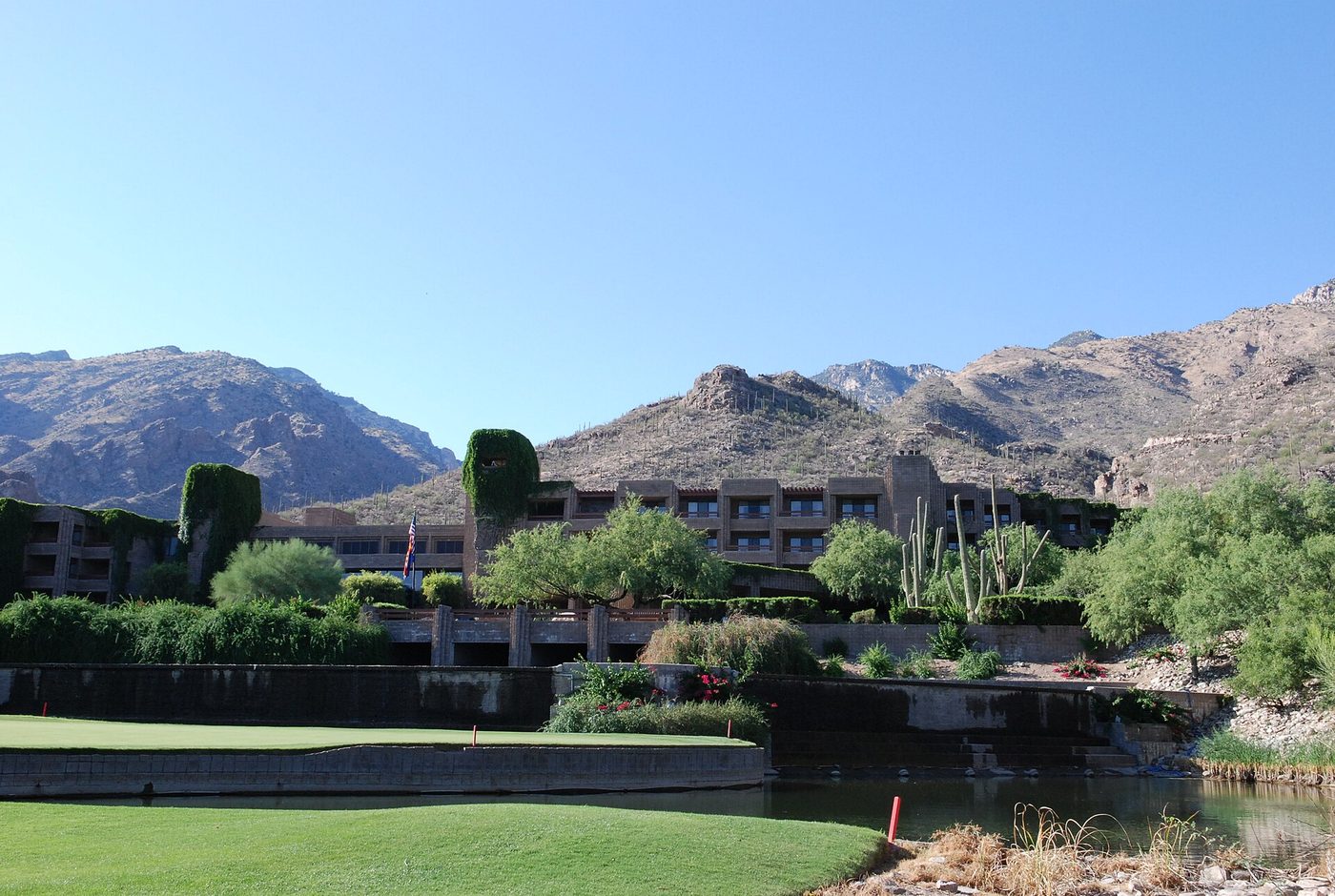
Getting on: you need to stay at the Lodge at Ventana Canyon or be a member, and the courses alternate between members and guests day to day, so check which one is open before you book.
Verdict: the best reason to base a Tucson stay around golf. Not something to plan as a one-off round.
Omni Tucson National (Catalina Course)
Tucson · resort/public · Par 73, 7,262 yards · back tees 75.4/136 · Green fee in peak season (February to April) $180 for resort guests and $230 for outside players; off-peak $135 and $165, cart included (reported, September 2026)
Tucson National’s Catalina Course has decades of Tour history in Tucson, first as a PGA Tour venue and more recently for the senior tour. It’s a long, traditional parkland-style course, greener than most desert courses, with water in play on the closing holes. The par of 73 and a rating of 75.4 from the back tell you it’s a long day from the tips.
Verdict: a solid, fair course at a fair price for Arizona in peak season. It’s a better value than most Scottsdale resorts, but the golf is less memorable than Ventana Canyon’s.
Randolph North Golf Course
Tucson · public (city-owned) · William P. Bell · About 7,000 yards from the championship tees · Rating and slope not published · Green fee for non-residents reported at $60 to $70 in peak season, with a cart (September 2026)
Randolph North is Tucson’s best municipal course, a former LPGA Tour stop in the middle of the city, with mature trees, wide fairways and good greens. It’s the course Tucson locals play, and it’s priced for them.
Verdict: the best-value round in Tucson. Book it for your first round of a trip, while you’re finding your swing.
North of Tucson, the Ritz-Carlton Golf Club at Dove Mountain in Marana, a 27-hole Jack Nicklaus design that hosted the WGC-Accenture Match Play Championship from 2009 to 2014, is open only to members and resort guests.
Northern Arizona: Flagstaff, Sedona and the high country
Northern Arizona is the state’s summer golf region, when the high country is 30 degrees cooler than Phoenix. The best course up there, Forest Highlands in Flagstaff, is private, as are Pine Canyon and most of the courses in the pines. Sedona’s courses are the public exception: Sedona Golf Resort, a Gary Panks design, plays under the red rock formations, and the views are the reason to go. We cover northern Arizona’s mountain courses in their own guide.
Two things change at altitude. The ball flies farther: a common rule of thumb is about 2% more distance for every 1,000 feet, so at Flagstaff’s 7,000 feet a 150-yard shot plays more like 130 to 135. And the season flips: the high country plays from May to October and is often closed or snowbound in winter.
How desert golf plays: target golf, dry air and cactus
Arizona golf feels different from anywhere else in America, and a few things are worth knowing before you tee off.
Target golf. Most Arizona courses grass only the playing corridors, with native desert, sand, rocks and cactus in between. That style, pioneered at Desert Forest in 1962, means a ball that misses the grass is often gone. Many courses mark their desert areas as penalty areas, so you can take a drop under penalty rather than play off the rocks; check the local rules on the card. Don’t go into the desert after a ball in sandals, and never reach into a bush: rattlesnakes are real.
Dry air. In the desert the air is thin and dry, so the ball flies farther and rolls more, especially in summer. Most golfers take one club less than at home.
Grass and overseeding. Arizona courses have bermudagrass fairways and greens that thrive in the heat and go dormant (brown) in winter. To stay green, most courses overseed with ryegrass in the autumn, which closes them for two or three weeks. For a few weeks after reopening the rye is young and soft, and you may find cart-path-only rules. We explain how Arizona’s overseeding season works, course by course, in a separate guide.
Heat. In summer, play at dawn. Most courses open at first light from June to September, carry a lot of water and have coolers on the carts. By 11 am, it’s dangerously hot.
Which tees should you play on Arizona courses?
Play shorter than you think. The dry air adds distance, but the forced carries over desert punish any miss, and on courses with a slope over 140 (TPC Scottsdale’s Stadium, Grayhawk’s Raptor), a 10-handicap should be at 6,200 to 6,500 yards, an 18 at 5,700 to 6,100 and a 25 at 5,200 to 5,600. On open, forgiving courses like Talking Stick and We-Ko-Pa’s Saguaro, you can move back one set.
When is the best time to play golf in Arizona?
For conditions, November through April, once the overseeded rye has grown in; prices peak from January to April, when TPC Scottsdale’s Stadium Course runs $436 to $550. For price, June through early September, when We-Ko-Pa’s Saguaro drops to about $99 and Talking Stick to as little as $25.
Arizona has four golf seasons, and knowing which one you’re in explains the price:
- Peak (roughly January to April): perfect weather, the Phoenix Open in February, spring training baseball in March and the highest prices of the year. Book early; the best tee times sell out weeks ahead.
- Summer (June to early September): 100-plus degrees every day and prices at their lowest, often less than a third of peak. Play at dawn.
- Overseeding (mid-September to early November): courses close for two or three weeks in rotation. Check the dates below before booking.
- Shoulder (November and December, May): good weather, lower prices than peak, and young but good rye grass. Often the best value of the year.
The 2026 overseeding closures published by the courses in this guide:
| Course | Closed for overseeding (2026) |
|---|---|
| TPC Scottsdale (Champions) | September 14 to 30 |
| The Boulders (South) | September 14 to October 11 |
| Troon North (Pinnacle) | September 20 to October 9 |
| Quintero | September 21 to October 15 |
| Talking Stick (O’odham) | September 27 to October 15 |
| TPC Scottsdale (Stadium) | September 28 to October 18 |
| Arizona Biltmore (Links) | September 28 to October 18 |
| Troon North (Monument) | October 4 to 25 |
| We-Ko-Pa (Cholla) | October 5 to 22 |
| The Wigwam (Gold) | October 5 to 25 |
| We-Ko-Pa (Saguaro) | October 12 to 29 |
| Grayhawk (Raptor) | October 12 to 30 |
| The Boulders (North) | October 12 to November 1 |
The pattern: courses stagger their closures so that there’s always somewhere open. If you’re visiting in October, you’ll have fewer choices but you’ll still find good golf, often at a discount on the courses that have just reopened.
For a comparison with the other big winter golf state, see our guide to Florida’s best courses, where the season is similar but the rates fall in a different pattern.
How much does it cost to play the best courses in Arizona?
At the top, TPC Scottsdale’s Stadium Course is reported at $436 to $550 in peak season, and Grayhawk’s Raptor at up to $450. We-Ko-Pa’s Saguaro is about $309, or $219 for residents. Summer rates are often half or less, and the City of Phoenix courses cost $18 to $74.
Here is what the courses in this guide cost at peak and in summer, based on the rates we found in September 2026:
| Course | Peak rate | Summer rate | Notes |
|---|---|---|---|
| TPC Scottsdale (Stadium) | $436-$550 (reported) | About $303 (reported) | Cart included; tax and water fee extra |
| Grayhawk (Raptor) | $270-$450 (reported) | About $100 (reported) | Walking permitted |
| The Boulders (South) | About $329 (reported) | About $159 (reported) | Dynamic pricing |
| Troon North (Monument) | $250-$315 and up | Much lower | Plus 5% water fee |
| We-Ko-Pa (Saguaro) | About $309 ($219 residents) | About $99 ($69 residents) | Cart and balls included |
| Ak-Chin Southern Dunes | Up to $286 (reported) | About $33 (reported) | Best summer deal |
| Talking Stick (O’odham) | $150-$261 (reported) | $25-$93 (reported) | Best value in Scottsdale |
| Omni Tucson National (Catalina) | $230 non-guests (reported) | $165 non-guests (reported) | Cart included |
| Arizona Biltmore (Links) | About $229 (reported) | Not published | Resort course |
| Randolph North (Tucson) | $60-$70 non-residents (reported) | Lower | Cart included |
| Papago (Phoenix) | $47-$74 weekend (reported) | Lower | Walking allowed |
| Encanto and Aguila (Phoenix) | Up to $62 (reported) | From $18 (reported) | City courses |
Three money rules hold across the state. First, add tax and the water surcharge: most Scottsdale-area rates exclude sales tax and a water fee of around 5%, which together add $25 to $50 to a $300 round. Second, Arizona residents get big discounts at many courses (We-Ko-Pa’s resident rate is $90 lower in peak season), and there are Arizona golf cards and city golf cards that cut the price further for regulars. Third, the shoulder weeks in November, December and May are often the best value of the year, with near-peak conditions and prices well below the January-to-April peak.
How do you book a tee time at Arizona’s best courses?
Book directly on each course’s website or by phone, and check the season before the date: overseeding closes most courses for two or three weeks between mid-September and early November. Troon North opens 90 days ahead. Ventana Canyon and Dove Mountain need a resort stay.
A simple way to get the tee times you want:
- Check the overseeding calendar first. If you’re coming between mid-September and early November, confirm the course is open; the table above has the 2026 dates.
- Book peak-season rounds early. For February to April, and especially Phoenix Open week and spring training in March, book the day each course’s window opens. Troon North opens 90 days out.
- Decide whether you need to stay. Ventana Canyon, Dove Mountain and The Boulders’ North Course are effectively closed to day visitors.
- Compare the total price. Add tax and the water fee to the dynamic rate before you decide; the gap between two courses can shrink or grow by $50.
- Ask about resident rates. If you live in Arizona or spend the winter there, the resident rate at We-Ko-Pa or the City of Phoenix’s golf card can halve the cost.
- In summer, book the first tee time of the day. Temperatures above 100 degrees by late morning are normal, and the course is emptier and faster at dawn.
- Walk where it’s welcome. We-Ko-Pa has free push carts, and Grayhawk and the city courses allow walking. In winter, it’s the best way to see the desert.
How to choose which Arizona course to play
Start with what kind of golf you want, then work down to price and access.
- For the best golf, full stop: We-Ko-Pa’s Saguaro. Walk it, and play Cholla the same day.
- For a Tour experience: TPC Scottsdale’s Stadium Course, ideally in summer.
- For value: Talking Stick’s O’odham, Papago, Ak-Chin Southern Dunes in summer and Randolph North, in that order of quality.
- For the classic desert look: Troon North’s Monument and Pinnacle, and The Boulders’ South.
- For a beginner or a 25-handicap: Talking Stick’s O’odham, for its width and low slope; Encanto and Aguila, for price and simplicity; and the forward tees anywhere with forced carries.
- For summer golf without the heat: the high country around Flagstaff and Sedona.
If you’d rather see a longer list of Arizona courses anyone can book, including the dozens of daily-fee courses that don’t make the rankings, we have a separate guide to the best public courses in the state. For the country’s other great desert golf, in Nevada, California and Utah, see the best desert courses in the country.
Frequently asked questions
What is the best golf course in Arizona?
Scottsdale National’s Other Course is No. 1 on GOLF’s 2024-25 Arizona ranking, followed by Forest Highlands’ Canyon Course in Flagstaff and the Estancia Club in Scottsdale. All three are private. The best course you can book is We-Ko-Pa’s Saguaro Course, No. 6 on the same list.
What is the best public golf course in Arizona?
We-Ko-Pa’s Saguaro Course at Fort McDowell, a 2006 Coore and Crenshaw design, is the highest-ranked course in Arizona that anyone can book, at No. 6 on GOLF’s Arizona list. Talking Stick’s O’odham Course, at No. 10, is the other public course on the list.
How much does it cost to play TPC Scottsdale?
The Stadium Course is reported at $436 to $550 in peak season (roughly January to April) and around $303 in summer, with a cart included and tax and a water fee extra. The Champions Course is reported at $139 to $249 in peak season and under $100 in summer.
When do Arizona golf courses overseed?
Most overseed between mid-September and early November, closing for two or three weeks in rotation. In 2026, TPC Scottsdale’s Champions Course closes first, from September 14, and The Boulders’ North Course reopens last, on November 1. Check the course before booking in that window.
Is summer golf in Arizona worth it?
Yes, if you tee off at dawn. Prices are often half of peak or less; We-Ko-Pa’s Saguaro drops from about $309 to $99 and Talking Stick to as little as $25. Temperatures above 100 degrees by late morning are normal, so carry plenty of water and finish before noon.
Can you walk golf courses in Arizona?
At some of them. We-Ko-Pa encourages walking with free push carts, and Grayhawk and the City of Phoenix courses allow it. Many resort courses in north Scottsdale are cart-only in practice because of the distances between greens and tees. Check with the course when you book.
What is desert golf?
Desert golf, or target golf, grasses only the playing corridors and leaves native desert, sand, rock and cactus between them. A shot that misses the grass is usually lost or unplayable. Desert Forest in Carefree pioneered the style in 1962, and most Arizona courses follow it.
What is the cheapest good golf course in Arizona?
The City of Phoenix’s Papago Golf Course, a 1963 Billy Bell design, is reported at about $37 to $74 and is the best cheap course in the state. In summer, Ak-Chin Southern Dunes (reported at about $33) and Talking Stick’s O’odham (from about $25) are extraordinary value.
Does the ball go farther in Arizona?
Yes. The dry desert air and, in northern Arizona, the altitude both add distance. A common rule of thumb is about 2% more carry for every 1,000 feet of elevation, so at Flagstaff’s 7,000 feet a 150-yard shot plays like 130 to 135 yards. Most golfers take one club less in the desert.
Our verdict
The best golf courses in Arizona are mostly private, and the gap between the gated clubs of north Scottsdale and what the rest of us can play is wide. But Arizona’s best public golf is excellent, and much of it is better value than its reputation.
If you can play only one course, make it We-Ko-Pa’s Saguaro, and walk it. If you want the Tour experience, play TPC Scottsdale’s Stadium Course, ideally in summer. If you want value, play Talking Stick and Papago. And whatever you play, check the overseeding calendar and the season before you book: in Arizona, the same round can cost $99 or $309 depending on the week.
Sources
- Best Golf Courses in Arizona for 2024-25, GOLF, December 16, 2024
- America’s 100 Greatest Golf Courses, 2025-26, Golf Digest
- What exactly are Course Rating and Slope Rating?, USGA
- Stadium Course, TPC Scottsdale
- Scottsdale golf prices, Golf Scottsdale
- Rates and packages, We-Ko-Pa Golf Club
- Tee times, Troon North Golf Club; Pinnacle details via LocalGreenFees
- Raptor Course, Grayhawk Golf Club
- The Boulders Club
- Quintero Golf Club
- Arizona Biltmore Golf Club
- About, Ak-Chin Southern Dunes Golf Club
- Online tee times, Gold Canyon Golf Resort
- The Wigwam
- Phoenix golf courses, City of Phoenix
- Phoenix golf, Visit Phoenix
- Ventana Canyon tee times, Ventana Canyon Golf Club
- Rates, Omni Tucson National
- Randolph North, Tucson City Golf
- Dove Mountain, Nicklaus Design
Image credits
| Image | Photographer | Licence | Source |
|---|---|---|---|
| We-Ko-Pa Golf Club, Saguaro Course, 15th hole (featured image) | Bernard Gagnon | CC BY-SA 3.0 | Wikimedia Commons |
| TPC Scottsdale Stadium Course during the WM Phoenix Open | Gage Skidmore from Surprise, AZ, United States of America | CC BY-SA 2.0 | Wikimedia Commons |
| The Phoenician Golf Club, Canyon course, 7th hole | Bernard Gagnon | CC BY-SA 3.0 | Wikimedia Commons |
| We-Ko-Pa Golf Club, Cholla Course, 3rd hole | Bernard Gagnon | CC BY-SA 3.0 | Wikimedia Commons |
| Encanto Golf Course, Phoenix | Chris English | CC BY-SA 3.0 | Wikimedia Commons |
| Loews Ventana Canyon, Tucson | https://www.flickr.com/photos/hyku/ | CC BY-SA 2.0 | Wikimedia Commons |