Golf etiquette comes down to three things: keep up with the group ahead, leave the course as you found it, and don’t distract anyone while they play. In practice that means being ready when it’s your turn (the USGA recommends 40 seconds or less a shot), fixing ball marks, divots and bunkers, and following the course’s cart and dress rules.
That’s the short version, and if you do those three things, nobody will care that you shot 110. The long version is below, in the order you’ll meet it: arriving and checking in, the range and practice green, the first tee, keeping pace, the fairway and bunkers, the green, carts, caddies and tipping, the last putt and the clubhouse. Where a point is an actual Rule of Golf, we say so. Where it’s custom, we say that too, because a lot of what gets passed off as “the rules” is really habit, and some of it has changed.
How we built this. The Rules points come from the USGA’s Rules of Golf, especially Rule 1.2 (standards of player conduct), Rule 5.6 (pace of play) and the modern rules on the green. Course policies, such as dress codes, walking rules and caddie fees, come from each course’s own website, checked in September 2026. We’ve used real courses as examples throughout, from Bethpage Black to Pinehurst, because “check with the course” is only useful advice if you know what to look for. The rest is how experienced public golfers behave on a busy Saturday.
At a glance
- Arrive: 30 minutes before your tee time, and be on the first tee 10 minutes early
- Pace: keep up with the group in front, not just ahead of the group behind; the USGA recommends taking no more than 40 seconds a shot
- Lost balls: you get three minutes to search under the Rules of Golf (Rule 18.2a), not five as it used to be
- Ready golf: allowed and encouraged in stroke play; play when you’re ready if it’s safe
- Greens: fix your ball mark and one more; don’t walk on anyone’s line; you can putt with the flagstick in
- Bunkers: enter from the low side, rake your footprints and leave the rake where the course wants it
- Carts: follow the day’s rule (cart path only, 90 degrees or free roaming), and keep carts well away from greens and tees
- Dress: a collared shirt and golf trousers or shorts are safe everywhere; no denim at most resort and private courses, including Pinehurst
- Tipping: tip caddies on top of the caddie fee (Pebble Beach’s caddie fee is $175, Bandon Dunes’ $125), and a few dollars to bag drop and cart staff
Golf etiquette at a glance: what matters at each stage of a round
Etiquette isn’t one list; it changes as you move around the course. This table is the whole guide in one place:
| Stage | What good etiquette looks like | Rule or custom? | Most common mistake |
|---|---|---|---|
| Arrival and check-in | Arrive 30 minutes early; pay before warming up | Custom | Rushing to the tee from the car |
| Range and practice green | Stay in your bay; putt with one or two balls on a busy green | Custom and course policy | Chipping onto a practice green that bans it |
| First tee | Be there 10 minutes early; agree how you’ll play | Custom | Not being ready when the starter calls |
| Pace of play | Keep up with the group ahead; 40 seconds a shot | Rule 5.6 (recommendation) | Everyone watching everyone else’s shot |
| Lost ball | Search for no more than three minutes | Rule 18.2a | Five-minute searches with the group behind waiting |
| Safety | Shout “fore” loudly; never play into the group ahead | Rule 1.2 (spirit of the game) | Hitting when the group ahead is just in range |
| Fairway and rough | Replace or fill divots | Custom and course policy | Leaving divots unrepaired |
| Bunkers | Rake footprints and your shot | Custom | Walking out without raking |
| Greens | Fix ball marks; don’t step on lines; leave carts and bags off the green | Custom; repairing damage is allowed under Rule 13.1c | Stepping on a putting line |
| Carts | Follow the day’s cart rule; park beside the green, not in front | Course policy | Driving close to greens and tees |
| Caddies | Let them work; tip on top of the fee | Custom | Assuming the fee includes the tip |
| Finishing | Shake hands, clear the green, write scores at the next tee | Custom | Recording scores on the green |
| Clubhouse | Change shoes in the car park or locker room; follow the dress code | Course policy | Wearing a hat indoors where it isn’t allowed |
Most of this is common sense and consideration for other people. A small part of it is written into the Rules of Golf. And a growing part, especially cart rules, dress codes and the policies on walking and caddies, varies from course to course, so the sections below show you what real courses actually ask.
Why does golf etiquette matter?
Golf is played without a referee, often with strangers, on a shared course where one slow group slows everyone behind it. Etiquette keeps everyone safe, keeps the course in good condition and keeps the day moving. The Rules of Golf make this part of the game: Rule 1.2 expects players to act with integrity and consideration.
Rule 1.2a of the Rules of Golf says players are expected to play in the spirit of the game by acting with integrity, showing consideration to others and taking good care of the course. It also gives a committee the power to disqualify a player for serious misconduct. Rule 1.2b lets a club or competition adopt its own code of conduct, with penalties for breaking it. So when your local club posts rules about swearing, throwing clubs or leaving the course in a mess, it’s not being fussy; the Rules of Golf let it do so.
The practical reasons are just as strong. A course can only fit so many groups a day, and a four-hour round becomes a five-and-a-half-hour one if a single group loses the pace. Greens are the most expensive part of a course to maintain, and an unrepaired ball mark can take weeks to heal. And golf balls travel fast enough to seriously injure someone. Etiquette, in the end, is how thousands of strangers share one piece of land without a referee.
Before you play: booking, arriving and checking in
Good etiquette starts before you get to the course. Book the right number of players, turn up on time, and know the course’s basic policies before you arrive.
Book honestly. If you book a foursome and turn up as a twosome, you’ll probably be paired with strangers, and that’s normal. If you book a foursome and don’t show, many courses charge a no-show fee, and at a busy public course you’ve taken a slot someone else wanted. At Bethpage Black, where tee times open to New York residents seven days ahead and to non-residents five days ahead, and golfers are limited to one round every 28 days, a no-show isn’t just rude; it’s a wasted chance for another golfer. Cancel as early as you can.
Arrive 30 minutes early. That’s enough time to park, check in, pay, visit the practice green and get to the tee without running. If you want to hit balls on the range, allow 45 minutes to an hour. Many courses ask you to be at the first tee at least 10 minutes before your time, and the starter may give your slot away if you’re not.
Check in before you do anything else. Pay at the pro shop, pick up your cart key or caddie, and ask about the day’s cart rule and any local rules, such as out-of-bounds areas or ground under repair. Don’t head to the range or tee without checking in.
Know the walking and cart rules before you book. Some of the best public courses in America are walking only: Bethpage Black, all the courses at Bandon Dunes and Chambers Bay among them. At others, walking isn’t possible at all. Pebble Beach uses carts and caddies, and many resort courses require carts. Our guide to your first time playing a golf course goes through arrival day step by step for beginners.
Change your shoes in the car park or locker room. At most public courses, changing shoes at your car is normal. At many private clubs and some resorts, it’s frowned on and you should use the locker room. When in doubt, look at what other golfers are doing.
Here’s a simple checklist for the day of your round:
- Confirm your tee time and the number of players the day before.
- Check the dress code on the course’s website, especially for a resort or private club.
- Arrive 30 minutes early, or an hour if you want to warm up on the range.
- Check in at the pro shop and pay before doing anything else.
- Ask about the cart rule and local rules for the day.
- Warm up on the range or practice green, without taking over either.
- Be on the first tee 10 minutes before your time, with balls, tees, a ball marker and a pitch-mark repair tool in your pocket.
What should you wear on a golf course?
A collared golf shirt, tailored golf trousers or shorts, and golf shoes or clean trainers work at almost every course in America. Avoid denim, cut-offs, gym wear and T-shirts at resorts and private clubs. Pinehurst, for example, doesn’t allow denim or open-toe shoes on its courses or range.
Dress codes are one of the things that vary most from course to course. A city course may accept a T-shirt and trainers; a resort or private club may require a collar, tailored trousers or shorts, and nothing made of denim. The safest approach is to dress one level smarter than you think you need to, and check the course’s website.
Pinehurst, the resort that owns Pinehurst No. 2, is a useful example because its policy is typical of American resort golf. It recommends collared shirts and trousers or shorts, and it doesn’t allow denim or open-toe shoes on the golf courses or the practice range. Shorts are fine, but not cut-offs. In its restaurants, the dress code is stricter.
A few broader points:
- Collars: a collared polo is the default. Many modern courses accept mock-neck golf shirts; some traditional clubs don’t.
- Shorts: tailored golf shorts are fine at nearly every American course, including Pinehurst. Very short, athletic or cargo shorts often aren’t.
- Shoes: most courses require soft spikes or spikeless golf shoes. Metal spikes are banned almost everywhere.
- Hats: fine on the course, but take them off indoors at traditional clubs, especially in dining rooms.
- Women’s dress codes: usually allow collared or collarless sleeved golf tops, skirts, skorts and golf dresses, with length rules at some private clubs.
Our full guide to golf course dress codes quotes real policies from public, resort and private courses, and we have a separate guide to what women should wear golfing.
On the range and practice green
The range and practice green are shared spaces, and busy ones before the morning tee times. A few habits keep them working for everyone.
On the range, hit from the designated area and stay within your bay or between the markers. Take divots in a line rather than scattered all over the tee, so the turf can recover, and don’t hit toward the maintenance carts collecting balls. Don’t walk out to pick up a ball, ever.
On the practice green, putt with two or three balls at most when it’s busy, and don’t chip onto the putting green unless a sign says you can; many courses have a separate chipping area. Stay off the edges of the cups when you retrieve your ball, just as you would on the course.
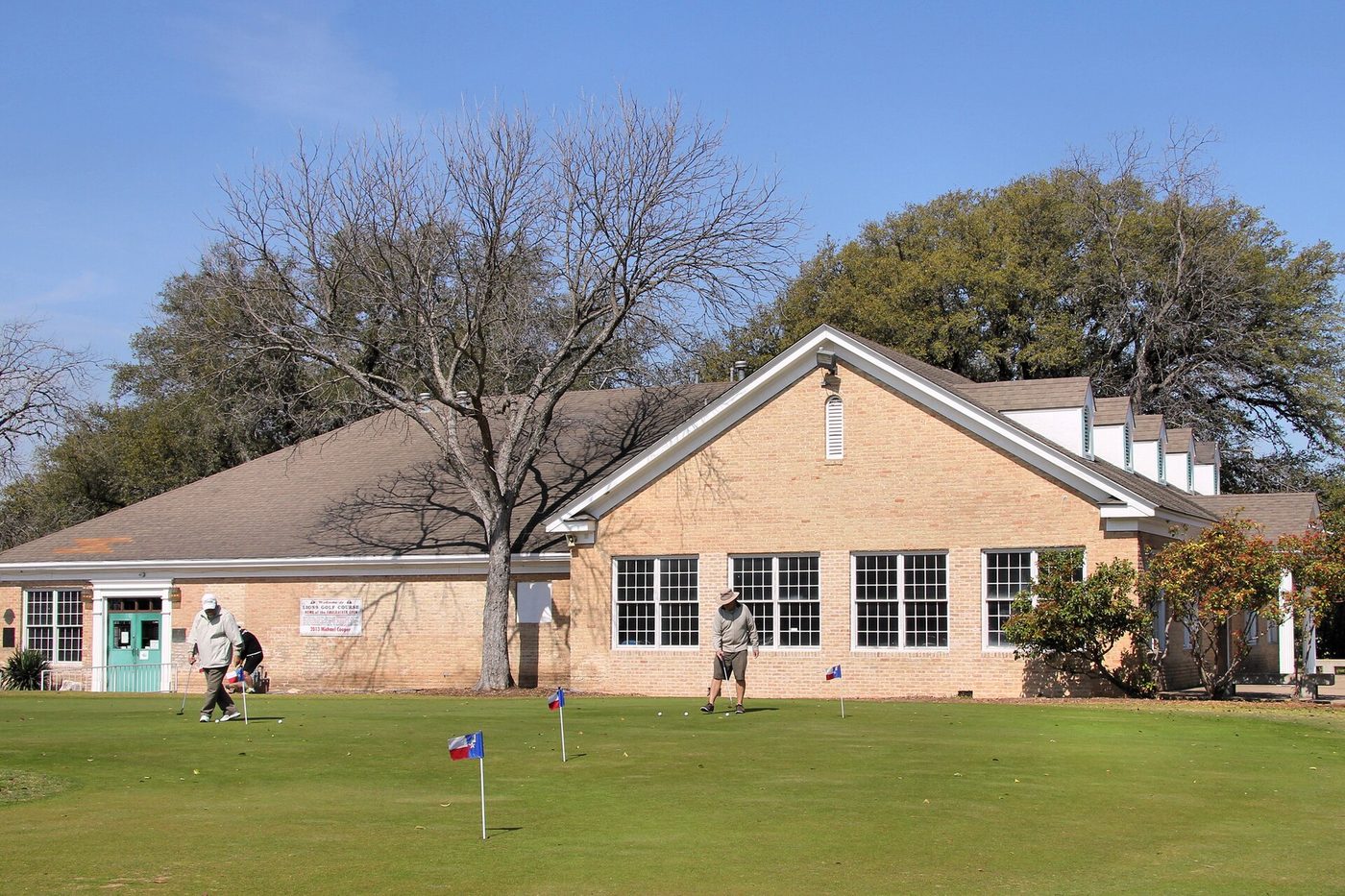
Watch the clock. The practice green is a good place to wait for your tee time, but it’s easy to lose track. Leave for the first tee with ten minutes to spare.
On the first tee: honour, introductions and “what are we playing?”
The first tee is where your group sets the tone. Be there early, introduce yourself if you’ve been paired with strangers, and agree how you’re going to play before anyone hits.
Introduce yourself. If you’re joining another group, a handshake and a first name are all it takes. Say roughly how good you are (“I’m about an 18”) so nobody is surprised.
Agree how you’ll play. Decide the tees each player will use, whether you’re counting every stroke, and whether you’re playing a game. Our advice on tees: a 10-handicap should usually play around 6,200 to 6,500 yards, an 18 around 5,800 to 6,200 and a 25 around 5,200 to 5,600. Playing the right tees does more for pace of play than any other single decision.

Who hits first? On the first tee, the order is often decided by a toss or by whoever is ready. After that, the player with the lowest score on the previous hole has the “honour” and tees off first. Under the Rules of Golf, that order matters in match play; in stroke play, playing out of turn carries no penalty, and ready golf is encouraged.
Stand in the right place. When someone is hitting, stand where they can’t see you, usually to the side and slightly behind, facing them. Never stand directly behind a player’s line or in front of the tee markers.
Be quiet during a swing. Stop talking, stop moving and don’t rustle anything in your bag while someone is over the ball. Phones on silent.
Mark your ball. Put an identifying mark on your ball and tell your group what you’re playing (“Titleist 3 with a red dot”). It saves arguments, and the Rules require you to be able to identify your ball.
How do you keep up the pace of play?
Keep up with the group in front of you, not just ahead of the group behind. Be ready when it’s your turn, play ready golf in stroke play, take no more than 40 seconds a shot as the USGA recommends, limit searches to three minutes, and let faster groups through if you fall a hole behind.
Slow play is the biggest etiquette complaint on public courses, and it’s usually caused by small delays repeated 70 times. Here’s what makes the difference:
Be ready when it’s your turn. Work out your yardage, choose your club and put your glove on while others are playing, as long as you’re not distracting them. Rule 5.6b recommends taking no more than 40 seconds to make a stroke once you’re able to play without interference, and usually less.
Play ready golf. In stroke play, “ready golf”, where whoever is ready plays first if it’s safe, is allowed under the Rules and encouraged by the USGA. Hit your tee shot if the player with the honour is still looking for a tee; putt out short putts rather than marking them. In match play, the order of play matters, so agree first. Our guide to ready golf explained has examples.
Search for three minutes, not five. Under Rule 18.2a, a ball is lost if it isn’t found within three minutes of starting to search. That rule was cut from five minutes in 2019, and it’s the single biggest time-saver in the Rules. If you think your ball may be lost or out of bounds, hit a provisional ball before you walk forward.
Walk or drive to your ball efficiently. Leave your bag or cart on the side of the green nearest the next tee. In a cart, drop one player at their ball and drive to the other.
Pick up when the hole is gone. In casual rounds, and in stroke play formats that allow it, pick up when you’ve reached double or triple bogey. Many handicap-counting rounds allow a maximum score per hole; for handicap purposes, the World Handicap System caps each hole at net double bogey.
Let faster groups play through. If you’ve lost a hole on the group in front and the group behind is waiting, wave them through on the next tee or par 3. It’s polite, and it gets them out of your way too.
Write down scores at the next tee, not on the green.
How long should a round take? Many public courses aim for about four to four and a half hours for a foursome, and walking-only courses often move faster than you’d expect because nobody is waiting for a cart to return. Our guide to how long 18 holes should take looks at the numbers, and we cover how far you walk in 18 holes separately.

Safety: “fore”, waiting and where to stand
Golf is safe until someone isn’t paying attention. Three habits prevent almost every accident.
Wait until the group ahead is out of range. If there’s any chance you could reach them, including with your best-ever drive, wait. On a par 5, that means waiting until the group ahead has hit their second shots and moved on. Hitting into the group in front is the most dangerous and least forgivable mistake in golf.
Shout “fore” loudly and early. If your ball is heading anywhere near another person, on your hole or an adjoining one, shout “fore” at once, and point in the direction the ball went. Loud enough to be embarrassing is loud enough. If you hear “fore”, don’t look up; cover your head and turn away.
Know where everyone is before you swing. Look behind you before a practice swing, never swing toward another player, and don’t walk ahead of a player who’s about to hit.
Caring for the course: divots, bunkers and ball marks
Leave the course better than you found it. Replace or fill every divot, rake every bunker you step in, and fix every ball mark on the green, plus one more.
Divots. On most northern courses with cool-season grass, replace your divot and press it down. On many bermudagrass courses in the South and at courses that provide a seed-and-sand mix, fill the hole with the mix instead, because the replaced turf often dies. If there’s a seed bottle on your cart or a seed box on the tee, that’s the course telling you which to do.
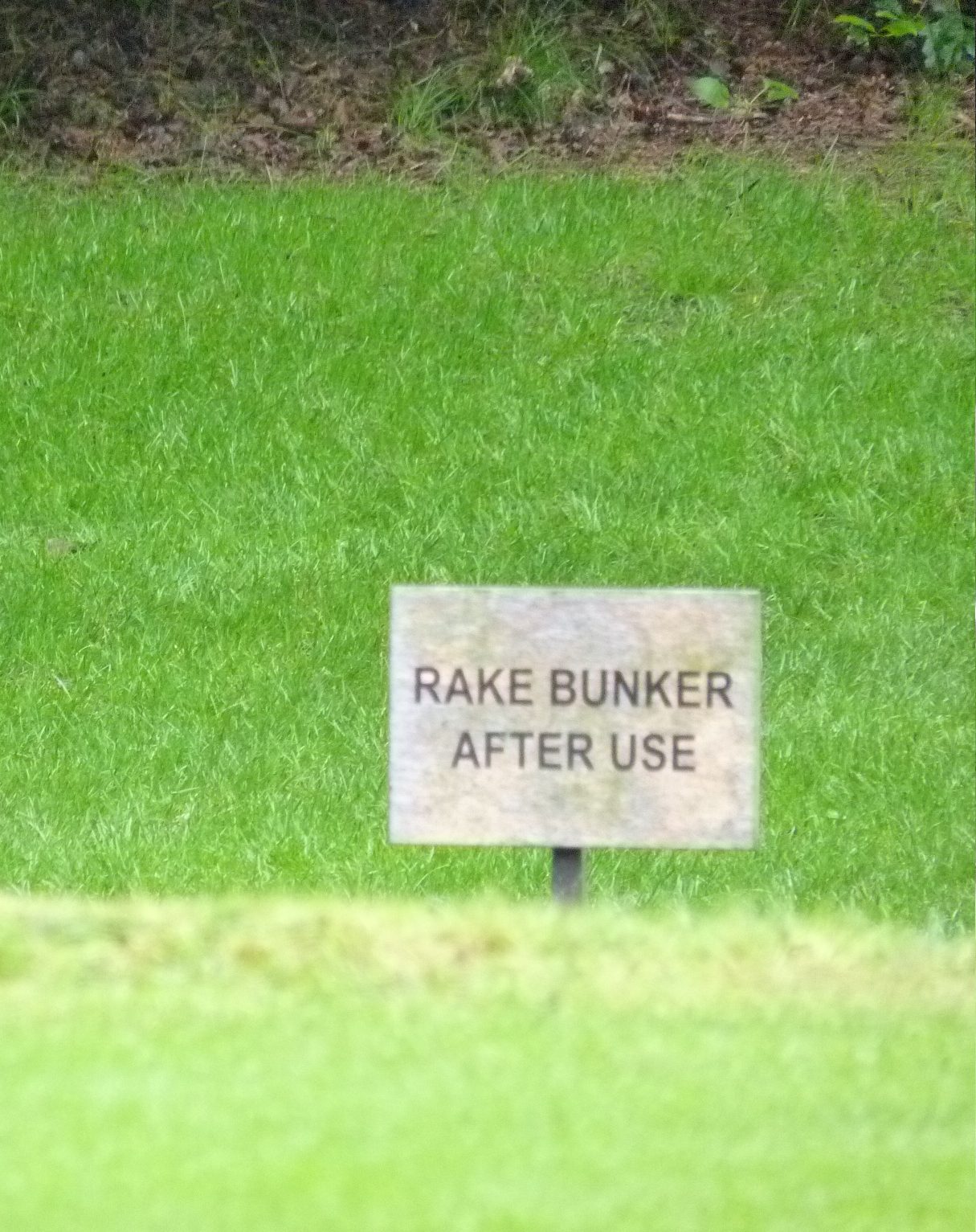
Bunkers. Enter and leave a bunker from the low side, nearest your ball, not by climbing down a steep face. After your shot, rake your footprints and the mark your shot left, working backward toward where you exit. Leave the rake where the course wants it: some courses ask for rakes inside bunkers, others outside, parallel to the line of play. Look at where the other rakes are.
Practice swings. Don’t take divots with practice swings on the tee or fairway, and never take a practice swing on the green’s fringe or apron that damages the turf.
Leave nothing behind. Water bottles, tees, broken tees, scorecards and cigarette butts go in the bins, not on the course.
Etiquette on the green
On the green, mark and repair, don’t step on anyone’s putting line, keep quiet while others putt, and leave bags and carts off the green and its fringe. You can putt with the flagstick in or out, but agree as a group so nobody is waiting on someone to tend or pull it.
The green is where most etiquette mistakes happen, and where they matter most, because damage to the putting surface affects every group behind you.
Repair your ball mark, and one more. When a ball lands on the green, it often leaves a small dent, a ball mark or pitch mark. Push the grass back toward the centre with a repair tool from the edges, then tap it flat with your putter. Don’t lift the centre up, which tears the roots. Under Rule 13.1c, you’re allowed to repair almost any damage on the green, including spike marks, without penalty.
Don’t walk on putting lines. A player’s line is the path from their ball to the hole, plus a little extra on either side. Step over it or walk around it, including behind the hole. Watch your shadow too; don’t let it fall across someone’s line while they putt.
Mark your ball when asked. If your ball is near another player’s line, mark it with a coin or ball marker behind the ball, and move the marker a putter-head length to one side if asked. Remember to move it back before you putt.
The flagstick. Since 2019, you can putt with the flagstick in the hole without penalty (Rule 13.2a). Agree as a group, and if someone wants it out, the player nearest the hole should take it out and lay it gently off the putting line, off the green if possible. Don’t drop it on the putting surface.
Don’t stand behind the hole or the player. Stand to the side, out of the player’s eyeline.
Hold the flagstick carefully. If you’re tending the flagstick, stand to the side so your shadow isn’t across the line, and pull it out as soon as the ball is struck.
Leave the green promptly. When everyone has holed out, replace the flagstick and walk off. Put your clubs away and mark your scorecard at the next tee.
Bags and carts stay off. Put your bag down on the side of the green nearest the next tee, and never drive a cart or pull a trolley across a green, fringe or tee.
Golf cart etiquette and rules
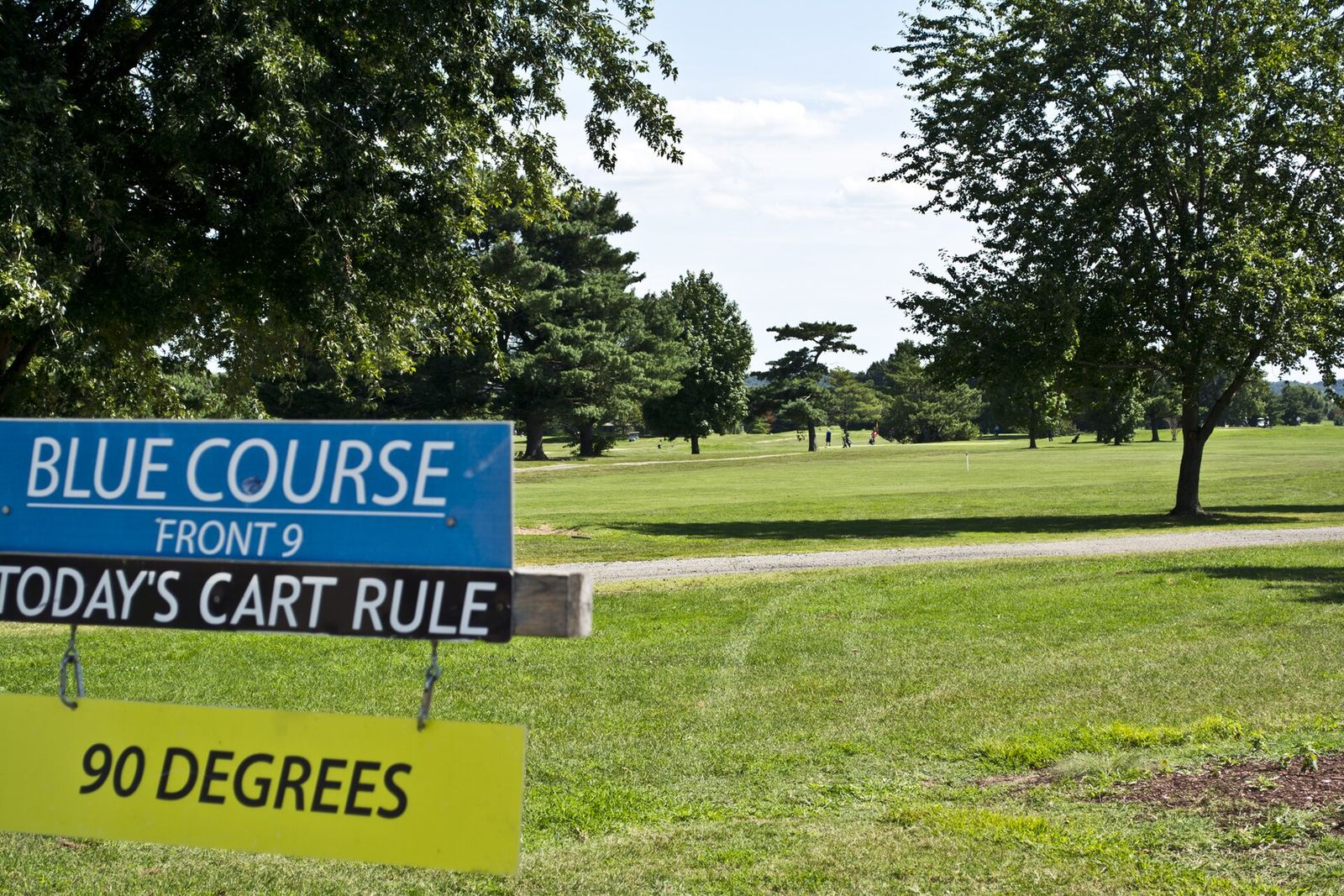
Follow the course’s cart rule for the day, keep carts on paths near tees and greens, and park where you won’t block the next group. “Cart path only” means paths everywhere; “90 degrees” means paths except to drive straight across to your ball.
Carts are the part of golf etiquette that varies most with the weather, and courses post the rule of the day at the first tee or in the cart itself:
| Cart rule | What it means | When courses use it |
|---|---|---|
| Cart path only | Drive only on paved or gravel paths | After heavy rain, during frost or heat stress, or on fragile turf |
| 90-degree rule | Stay on the path until you’re level with your ball, then turn at a right angle and drive straight to it and back | Wet or recovering fairways |
| Free roaming (open) | Drive on the fairways and rough, but keep away from tees and greens | Dry conditions |
| Walking only | No carts at all; carry, push or take a caddie | Bethpage Black, Bandon Dunes, Chambers Bay |
A few habits apply whatever the rule:
- Keep carts well away from greens and tees. Most courses use signs, ropes or lines to show where carts must return to the path, usually well short of the green.
- Park beside or behind the green, on the path near the next tee, never in front of the green.
- Drive slowly near other players, and stop while someone near you is hitting.
- Follow hazard and wet-area signs, and never drive through standing water or on steep banks.
- One cart, two players: drop your partner at their ball and drive to yours, then meet at the green.
If you’ve been handed the key to a cart for the first time, our guide to golf cart rules, including the 90-degree rule explains every sign you might see.
Caddies, forecaddies and what to tip
Tip a caddie on top of the caddie fee, and tip bag-drop and cart staff a few dollars. Caddie fees at leading public courses run from $65 at Erin Hills to $175 at Pebble Beach, and the tip is extra. Some courses publish a suggested gratuity; if yours does, follow it.
Caddies are becoming more common at America’s best public courses, and at some they’re required. The fees below are what each course charges for the caddie’s service; the tip goes on top unless the course says otherwise.
| Course | Caddie rule | Published caddie or forecaddie fee (2026) |
|---|---|---|
| Pebble Beach | Carts or caddies | Caddie $175; forecaddie $62.50 |
| Bandon Dunes (all courses) | Walking only; caddie optional | $125 plus tip |
| Pinehurst No. 2 | Caddie optional | Caddie $85; forecaddie $45 |
| Whistling Straits | Walking only; caddie optional | $90 plus tip |
| Chambers Bay | Walking only; caddie optional | $100 |
| Erin Hills | Walking only; caddie optional | $65 |
| The Park, West Palm Beach | Caddie required before 9 am | $120 |
| Kiawah Island Ocean Course | Walk at any time; caddie optional | No caddie fee; the resort publishes suggested tips of $60 to $120 |
| TPC Sawgrass Stadium Course | Forecaddie included in the green fee | Walking with a caddie is a $130 upgrade |
Fees from each course’s own website, checked September 2026.
How much to tip. There’s no single rule, and golf publications disagree. A caddie who carries your bag, reads your putts and keeps you moving for four and a half hours is doing skilled work, and most regular caddie-course golfers tip generously on top of the fee, often somewhere between half the fee and the full fee again for good service. Where a course publishes a suggested gratuity, as Kiawah does, use it as your guide. A forecaddie, who walks ahead of a cart group to find balls and read greens, is typically tipped per player. Our guide to how much to tip a caddie goes into it in detail.
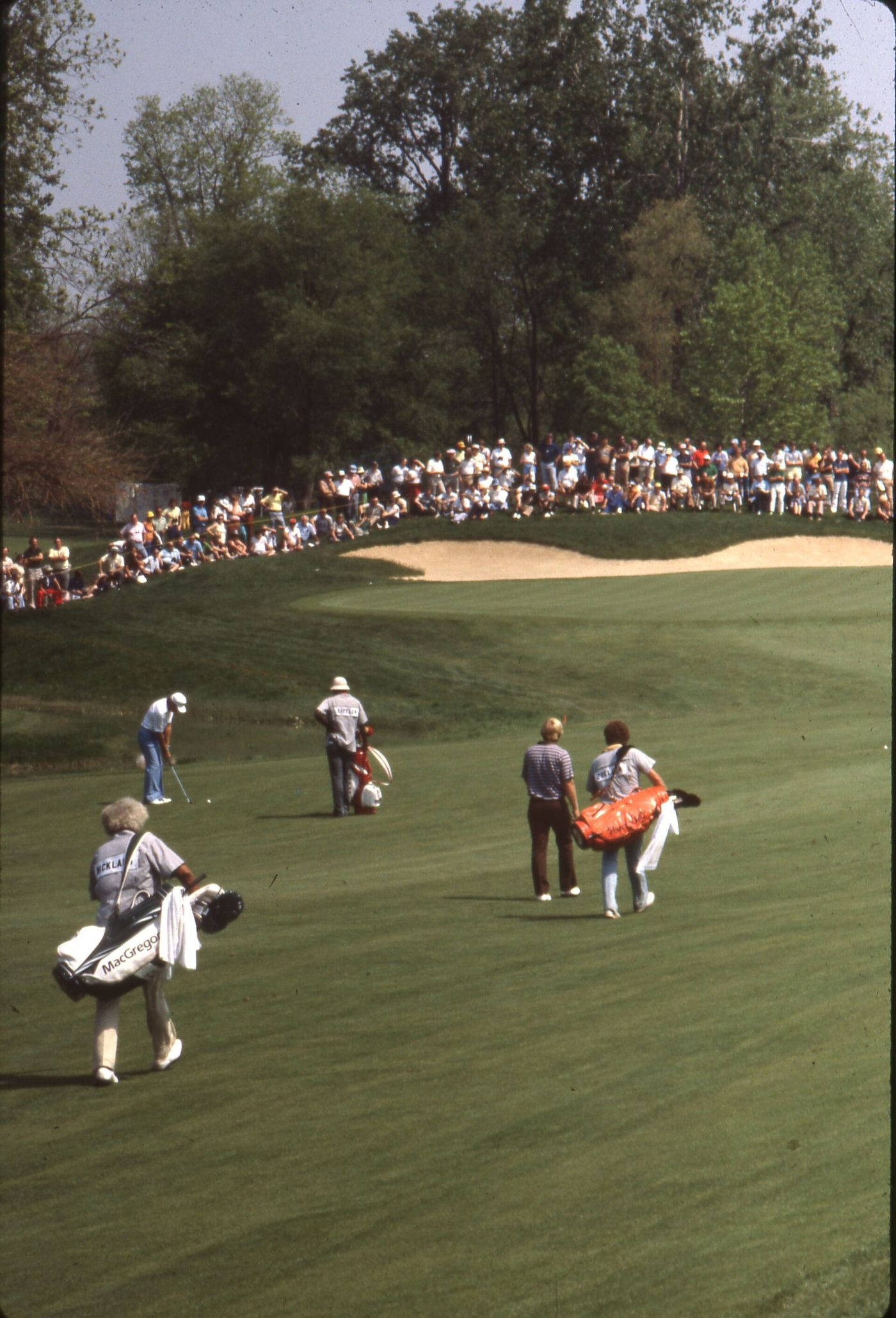
Working with a caddie. Tell them your handicap and how far you hit each club on the first tee. Let them rake bunkers and tend flags; that’s their job. Don’t argue with every read, and don’t blame them for a bad shot.
Other tips. Most golfers give a few dollars to the bag-drop attendant who takes clubs from the car, and to the staff who clean clubs and carts at the end. Tip the beverage cart as you would a bartender. You don’t tip the starter or the pro shop.
These costs add up, so if you’re budgeting for a big round, our guide to how much a round of golf costs includes caddies and tips in the total.
Phones, music, temper and honesty
Keep your phone on silent and out of sight while others are playing, take calls away from the group, and ask before playing music. If your group agrees to a Bluetooth speaker, keep it low enough that the next hole can’t hear it, and turn it off near greens and tees.
Golf’s approach to phones and music has relaxed, and a portable speaker on a cart is common at many public courses. But a few courtesies still apply:
- Silence your phone and never let it ring during someone’s swing or putt.
- Use range finders and GPS apps quickly; they save time only if you’re ready to play.
- Ask your group before playing music, and turn it off on the tee and green, when you’re near other groups and whenever anyone asks.
- Check the course’s policy. Some private clubs ban phones outside the car park; some public courses ban speakers.
We cover this in more detail in our guide to Bluetooth speaker etiquette.
Golf is also hard, and everyone gets frustrated. Good etiquette means keeping it to yourself.
Don’t throw clubs, slam them into the ground or swear loudly. It’s unpleasant for your group, the groups nearby and anyone living next to the course, and it’s the kind of behaviour Rule 1.2 lets a committee penalise.
Count every stroke, including penalty strokes, and call penalties on yourself. Golf’s integrity depends on players who do.
Don’t coach unless asked. Unsolicited swing tips, especially to a beginner, are rarely welcome.
Be generous. Say “good shot” when someone hits one; help look for their ball; concede a short putt in a friendly match. Golf is a social game first.
Finishing the round and the 19th hole
On the 18th green, finish promptly, shake hands with everyone in your group, and take off your hat if you’re wearing one. Then clear the green for the group behind, return your cart or push cart, and settle bets and scorecards at the clubhouse, not on the green.
The handshake. When the last putt drops, take your hat off and shake hands with every player and caddie in the group. It’s one of golf’s oldest customs, and it’s worth keeping even in a casual round with strangers.
Return what you borrowed. Take your cart to the return area, drop the key, and put push carts and rental clubs back where they belong.
Tip and thank. Pay caddies and thank the staff before you leave.
Clubhouse manners. Take off your hat indoors at traditional clubs, change out of golf shoes if the club asks, and follow the dress code in the restaurant and bar, which is often stricter than on the course. At private clubs, your host will pay; don’t try to hand over cash or a card to staff. Our guide to private club etiquette covers what to expect as a guest, and our guide to what country club membership costs explains how those clubs work.
Etiquette for beginners, juniors and seasonal golf
Beginners. Nobody expects a beginner to play well. What people notice is whether you keep up and look after the course. Play from the forward tees, pick up when you’ve reached double par, and tell your group it’s one of your first rounds; most golfers will be kind and helpful. If you can, play your first rounds at quiet times, such as weekday afternoons or twilight, when a slower pace won’t hold anyone up.
Juniors. Kids learn etiquette fastest by copying adults. Teach them to stand still and quiet, repair ball marks and rake bunkers from the first day. Many courses run programmes where children play free or cheaply with a paying adult; our guide to kids play free programs lists some.
Winter golf. In winter, some courses play “preferred lies” or lift, clean and place in fairways, and may use temporary greens or tees. Follow the local rule on the card or the sign at the first tee, and stay off frosty greens until the course opens them; walking on frozen grass damages it. We explain the details in our guide to winter rules.
The most common golf etiquette mistakes
If you avoid these, you’re ahead of most golfers on a public course:
- Not being ready to play when it’s your turn.
- Searching for a ball for more than three minutes.
- Hitting into the group in front.
- Walking on another player’s putting line.
- Leaving ball marks, divots and footprints in bunkers unrepaired.
- Driving a cart too close to a green or tee, or ignoring a cart-path-only rule.
- Talking or moving during another player’s swing.
- Marking scorecards on the green while the group behind waits.
- Playing tees that are too long for your game.
- Assuming the caddie fee includes the tip.
Frequently asked questions
What are the basic rules of golf etiquette?
Keep up with the group ahead, stay quiet and still while others play, shout “fore” if your ball heads toward anyone, and look after the course by fixing ball marks, replacing or filling divots and raking bunkers. Follow the course’s cart and dress rules, and shake hands at the end.
Is golf etiquette part of the Rules of Golf?
Partly. Rule 1.2 of the Rules of Golf expects players to act with integrity, show consideration to others and take care of the course, and it lets a committee disqualify a player for serious misconduct. Many other points, such as dress codes, cart rules and tipping, are course policy or custom.
How long should you look for a lost golf ball?
Three minutes. Under Rule 18.2a of the Rules of Golf, a ball is lost if it isn’t found within three minutes of starting to search. The limit was five minutes before 2019. If you think your ball may be lost, hit a provisional ball before walking forward.
Can you putt with the flagstick in?
Yes. Since the 2019 Rules changes, there’s no penalty for hitting the flagstick with a putt from the green (Rule 13.2a). Agree with your group whether the flagstick is in or out before anyone putts, so nobody has to wait while it’s pulled or replaced.
What is ready golf?
Ready golf means playing when you’re ready and it’s safe, rather than strictly in turn. It’s allowed in stroke play under the Rules of Golf and encouraged by the USGA to speed up play. In match play, the order of play matters, so players should agree before playing out of turn.
What should I wear to play golf for the first time?
A collared golf shirt, tailored trousers or golf shorts, and golf shoes or clean trainers. Avoid denim, gym shorts and T-shirts, especially at resorts and private clubs. Pinehurst, for example, doesn’t allow denim or open-toe shoes on its courses or practice range. Check the course’s website before you go.
How much should you tip a caddie?
On top of the caddie fee, which runs from $65 at Erin Hills to $175 at Pebble Beach. Where a course publishes a suggested gratuity, as Kiawah Island does, follow it. Otherwise many regular caddie-course golfers tip between half and all of the fee again for good service.
When should you let a group play through?
When your group has lost a clear hole on the group in front and a faster group is waiting behind you. Wave them through at the next tee or on a par 3, stand aside while they hit, and then continue. It keeps the whole course moving.
What does “cart path only” mean?
It means golf carts must stay on the paved or gravel cart paths for the whole round, usually because the course is wet or the grass is recovering. Park on the path level with your ball and take several clubs with you so you don’t have to walk back.
Our verdict
Golf etiquette isn’t a test you pass by memorising a list. It’s a way of sharing a course with 150 other golfers without making anyone’s day worse. If you keep up, look after the course and stay out of other people’s way, you’ll be welcome in any group, whatever you shoot.
Start with the three habits that matter most: be ready when it’s your turn, fix what you damage, and follow the course’s own rules on carts, walking and dress. Everything else, from the handshake on the 18th to the tip for your caddie, comes naturally once those are second nature. If you’re choosing where to play, our guide to the best public golf courses in America tells you which courses are walking only, which use caddies and what each costs.
Sources
- Rules of Golf: Rule 1, The Game, Player Conduct and the Rules, USGA
- Rule 5, Playing the Round, USGA
- Pace of Play, USGA
- Encouraging prompt pace of play, USGA
- World Handicap System, USGA
- FAQs, Pinehurst Resort
- Frequently asked questions, Pebble Beach Resorts
- Green fees, Bandon Dunes Golf Resort
- Golf price list, Bethpage State Park, New York State Parks
- Rates, Chambers Bay
- Rates, Erin Hills
- Rates and policies, Destination Kohler
- Ocean Course FAQ, Kiawah Island Golf Resort
- FAQ, TPC Sawgrass
- Golf, The Park, West Palm Beach
- Unwritten rules of golf etiquette, British Columbia Golf
Image credits
| Image | Photographer | Licence | Source |
|---|---|---|---|
| Today’s cart rule sign, East Potomac Golf Course (featured image) | Tim Evanson | CC BY-SA 2.0 | Wikimedia Commons |
| Kingsley Club, first tee | Ben Scripps | CC BY-SA 4.0 | Wikimedia Commons |
| Rake bunker after use sign, Sennelager | R-E-AL (German Wikipedia) | Copyrighted free use | Wikimedia Commons |
| Caddies at the 1980 Memorial Tournament, Muirfield Village | David E. Lucas | public domain | Wikimedia Commons |
| Bandon Dunes push carts and starter’s clock | Visitor7 | CC BY-SA 3.0 | Wikimedia Commons |
| Lions Municipal Golf Course clubhouse, Austin | Larry D. Moore | CC BY 4.0 | Wikimedia Commons |