Cypress Point Club in Pebble Beach is the best golf course in California and one of the two best in the country, but it is private and you can’t book it. Of the best golf courses in California that you can actually play, Pebble Beach is the obvious first choice at $695, followed by Pasatiempo, Spyglass Hill and Torrey Pines South.
California is the deepest golf state in America. GOLF ranks 40 courses in its state list, Golf Digest 60, and the top of both lists is as good as anywhere in the world. It is also the state where the gap between what you can and can’t play is most obvious. Four of the top five on GOLF’s California list are private clubs whose members include studio heads and tech founders, and the fifth, Pebble Beach, costs more than most golfers spend on golf in a year. But California also has the best municipal golf in the country, with courses in San Diego, San Francisco and Los Angeles that host major championships or once did, and that a city resident can play for under $100.
How we built this. The rankings come from GOLF’s Best Golf Courses in California for 2024-25, published in December 2024, and the national lists we compare in our guide to every major national ranking. Golf Digest’s California list refused our requests, so we don’t quote its positions. Green fees come from each course’s own rate page where one exists and are dated September 2026; where the only figure is from a news report or a third-party listing, we say “reported”. We haven’t played every course here; where a note leans on the rankings, published data and the architecture rather than our own scorecards, we say so.
At a glance
- Best golf course in California: Cypress Point Club (private), No. 1 on GOLF’s California list and the LINKS 100 U.S.
- Best course you can book: Pebble Beach Golf Links, No. 2 in the state and No. 1 on both Golf Digest’s and GOLF’s public lists, $695 through March 2027
- Best value among the ranked courses: Rustic Canyon in Moorpark, No. 23 on GOLF’s list, $65 on weekdays and $90 at weekends
- Best municipal course: Torrey Pines South, a two-time U.S. Open venue, $73 to $90 for San Diego residents and $258 to $322 for everyone else
- Cheapest good round: the City of Los Angeles courses, from about $35 on weekdays at Wilson in Griffith Park
- Best-kept secret: Pacific Grove Golf Links, the city course next to Pebble Beach, $66 on weekdays for anyone
- Best months: September to November on the coast, October to May in the desert, summer in the mountains
The best golf courses in California at a glance
The table lists the ranked courses first, then the best public and resort courses by region. “Access” is what a golfer without a membership can expect: private means members and their guests only; resort guests means you need a room; resort/public means anyone can book, usually with an earlier window for hotel guests; public means anyone can book, and “city” marks a municipally owned course.
| Course | Region | Access | Architect (year) | Green fee (Sept 2026) | Ranking |
|---|---|---|---|---|---|
| Cypress Point | Monterey | Private | Alister MacKenzie with Robert Hunter (1928) | Members’ guests only | GOLF CA No. 1; LINKS U.S. No. 1 |
| Pebble Beach | Monterey | Resort/public | Jack Neville and Douglas Grant (1919) | $695 plus cart or caddie | GOLF CA No. 2; No. 1 on both public lists |
| Los Angeles CC (North) | Los Angeles | Private | George C. Thomas Jr. | Members’ guests only | GOLF CA No. 3; 2023 U.S. Open |
| Riviera | Los Angeles | Private | George C. Thomas Jr. and William P. Bell (1927) | Members’ guests only | GOLF CA No. 4 |
| San Francisco Golf Club | Bay Area | Private | A.W. Tillinghast (1915) | Members’ guests only | GOLF CA No. 5 |
| Valley Club of Montecito | Central Coast | Private | Alister MacKenzie and Robert Hunter (1929) | Members’ guests only | GOLF CA No. 7 |
| Olympic Club (Lake) | Bay Area | Private | Willie Watson and Sam Whiting (1924-27) | Members’ guests only | GOLF CA No. 8; five U.S. Opens |
| Pasatiempo | Santa Cruz | Public | Alister MacKenzie (1929) | $465 walking, $515 riding | GOLF CA No. 9 |
| Spyglass Hill | Monterey | Resort/public | Robert Trent Jones Sr. (1966) | $525 plus $50 cart (reported, to March 2026) | GOLF CA No. 14 |
| Torrey Pines (South) | San Diego | Public (city) | William Bell (1957); Rees Jones redesign | $258-$322 non-residents; $73-$90 residents | GOLF CA No. 22 |
| Rustic Canyon | Los Angeles area | Public | Gil Hanse and Jim Wagner with Geoff Shackelford | $65-$90 | GOLF CA No. 23 |
| PGA West (Stadium) | Desert | Resort/public | Pete Dye (1987) | $146-$264 dynamic (reported) | GOLF CA No. 25 |
| TPC Harding Park | Bay Area | Public (city) | Willie Watson and Sam Whiting (1925) | Dynamic; not published | GOLF CA No. 31; 2020 PGA Championship |
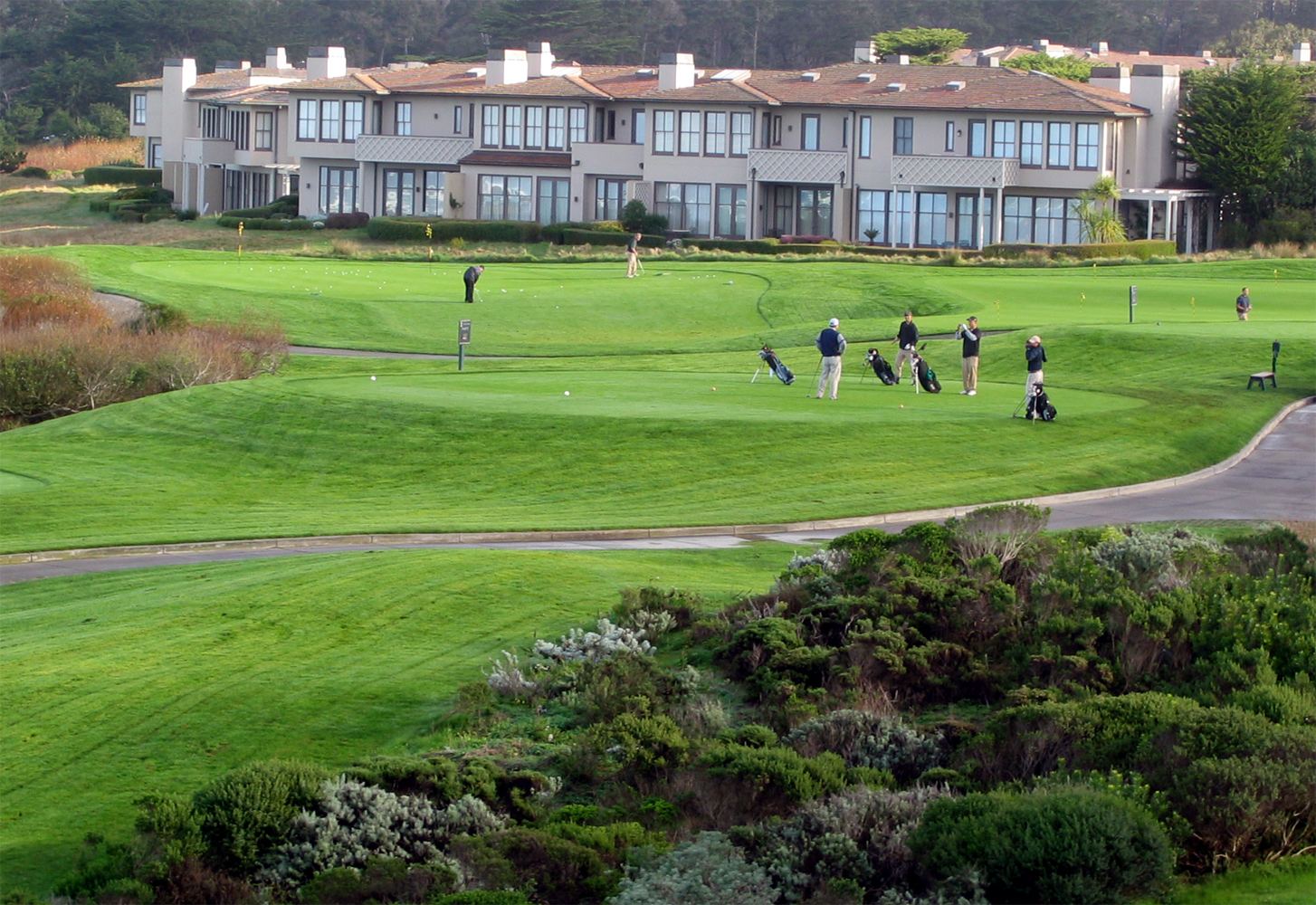
| Links at Spanish Bay | Monterey | Resort/public | Robert Trent Jones Jr., Tom Watson and Sandy Tatum (1987) | Not published | Pebble Beach’s links course |
| Poppy Hills | Monterey | Public | Robert Trent Jones Jr. (1986) | $350 public; $95-$125 NCGA members | Owned by the NCGA |
| Pacific Grove Golf Links | Monterey | Public (city) | H. Chandler Egan (1932) | $66-$89 walking | Best cheap links golf |
| Presidio | Bay Area | Public | Opened 1895 | $105-$137 non-residents | Historic army course |
| Sandpiper | Central Coast | Public | William F. Bell (1972) | $175-$245 | Clifftop course |
| Pelican Hill (Ocean South) | Orange County | Resort/public | Tom Fazio (1991) | $340-$415 public; $255-$315 guests | Ocean views |
| Maderas | San Diego | Public | Johnny Miller and Robert Muir Graves (1999) | Dynamic; cart $30 | Slope 142 |
Rankings: GOLF’s Best Golf Courses in California for 2024-25 (December 16, 2024), the LINKS 100 U.S., and Golf Digest’s and GOLF’s public lists. Fees checked September 2026; see each course’s section for what’s included and where the figure came from.
Three things stand out. First, the private top is extraordinary: six of GOLF’s top eight in California are also in the national top 60 on at least two of the four major lists, and Cypress Point is No. 1 on two of them and in the top three on all four. Second, California’s public golf is dominated by one place, the Monterey Peninsula, where Pebble Beach, Spyglass Hill, Spanish Bay, Poppy Hills and Pacific Grove sit within a few miles of each other. Third, the state’s big cities own some of the best golf in the country. Torrey Pines, Harding Park and the Los Angeles city courses are municipal, and they’re priced for residents.
What is the best golf course in California?
Cypress Point Club in Pebble Beach is the best golf course in California and, by the average of the four major national rankings, the second-best in America. It’s No. 1 on GOLF’s California list and No. 1 on the LINKS 100 U.S. It is private, and you can’t book it.
The rest of California’s top tier is private too. We don’t list green fees or course ratings for the clubs below: none of them sells a tee time or publishes rates. The notes lean on the rankings, the clubs’ histories and their architecture.
Cypress Point Club
Pebble Beach · private · Alister MacKenzie with Robert Hunter (1928) · GOLF California No. 1 · Golf Digest U.S. No. 3, GOLF U.S. No. 2, LINKS U.S. No. 1 · members and their guests only
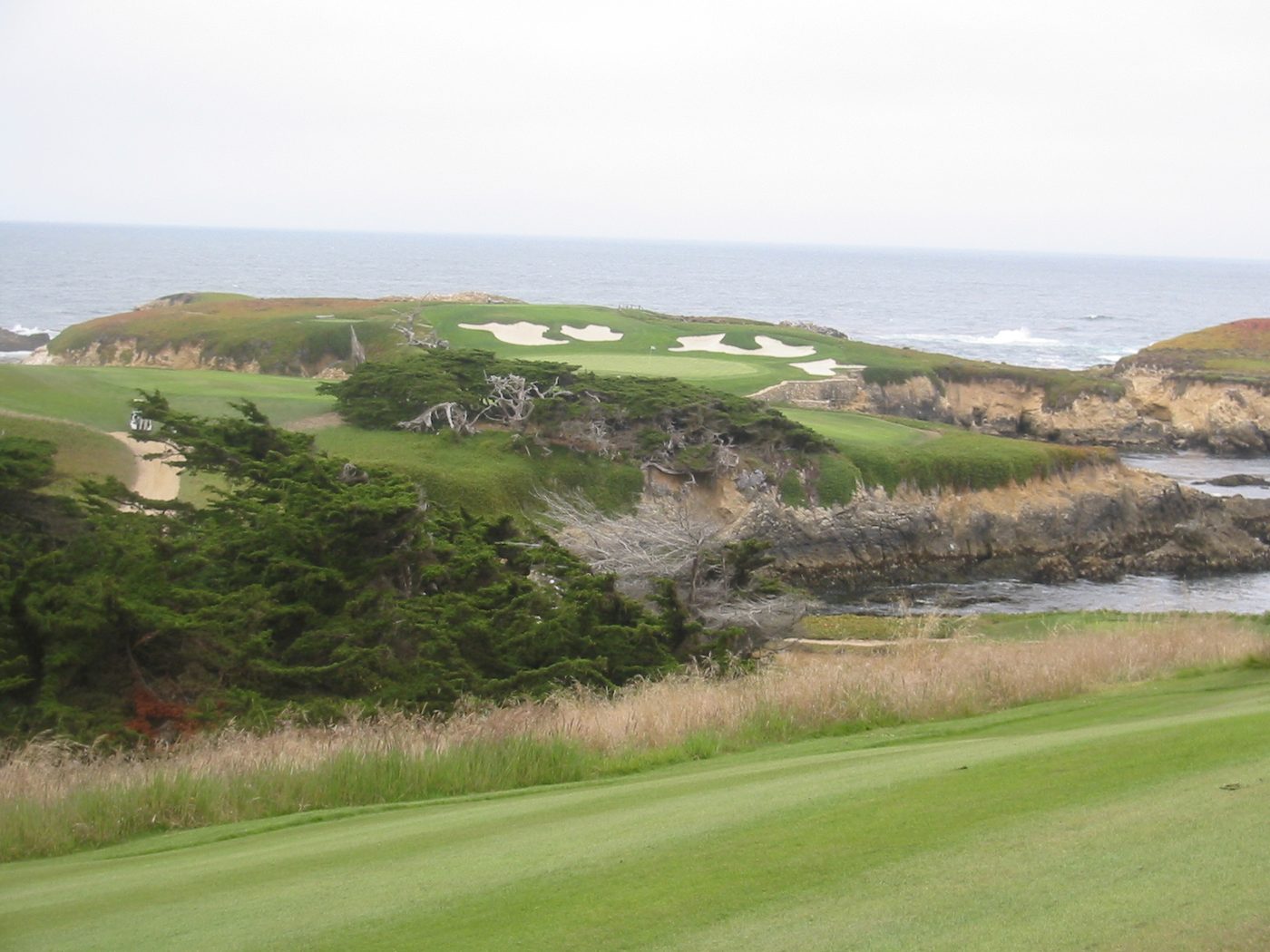
Cypress Point is the course golf architects rate as the best in America, and it’s easy to see why. In 18 holes it moves from pine forest into white sand dunes and then out onto the rocks above the Pacific, and it makes great holes out of all three. Its 16th is the most famous par 3 in American golf: a full carry of more than 200 yards over an ocean inlet to a green on a headland, with a fairway to the left for anyone who would rather lay up. The club is tiny and private, and it doesn’t reply to requests from strangers.
Los Angeles Country Club (North Course)
Los Angeles · private · George C. Thomas Jr.; restored by Gil Hanse · GOLF California No. 3 · Golf Digest U.S. No. 16, GOLF U.S. No. 10 · members and their guests only
The North Course at LACC sits on some of the most valuable land in America, between Beverly Hills and Century City, and for most of its history it was famously private, even by Los Angeles standards. Gil Hanse’s restoration brought back George Thomas’s wide fairways, bold barranca bunkering and big greens, and in 2023 the club hosted its first U.S. Open, won by Wyndham Clark. That week was the first time most golfers had seen the course.
Riviera Country Club
Pacific Palisades · private · George C. Thomas Jr. and William P. Bell (1927) · GOLF California No. 4 · Golf Digest U.S. No. 18, GOLF U.S. No. 14 · members and their guests only
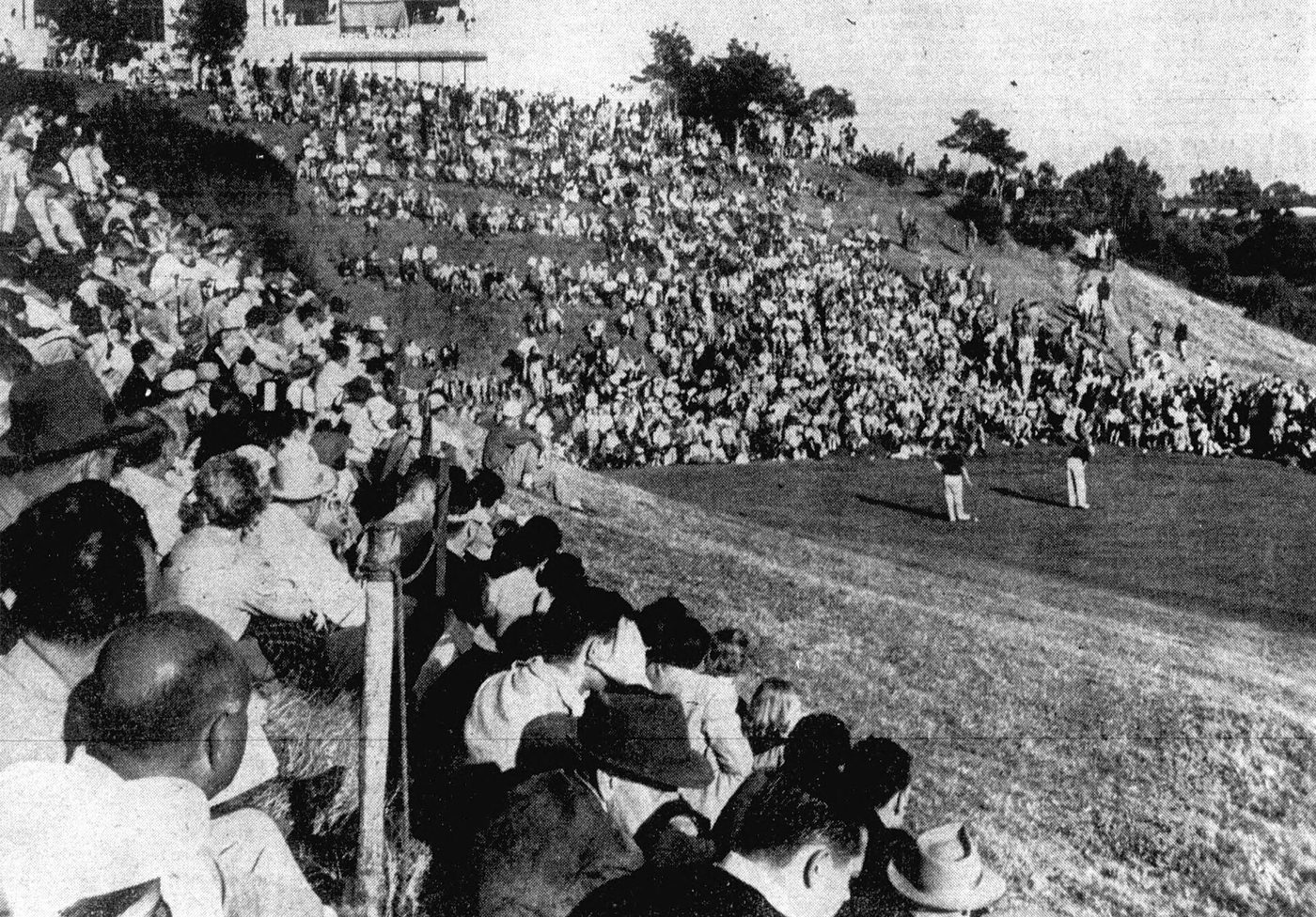
Riviera is the course the PGA Tour players love, and they get to play it every February at the Genesis Invitational. It is full of great holes: the short par-4 10th, where the green is so narrow that laying up is often the smart play, and the 18th, which climbs up to a green below the clubhouse, set in a natural amphitheatre. Ben Hogan won the 1948 U.S. Open there, which is why it’s nicknamed “Hogan’s Alley”, and it will host the golf at the 2028 Los Angeles Olympics.
San Francisco Golf Club
San Francisco · private · A.W. Tillinghast (1915) · GOLF California No. 5 · Golf Digest U.S. No. 33, GOLF U.S. No. 22 · members and their guests only
San Francisco Golf Club is the quiet one. It doesn’t court publicity or big championships, and it is widely considered one of the best courses Tillinghast built, with bold bunkering and a famous par 3, the 7th, near the site of the Broderick-Terry duel of 1859, one of the most notorious episodes in early California politics. It’s a members’ club in the purest sense.
The Olympic Club (Lake Course)
San Francisco · private · Willie Watson (1924) and Sam Whiting (1927) · GOLF California No. 8 · Golf Digest U.S. No. 35 · members and their guests only
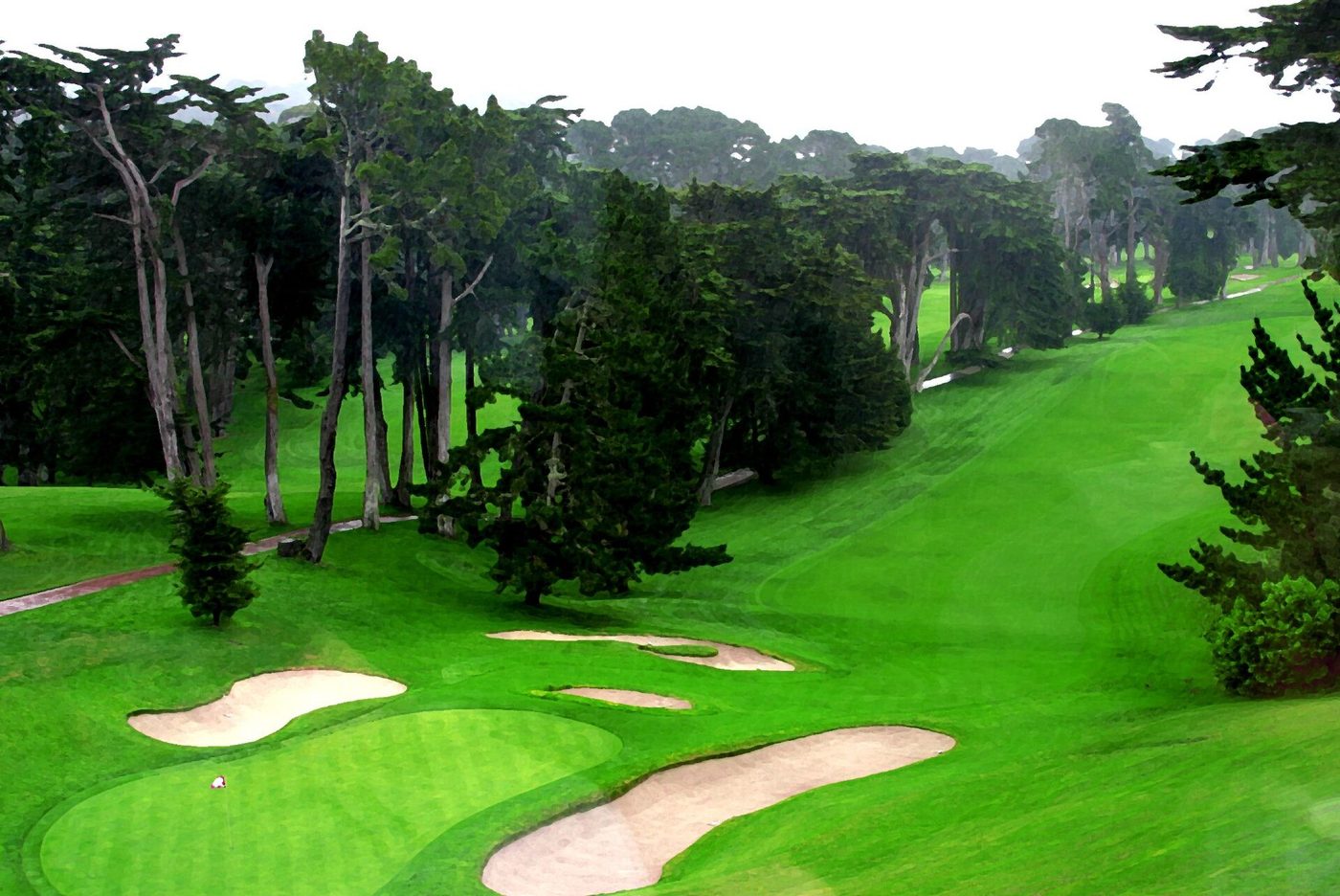
The Lake Course has hosted five U.S. Opens, and it’s known for its upsets: Jack Fleck beating Ben Hogan in 1955, Billy Casper catching Arnold Palmer in 1966, Scott Simpson in 1987 and Webb Simpson in 2012. It’s a tough, tree-lined course on the hills above Lake Merced, with fairways that slope the wrong way and small greens. Olympic is a large club, but it is private, and its courses are open only to members and their guests.
The Valley Club of Montecito
Montecito · private · Alister MacKenzie and Robert Hunter (1929) · GOLF California No. 7 · Golf Digest U.S. No. 71, GOLF U.S. No. 58 · members and their guests only
The Valley Club is the other MacKenzie and Hunter course in California, built a year after Cypress Point in the hills above Santa Barbara. It has no ocean holes and no Tour history, which is exactly why it’s so admired by people who know golf architecture: it’s a pure, strategic course with brilliant greens, built by the same partnership at the height of their powers.
The rest of GOLF’s California top 15 is mostly private as well: the California Golf Club of San Francisco (No. 6), Bel-Air (No. 10), both courses at Monterey Peninsula Country Club (No. 11 and No. 13), Ladera in the desert (No. 12) and the Meadow Club in Fairfax (No. 15), another MacKenzie design.
Which of California’s top-ranked courses can you actually play?
Pebble Beach, No. 2 on GOLF’s California list and No. 1 on both major public lists, is the best course in the state you can book. Pasatiempo (No. 9), Spyglass Hill (No. 14), Torrey Pines South (No. 22) and Rustic Canyon (No. 23) are the next four.
That makes California one of the best states in America for top-ranked public golf, but the range of prices is enormous. Pebble costs $695 before a cart or caddie; Rustic Canyon, a Gil Hanse course ranked just one place below Torrey Pines South, costs $65 on a weekday. GOLF counts 11 California courses on its Top 100 Courses You Can Play list.
The sections below take the public and resort courses region by region. Every course with its own heading gets a data line: location, who can play, architect and year, par and yardage, course rating and slope from a named tee where one is published, the green fee with the date we checked it, and the walking and booking rules. Course rating is what a scratch golfer is expected to shoot; slope measures how much harder the course plays for a bogey golfer, on a scale where 113 is average and 155 the maximum. The USGA explains both.
The Monterey Peninsula: Pebble Beach and its neighbours
The Monterey Peninsula has more great golf in a few square miles than anywhere else in America: Pebble Beach, Cypress Point, Spyglass Hill, Spanish Bay, Monterey Peninsula Country Club, Poppy Hills and the city course at Pacific Grove. You can play five of them. We cover every public course on the Monterey Peninsula, including the Bayonet course at Seaside, in a separate guide.
Pebble Beach Golf Links
Pebble Beach · resort/public · Jack Neville and Douglas Grant (1919) · Par 72 · White tees 71.7/135 · Green fee $695 (April 2026 to March 2027); non-guests pay $60 for a cart; caddie $175, forecaddie $62.50 (official, September 2026) · resort guests can book up to 18 months ahead with a minimum stay; non-guests only 24 hours ahead
Pebble Beach is the best course in America that anyone can play, No. 1 on both Golf Digest’s and GOLF’s public lists and inside the top ten on every major national ranking. Its reputation is built on the stretch from the 4th to the 10th, which runs along the cliffs above Carmel Bay, and on the 18th, the most famous finishing hole in golf, a par 5 that curves around the bay with the Pacific on the left the whole way. The 7th, a tiny downhill par 3 to a green on the rocks, is a wedge for most players and one of the most photographed holes in the world.
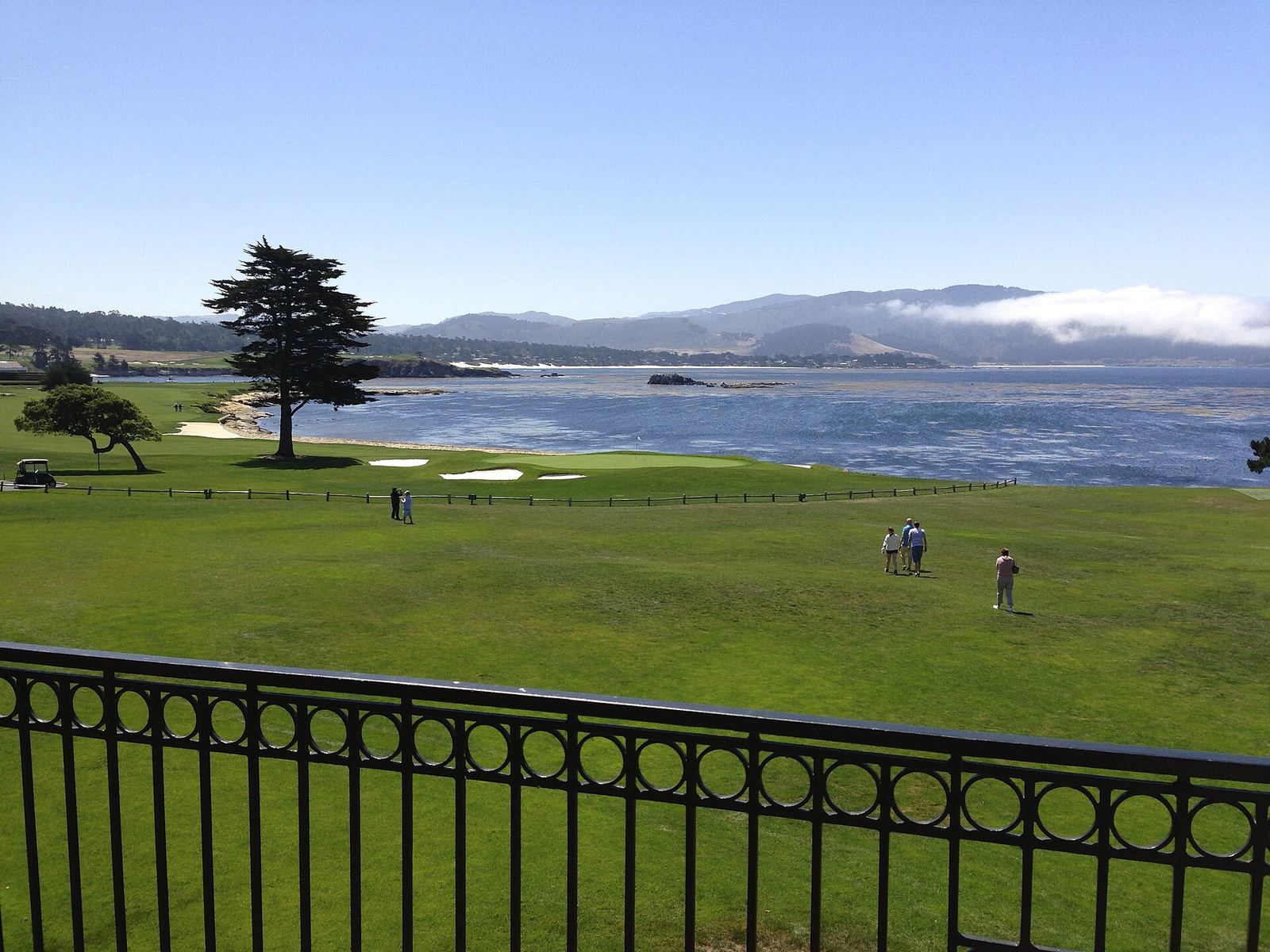
Pebble has hosted six U.S. Opens, most recently in 2019, and will host the next one in 2027. It is also a surprisingly short and fair course for an average golfer, with small greens but few forced carries, and the famous holes are more beautiful than brutal.
Which tees: a 10-handicap should play the white tees, rated 71.7 with a slope of 135; an 18 should play the forward-middle set; a 25 should play the forward tees and enjoy the scenery. Nobody pays $695 to lose a dozen balls into Carmel Bay.
Getting on: the easiest way is to stay at The Lodge at Pebble Beach or another resort property, which lets you book up to 18 months ahead but requires a minimum stay. Non-guests can book only 24 hours in advance, which in practice means turning up and hoping. We break down what a round at Pebble really costs, including the caddie, the cart and the lodging, in a separate guide.
Verdict: worth it once, if you can afford it. Nothing else you can book in America matches holes 4 to 10. On pure value it’s hard to justify, but it’s the one course on this list that almost every golfer wants to play before they die.
Spyglass Hill Golf Course
Pebble Beach · resort/public · Robert Trent Jones Sr. (1966) · Par 72, 6,960 yards · Gold tees 73.3/140 (reported) · Green fee $525 plus $50 cart for non-guests (reported, rates to March 31, 2026; current rate not verified) · non-guests can book 3 months ahead; resort guests 18 months
Spyglass Hill is the harder course, and many good golfers think it’s the better one. The first five holes run through white sand dunes toward the ocean, with the 1st, a long downhill par 5, among the best opening holes in the country. Then the course turns inland and climbs into the Del Monte Forest, where the holes become tighter, longer and tree-lined, with small, fast greens. It’s No. 14 on GOLF’s California list and on Golf Digest’s national top 100.
Verdict: a better test of golf than Pebble and a better value at roughly $120 less, but the forest holes are a grind for a high handicapper. A 10-handicap will love it; a 25 should play Pacific Grove instead.
The Links at Spanish Bay
Pebble Beach · resort/public · Robert Trent Jones Jr., Tom Watson and Sandy Tatum (1987) · Par 72, 6,821 yards · Blue tees 74.3/142 (reported) · Green fee not published on the resort’s site in our check · walking allowed; caddies available
Spanish Bay is Pebble Beach’s attempt at a Scottish links, built in the dunes on the north side of the peninsula, with firm, fescue-style fairways, dunes and holes along the shoreline. It’s best known for the bagpiper who plays at sunset every evening on the course. As golf it’s not as good as Pebble or Spyglass, but it is the most enjoyable of the three for a mid-handicapper, and the wind makes it a real links test on the right day.
Verdict: a good third round at Pebble Beach, and the best of the three for a high handicapper. Check the rate when you book; it doesn’t publish one.
Poppy Hills Golf Course
Pebble Beach · public (owned by the Northern California Golf Association) · Robert Trent Jones Jr. (1986; redesign 2014) · Par 71, 7,002 yards · back tees 73.5/135 · Green fee: NCGA members $95 on weekdays and $125 at weekends, plus $30 for a cart; members’ guests $150 and $185; public $350 (official, September 2026) · walking allowed
Poppy Hills is owned by the NCGA, the golf association for Northern California, and was rebuilt by Robert Trent Jones Jr. in 2014 into a firmer, more natural course through the Del Monte Forest. It’s a very good course, but the pricing tells you who it’s for: an NCGA member pays $95 on a weekday, while the public rate is $350.
Verdict: worth it for NCGA members, who get one of the best deals on the peninsula. At $350 for everyone else, it’s poor value against Spyglass Hill.
Pacific Grove Golf Links
Pacific Grove · public (city-owned) · H. Chandler Egan (front nine, 1932); back nine added later · Par 70, 5,732 yards · Green fee $66 on weekdays and $89 at weekends, walking; cart $25 per rider (official, September 2026) · book up to 60 days ahead online
Pacific Grove is the best-value golf on the Monterey Peninsula, and locals call it “the poor man’s Pebble Beach”. The front nine is a pleasant, tree-lined city course; the back nine runs out into the dunes around the Point Pinos lighthouse, with ocean views and wind that make it feel like a genuine links. At 5,732 yards it’s short, but the back nine will give anyone a test in the wind.
Verdict: one of the best-value rounds in America. Play it the day before Pebble, and walk.
Santa Cruz and the Bay Area
The Bay Area has one of the best public courses in the country, Pasatiempo, and a set of city courses in San Francisco that rival any city’s in America. We cover the Bay Area’s courses, and San Francisco’s public courses in more detail, in separate guides.
Pasatiempo Golf Club
Santa Cruz · public · Alister MacKenzie (1929) · Par 71, 6,495 yards · White tees 70.7/138 · Green fee $465 walking and $515 riding (official, September 2026; no year printed) · public tee times 7 days ahead, or up to 365 days for a $50 priority fee · caddies with 24 hours’ notice
Pasatiempo is Alister MacKenzie’s public masterpiece, and the architect liked it so much that he built a house beside the sixth fairway and lived there until his death. It was founded by Marion Hollins, the champion golfer who also developed Cypress Point, and it has some of MacKenzie’s best greens and bunkering anywhere, restored in recent decades to their original look. It’s No. 9 on GOLF’s California list, and between No. 44 and No. 93 on the national lists.
Which tees: Pasatiempo is short but hard, with steep greens and deep bunkers. A 10-handicap should play the white tees at about 6,500 yards; an 18 and a 25 should move forward.
Verdict: the best golf you can book in California after Pebble, at two-thirds the price. If you love golf architecture, it’s arguably the better experience. Walk it.
TPC Harding Park
San Francisco · public (city-owned) · Willie Watson and Sam Whiting (1925) · Par 72 · Green fee: dynamic, set in real time and not published as a rate card; San Francisco resident cardholders are guaranteed the lowest rate; cart $25 per golfer (official, September 2026) · tee times 8 to 30 days ahead, with a $19 advance booking fee
Harding Park is San Francisco’s championship municipal course, set on a peninsula in Lake Merced next door to the Olympic Club. It was restored in the early 2000s and has since hosted the 2009 Presidents Cup and the 2020 PGA Championship, won by Collin Morikawa. It’s a tree-lined, parkland course with cypress on every hole, and the holes along the lake, the 14th through the 18th, are the best.
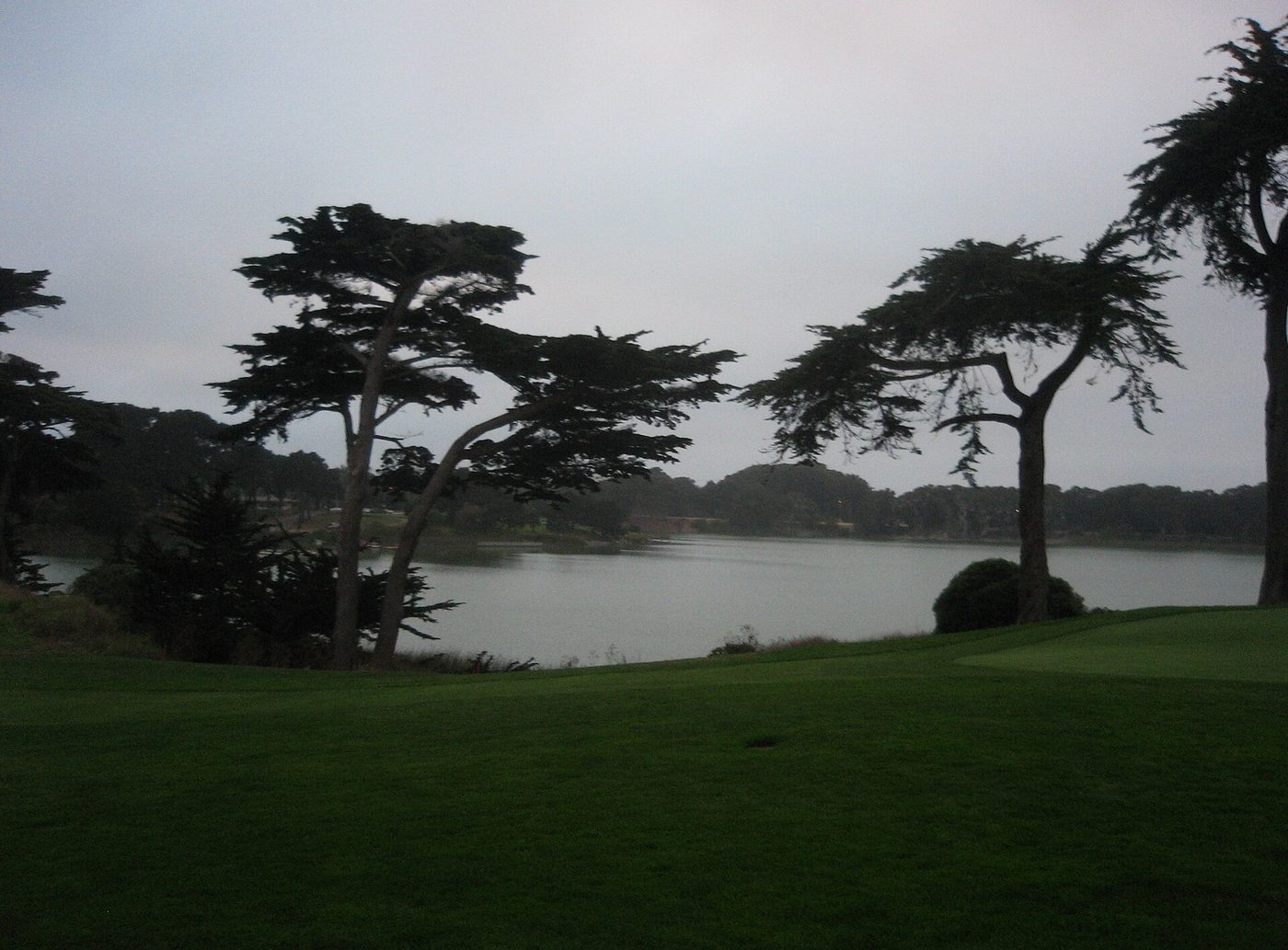
Verdict: for a San Francisco resident with the city card, a major-championship course at a municipal price. For visitors, check the dynamic rate; the course doesn’t publish one.
Presidio Golf Course
San Francisco · public (in the Presidio, managed by the Presidio Trust) · opened 1895 · Green fee: non-residents $105 walking or $127 with a cart on weekdays, $137 with a cart at weekends; San Francisco residents $80 walking or $102 with a cart on weekdays, $112 at weekends; plus a 3% park fee (official, September 2026) · tee times 8 to 30 days ahead, with a $20 booking fee · walking on weekdays only
The Presidio is one of the oldest courses west of the Mississippi, built for the officers of the old army post in the forested hills above the Golden Gate. It’s hilly, tree-lined and short, with eucalyptus and cypress on every hole. It’s a genuinely pleasant round in the middle of the city.
Verdict: good value for residents, fair for visitors. Walk it on a weekday.
San Francisco’s other city course worth knowing is Lincoln Park, a short, hilly course with views of the Golden Gate Bridge from its back nine, at $49 on weekdays for residents and $63 for non-residents. It’s the cheapest good round in the city. Down the coast, Half Moon Bay Golf Links’ Ocean Course, an Arthur Hills design from 1997, runs along the clifftops but doesn’t publish a rate. Inland, CordeValle in San Martin and the North Course at Silverado in Napa are open only to members and resort guests.
Los Angeles, Orange County and the Central Coast
Los Angeles has the best private golf in the state after the Monterey Peninsula, but its public golf is thin: most visitors end up at a resort or a city course. The exceptions are very good. We cover Southern California as a whole in a separate guide.
Rustic Canyon Golf Course
Moorpark · public · Gil Hanse and Jim Wagner with Geoff Shackelford · Green fee $65 prime time on weekdays (Monday to Thursday) and $90 at weekends; twilight from $45; cart $20 per rider; push cart $12 (official, September 2026) · book 1 to 14 days ahead, or 15 to 28 days ahead with a $20 booking fee · walking allowed
Rustic Canyon is the best-value golf in California, and one of the best in America. Gil Hanse and Jim Wagner, working with the writer and architect Geoff Shackelford, built it in a canyon north of Los Angeles as a minimalist course: wide fairways, few trees, firm ground and big, bold greens that reward a running shot. It’s No. 23 on GOLF’s California list, one place below Torrey Pines South, and it costs a fraction of the price.
Which tees: the fairways are wide and the slope is moderate, so a 10-handicap can play back. A 25 should move up for the greens, which are where the course gets hard.
Verdict: the best-value round in the state, and for anyone who loves golf architecture, a must. Walk it.
Los Angeles city courses: Wilson and Rancho Park
Los Angeles · public (city-owned) · Wilson Course at Griffith Park: George C. Thomas Jr., William P. Bell and William H. Johnson (1927), par 72, 7,002 yards; Rancho Park: par 71, 6,839 yards, 72.8/130 · Green fee: Wilson about $35 on weekdays and $45 at weekends (reported); Rancho Park $42 on weekdays and $53 to $58 at weekends (September 2026) · walking allowed
The City of Los Angeles runs one of the largest municipal golf systems in the country, and its best two courses are Wilson, one of two 18-hole courses in Griffith Park, and Rancho Park in West Los Angeles. Wilson is a George Thomas and Billy Bell design, like Riviera, and it’s long and challenging. Rancho Park hosted the Los Angeles Open for years, and a plaque on the 18th tee marks the spot where Arnold Palmer made a 12 there in 1961. They are busy, but they are some of the cheapest good golf in the state.
Verdict: real golf at city prices. Book early at weekends.
Pelican Hill Golf Club (Ocean South)
Newport Coast · resort/public · Tom Fazio (1991) · Par 70, 6,580 yards · Rating and slope not published · Green fee: public $340 Sunday to Thursday and $415 on Friday and Saturday; resort guests $255 and $315 (official, September 2026)
Pelican Hill is Orange County’s showpiece resort course, with fairways laid out on the hillsides above the Pacific and views to Catalina Island. The Ocean South Course has several holes right along the bluffs, with forced carries over canyons. It’s beautiful, immaculate and expensive.
Verdict: a spectacular setting, but at $415 on a Saturday, it’s hard to recommend over Pasatiempo or Spyglass Hill for the golf. Play it if you’re staying at the resort.
Sandpiper Golf Club
Goleta · public · William F. Bell (1972) · Par 72, 7,068 yards · Rating and slope not published · Green fee $175 walking and $210 with a cart on weekdays; $210 and $245 at weekends (official, September 2026) · book 7 to 30 days ahead · walking allowed
Sandpiper sits on the bluffs above the Pacific just north of Santa Barbara, and several holes play right along the cliffs. It’s a straightforward, playable course with some of the best ocean views you can get for under $250 in California.
Verdict: a good ocean round for less than half the price of Pebble. Walk it.
Nearby, Monarch Beach Golf Links in Dana Point, a Robert Trent Jones Jr. design, publishes a fixed rate of $269 on weekdays and $299 at weekends, and the Ojai Valley Inn’s course, a 1923 George Thomas and Billy Bell design in the hills above Ventura, costs $119 for nine holes and $190 for 18. Trump National in Rancho Palos Verdes, a Pete Dye design on the cliffs, doesn’t publish a rate.
San Diego
San Diego has one of the best municipal courses in America, Torrey Pines South, and a handful of very good resort and daily-fee courses. We cover San Diego’s public courses, and how to get a Torrey Pines tee time, in separate guides.
Torrey Pines Golf Course (South and North)
La Jolla (City of San Diego) · public (city-owned) · William Bell (1957); South redesigned by Rees Jones · South par 72, 7,802 yards, Green tees 73.3/134 · Green fee: South, non-residents $258 Monday to Thursday and $322 Friday to Sunday; San Diego residents $73 and $90 with a $25 resident ID; North, non-residents $163 and $204, residents $51 and $68; cart $48 (official CY2026 rates, September 2026) · non-residents can book up to 90 days ahead for a $50 booking fee · walking allowed
Torrey Pines South is the most famous municipal course in America. It hosts the PGA Tour’s Farmers Insurance Open every year and has hosted two U.S. Opens: 2008, when Tiger Woods won on a broken leg, and 2021, when Jon Rahm won with birdies on the last two holes. It runs along the cliffs above the Pacific in La Jolla, with hang gliders launching from the Torrey Pines Gliderport next door. The North Course, rebuilt in recent years, is shorter and more fun for most players.
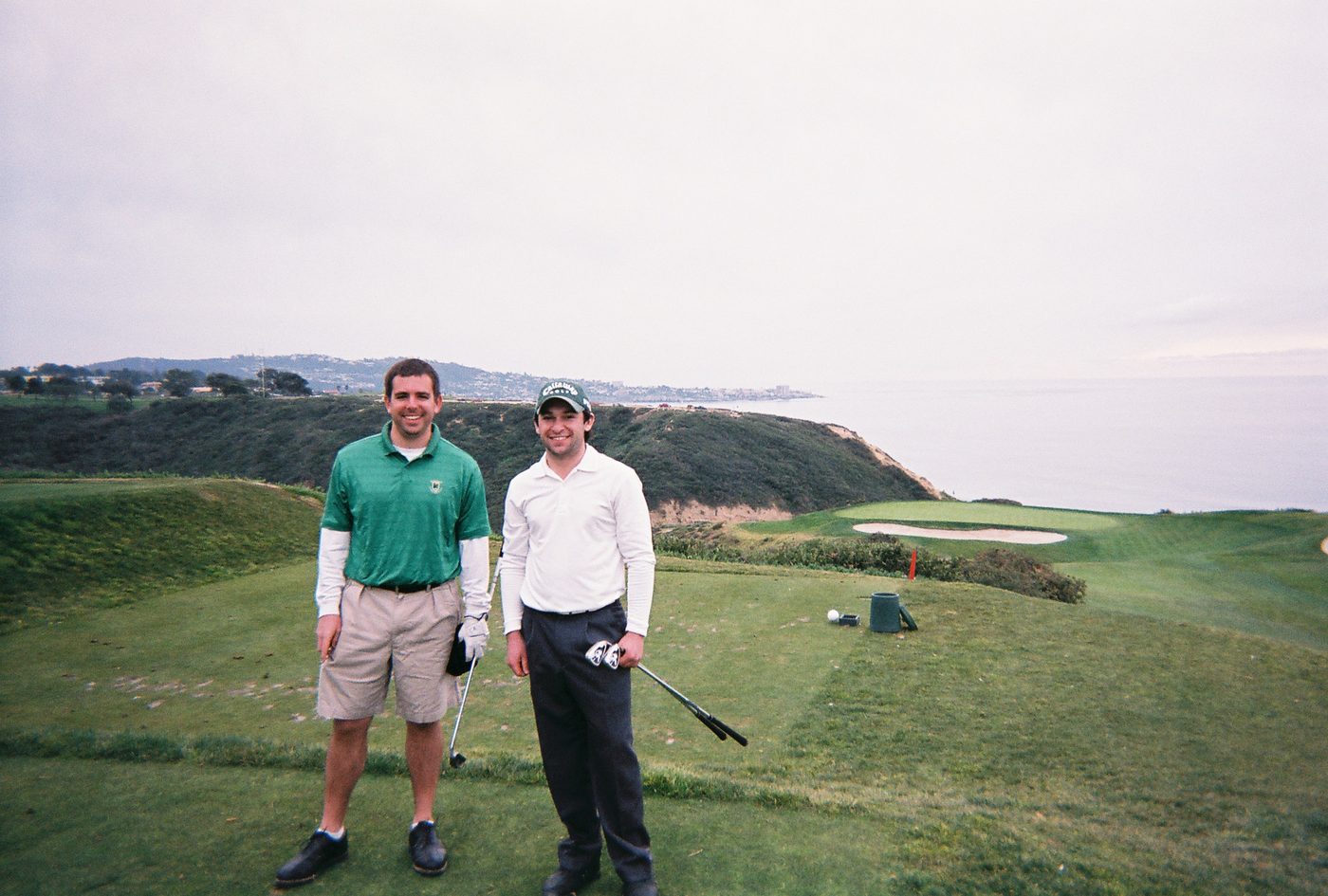
Which tees: at 7,802 yards from the back, South is too long for almost everyone. A 10-handicap should play about 6,500 yards; an 18 about 6,000; a 25 the forward tees. Or play the North, which is more enjoyable for most handicaps.
Verdict: for a San Diego resident at $73, one of the great deals in golf. For a visitor at $322 on a weekend, it’s a long, hard municipal course with great views and a famous name; the North, at $163, is better value and more fun.
Maderas Golf Club
Poway · public · Johnny Miller and Robert Muir Graves (1999) · Par 72, 7,167 yards · back tees 75.2/142 · Green fee: dynamic, not published as a range; cart $30 ($22 for members) (official, September 2026)
Maderas is San Diego’s best daily-fee course, a hilly, dramatic layout in the canyons northeast of the city, with elevated tees and forced carries over ravines. The slope of 142 from the back tees tells you it’s serious golf.
Verdict: the best inland course in San Diego. Check the dynamic rate, and move up a tee.
North of the city, Aviara in Carlsbad, an Arnold Palmer design from 1991, is reported at $200 to $350 for the public, with Park Hyatt guests getting a longer booking window.
The desert: Palm Springs, La Quinta and the Coachella Valley
The Coachella Valley, from Palm Springs to La Quinta, has more than 100 courses and is California’s winter golf capital, with the same season as Arizona’s desert courses: perfect from October to May, overseeded in the autumn and baking hot in summer. Most of its best courses are private, but the resorts at La Quinta are open to all. We cover the rest of the Coachella Valley’s courses in their own guide.
PGA West (Pete Dye Stadium Course)
La Quinta · resort/public · Pete Dye (1987) · Par 72, about 7,300 yards · back tees 76.1/150 (reported) · Green fee dynamic, reported at $146 to $264 (September 2026)
The Stadium Course is Pete Dye at his most brutal. It’s a desert version of TPC Sawgrass, with deep pot bunkers, railroad-tie bulkheads and water everywhere, and a slope of 150 from the back tees, close to the maximum. Its 17th, an island-green par 3 nicknamed “Alcatraz”, is the most famous hole in the desert. The course is part of the PGA Tour’s American Express tournament rotation, and it’s No. 25 on GOLF’s California list.
Which tees: move up. A 10-handicap should play about 6,300 yards; an 18 about 5,800; a 25 the forward tees. There’s no shame in it; the pros struggle here too.
Verdict: one of the great experiences in desert golf, and at the summer end of the dynamic range, good value. Bring extra balls.
La Quinta Resort’s Mountain Course, another Pete Dye design, is 6,666 yards from the back tees and plays along the base of the Santa Rosa Mountains; it doesn’t publish a rate. In Temecula, Journey at Pechanga, an Arthur Hills and Steve Forrest design from 2008, is another good inland option.
Northern California beyond the Bay Area
California’s mountain golf, at Lake Tahoe, Truckee and the Sierra foothills, is a summer affair, played from late spring to early autumn above 6,000 feet, where the ball flies noticeably farther in the thin air. The best courses up there, Martis Camp and the Truckee clubs, are private. We cover Lake Tahoe’s summer courses in one guide and the rest of Northern California in another.
How California golf courses play: fog, poa, kikuyu and wind
California golf is more varied than any other state’s, and knowing how each region plays helps you pick the right course.
Fog and wind on the coast. From Monterey to San Francisco, summer mornings are often foggy and cool, and the afternoons windy. The best weather on the coast is usually in September and October, when the fog lifts and the wind drops. A course that plays gentle in the morning can be brutal by 2 pm.
Poa annua greens. Most coastal California courses have poa annua greens, a grass that grows unevenly through the day, so putts get bumpier in the afternoon. It’s why Pebble Beach’s greens can look smooth at 8 am and play very differently at 3 pm. Take the early tee time if you can.
Kikuyu fairways. Many Southern California courses, Riviera most famously, have kikuyu grass in the fairways and rough. It’s thick and sticky, so the ball sits up on the fairway but grabs the club in the rough. Take one more club out of it.
Desert overseeding. Like Arizona, the Coachella Valley courses overseed with ryegrass in the autumn and close for a few weeks, usually from late September into October. Check before you book.
Which tees should you play on California courses?
Play the course, not the yardage. On the coast, the wind and the poa greens make even short courses hard; on the desert courses, the slope and the forced carries do. As a rule, a 10-handicap belongs at 6,200 to 6,500 yards, an 18 at 5,700 to 6,100 and a 25 at 5,200 to 5,600, and on a course with a slope above 140, such as PGA West’s Stadium, Spyglass Hill or Maderas, move up a set.
When is the best time to play golf in California?
It depends on the region. The coast from Monterey to San Diego plays year-round, best from September to November when the fog lifts. The desert around Palm Springs is a winter destination, October to May. Lake Tahoe and the mountains are summer-only. Winter brings rain to the north.
A quick guide by region:
- Monterey Peninsula and the Bay Area: best in September and October, when the fog lifts. Summer mornings are often foggy and cool; winter brings rain, but the courses stay open.
- Los Angeles and Orange County: year-round golf, with the best conditions from October to May.
- San Diego: the most reliable weather in the state, year-round. Torrey Pines is busiest during the Farmers Insurance Open week in late January and early February.
- The desert: peak season from January to April, overseeding in the autumn, and very hot in summer, when rates drop sharply.
- Lake Tahoe and the mountains: roughly May to October, depending on the snow.
How much does it cost to play the best courses in California?
At the top, $695 at Pebble Beach plus a cart or caddie, and $465 to $515 at Pasatiempo. Torrey Pines South costs non-residents $258 to $322. The best value courses are far cheaper: Rustic Canyon is $65 to $90, and Los Angeles city courses start around $35.
Here is what the courses in this guide cost, based on the published rates we checked in September 2026:
| Course | Rate | What’s included |
|---|---|---|
| Pebble Beach | $695 (April 2026-March 2027) | Non-guests add $60 cart; caddie $175 |
| Spyglass Hill | $525 + $50 cart (reported, to March 2026) | Current rate not verified |
| Pasatiempo | $465 walking; $515 riding | Caddie with 24 hours’ notice |
| Pelican Hill (Ocean South) | $340-$415 public; $255-$315 guests | Resort course |
| Poppy Hills | $350 public; $95-$125 NCGA members | Cart $30 |
| Torrey Pines South | $258-$322 non-residents; $73-$90 residents | Cart $48 |
| Monarch Beach | $269-$299 | Fixed published rate |
| Sandpiper | $175-$245 | Walking or cart |
| Torrey Pines North | $163-$204 non-residents; $51-$68 residents | Cart $48 |
| Presidio | $105-$137 non-residents; $80-$112 residents | Plus 3% park fee |
| Rustic Canyon | $65-$90 | Cart $20 |
| Pacific Grove | $66-$89 walking | Cart $25 |
| Lincoln Park | $49 residents; $63 non-residents (weekday) | Short city course |
| Rancho Park | $42-$58 | City course |
| Wilson (Griffith Park) | About $35-$45 (reported) | City course |
Three money rules hold across the state. First, city residency is worth a fortune in California: a San Diego resident saves $185 to $232 a round at Torrey Pines South, and San Francisco residents get the lowest rate at Harding Park and discounts at the Presidio and Lincoln Park. Second, add the extras: at Pebble Beach, a non-guest pays $60 for a cart or $175 plus tip for a caddie on top of $695. Third, advance booking fees are common ($50 at Torrey Pines for non-residents, $19 at Harding Park, $20 at the Presidio and at Rustic Canyon for the long window), so factor them in.
How do you book a tee time at California’s best courses?
Book through each course’s own site and check the window. Pebble Beach gives non-guests 24 hours but resort guests 18 months. Pasatiempo opens 7 days out, or a year for a $50 fee. Torrey Pines lets non-residents book up to 90 days ahead for a $50 fee.
A simple way to get the tee times you want:
- Decide whether to stay at Pebble Beach. If Pebble is the priority, booking a resort stay is the only reliable way to get a tee time more than a day ahead. Spyglass and Spanish Bay open three months ahead for non-guests.
- Use Pasatiempo’s priority window. For $50 you can book up to a year ahead, which is worth it if you’re travelling.
- Book Torrey Pines as soon as your window opens. Non-residents can book 90 days ahead for a $50 fee; residents with the city ID have their own window.
- Check the resident rules. If you live in San Diego, San Francisco or Los Angeles, get the city golf ID. It pays for itself in one round.
- Compare the total price. Add carts, caddies, booking fees and park fees before you decide.
- Book early tee times on the coast. Poa greens are smoothest in the morning, and the wind is usually lighter.
- Walk where you can. Pasatiempo, Pacific Grove, Rustic Canyon, Torrey Pines and the city courses all allow walking.
How to choose which California course to play
Start with what kind of golf you want, then work down to price and access.
- For the once-in-a-lifetime round: Pebble Beach. Stay at the resort if you can.
- For the best architecture you can book: Pasatiempo, then Rustic Canyon.
- For value: Rustic Canyon, Pacific Grove, Torrey Pines North and the Los Angeles city courses.
- For major championship history: Torrey Pines South, Harding Park and Pebble Beach.
- For a beginner or a 25-handicap: Pacific Grove, Spanish Bay and Torrey Pines North, from the forward tees.
- For a winter desert trip: PGA West’s Stadium and the La Quinta resort courses.
If you’d rather see a longer list of California courses anyone can book, including the dozens of daily-fee courses that don’t make the rankings, we have a separate guide to the best public courses in the state.
Frequently asked questions
What is the best golf course in California?
Cypress Point Club in Pebble Beach, a 1928 Alister MacKenzie design, is No. 1 on GOLF’s California list and on the LINKS 100 U.S., and in the top three on every other national list. It is private. The best course you can book is Pebble Beach Golf Links, No. 2 in the state.
What is the best public golf course in California?
Pebble Beach Golf Links is No. 1 on both Golf Digest’s and GOLF’s national lists of public courses. For value, Pasatiempo in Santa Cruz, an Alister MacKenzie course at No. 9 on GOLF’s California list, and Rustic Canyon in Moorpark, at No. 23 and $65 on weekdays, are the standouts.
How much does it cost to play Pebble Beach?
The green fee is $695 from April 2026 to March 2027. Non-guests pay $60 more for a cart, or you can take a caddie for $175 plus tip. Resort guests can book up to 18 months ahead with a minimum stay; non-guests can book only 24 hours in advance.
How much does it cost to play Torrey Pines?
For non-residents, the South Course costs $258 Monday to Thursday and $322 Friday to Sunday, and the North $163 and $204, with a $48 cart. San Diego residents with a $25 resident ID pay $73 and $90 on the South and $51 and $68 on the North. These are the city’s 2026 rates.
Can you play Cypress Point?
Only as the guest of a member. Cypress Point is a tiny private club that doesn’t sell tee times and doesn’t respond to outside requests. The closest most golfers get is the view from the 17-Mile Drive, the toll road that runs past the club.
What is the cheapest good golf course in California?
The City of Los Angeles courses are the cheapest good golf in the state, from about $35 on weekdays at Wilson in Griffith Park. On the coast, Pacific Grove Golf Links, at $66 on weekdays, is the best cheap round, and Rustic Canyon, at $65, is the best value among the ranked courses.
When is the best time to play golf in California?
On the coast from Monterey to San Francisco, September and October, when the summer fog lifts. In Los Angeles and San Diego, year-round, with the best conditions from October to May. In the desert, October to May. At Lake Tahoe and in the mountains, summer only.
Is Pebble Beach worth the green fee?
Once, if you can afford it. Nothing else you can book in America matches holes 4 to 10 along Carmel Bay. On value, Pasatiempo, Spyglass Hill and Pacific Grove all offer more golf per dollar, and Pasatiempo is ranked in the same company by the architects.
Our verdict
The best golf courses in California are, at the very top, private: Cypress Point, LACC, Riviera, San Francisco Golf Club and Olympic are among the best clubs in the world, and most golfers will never play them. But California’s public golf is the best of any state’s, from Pebble Beach and Pasatiempo to the municipal courses in San Diego, San Francisco and Los Angeles.
If you can play one course, and you can afford it, make it Pebble Beach. If you love architecture, Pasatiempo is the better experience at two-thirds of the price. And if you want the best value in golf, play Rustic Canyon for $65 and Pacific Grove for $66, and spend the difference on a second round.
Sources
- Best Golf Courses in California for 2024-25, GOLF, December 16, 2024
- America’s 100 Greatest Golf Courses, 2025-26, Golf Digest
- America’s 100 Greatest Public Golf Courses, 2025-26, Golf Digest
- Top 100 Courses in the U.S., 2024-25, GOLF
- Top 100 Courses You Can Play in the U.S., 2024-25, GOLF
- The LINKS 100 U.S., LINKS Magazine
- What exactly are Course Rating and Slope Rating?, USGA
- Rates and FAQs, Pebble Beach Resorts; rating and slope from the USGA Course Rating and Slope Database
- The Links at Spanish Bay, Pebble Beach Resorts
- Rates, Poppy Hills Golf Course
- Rates, Pacific Grove Golf Links
- Rates, Pasatiempo Golf Club
- Current rates, TPC Harding Park
- Rates and reservations, Presidio Golf Course
- Rates, Lincoln Park Golf Course
- The Ocean Course, Half Moon Bay Golf Links
- Fees, Rustic Canyon Golf Course
- Golf rates, City of Los Angeles Golf
- Golf rates, Pelican Hill
- Course rates, Sandpiper Golf Club
- Monarch Beach Golf Links
- Ojai golf course, Ojai Valley Inn
- Torrey Pines Golf Course rates effective January 1, 2026, City of San Diego
- Maderas Golf Club
- Aviara Golf, Park Hyatt Aviara
- The Stadium Course at PGA West, La Quinta Resort
- Mountain Course, La Quinta Resort
- Spyglass Hill green fee to March 31, 2026, as reported by The Golf News Net
Image credits
| Image | Photographer | Licence | Source |
|---|---|---|---|
| The Links at Spanish Bay, first hole (featured image) | unknown photographer | CC BY-SA 3.0 | Wikimedia Commons |
| Cypress Point Club, 16th hole | schnaars | CC BY-SA 2.0 | Wikimedia Commons |
| Riviera Country Club, 18th hole, 1951 Los Angeles Open | unknown author | public domain | Wikimedia Commons |
| The Olympic Club, Lake Course, 18th hole | Thomas Hawk from San Francisco, USA | CC BY 2.0 | Wikimedia Commons |
| Pebble Beach Golf Links, 18th green | WilliamFMeyer | CC BY-SA 4.0 | Wikimedia Commons |
| TPC Harding Park and Lake Merced | flickr user ojbyrne | CC BY 2.0 | Wikimedia Commons |
| Torrey Pines South, 3rd tee | Matthewwlloyd | CC BY 3.0 | Wikimedia Commons |