
Can you play Augusta National? Almost certainly not. The home of the Masters is a private club of about 300 members, with no public tee times, no stay-and-play package and no green fee at any price. The realistic routes are an invitation from a member, the media lottery, volunteering or working there, or qualifying for a tournament played on it.
That’s the honest answer, and it’s not a bad thing to know before you spend years hoping. Augusta National is the most famous golf course in the world and among the most private, and almost everything you read about “how to play Augusta” is a list of long shots. This guide goes through every route that actually exists, how many people each one gets onto the course and how realistic it is for an ordinary golfer. For the other famous courses and which of them you can book, start with our guide to famous golf courses.
It also covers the next-best things, which are better than you’d think: getting through the gates for the Masters itself, where 2027 practice-round tickets were reported at $125, and playing the city course a couple of miles away, which Augusta National helped rebuild and reopen in 2026. And for golfers who want a bucket-list round they can actually book, we compare the famous courses that sell tee times.
How we built this. Augusta National publishes almost nothing about who plays its course or what members pay, so much of what’s known comes from reporting. We’ve used GOLF’s guide to the ways onto the course (April 2022), news reports of the Masters ticket lottery from June 2026, and The Patch’s own announcements about the city course’s reopening. Where a detail is reported rather than official, we say so. We haven’t played Augusta National, and we haven’t won the media lottery either.
At a glance
- Is it public? No. Augusta National is a private club of about 300 members (reported), with no public tee times
- Most realistic route for most golfers: an invitation from a member, if you know one
- Most realistic route for a journalist: the media lottery; about 28 winners play the Monday after the Masters, and winners can’t enter again for seven years (reported)
- Routes for amateurs: win one of the amateur championships that earn a Masters invitation, or, for women, qualify for the Augusta National Women’s Amateur
- When the club is open: roughly October to May; it closes in summer (reported)
- The next-best thing: Masters tickets through the lottery, reported at $125 to $150 for 2027 practice rounds and $160 for tournament days, or $525 for a four-day badge
- Play nearby: The Patch, Augusta’s city course, reopened in April 2026 after a renovation backed by Augusta National, at $25 to $35 for local residents to walk 18 holes
Is Augusta National open to the public?
No. Augusta National is a private club with about 300 members, and the course isn’t open for public play at any time or price. There’s no booking system, no hotel package and no green fee. Apart from members and their guests, the only people who play it are those invited for specific events.
That makes it different from most famous courses. Pebble Beach, TPC Sawgrass, Bethpage Black and the Old Course at St Andrews all sell tee times, at a price. Augusta National doesn’t sell anything except Masters tickets, and even those go by lottery.
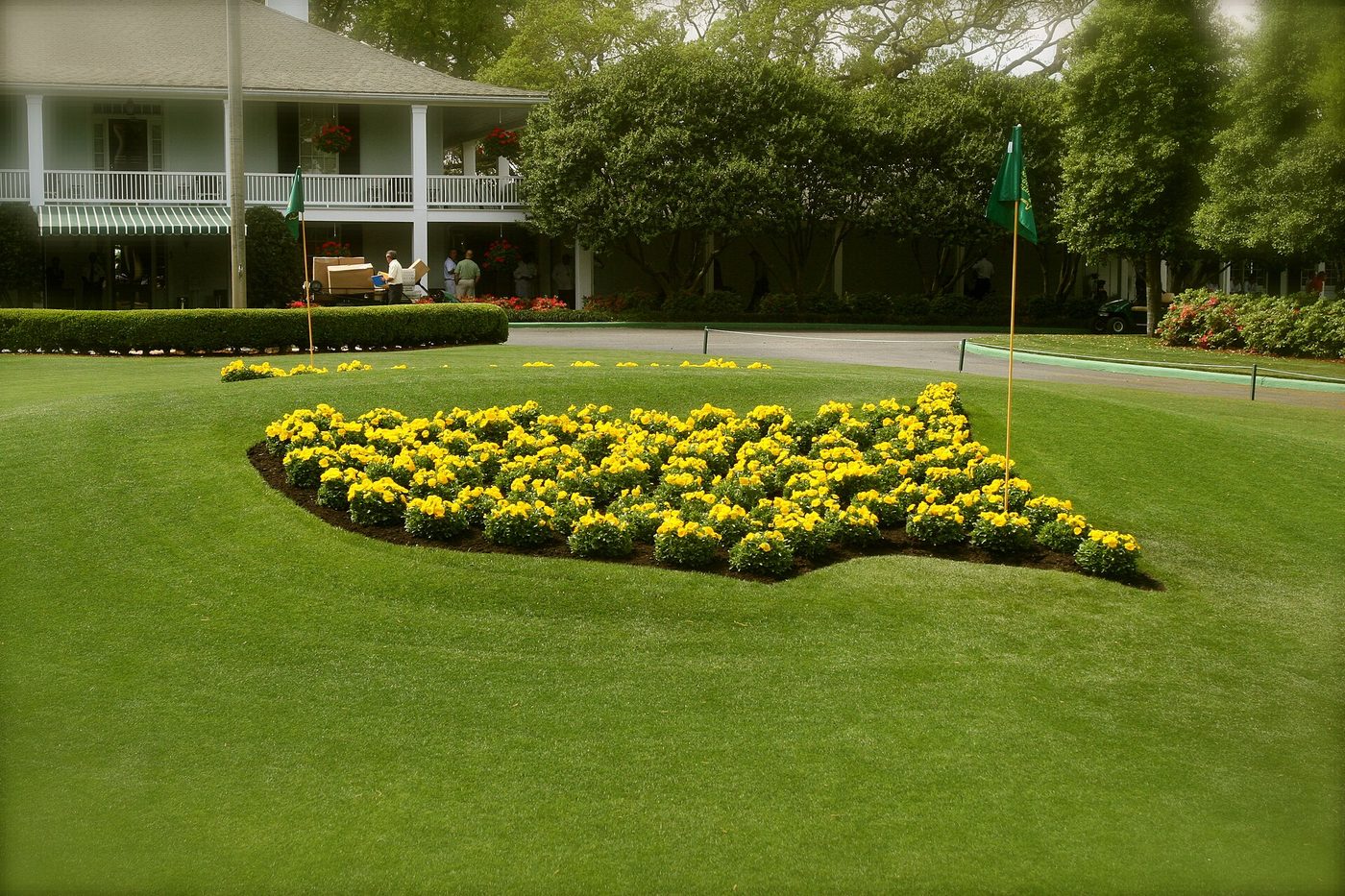
The club was founded by Bobby Jones and Clifford Roberts, and the course, designed by Jones with the architect Alister MacKenzie, opened in 1933 on the site of an old plant nursery. The first Masters was played in 1934. From the start, it was meant to be a quiet winter retreat for its members, and in many ways it still is: the club is open from autumn to spring and closes through the summer heat.
Can you play Augusta National? Every realistic way on
Only by invitation or qualification. There are about a dozen routes onto the course: as a member’s guest, through the media lottery, as a volunteer, employee or caddie, as a sponsor’s guest, or by qualifying for the Masters or the Women’s Amateur. Most are closed to almost everyone.
Here they are, from the most common to the most remote:
| Route | Who it’s for | How likely for an ordinary golfer | What’s reported |
|---|---|---|---|
| A member’s guest | Anyone a member invites | The best chance, if you know a member | Members can bring guests on select days during the season |
| A past champion’s guest | Friends of Masters winners | Remote | Champions have hosted friends and family |
| Membership | Invited members only | Effectively nil | About 300 members; you can’t apply |
| Masters volunteer | People who work the tournament week | Possible, but there’s a waiting list to volunteer | An “Appreciation Day” round in May for volunteers who work the full week |
| Media lottery | Credentialed media at the Masters | Possible for journalists | About 28 winners each year; no re-entry for seven years after winning |
| Club employee | Full-time staff | Possible, if you work there | Rounds near the end of the season, before the summer closure |
| Caddie | Augusta National’s caddies | Possible, if you’re one | End-of-season playing privileges |
| Sponsor representative | Guests of Masters sponsors | Remote | Reported to play on the Monday after the Masters |
| Local college golfer | Augusta University’s team | Remote | Invited semi-regularly for outings |
| Qualify for the Masters | Professionals and leading amateurs | Elite golfers only | Through the Masters’ invitation categories |
| Augusta National Women’s Amateur | Elite women amateurs | Elite golfers only | Everyone plays a practice round; the top 30 play the final round at Augusta |
Sources: GOLF, April 2022, and other published reporting. Augusta National doesn’t publish its guest or employee policies.
Be a member’s guest
This is how most people who’ve played Augusta National got there. The club has about 300 members, and members can bring guests on select days during the season, according to GOLF’s reporting. If you know a member well enough to be invited, that’s your route. If you don’t, there’s no polite way to engineer it, and asking a member for an invitation is a good way not to get one.
Past Masters champions are a special case. Champions have hosted friends and family at the club; Tiger Woods, for example, played there with his son and friends, according to GOLF. Unless you’re close to a green jacket, that doesn’t help you.
Win the media lottery
Every Masters week, the club holds a lottery among credentialed media. GOLF reported that about 28 winners, seven foursomes, are drawn on the Friday of tournament week and play the course the Monday after the Masters, and that winners can’t enter again for seven years. It’s the most famous long shot in golf, and it’s real, but it’s only open to working media at the tournament.
Volunteer at the Masters
The Masters relies on hundreds of volunteers, and GOLF reported that volunteers who work the full week are invited back for an “Appreciation Day” round in May. The catch is getting a volunteer spot in the first place: there’s a waiting list just to join, and most volunteers come from the Augusta area.
Work at the club
Full-time employees are reported to get a round near the end of the season, before the course closes for the summer, and Augusta National’s caddies are reported to have end-of-season playing privileges too. If you’re prepared to move to Augusta and work there, it’s a route; for almost everyone else, it isn’t.
Other long shots
Representatives of the Masters’ sponsors have reportedly played on the Monday after the tournament, and Augusta University’s golf team has been invited to the club semi-regularly, according to GOLF. Neither is a route an ordinary golfer can plan.

How do you become a member of Augusta National?
You don’t apply; you’re invited. Augusta National has about 300 members, chosen by the club, and the long-standing rule of thumb is that asking to join is the surest way never to be asked. The club doesn’t publish its fees, and reported figures vary; money isn’t the obstacle.
Membership is famously private, and the club has historically been criticised for who it excluded. It admitted its first Black member, Ron Townsend, in 1990, and its first women members, Condoleezza Rice and Darla Moore, in 2012. Since then it has also launched the Augusta National Women’s Amateur and expanded its work with junior and community golf in the city.
The members you’ve heard of tend to be chief executives, former officials and longtime figures in American business, and their names are rarely confirmed by the club. If you’re reading this page wondering how to join, the honest answer is that the question answers itself.
Why is Augusta National so exclusive?
Because it was built to be. Bobby Jones and Clifford Roberts founded it as a quiet winter club for members from across the country, and it has never needed public golfers’ money; the Masters, with its patrons, broadcast deals and merchandise, is widely reported to be one of golf’s most profitable events.
The “National” in the name was the point: rather than a local country club, Jones and Roberts wanted a membership drawn from across the United States, men who would come to Augusta for the mild winters. That idea, a small, scattered membership that uses the club for a few weeks a year, is why the course is so quiet for most of the season, and why there’s no commercial reason to sell tee times.
Everything about the Masters reflects the same instinct for control. Spectators are “patrons”. Phones aren’t allowed on the grounds, running is frowned upon, and the sandwiches are priced as if it were still the 1990s. The television broadcasts carry far fewer commercials than other golf events. The club decides who plays, who watches and how the tournament looks, and it guards that control carefully, which is exactly why a tee time can’t be bought.
For a golfer, that’s frustrating, but it’s also part of the appeal. Augusta National is one of the few places in sport where money genuinely can’t buy access, and the Masters is better for it.
Can amateurs play in the Masters or at Augusta National?
Yes, if they’re good enough. The Masters invites the winners of leading amateur championships, including the U.S. Amateur, the Amateur Championship, the Asia-Pacific Amateur, the Latin America Amateur and the U.S. Mid-Amateur. Elite women amateurs can qualify for the Augusta National Women’s Amateur, whose final round is played on the course.
For an elite amateur, this is the most rewarding route of all, because it means playing the course under tournament conditions. The amateurs who make the cut at the Masters compete for the Silver Cup, awarded to the low amateur, and a good showing by an amateur is one of the stories of Masters week most years.
The Augusta National Women’s Amateur. First played in 2019, it’s held the week before the Masters. According to GOLF, the field plays its first two rounds at Champions Retreat, a club nearby, and the 30 players who make the cut play the final round at Augusta National. Every competitor plays a practice round at Augusta National before the final round.
Drive, Chip and Putt. The national finals of this junior skills competition, for boys and girls aged 7 to 15, are held at Augusta National on the Sunday before the Masters. The finalists compete on the practice facilities and putt on the 18th green, which is the closest most young golfers will ever get to the course.
When is Augusta National closed?
Through the summer. The club is open roughly from October to May and closes in the heat, with employees and caddies reported to get their rounds near the end of the season, before it shuts. Even a member’s invitation will be for a date between autumn and spring.
The seasonal calendar matters for one practical reason: even if a member invites you, it’ll be between autumn and spring. Summer invitations don’t exist, because the course doesn’t open.

What is the course like, if you ever get on?
Hillier, wider and harder around the greens than television suggests. The fairways are generous, the second shots are where the trouble starts, and the greens, with their huge slopes, are the defence. Augusta National is ranked No. 2 in the United States by Golf Digest, behind only Pine Valley.
Almost everyone who walks the course for the first time says the same thing: the television cameras flatten it. The 10th, Camellia, falls away so steeply from the tee that the green is far below you; the 18th climbs a long hill to the clubhouse; and the walk from the 1st tee to the turn is far more up and down than the broadcasts let on. If you get an invitation, the elevation will be the first surprise.
The second will be the greens. They’re bentgrass, kept firm and fast, and so heavily sloped that the hardest part of the course isn’t hitting the fairway but putting the approach on the right side of the hole. The fairways themselves are bermudagrass overseeded with ryegrass, which is why the course is so green in April; our guide to golf course grass explains how that works.
Then there’s the stretch everyone wants to play. Amen Corner is the run from the second shot at the 11th to the tee shot at the 13th: the long par-4 11th with water left of the green, the short par-3 12th, Golden Bell, across Rae’s Creek to a shallow green, and the par-5 13th, Azalea, which bends left around the creek and can be reached in two. The Hogan Bridge takes golfers across the creek to the 12th green, and the Nelson Bridge leads to the 13th tee. Every hole is named for a plant that grew on the old nursery site, and we explain the names of every hole at Augusta National in a separate guide.
For a guest, the advice from people who’ve played it is simple: take a caddie’s line on every putt, enjoy the walk, and don’t keep score too seriously. For the architects who shaped courses like it, see our guide to golf course architects.
How do you get Masters tickets?
Through the Masters’ online ticket lottery, which opens around the start of June for the following April. For 2027, reports said the application window closed on June 20, 2026, with practice-round tickets at $125 to $150, tournament-day tickets at $160 and a four-day tournament badge at $525. Winners are notified in July.
For almost every golfer, this is the realistic way through the gates, and it’s worth doing every year. Here’s how it works, as reported in June 2026:
- Create an account on the Masters’ ticketing site and complete the application while the window is open, usually in the first three weeks of June.
- Choose your days. For practice rounds on Monday, Tuesday and Wednesday, you can apply for up to four tickets a day; for tournament rounds, Thursday to Sunday, up to two tickets a day.
- Apply for every day you can make. You can apply for every day, but if you’re selected, you’ll win only one day, chosen for you.
- Know the prices. Monday and Tuesday practice rounds were reported at $125, Wednesday, the day of the Par 3 Contest, at $150, and tournament days at $160. A four-day tournament badge was reported at $525, a $75 increase.
- Wait for July. Winners and unsuccessful applicants are usually notified in July, and winners pay online.
- Follow the rules. Each permanent residential address is limited to one application, and applicants have to provide identity details.
| Ticket | Price (reported, June 2026) | What you get |
|---|---|---|
| Practice round, Monday or Tuesday | $125 | A day walking the course; phones aren’t allowed on the grounds, and the concession prices are famously low |
| Practice round, Wednesday | $150 | Practice rounds plus the Par 3 Contest |
| Tournament day, Thursday to Sunday | $160 | One day of the Masters |
| Four-day tournament badge | $525 | All four tournament rounds |
The Augusta National Women’s Amateur also sells tickets by lottery, and the final round is a way to walk Augusta National in competition without the Masters crowds.
Golf you can play instead
You can’t buy a round at Augusta National, but you can play a lot of great golf nearby and around the country.
In Augusta: The Patch. Augusta Municipal Golf Course, known locally as The Patch, reopened fully on April 15, 2026, after a 16-month renovation led by Tom Fazio and Beau Welling, backed by Augusta National, with a new nine-hole short course, The Loop, designed by Tiger Woods and his firm, TGR Design. According to The Patch, local residents pay $25 to walk 18 holes from Monday to Thursday and $35 from Friday to Sunday, The Loop costs locals $15, and a 12-hole putting course is free to the public. Rates for visitors weren’t in the announcement, so check before you go. It’s the best way to play golf in Augusta, and one of the best stories in American municipal golf; for more courses like it, see our guide to the best municipal golf courses.
Around the country: bucket-list courses you can book. If what you want is a round at one of the most famous courses in America, these sell tee times:
| Course | Can you book it? | Fee (as of) | Source |
|---|---|---|---|
| Pebble Beach | Yes; non-guests 24 hours ahead, resort guests up to 18 months | $695, plus $60 for a cart for non-guests (April 2026 to March 2027) | Official |
| TPC Sawgrass (Stadium) | Yes; 14 days ahead, or 12 months with Sawgrass Marriott lodging | From $775 (September to May), from $550 (June to August) | Official, October 2026 |
| Pinehurst No. 2 | With a resort stay | No stand-alone fee; a premium on a package | Official |
| Bethpage Black | Yes; New York residents 7 days ahead, others 5 | Non-residents $140 weekdays, $160 weekends | Official, 2026 |
| Fields Ranch East, PGA Frisco | Yes; 7 days ahead | About $277 to $330 plus a caddie | Reported, 2026 |
| Ocean Course, Kiawah Island | Yes; non-guests up to 60 days ahead | About $480 for resort guests | Reported, 2026 |

Pebble Beach is the obvious first choice: it’s ranked among the best courses in America, it’s hosted six U.S. Opens, and you can book it. Bethpage Black is the best value, a major-championship course run by New York State. We break down the costs in our guides to the TPC Sawgrass green fee and the PGA Frisco green fee, and rank them all in our guide to bucket list golf courses.

What about playing Augusta National on a simulator?
You can play recreations of it, but not an official version. Simulator retailers report that Augusta National doesn’t license its course to simulator makers, so the versions on home and indoor simulators are unofficial recreations, sometimes under other names, and none is endorsed by the club.
For most golfers, a simulator is the only way they’ll ever hit a tee shot down the 13th, and there’s no harm in it. Just know that you’re playing someone’s interpretation of the course, not one the club has signed off. The slopes on the greens, in particular, are hard to reproduce, and they’re the part of Augusta National that matters most.
Frequently asked questions
Can anyone play Augusta National?
No. Augusta National is a private club with about 300 members and no public tee times. The people who play it are members and their guests, past champions and their guests, Masters volunteers, employees and caddies, media lottery winners and players in the tournaments held there.
How much does it cost to play Augusta National?
There’s no green fee, because there’s no way to buy a round. Guests play at a member’s invitation, and the club doesn’t publish its membership fees. The cheapest legitimate way onto the grounds is a Masters practice-round ticket, reported at $125 for 2027.
How many members does Augusta National have?
About 300, according to published reporting. The club doesn’t publish its membership list, and membership is by invitation only; you can’t apply.
How do journalists get to play Augusta National?
Through a lottery for credentialed media at the Masters. GOLF reported that about 28 winners, in seven foursomes, play the course on the Monday after the tournament, and that winners can’t enter again for seven years.
Can you tour Augusta National?
Not as a visitor off the street. The club doesn’t run public tours, and the grounds are closed to the public outside events. The realistic way to walk the course is with a ticket to the Masters, or to the final round of the Augusta National Women’s Amateur.
When is the Masters ticket lottery?
Usually in early June for the following April. For 2027, the application window opened at the start of June 2026 and closed on June 20, and applicants were told in July whether they’d been successful, according to reports.
Is Augusta National closed in the summer?
Yes. The club closes through the summer and reopens in the autumn, so the course is in play roughly from October to May. Employees and caddies are reported to get their rounds near the end of the season, before it shuts.
Where can you play golf in Augusta?
The Patch, Augusta’s municipal course, reopened in April 2026 after a renovation by Tom Fazio and Beau Welling, backed by Augusta National, with a new short course by Tiger Woods’s TGR Design. Local residents pay $25 to $35 to walk 18 holes, according to the course.
Our verdict
Can you play Augusta National? For almost everyone, no, and the sooner you accept that, the more you can enjoy the alternatives. If you know a member, be patient and polite and never ask. If you’re a journalist, enter the media lottery every year you’re there. If you’re a talented amateur, the amateur championships that lead to the Masters are the real route. Everyone else should do two things: enter the Masters ticket lottery every June, because walking the course in April is the best experience in spectator golf, and play The Patch while you’re in town.
Then book a famous course that wants your business. Pebble Beach, Bethpage Black, TPC Sawgrass and the rest are open to anyone, and we compare them in our guide to the most famous golf courses and who can play them. We also explain the names of every hole at Augusta National, and the same question for Pine Valley, in separate guides.
Sources
- 11 ways you can play Augusta National, Dylan Dethier, GOLF, April 9, 2022
- The 2027 Masters ticket lottery is open. Here’s how to apply, Irish Golfer, June 2, 2026
- Masters lottery registration: 2027 ticket window open for limited time, Atlanta Journal-Constitution, June 2026
- Masters 2027 ticket application process begins, WRDW, June 1, 2026
- The Patch announces plans for reopening, The Patch (Augusta Municipal Golf Course)
- Augusta Municipal Golf Course, Wikipedia
- Augusta National Golf Club, Wikipedia
- Can you play Augusta National on a golf simulator?, Carl of Et (simulator retailer)
- Rates and FAQs, Pebble Beach Resorts; FAQ, TPC Sawgrass; FAQs, Pinehurst Resort; Bethpage State Park, New York State Parks; Ocean Course FAQ, Kiawah Island Golf Resort
Image credits
| Image | Photographer | Licence | Source |
|---|---|---|---|
| Teeing off on the 8th hole at Augusta National (featured image) | Florian Fritsch, assisted by Mark Anderson | CC BY-SA 3.0 | Wikimedia Commons |
| The Masters logo in flowers at Augusta National | Unknown photographer | CC BY 2.0 | Wikimedia Commons |
| An approach shot on the 11th hole at Augusta National | Florian Fritsch, assisted by Mark Anderson | CC BY-SA 3.0 | Wikimedia Commons |
| Augusta National, 10th hole | Mbrooks | public domain | Wikimedia Commons |
| Pebble Beach Golf Links, 18th green | WilliamFMeyer | CC BY-SA 4.0 | Wikimedia Commons |
| Bethpage Black warning sign | E S Lee | CC BY 2.0 | Wikimedia Commons |