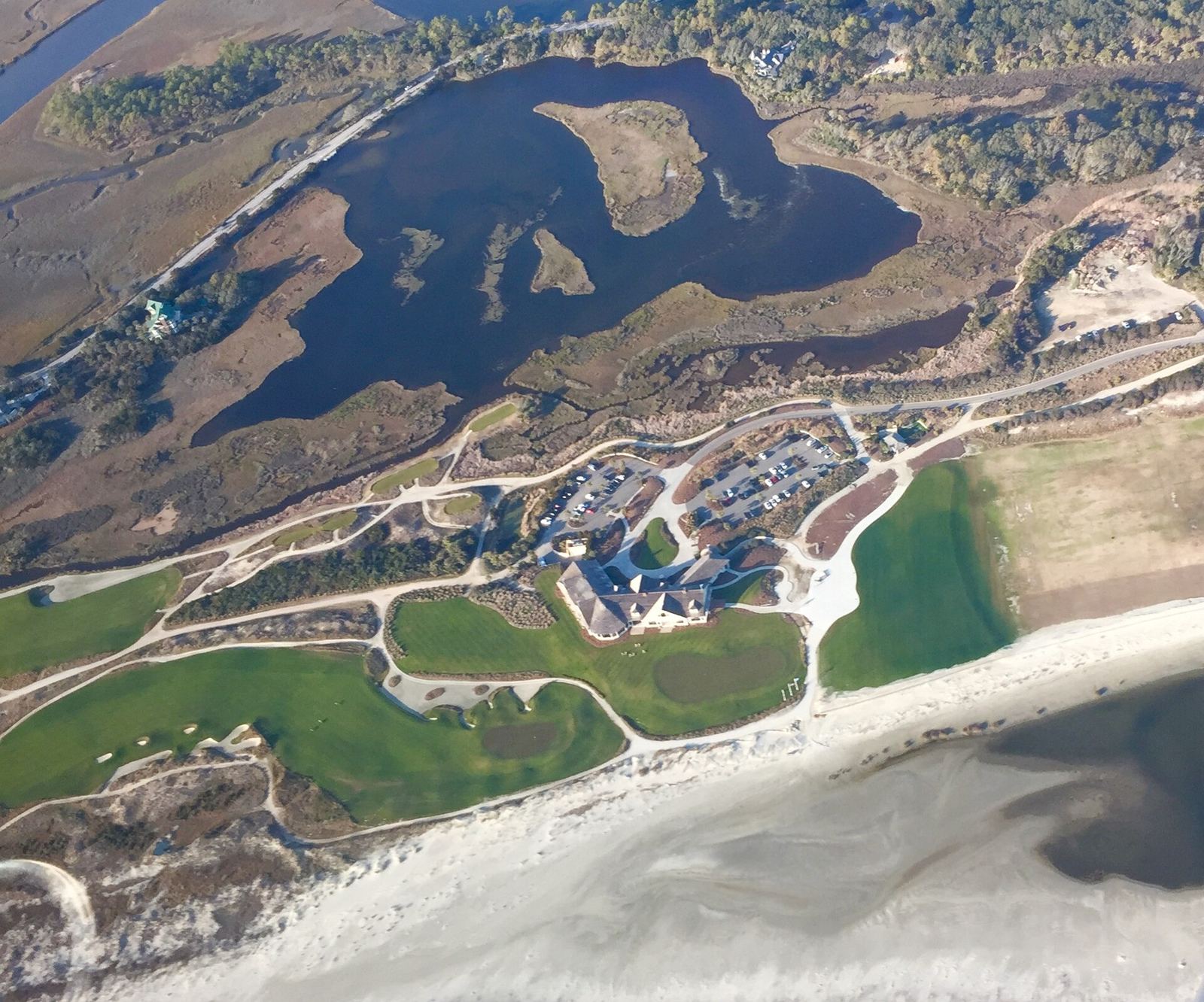
The Ocean Course at Kiawah Island is the best golf course in South Carolina, No. 1 on GOLF’s state ranking and the state’s highest-ranked course on every national list, and, unlike most state No. 1s, you can book it. Of the other best golf courses in South Carolina anyone can play, Harbour Town on Hilton Head and Caledonia on Pawleys Island are the picks, with green fees from $79 at summer twilight to $651 at Harbour Town’s peak.
South Carolina’s golf lives on its coast. Three stretches of it, the Grand Strand around Myrtle Beach, Charleston and Kiawah Island, and Hilton Head and the Lowcountry, hold almost all the courses a visitor will ever play, and they are three very different markets. Myrtle Beach is volume golf, with dozens of courses competing on price. Kiawah and Hilton Head are resort golf, with two of the most famous tournament courses in America. And inland, around Aiken and in the Lowcountry between Hilton Head and Charleston, are private clubs that most golfers only ever see on television.
How we built this. The rankings come from GOLF’s Best Golf Courses in South Carolina for 2024-25, published in December 2024, and the national lists we compare in our guide to every major national ranking. Green fees come from each course’s own rate page where one exists and are dated September 2026. Kiawah Island, Sea Pines and Palmetto Dunes all use dynamic pricing and don’t publish a rate card; for those we give the published package price or a reported figure and say which. We haven’t played every course here; where a note leans on rankings, published data and the architecture rather than our own scorecards, we say so.
At a glance
- Best golf course in South Carolina: the Ocean Course at Kiawah Island, No. 1 on GOLF’s 2024-25 list, No. 12 on the LINKS 100 U.S. and bookable by anyone
- Most famous course: Harbour Town Golf Links on Hilton Head, home of the RBC Heritage, about $378 to $651 in 2026 depending on the date
- Best value among the ranked courses: Caledonia Golf & Fish Club on Pawleys Island, No. 21 on GOLF’s list, from $129 in the morning and $79 at twilight in summer 2026
- Best private course: Yeamans Hall Club near Charleston, a 1925 Seth Raynor design, No. 2 in the state
- Cheapest good round: Charleston Municipal, a rebuilt 1929 city course, $68 walking for non-residents and from $23 for city residents
- Newest names on the list: Old Barnwell and Tree Farm, two private clubs near Aiken that went straight into GOLF’s state top ten
- Best months: March to May and late September to November
The best golf courses in South Carolina at a glance
The table lists the ranked courses first, then the best public and resort courses by region. “Access” is what a golfer without a membership can expect: private means members and their guests only; resort/public means anyone can book, usually with better rates and earlier booking for hotel guests; semi-private means limited public tee times; public means anyone can book, and “city” marks a municipally owned course.
| Course | Region | Access | Architect (year) | Green fee (Sept 2026) | Ranking or note |
|---|---|---|---|---|---|
| Kiawah Island (Ocean Course) | Charleston | Resort/public | Pete and Alice Dye (1991) | Not published; about $480 for resort guests (reported) | GOLF SC No. 1; LINKS U.S. No. 12 |
| Yeamans Hall | Charleston | Private | Seth Raynor (1925) | Members’ guests only | GOLF SC No. 2; LINKS U.S. No. 18 |
| Old Barnwell | Aiken | Private | New club | Members’ guests only | GOLF SC No. 3 |
| Harbour Town | Hilton Head | Resort/public | Pete Dye with Jack Nicklaus (1969) | About $378-$651 (2026, dynamic) | GOLF SC No. 4; RBC Heritage |
| Palmetto Golf Club | Aiken | Private | Founded 1892 | Members’ guests only | GOLF SC No. 5 |
| Congaree | Lowcountry | Private | Tom Fazio (2017) | Members’ guests only | GOLF SC No. 6; Golf Digest U.S. No. 40 |
| The Dunes Golf and Beach Club | Grand Strand | Semi-private | Robert Trent Jones Sr. (1948) | Not published | GOLF SC No. 14 |
| Caledonia | Grand Strand | Public | Mike Strantz (1994) | $79-$129 in summer 2026 | GOLF SC No. 21 |
| True Blue | Grand Strand | Public | Mike Strantz (1998) | $59-$109 in summer 2026 | Caledonia’s sister course |
| Atlantic Dunes (Sea Pines) | Hilton Head | Resort | Davis Love III (2016) | Summer 2026 package from about $399 | Slope 140 |
| Palmetto Dunes (RTJ Oceanfront) | Hilton Head | Resort/public | Robert Trent Jones Sr. | Dynamic; not published | Ocean hole |
| Kiawah (Osprey Point) | Charleston | Resort/public | Tom Fazio (1988; redesign 2014) | About $200-$240 resort guests (reported) | Best of Kiawah’s other four |
| Kiawah (Turtle Point) | Charleston | Resort/public | Jack Nicklaus (1981; redesign 2016) | Not published | Three ocean holes |
| TPC Myrtle Beach | Grand Strand | Public | Tom Fazio (1999) | Dynamic; not published | Slope 144 |
| Tidewater | Grand Strand | Public | Ken Tomlinson (1990) | Dynamic; not published | Marsh and waterway views |
| Barefoot (Dye Course) | Grand Strand | Semi-private | Pete Dye (2000) | About $95-$235, seasonal | Slope 143 |
| Charleston Municipal | Charleston | Public (city) | John E. Adams (1929); Troy Miller redesign (2020) | $23-$90 | Best cheap round |
Rankings: GOLF’s Best Golf Courses in South Carolina for 2024-25 (December 23, 2024), the LINKS 100 U.S. and Golf Digest’s America’s 100 Greatest Golf Courses (2025-26). Fees checked September 2026; see each course’s section for what’s included and where the figure came from.
Three things jump out. First, the top of the South Carolina list is split between two famous resort courses you can play, Kiawah’s Ocean Course and Harbour Town, and a set of private clubs, several of them brand new. Second, the Grand Strand, with more courses than anywhere else in the state, has only two courses in GOLF’s top 25, the Dunes Club and Caledonia. Its strength is value, not rankings. Third, the gap between the best-known courses and the best value is wider here than almost anywhere: Harbour Town can cost five times as much as Caledonia on the same day.
What is the best golf course in South Carolina?
The Ocean Course at Kiawah Island is No. 1 on GOLF’s 2024-25 South Carolina list and the state’s highest-ranked course on every national list, including No. 12 on the LINKS 100. It is a resort course, so anyone can book it, though resort guests get priority and lower rates.
The Ocean Course at Kiawah Island
Kiawah Island · resort/public · Pete and Alice Dye (1991) · Par 72, 7,385 yards · Gold tees 74.7/150 · Green fee not published; reported at about $480 for resort guests in 2026, with non-guests paying more · non-guests can book up to 60 days ahead · walking allowed at any time; no caddie fee, but customary tips are about $120 for a caddie and $60 for a forecaddie (official, September 2026)
The Ocean Course is the most exposed great course in America. Pete and Alice Dye built it on a thin strip of dunes at the eastern end of Kiawah Island for the 1991 Ryder Cup, the “War by the Shore”, and they raised the fairways so that every hole has a view of the Atlantic. That also means every hole is exposed to the wind, which can change the course by four or five clubs from one day to the next. It has since hosted two PGA Championships: in 2012, won by Rory McIlroy, and in 2021, when Phil Mickelson became the oldest major champion in history at 50.
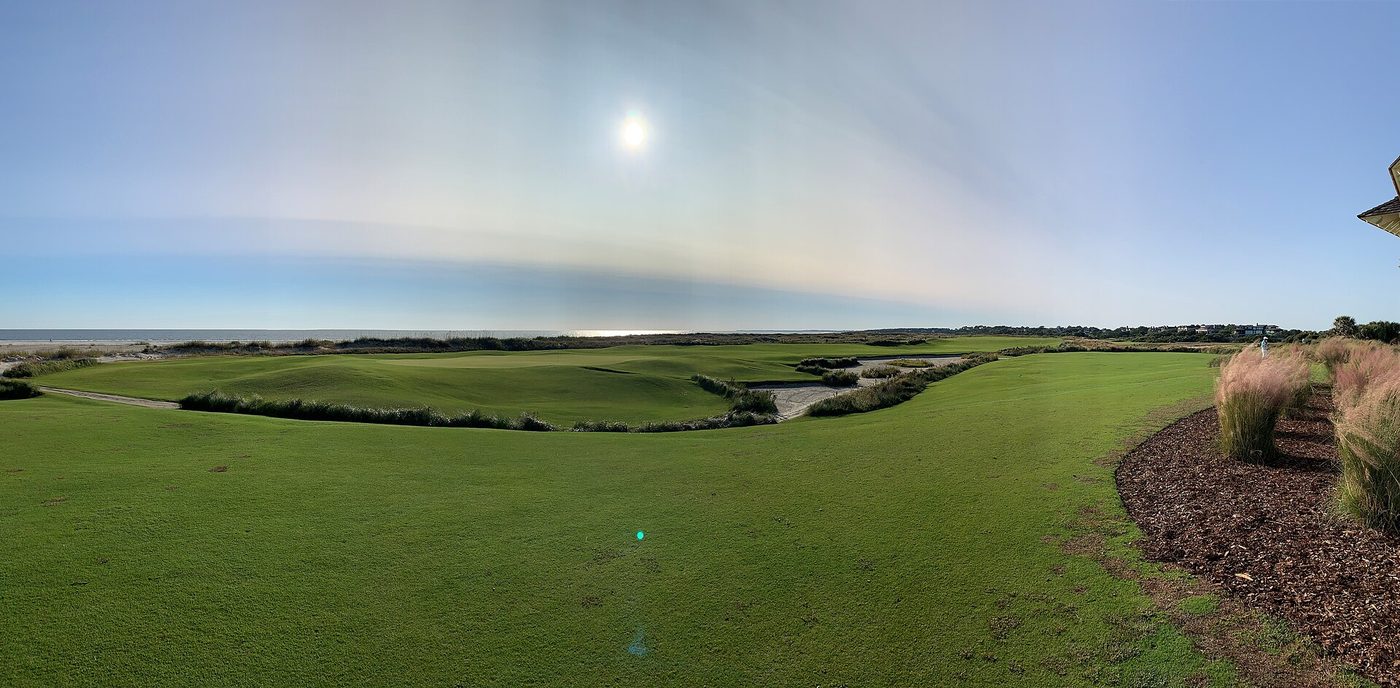
A slope of 150 from the gold tees is close to the maximum of 155, and the course earns it. The fairways are wide, but the waste areas along them are full of sand and scrub, the greens are raised and repel anything short, and many holes ask for long carries over marsh.
Which tees: move up. A 10-handicap will have more than enough from about 6,300 yards; an 18 should play about 5,800 and a 25 the forward tees. The wind will do the rest.
Getting on: stay at the resort for the lowest rate and the earliest booking; non-guests can book up to 60 days ahead. You can walk at any time, and walking with a caddie is the traditional way to play it. We break down what the Ocean Course really costs, including the caddie tips and the resort-guest discount, in a separate guide.
Verdict: worth it, and for many good golfers the best course they’ll ever play. At about $480 for a resort guest plus tips, it’s cheaper than Pebble Beach and at least as memorable. Play it in the morning, before the wind gets up.
Which of South Carolina’s top-ranked courses can you actually play?
Four of the 25 on GOLF’s South Carolina list sell tee times to the public: the Ocean Course at Kiawah (No. 1), Harbour Town (No. 4), Caledonia (No. 21) and, with limits, the Dunes Golf and Beach Club (No. 14). The rest are private or limited to members, residents and resort guests.
The private clubs at the top of the list deserve a word, because they’re the reason South Carolina ranks so highly. We don’t list green fees or ratings for them: none sells tee times or publishes rates. These notes lean on the rankings, the clubs’ histories and their architecture.
Yeamans Hall Club
Hanahan (Charleston) · private · Seth Raynor (1925) · GOLF South Carolina No. 2 · LINKS U.S. No. 18, GOLF U.S. No. 47 · members and their guests only
Yeamans Hall is one of the best-preserved Seth Raynor courses in the world, laid out on an old rice plantation north of Charleston, among live oaks and Spanish moss. Raynor built “template holes”, adaptations of famous British holes, and Yeamans has classic examples of them: a Redan (a par 3 whose green angles away from front right to back left, so the smart shot runs in from the side), a Biarritz and a Short. The architects who vote in the LINKS poll rank it 18th in the country, above any other South Carolina course except the Ocean Course.
Congaree Golf Club
Ridgeland · private · Tom Fazio (2017) · GOLF South Carolina No. 6 · Golf Digest U.S. No. 40 · members and their guests only
Congaree is a Tom Fazio course on sandy Lowcountry land between Hilton Head and Charleston, built as a private club with an unusual mission: it runs educational and golf programmes for young people from the region. It hosted the PGA Tour’s Palmetto Championship in 2021, and it went straight into the national rankings after it opened.
Palmetto Golf Club, Old Barnwell and Tree Farm
Aiken · private · Palmetto founded 1892; Old Barnwell and Tree Farm are recent clubs · GOLF South Carolina No. 3 (Old Barnwell), No. 5 (Palmetto) and No. 7 (Tree Farm) · members and their guests only
Aiken, the old winter resort town on the Georgia border, has become one of the most interesting golf towns in America. Palmetto Golf Club, founded in 1892 and remodelled over the years by some of the most famous architects in golf, including Alister MacKenzie, is one of the oldest clubs in the country, and it sits about half an hour’s drive from Augusta National. Old Barnwell and Tree Farm are new private clubs nearby, and both went straight into GOLF’s state top ten. None of the three is open to the public.
The rest of GOLF’s list includes the Country Club of Charleston (No. 8), Long Cove on Hilton Head (No. 9, a Pete and Alice Dye design from 1981), Sage Valley near Aiken (No. 10), Secession near Beaufort (No. 11) and Chechessee Creek (No. 12, a Coore and Crenshaw design from 2000). All are private.
Charleston and Kiawah Island
Charleston and the islands to its south, Kiawah, Seabrook and Johns Island, are South Carolina’s most varied golf region: a world-famous resort, a rebuilt city course and a set of historic private clubs. We cover the rest of the Charleston area’s courses, and all five Kiawah Island courses, in separate guides.
Kiawah Island Golf Resort (Osprey Point, Turtle Point, Cougar Point and Oak Point)
Kiawah Island · resort/public · Osprey Point: Tom Fazio (1988; redesign 2014), par 72; Turtle Point: Jack Nicklaus (1981; redesign 2016), par 72, 7,054 yards, 74.2/141 from the back tees; Cougar Point: Gary Player (1996; redesign 2017), par 72; Oak Point: Clyde Johnston (1988), par 72, 6,701 yards, 71.9/130 · Green fee: dynamic, not published; Osprey Point reported at about $200 to $240 for resort guests (September 2026) · non-guests can book up to 60 days ahead · walking allowed
Kiawah’s four other resort courses get overshadowed by the Ocean Course, but three of them are very good. Osprey Point, a Fazio design rebuilt in 2014, is the most polished, with lagoons and live oaks and some of the best greens on the island. Turtle Point, a Nicklaus course redesigned in 2016, has three holes along the ocean in the middle of the back nine. Cougar Point, by Gary Player, winds through the marshes of the Kiawah River and is the most scenic of the four. Oak Point, just off the island, is the shortest and the cheapest, and the easiest for a beginner.
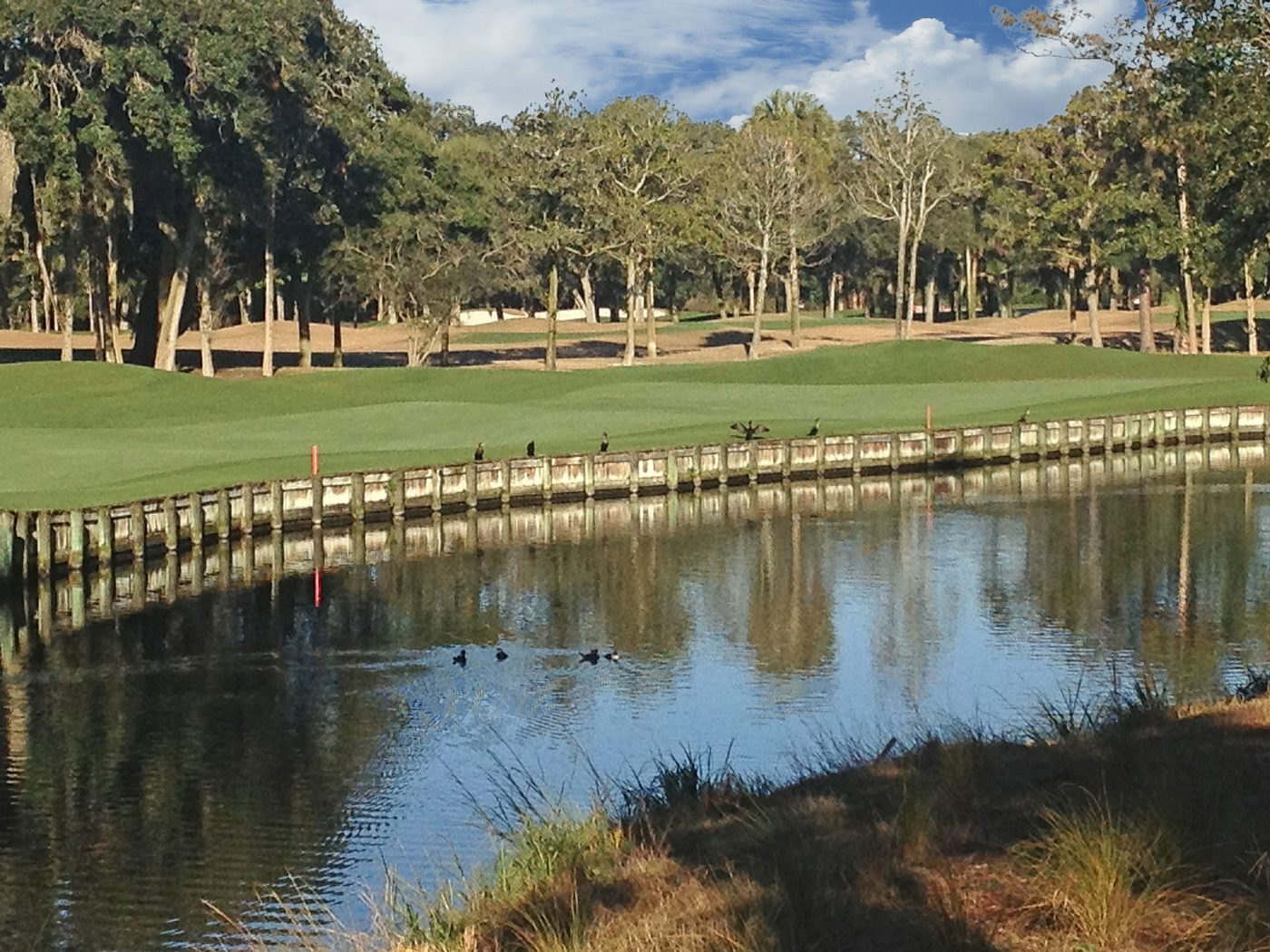
Verdict: Osprey Point is the one to add to an Ocean Course trip, and Turtle Point for its ocean holes. For a 25-handicap, Oak Point is the most enjoyable, and the cheapest.
Charleston Municipal Golf Course
Charleston · public (city-owned) · John E. Adams (1929); Troy Miller redesign (2020) · Par 72, 6,565 yards · 72.1/137 (reported) · Green fee: weekdays, non-residents $68 walking and $90 riding, Charleston County-area (tri-county) residents $38 and $60, city residents $23 and $45; weekends, non-residents $68 and $90, tri-county residents $43 and $65, city residents $28 and $50 (official 2026 rates) · walking allowed
Charleston Municipal, on James Island, is the city’s own course, and after a full redesign by Troy Miller in 2020 it’s one of the best municipal courses in the Southeast. Miller rebuilt it with firmer, more interesting greens and bunkering, and the marsh views are the same as those at the famous clubs nearby. It’s busy, well run and, for a city resident, astonishingly cheap.
Verdict: the best-value round in the Charleston area, for residents and visitors alike. At $68 walking for a non-resident, it’s worth playing on any Charleston trip.
Just north of the city, Wild Dunes on the Isle of Palms has a Tom Fazio links course from 1980, rebuilt after Hurricane Hugo in 1989, with two holes along the ocean at the finish.
Hilton Head Island and the Lowcountry
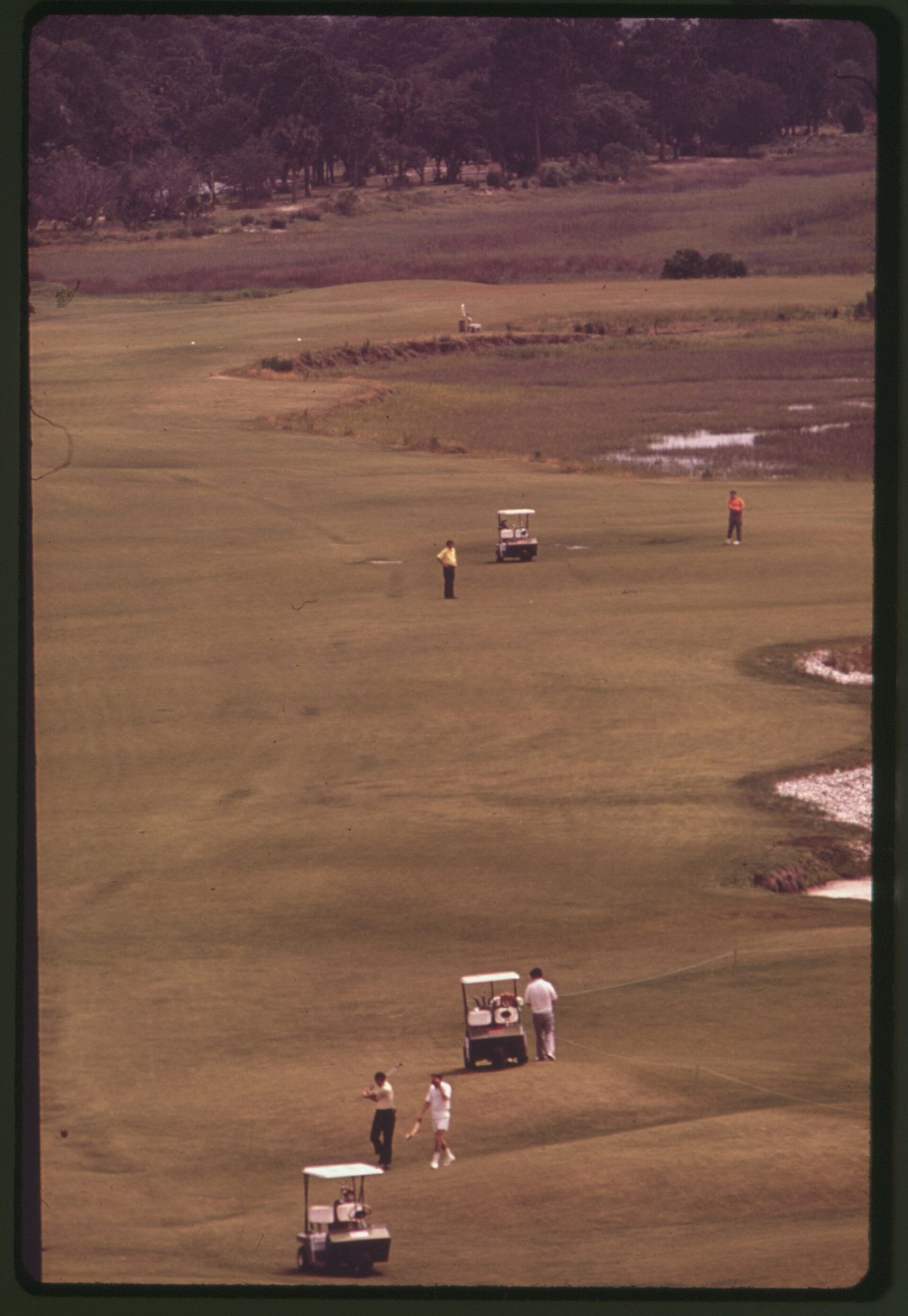
Hilton Head is where South Carolina resort golf began. Sea Pines, at the south end of the island, was developed from the late 1950s, and Harbour Town, the course that made it famous, has hosted a PGA Tour event every year since 1969. Today the island has more than 20 courses, most of them resort or semi-private. We cover every Hilton Head course, and how Harbour Town’s dynamic pricing works, in separate guides.
Harbour Town Golf Links
Hilton Head Island (Sea Pines) · resort/public (resort guests get priority) · Pete Dye with Jack Nicklaus (1969) · Par 71, 7,131 yards · White tees 71.0/135 · Green fee: dynamic; sample 2026 dates reported at $378 to $651, including cart and range (September 2026) · one forecaddie per group; carts on the paths only
Harbour Town is the course that made Pete Dye famous, and the opposite of what most people expect from a resort course. It’s short by Tour standards, at 7,131 yards from the back, and tight, with small greens, overhanging live oaks and pines, and holes that ask you to shape the ball both ways. Nicklaus consulted on the design, and the result was so different from the long, open courses of the 1960s that it changed American golf architecture. The finish, along the Calibogue Sound toward the red-and-white-striped Harbour Town lighthouse, is one of the most recognisable in golf, and the RBC Heritage is played there every April.
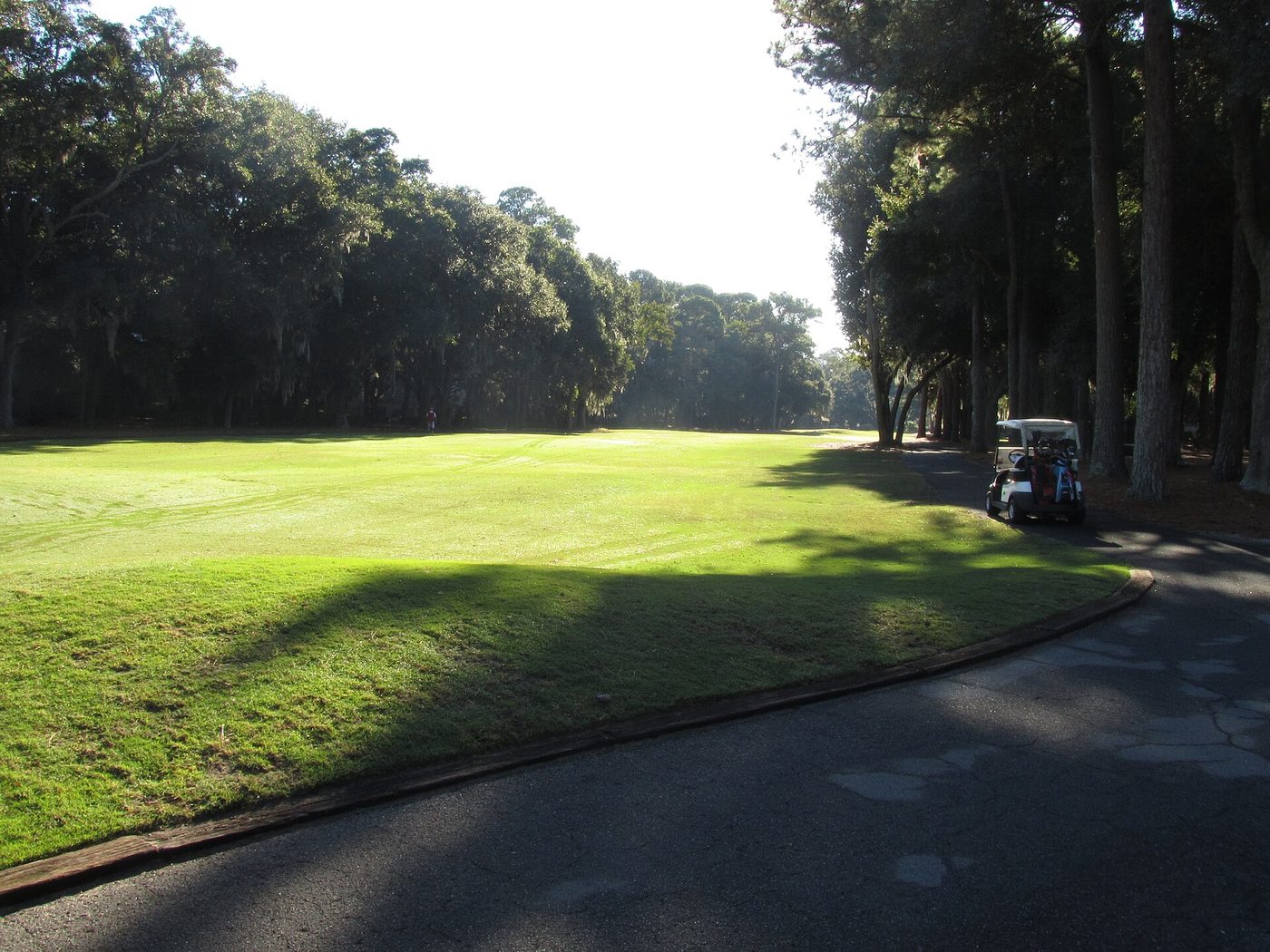
Which tees: Harbour Town is about precision, not power, so a 10-handicap can play the white tees, rated 71.0 with a slope of 135, and enjoy it. An 18 and a 25 should play forward and aim for the fat side of every green.
Verdict: worth playing once for the history and the design, but the dynamic price is steep. At $378 on a quiet date it’s fair for a Tour course; at $651 in peak season, it’s hard to justify against the Ocean Course.
Atlantic Dunes by Davis Love III (Sea Pines)
Hilton Head Island (Sea Pines) · resort · Davis Love III (2016, rebuilt on the site of the old Ocean Course) · Par 72, 7,065 yards · Love tees 73.6/140 · Green fee: sold through Sea Pines’ booking; summer 2026 packages from about $399 per golfer, including cart and range (official, September 2026)
Atlantic Dunes is Sea Pines’ second course, rebuilt by Davis Love III in 2016 on the site of the old Ocean Course. Love opened it up, removed trees and brought back sandy waste areas, turning it back toward the Atlantic dunes it’s named for. It’s a fairer, more open course than Harbour Town, and a better one for a mid-handicapper.
Verdict: a very good resort course that works best as a second round alongside Harbour Town. Sea Pines’ third course, Heron Point, a Pete Dye redesign from 2007, is the quieter choice.
Palmetto Dunes (Robert Trent Jones Oceanfront and Arthur Hills)
Hilton Head Island · resort/public · Robert Trent Jones Oceanfront: Robert Trent Jones Sr., par 72, gold tees 74.8/141; Arthur Hills Course: par 72, about 6,455 yards (blue), 73.5/139 · Green fee: dynamic, booked online; not published as a rate card (September 2026)
Palmetto Dunes, in the middle of the island, has three courses, and the two to know are the Robert Trent Jones Oceanfront, with a par 5 that runs down to the beach, and the Arthur Hills, which winds through dunes and lagoons. Both are good, well-kept resort courses, and neither needs a hotel stay.
Verdict: a good alternative to Sea Pines if you’re playing several rounds on Hilton Head. Check the dynamic rate against Harbour Town’s for your dates.
Myrtle Beach and the Grand Strand
The Grand Strand, 60 miles of coast from Pawleys Island to the North Carolina line, has more golf courses than anywhere else in South Carolina, and most of them are public. It’s the country’s biggest golf-vacation market, and competition keeps prices down. We cover the full run of Myrtle Beach courses, a map of the Grand Strand’s courses and cheap golf in Myrtle Beach in separate guides.
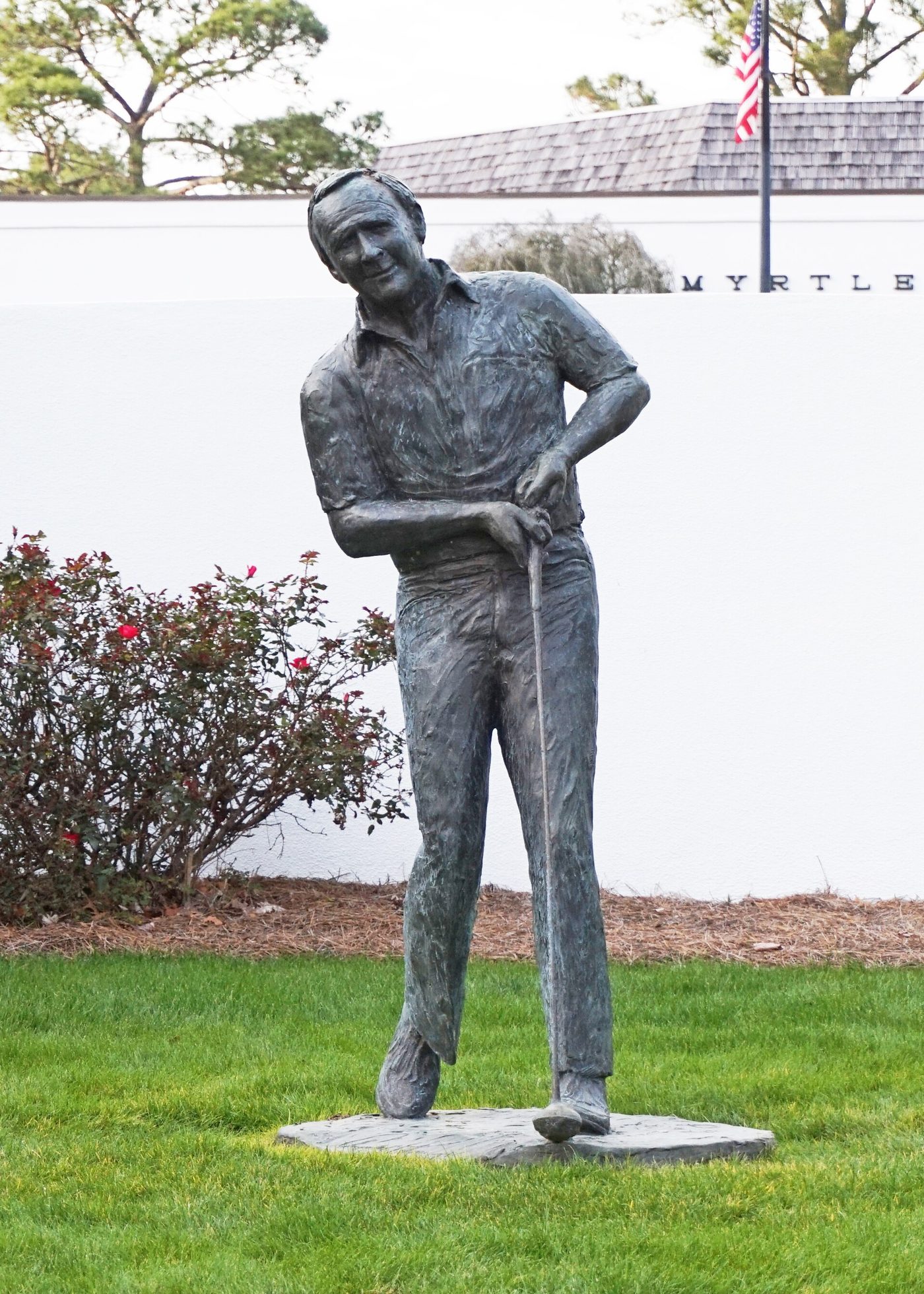
Myrtle Beach National, with its Arnold Palmer statue outside the clubhouse, is the classic old Grand Strand complex. But the best golf on the Strand is at its southern end, around Pawleys Island and Murrells Inlet, and at the Dunes Club in Myrtle Beach itself.
Caledonia Golf & Fish Club
Pawleys Island · public · Mike Strantz (1994) · Par 70 · Rating and slope not published on the rate page · Green fee in summer 2026 (June 22 to August 30): mornings from $129, afternoons from $99, twilight after 4 pm $79 (official, September 2026)
Caledonia is the best public course on the Grand Strand, and one of the most beautiful anywhere. Mike Strantz, an architect and artist who died young, built it on an old rice plantation on the Waccamaw River, with live oaks draped in Spanish moss, bold bunkers and a par-4 18th that finishes in front of the clubhouse porch, where people sit and watch. It’s short, at par 70, but the greens and the bunkering make it a real test.
Which tees: it’s short enough for anyone to play back, but the forced carries to some greens are real. A 25-handicap should move up and enjoy the setting.
Verdict: the best round on the Grand Strand, and at $129 on a summer morning, one of the best values in Southern golf. Book early in spring.
True Blue Golf Club
Pawleys Island · public · Mike Strantz (1998) · Par 72 · Green fee in summer 2026: mornings from $109, afternoons from $89, twilight after 4 pm $59 (official, September 2026)
True Blue, across the road from Caledonia, is Strantz’s other Pawleys Island course, and it’s the opposite of its sister: big, wide and wild, with huge sandy waste areas, enormous greens and bold angles. Some golfers think it’s the better of the two. It’s certainly the harder.
Verdict: play it the same day as Caledonia; it’s one of the best 36-hole days in the Southeast for under $250.
The Dunes Golf and Beach Club
Myrtle Beach · semi-private (members and limited public tee times; unaccompanied guests can’t play on Fridays, Saturdays or holidays) · Robert Trent Jones Sr. (1948); later work by Rees Jones · Par 72, 7,370 yards · championship tees 76.1/148 · Green fee not published
The Dunes Club is the oldest great course on the Grand Strand, and the only one in GOLF’s state top 15. Robert Trent Jones Sr. laid it out in 1948 along the ocean, and its signature is the 13th, a long par 5 that bends around a lake, known as “Waterloo”. It’s a private club that sells a limited number of public tee times, but not on the busiest days.
Verdict: the best course on the Grand Strand, if you can get a time. Call the club; it doesn’t publish rates or open its tee sheet online to the public.
TPC Myrtle Beach
Murrells Inlet · public · Tom Fazio (1999) · Par 72, 6,950 yards · back tees 74.1/144 · Green fee: dynamic, not published as a rate card (September 2026)
TPC Myrtle Beach is a big, well-conditioned Fazio course with wetlands, lakes and a slope of 144 from the back tees. It was built as a tournament course, and it plays like one, with fast greens and plenty of water.
Verdict: a very good, polished round, but check the dynamic rate against Caledonia’s before you book.
Barefoot Resort (Dye Course)
North Myrtle Beach · semi-private with public access · Pete Dye (2000) · Par 72, 7,343 yards · Platinum tees 76.0/143 · Green fee walk-on rates about $95 to $235, depending on the season; range balls included (official, September 2026)
The Dye Course is the best of Barefoot Resort’s four courses, a typical Pete Dye design with waste bunkers, railroad-tie bulkheads and greens that punish anything off line. It plays hard from the back tees.
Verdict: a good Pete Dye course at a Grand Strand price, especially at the low end of the seasonal range.
Tidewater Golf Club
North Myrtle Beach · public · Ken Tomlinson (1990) · Par 72, 7,044 yards · Black tees 74.3/144 · Green fee: dynamic, not published · walking allowed
Tidewater sits on a peninsula between the Intracoastal Waterway and Cherry Grove inlet, with holes along the salt marsh and the waterway. It’s one of the most scenic courses on the Strand, and it allows walking.
Verdict: worth it for the setting, and a good walk.
Also on the south end, Pawleys Plantation, a Jack Nicklaus design from 1988, plays out across the salt marsh.
Aiken, the Midlands and the Upstate
South Carolina’s inland golf is mostly private, around Aiken, Columbia and Greenville. The best courses inland are the Aiken clubs above and Greenville Country Club’s Chanticleer course (No. 23 on GOLF’s list), all private. We cover the Upstate’s courses, including its public options, in their own guide.
How South Carolina golf courses play: marsh, wind, tides and alligators
South Carolina’s coastal golf has a character of its own, and a few things are worth knowing before you play.
Marsh and water. Most coastal courses are built along salt marsh, rivers and lagoons, so water and forced carries are common. The Lowcountry marsh looks harmless and swallows balls.
Wind. On the islands, especially Kiawah and Hilton Head, the wind off the Atlantic can add or take four or five clubs. Play in the morning when you can.
Heat and humidity. From June to September it’s hot and humid, with afternoon storms. Tee off early.
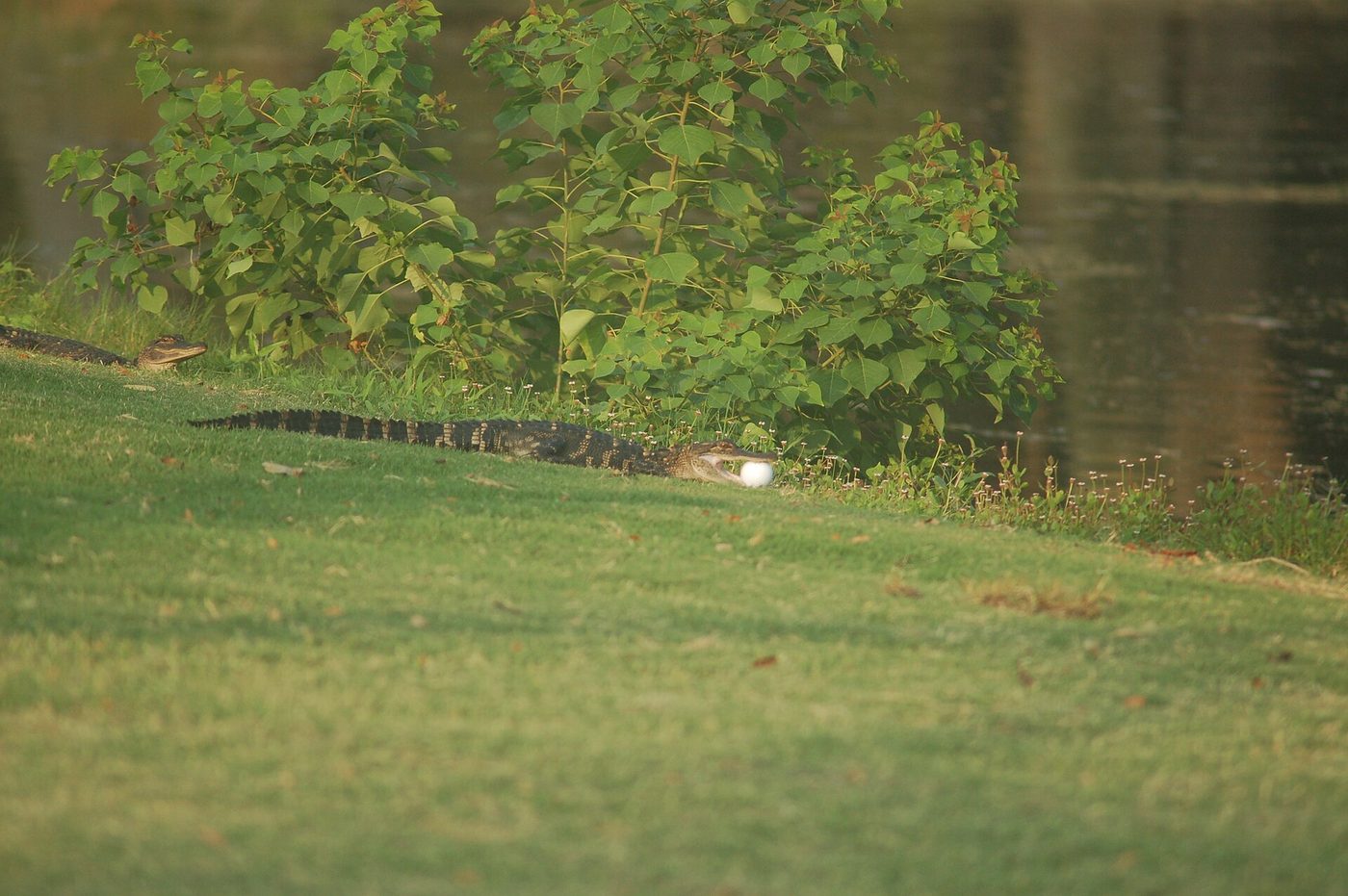
Alligators. Most Lowcountry courses have them, especially in the lagoons at Kiawah and Hilton Head. They’re generally not aggressive, but never go near one to retrieve a ball.
Which tees should you play on South Carolina courses?
A 10-handicap belongs at 6,200 to 6,500 yards, an 18 at 5,700 to 6,100 and a 25 at 5,200 to 5,600. On the high-slope courses, the Ocean Course (150 from the gold tees), the Dunes Club (148), TPC Myrtle Beach and Tidewater (144), move up a set. On short, tight courses like Harbour Town and Caledonia, you can play a little further back, because accuracy matters more than length.
When is the best time to play golf in South Carolina?
Spring and autumn. March to May and late September to November bring the best weather, the firmest conditions and the highest prices. Summer is hot and humid but cheaper: Caledonia’s morning rate starts at $129 from late June to August. Winter is mild on the coast and the quietest season.
A quick guide:
- Spring (March to May): peak season on all three coastal stretches, with the RBC Heritage at Harbour Town in April. Book well ahead.
- Summer (June to August): the lowest golf rates of the year on the Grand Strand, but heat, humidity and afternoon storms. Play early.
- Autumn (September to November): the second peak, with good weather and slightly lower prices than spring. Hurricane season runs to November 30, so keep an eye on the forecast.
- Winter (December to February): mild, with some cold days. The quietest and often cheapest time of year.
South Carolina’s season runs almost opposite to Florida’s best courses, where winter is peak. A spring trip here and a winter trip there is how many serious golfers split the year.
How much does it cost to play the best courses in South Carolina?
At the top, Harbour Town runs about $378 to $651 depending on the date, and the Ocean Course is reported at about $480 for resort guests. The Grand Strand is far cheaper: Caledonia starts at $129 in summer. Charleston Municipal costs non-residents $68 walking and $90 riding.
Here is what the courses in this guide cost, based on the rates we found in September 2026:
| Course | Rate | Notes |
|---|---|---|
| Harbour Town | About $378-$651 (2026 sample dates) | Dynamic; cart and range included |
| Kiawah Ocean Course | About $480 for resort guests (reported) | Non-guests pay more; caddie tips extra |
| Atlantic Dunes (Sea Pines) | Summer 2026 packages from about $399 | Cart and range included |
| Barefoot (Dye Course) | About $95-$235 | Seasonal walk-on rate |
| Kiawah Osprey Point | About $200-$240 for resort guests (reported) | Dynamic |
| Caledonia | $79-$129 (summer 2026) | Morning, afternoon and twilight rates |
| True Blue | $59-$109 (summer 2026) | Morning, afternoon and twilight rates |
| Charleston Municipal | $68-$90 non-residents; $23-$50 city residents | Walking or riding |
Three money rules hold across the state. First, the Grand Strand is where the value is: two Mike Strantz courses cost less together in summer than one round at Harbour Town. Second, the resorts, Kiawah, Sea Pines and Palmetto Dunes, all use dynamic pricing, so the same course can cost hundreds of dollars more on a spring weekend than on a winter weekday; check the booking engine for several dates. Third, add the extras. At the Ocean Course the caddie is free but customary tips are about $120, and at Harbour Town a forecaddie comes with every group.
How do you book a tee time at South Carolina’s best courses?
Book on each course’s own site or by phone. Kiawah Island Golf Resort lets non-guests book up to 60 days ahead, with earlier access for resort guests. Harbour Town and Kiawah price dynamically, so the same round can vary by more than $250 between dates.
A simple way to get the tee times you want:
- Decide whether to stay. At Kiawah and Sea Pines, a resort stay gets you earlier booking and lower rates at the Ocean Course and Harbour Town.
- Book the Ocean Course first. Non-guests can book up to 60 days ahead; in spring, times sell out.
- Check several dates at the dynamic-priced resorts. Harbour Town’s price can vary by more than $250 between dates.
- Call the Dunes Club. It sells limited public times and none to unaccompanied guests on Fridays, Saturdays or holidays.
- Book summer mornings on the Grand Strand. Caledonia and True Blue’s lowest rates are in the afternoon, but mornings are cooler and drier.
- Take the walking option where it’s offered. The Ocean Course lets you walk at any time; Charleston Municipal and Tidewater welcome walkers.
- Watch the hurricane forecast in late summer and autumn, and book refundable lodging.
How to choose which South Carolina course to play
Start with what kind of golf you want, then work down to price and access.
- For the best golf, full stop: the Ocean Course at Kiawah. Walk it, in the morning.
- For golf history: Harbour Town, for Pete Dye and the RBC Heritage.
- For value: Caledonia and True Blue on the same day, and Charleston Municipal.
- For a beginner or a 25-handicap: Kiawah’s Oak Point, Palmetto Dunes’ Arthur Hills and Caledonia from the forward tees.
- For a group trip with many rounds: the Grand Strand, where competition keeps prices low.
If you’re thinking of living on a course rather than visiting, South Carolina’s golf communities are a separate subject. And if you’d rather see a longer list of South Carolina courses anyone can book, we have a separate guide to the best public courses in the state.
Frequently asked questions
What is the best golf course in South Carolina?
The Ocean Course at Kiawah Island, a 1991 Pete and Alice Dye design, is No. 1 on GOLF’s 2024-25 South Carolina list and the state’s highest-ranked course on the national lists, including No. 12 on the LINKS 100 U.S. It’s a resort course that anyone can book.
What is the best public golf course in South Carolina?
The Ocean Course at Kiawah is the highest-ranked course anyone can book, followed by Harbour Town on Hilton Head. For value, Caledonia Golf & Fish Club on Pawleys Island, No. 21 on GOLF’s state list, is the standout, from $129 on a summer 2026 morning.
How much does it cost to play Harbour Town?
Harbour Town uses dynamic pricing, and sample 2026 dates were reported at $378 to $651, including a cart and range balls. Resort guests at Sea Pines get priority booking. A forecaddie accompanies every group, and carts are restricted to the paths.
How much does it cost to play the Ocean Course at Kiawah?
The resort doesn’t publish a rate card. Resort guests were reported to pay about $480 in 2026, with non-guests paying more. Caddies are free, but customary tips are about $120 for a caddie and $60 for a forecaddie. Non-guests can book up to 60 days ahead.
Can you walk the Ocean Course?
Yes. The Ocean Course allows walking at any time, and walking with a caddie is the traditional way to play it. There’s no caddie fee, but tips of about $120 per caddie are customary.
What is the cheapest good golf course in South Carolina?
Charleston Municipal, a 1929 city course rebuilt in 2020, costs non-residents $68 walking and city residents from $23. On the Grand Strand, True Blue’s twilight rate was $59 in summer 2026, and Caledonia’s $79.
When is the best time to play golf in Myrtle Beach?
Spring (March to May) and autumn (late September to November) bring the best weather and the highest prices. Summer is cheapest for golf but hot and humid, and winter is quiet and mild, with some cold days.
Can you play Yeamans Hall or Congaree?
Only as the guest of a member. Both are private clubs that don’t sell tee times. Congaree hosted the PGA Tour’s Palmetto Championship in 2021, which is the closest most golfers have come to seeing it.
Our verdict
The best golf courses in South Carolina are an unusual mix: the No. 1 course in the state is one you can book, and the second-most famous, Harbour Town, is too. Below them, the private clubs around Charleston, Aiken and the Lowcountry are some of the best in the country, but closed to the rest of us.
If you can play one course, make it the Ocean Course at Kiawah, and walk it in the morning. If you want history, add Harbour Town. And if you want the best value in Southern golf, spend a day at Caledonia and True Blue for less than one round on Hilton Head.
Sources
- Best Golf Courses in South Carolina for 2024-25, GOLF, December 23, 2024
- America’s 100 Greatest Golf Courses, 2025-26, Golf Digest
- Top 100 Courses in the U.S., 2024-25, GOLF
- The LINKS 100 U.S., LINKS Magazine
- What exactly are Course Rating and Slope Rating?, USGA
- Ocean Course FAQ, Kiawah Island Golf Resort
- Osprey Point and Oak Point, Kiawah Island Golf Resort
- Best golf courses on Kiawah Island, Birdie Report (Ocean Course resort-guest rate, 2026)
- Harbour Town Golf Links, Sea Pines Resort; 2026 sample prices via The Golf News Net
- Atlantic Dunes by Davis Love, Sea Pines Resort
- Robert Trent Jones Course and Arthur Hills Course, Palmetto Dunes
- Rates and specials, Caledonia Golf & Fish Club and True Blue Golf Club
- The Dunes Golf and Beach Club, Rees Jones Inc.
- Course guide, TPC Myrtle Beach
- Dye Course, Barefoot Resort
- FAQ, Tidewater Golf Club
- Course rates and annual passes, City of Charleston
- Yeamans Hall Club and Congaree Golf Club, Wikipedia
- Palmetto Golf Club, Chechessee Creek Club and Long Cove Club
Image credits
| Image | Photographer | Licence | Source |
|---|---|---|---|
| The Ocean Course at Kiawah Island from the air (featured image) | Pammymags | CC BY-SA 4.0 | Wikimedia Commons |
| Ocean Course at Kiawah Island, 18th green | N75746 | CC BY-SA 4.0 | Wikimedia Commons |
| Kiawah Island Golf Resort, bulkheaded green | Bill Showalter from Greeneville Tennessee, USA | CC BY 2.0 | Wikimedia Commons |
| A golf course on Hilton Head Island, 1970s | Paul Conklin | public domain | Wikimedia Commons |
| Harbour Town Golf Links fairway | danperry.com | CC BY 2.0 | Wikimedia Commons |
| Statue of Arnold Palmer at Myrtle Beach National | Bernard Gagnon | CC BY-SA 4.0 | Wikimedia Commons |
| Alligator with a golf ball at Kiawah Island | Ŵïllî§ï$2 | public domain | Wikimedia Commons |