Why do golf courses aerate greens? Because thousands of rounds a year pack the soil under a green tight, and dead roots and stems build up just below the surface. Aeration punches small holes, usually pulls out plugs of soil, and fills the holes with sand, letting air, water and new roots back in.
It’s the maintenance golfers hate most, and one of the most important. The holes make putting a lottery for a week or two, and nobody enjoys paying full price to roll the ball across sand. But a green that’s never aerated slowly suffocates: water sits on top, roots stay shallow, disease moves in, and by midsummer the putting surface is thin and soft. For how the grass on greens differs from region to region, start with our guide to golf course grass.
For a golfer, the practical questions are when it happens, how long the greens take to recover, and whether you’ll pay full price to putt on sand. This guide answers all three, with real 2026 schedules from Torrey Pines, Bethpage, Kapalua and others, the USGA’s guidance on how often greens should be aerated, the different machines and methods, and what the Rules of Golf say about playing through aeration holes.
How we built this. The agronomy comes from the USGA Green Section’s published guidance on aeration and organic-matter management. Aeration dates come from each course’s own maintenance calendar or website, checked in September and October 2026. The rules section draws on the Rules of Golf and the Model Local Rule for aeration holes, as explained by Golf Digest and the Nevada Golf Association. We’re golfers, not agronomists; where the science is more nuanced than a paragraph allows, we say so and point you to the people who manage greens for a living.
At a glance
- What it is: punching holes in the putting surface, usually removing small cores of soil and thatch, then filling the holes with sand
- Why: to relieve soil compaction, remove organic matter (thatch), improve drainage and encourage deeper roots
- How often: the USGA suggests about three core aerations a year for bentgrass greens, with 5/8-inch tines on 2-inch spacing, and one midsummer aeration for ultradwarf bermudagrass greens
- How long it takes to heal: Torrey Pines told golfers to expect bumpy, sanded greens for about two to three weeks after its April and May 2026 aerations
- When: cool-season greens in spring and late summer; warm-season bermuda greens in summer
- The rules: aeration holes aren’t damage you’re allowed to repair on the green, and you only get free relief if the committee has adopted Model Local Rule E-4
What is golf course aeration?
Golf course aeration is the practice of punching holes into greens, tees or fairways to relieve compacted soil and remove built-up organic matter. On greens, a machine drives hollow tines a few inches into the surface, pulls out plugs, and the crew fills the holes with sand topdressing.
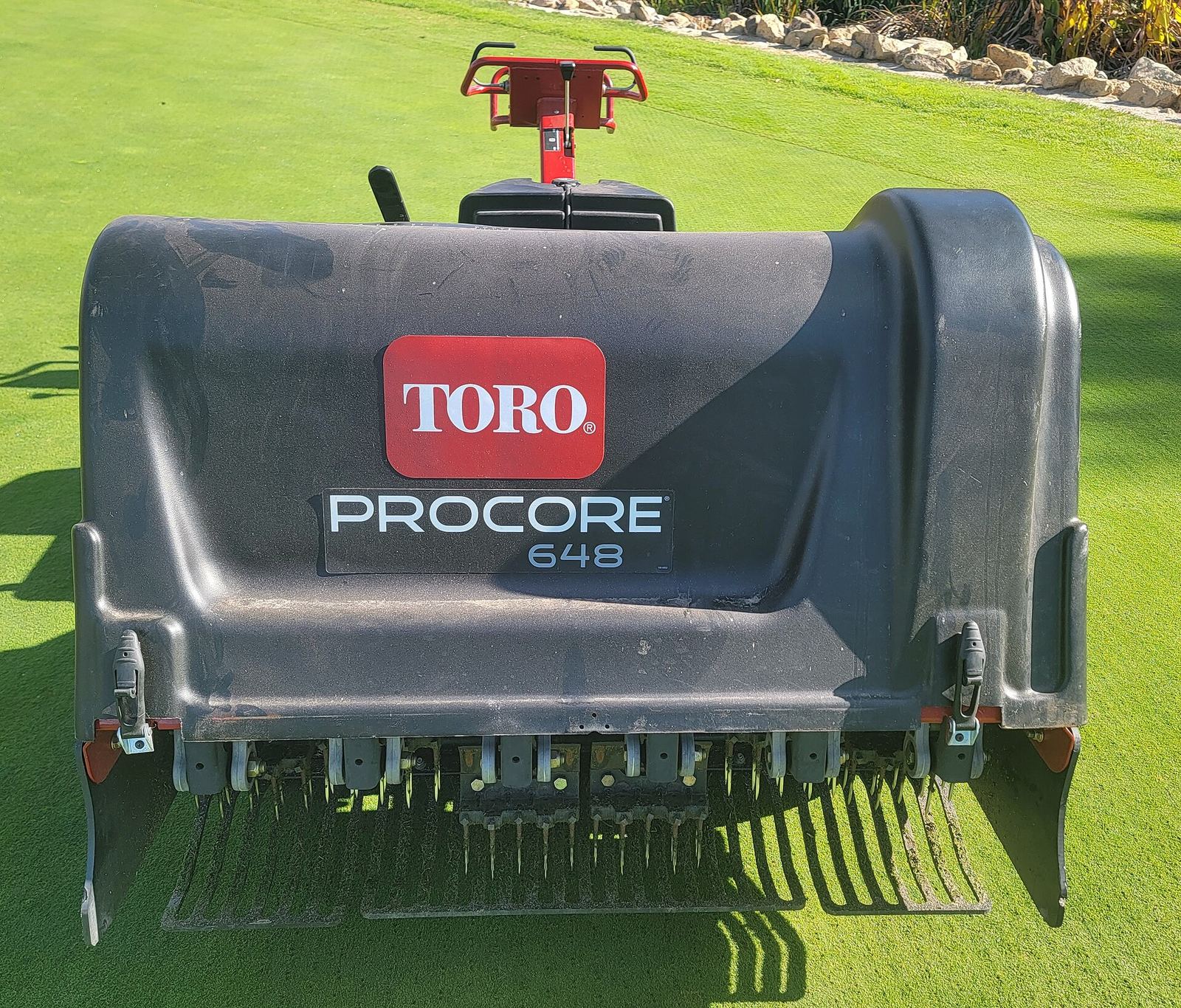
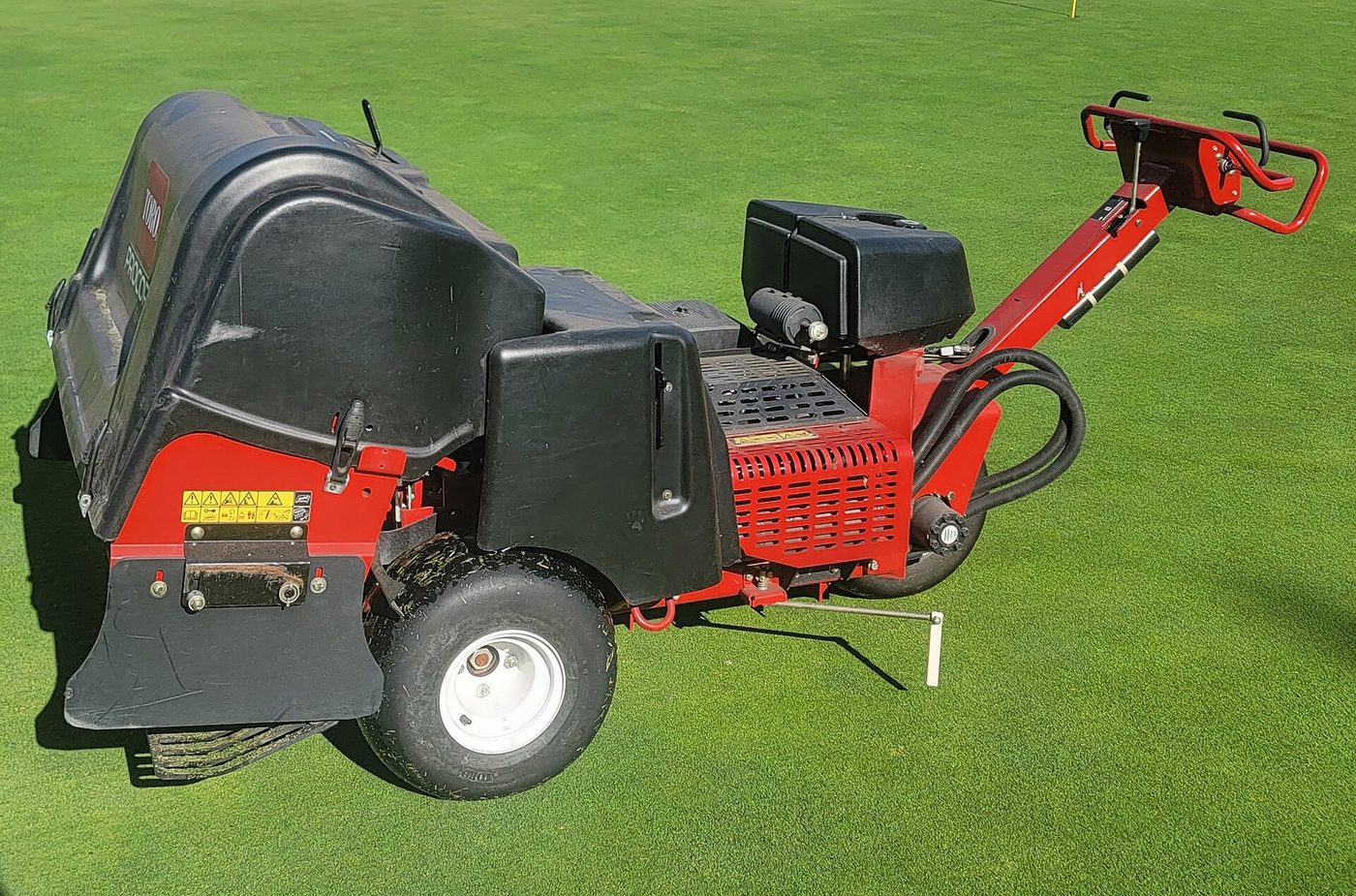
The machine in the photo at the top of this page, a walk-behind core aerator, is the most common tool for greens. A bank of tines at the back moves up and down as the machine rolls forward, punching rows of evenly spaced holes. Hollow tines pull a plug of soil, roots and thatch out of every hole and leave it on the surface; the crew sweeps or blows the plugs away, spreads sand over the green, and works it into the holes with brushes or drag mats.
There are four reasons a superintendent does it:
- Compaction. Every footstep, cart tyre and mower pass squeezes the soil particles under a green closer together. Compacted soil holds less air, drains more slowly and is harder for roots to push through.
- Organic matter. Grass constantly produces roots, stems and clippings, and the layer of half-decayed material just below the surface, often called thatch, grows every season. Too much of it holds water like a sponge, keeps the surface soft and invites disease.
- Drainage. Sand-filled holes act as channels that let water move down through the profile instead of sitting on top.
- Roots. With air and water reaching deeper, roots follow, and deeper roots mean grass that survives heat and drought better.
The USGA’s agronomists describe the removal of organic matter, and its replacement with sand, as one of the key functions of core aeration. That’s the long game: a green that’s aerated and topdressed consistently stays firm, smooth and fast for years. A green that isn’t gets softer and slower every season, whatever the mowers do. For more on the anatomy of a green and the rest of the course, see our guide to the parts of a golf course.
A worked example: what three aerations a year actually do
The USGA’s Green Section has suggested a target for bentgrass putting greens: apply a total of 40 to 50 cubic feet of sand per 1,000 square feet each year through core aeration and topdressing combined. In practice, it says, that can be reached with three core aerations a year using 5/8-inch tines on 2-inch by 2-inch spacing: two combined on one date in spring, and a third in late summer or early autumn, with regular light topdressing through the season.
Those numbers are worth working through, because they explain why the greens look the way they do the week after.
| Step | The numbers | What it means |
|---|---|---|
| Size of each hole | A 5/8-inch tine makes a hole about 0.31 square inches in area | Each hole is a little wider than a pencil |
| Spacing | 2-inch by 2-inch centres = one hole per 4 square inches | Holes in a tight grid across the whole green |
| Surface removed per pass | 0.31 ÷ 4 = about 7.7% of the green | Roughly one-thirteenth of the surface comes out in one pass |
| Two passes on one spring date | About 15% | Why spring aeration looks so dramatic |
| Three passes a year | About 23% | Close to a quarter of the surface replaced with sand every year |
| Sand needed (USGA target) | 40 to 50 cubic feet per 1,000 square feet a year | For a 5,000-square-foot green, 200 to 250 cubic feet of sand a year |
The hole-area and percentage figures are our own arithmetic from the USGA’s tine and spacing guidance, ignoring overlap. The 5,000-square-foot green is an example, not an average.
For warm-season greens, the guidance is lighter. On ultradwarf bermudagrass greens that aren’t overseeded, the USGA says less aeration is needed, and it can be done on one date in the middle of summer, again with 5/8-inch tines on the tightest spacing possible. Bermuda grows so fast in summer heat that it recovers quickly from one big aeration.
Now put that next to a real calendar. The city of San Diego scheduled core aeration with topdressing on the South Course at Torrey Pines for April 7 and 8, 2026, and on the North Course for May 12 and 13, and warned golfers to expect bumpy, sanded greens for about two to three weeks after each. If you’d booked the South Course for April 20, you’d have been putting on greens about halfway through their recovery.

Why do golf courses aerate greens when they’re perfect?
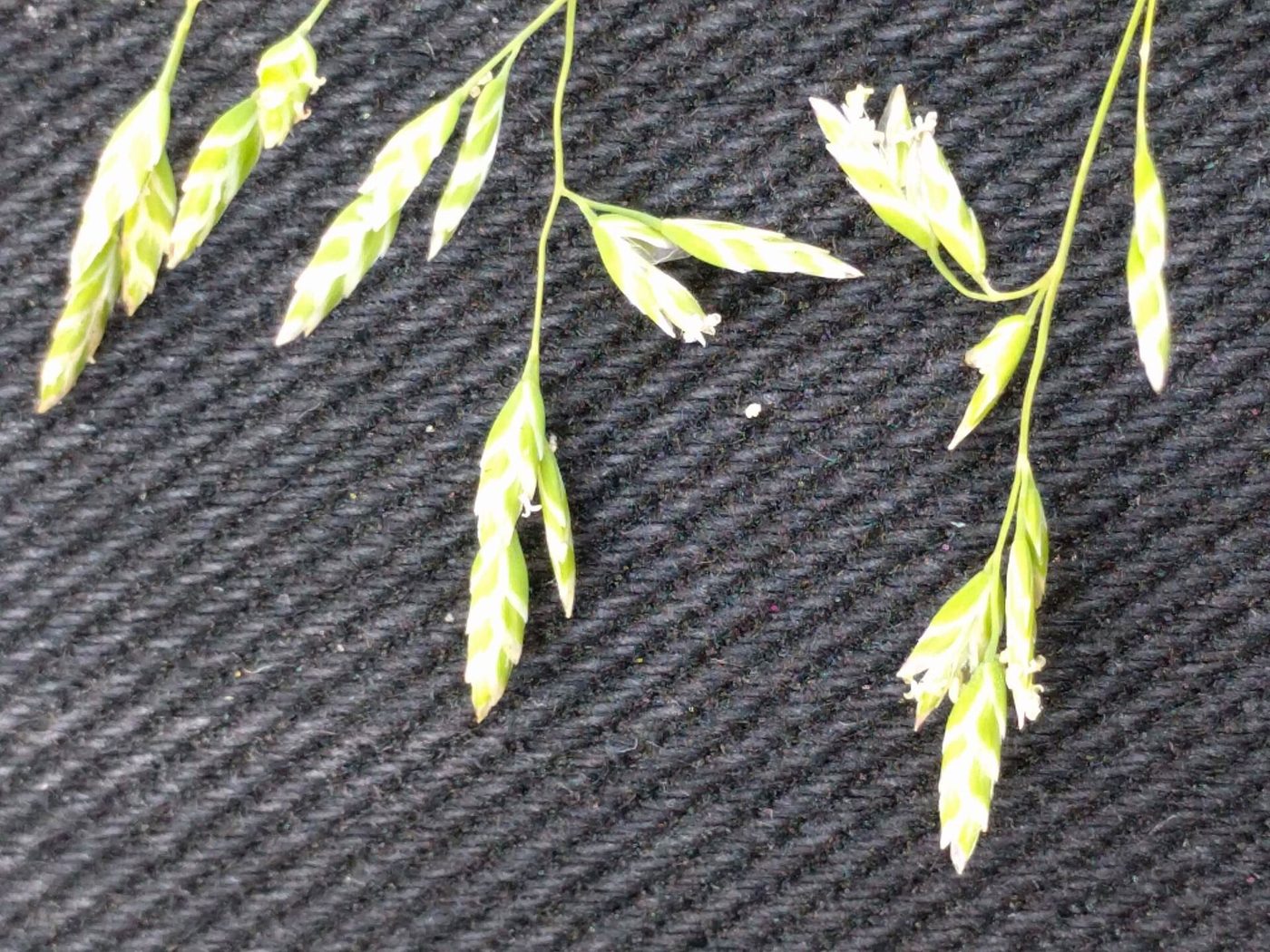
Because healthy, actively growing grass heals fastest. Superintendents schedule aeration for the weeks when their grass grows strongest: spring and late summer for cool-season bentgrass and poa annua, midsummer for bermudagrass. Punching holes into stressed or dormant grass would leave the greens scarred for far longer.
It’s the most common complaint in golf: the greens are finally perfect, and the course punches holes in them. The timing isn’t a coincidence; it’s the point. The same conditions that make greens good, warm soil, steady growth and no heat stress, are the conditions in which they recover from aeration in days rather than weeks.
The alternative is worse. Aerate a bentgrass green in the heat of July and the holes may not close until autumn, because the grass is barely growing. Aerate a bermuda green in March and it sits there, pockmarked, until the weather warms. So a northern course aerates in April or May and again in August or September, and a southern course aerates in June or July, and in both cases you’ll see the holes in the best weather of the year.
There’s a second, quieter reason. Many courses aerate in the shoulder season deliberately, when demand is lower and the lost revenue smallest. A resort course in Hawaii or a public course in the Northeast will usually choose a week when fewer golfers are booked, which is why aeration so often lands in early September, just after the summer holidays.
The different types of aeration
Not every hole in a green means weeks of bumpy putting. Superintendents use several methods, and they disrupt play very differently.
| Method | What it does | How disruptive | Typical use |
|---|---|---|---|
| Core (hollow-tine) aeration | Hollow tines remove plugs of soil and thatch; holes filled with sand | The most disruptive; greens usually take one to three weeks to heal | The main aeration of the year, once to three times |
| Solid-tine aeration | Solid tines push holes without removing soil | Less disruptive; holes close faster | Relieving compaction between core aerations |
| Needle-tine or “venting” | Very thin tines make tiny holes | Minimal; often barely noticeable after a day or two | In-season aeration to let air and water in during heat stress |
| Deep-tine aeration | Long solid tines reach far below the normal depth | Varies; usually less surface damage than coring | Breaking up deeper compacted layers, typically once a year or less |
| Sand injection | Machines blast holes with high-pressure water or air and fill them with sand in one pass | Usually smoother and quicker to recover than coring | An alternative or supplement to core aeration |
Descriptions are general. Recovery depends on the grass, the weather and the tines used; ask the pro shop what was done and when.
The method matters for your booking. A course that has “vented” its greens with needle tines may have greens that putt almost normally the next day; a course that core-aerated with large tines a week ago won’t. When a pro shop says the greens were “aerated recently”, ask which kind.
You’ll also hear about topdressing, the light layer of sand spread over greens every few weeks through the season, and verticutting, which slices through the surface to thin out grass and thatch. Neither is aeration, but both are part of the same programme, and both can leave greens sandy or a little slower for a day or two. Our guide to Stimpmeter readings and green speed explains how all of this affects how fast your putts roll.
When do golf courses aerate? A month-by-month calendar
It depends on the grass. Courses with cool-season greens (bentgrass and poa annua) usually aerate in spring and again in late summer or early autumn. Courses with warm-season bermudagrass greens usually aerate in summer. Here’s how that typically plays out, with real 2026 dates where courses published them:
| Month | Cool-season greens (North, Midwest, Northeast, West Coast) | Warm-season greens (South, Texas, Florida, desert, Hawaii) | 2026 examples (official) |
|---|---|---|---|
| January-February | Little or none; grass dormant or barely growing | Peak season in Florida and the desert; little aeration | None |
| March | Occasionally late in the month in mild climates | Too early for bermuda; little aeration | None |
| April | Spring aeration begins | Rarely | Torrey Pines South, April 7-8 |
| May | Spring aeration continues | Begins late in the month in some places | Torrey Pines North, May 12-13; Kapalua Plantation, May 6-10 (closed) |
| June | Usually avoided as heat builds | Summer aeration of bermuda greens | Typical bermuda window |
| July | Avoided; heat stress | Peak bermuda aeration; the USGA’s suggested midsummer date for ultradwarf greens | Typical bermuda window |
| August | Late-summer aeration begins in the North | Bermuda aeration continues | Typical cool-season window opens |
| September | Late-summer and early-autumn aeration | Hawaii and some southern courses; desert overseeding begins mid-month | Bethpage, September 1-2 and 4; Kapalua Plantation, September 8-13; Mauna Kea, September 8-9; Manele, September 21-28 |
| October | Some late aeration in milder climates | Desert courses closed for overseeding | Desert closures of two to three weeks between mid-September and early November |
| November-December | Little or none | Little; overseeded winter grass establishing | None |
Cool- and warm-season patterns are typical, consistent with USGA guidance; individual courses vary. The 2026 examples come from Torrey Pines (City of San Diego), Bethpage State Park, Kapalua Golf, Mauna Kea and Manele, checked September and October 2026.

A few patterns are worth knowing. Public courses tend to publish their dates, because they don’t want angry golfers at the first tee: Bethpage’s monthly calendar listed its September 2026 aeration days, and San Diego posts Torrey Pines’ maintenance schedule online. Resort courses publish closures when they shut down completely, as Kapalua did for two weeks in 2026. Private clubs usually tell only their members. And in the desert, the big autumn closure is overseeding rather than aeration, though courses often aerate in the same window; we explain how and why courses overseed in a separate guide.
How long does it take greens to recover after aeration?
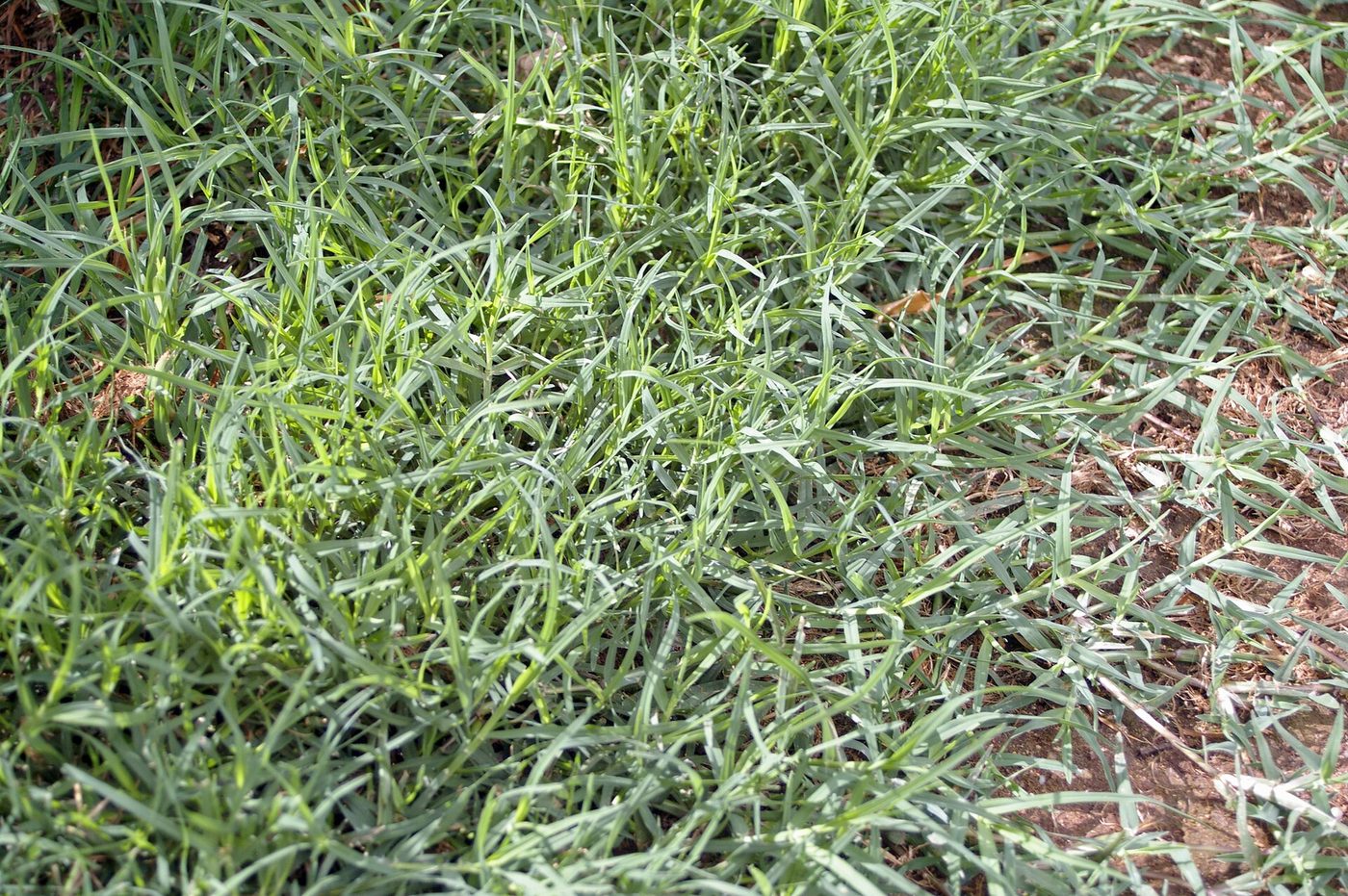
Usually one to three weeks after core aeration, depending on the grass, the weather and the size of the holes. Torrey Pines told golfers to expect bumpy, sanded greens for about two to three weeks after its 2026 aerations. Bermuda greens in summer often heal faster; needle-tine venting can be barely noticeable within days.
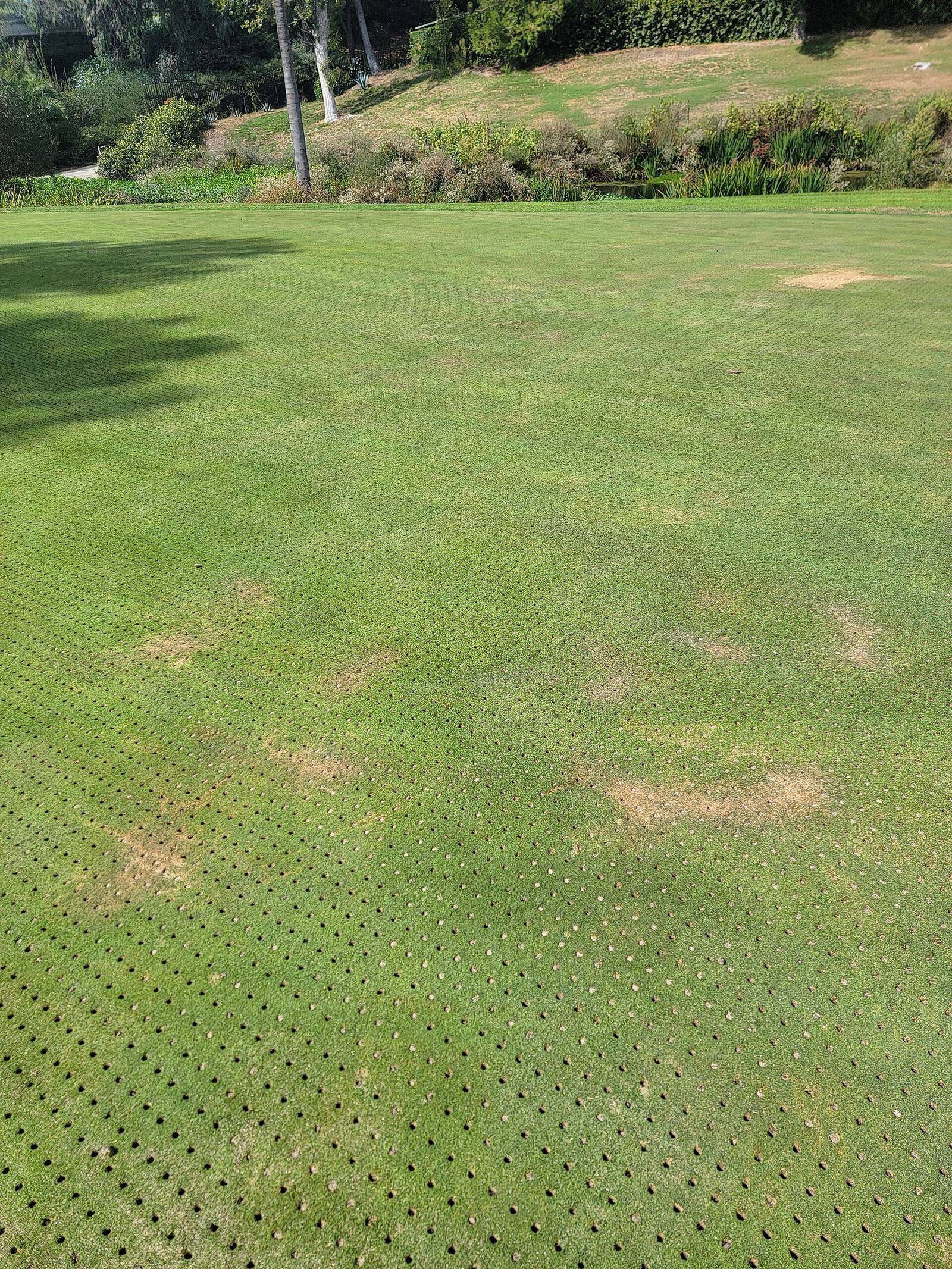
Recovery happens in stages. For the first few days, the greens are sandy and slow, and every putt hops. By the end of the first week, the grass has started to grow over the holes, though you’ll still see them and feel them. By the second or third week, most putts roll true again, though a sharp eye can still spot the pattern of healed holes.
Four things speed it up or slow it down:
- Grass type and season. Bermudagrass in summer heat is the fastest healer; bentgrass and poa in cool spring weather take longer.
- Tine size and spacing. Bigger holes on tighter spacing remove more material and take longer to close.
- Weather. A cold snap after spring aeration, or a heatwave after late-summer aeration, can add a week or more.
- Traffic. A busy public course with hundreds of rounds a day recovers more slowly than a quiet private club.
Can you repair aeration holes, or get relief from them?
You can’t repair them, and you only sometimes get relief. Under the Rules of Golf, aeration holes aren’t damage you may repair on a putting green. Free relief exists only if the committee has adopted Model Local Rule E-4, for a ball in or touching an aeration hole.
The Rules of Golf let you repair most damage on a putting green: ball-marks, shoe damage, old hole plugs and the like. But aeration holes are specifically excluded, along with natural surface imperfections, so tapping them down or pressing them flat on your line breaches the rules. In casual golf, the etiquette is the same: leave them alone, and don’t try to “fix” a sanded green for the group behind you. Our guide to golf etiquette covers what you should repair on a green.
Relief is a separate question. Aeration holes aren’t ground under repair by default, so normally you play the ball as it lies. But when holes are fresh enough to interfere seriously with play, a committee can adopt Model Local Rule E-4, as committees may do for an event held soon after aeration. With it in effect:
- In the general area, if your ball lies in or touches an aeration hole, you may take free relief under Rule 16.1b: drop within one club-length of the nearest point of relief, no nearer the hole.
- On the putting green, if your ball lies in or touches an aeration hole, you may place it at the nearest point of relief, no nearer the hole, under Rule 16.1d.
- There’s no relief if a hole only interferes with your stance, your swing or, on the green, your line of putt.
If you’re playing a competition the week after aeration, check the notice board or scorecard for the local rule before you tee off.
How to plan your golf around aeration
- Check the course’s maintenance calendar before you book. Public and resort courses increasingly post aeration dates months in advance; look for a “course conditions”, “maintenance” or “aeration” page.
- Ask the pro shop the right question. Not “are the greens good?” but “when were the greens last aerated, and was it core aeration or venting?”
- Count the weeks. Core aeration means one to three weeks of recovery; book your big round for the third week or later if you can.
- Look for a discount. Many courses lower their rates while greens recover. If a course doesn’t advertise one, ask; the worst answer is no. Our guide to what a round of golf costs explains how courses set their rates.
- Use aeration weeks for practice rounds. A cheap round on sanded greens is a fine way to work on your long game, especially if you leave the putter in the bag mentally and focus on approach shots.
- For a trip, check every course on the list. Courses in the same region often aerate in the same few weeks. If you’re planning a September golf trip to Hawaii or the Northeast, it’s worth checking each course’s dates before you book flights.
- Read the local rules in competitions. If Model Local Rule E-4 is in effect, you’ll get relief from aeration holes; if not, you won’t.
For how booking windows, rates and cancellations work in general, see our guide on how to book a tee time.
Mistakes golfers make about aeration
- Booking the big round the week after. The most common and most expensive mistake. A $475 round at Kapalua, for example, isn’t the same experience a week after its aeration closure as it is a month later.
- Assuming aeration means a badly run course. It’s the opposite. The courses with the best greens are usually the ones that aerate and topdress consistently.
- Trying to fix the holes. You can’t repair aeration holes on the green under the Rules of Golf.
- Assuming you’ll get relief. Only if Model Local Rule E-4 is in effect.
- Forgetting the fairways and tees. Many courses aerate fairways and tees too, sometimes at different times from the greens, which can leave cores on the fairway for a few days.
- Paying full price without asking. Many courses discount rates during recovery, but not all advertise it.
- Blaming the superintendent. The person who aerates your favourite greens is the reason they’re your favourite greens. We explain what a golf course superintendent does, and how golf course maintenance works, in separate guides.
Frequently asked questions
How long do greens take to heal after aeration?
Usually one to three weeks after core aeration. Torrey Pines told golfers to expect bumpy, sanded greens for about two to three weeks after its April and May 2026 aerations. Bermuda greens in summer can heal faster, and needle-tine venting often shows little after a few days.
How often do golf courses aerate their greens?
Most core-aerate greens once to three times a year. The USGA has suggested about three core aerations a year for bentgrass greens, with 5/8-inch tines on 2-inch spacing, and one midsummer aeration for non-overseeded ultradwarf bermuda greens.
Why do golf courses aerate greens when they’re in perfect condition?
Because healthy, actively growing grass recovers fastest. Courses schedule aeration when their grass grows strongest, which is usually when the greens are at their best: spring and late summer for cool-season grasses, midsummer for bermuda.
Do golf courses lower green fees after aeration?
Many do, for a week or two while the greens recover, and some publish reduced rates. If a course doesn’t advertise a discount, ask the pro shop before you book.
Can you repair aeration holes on the green?
No. Under the Rules of Golf, aeration holes aren’t damage you’re allowed to repair on a putting green, so you play through them. Leave them alone in casual golf too.
Do you get free relief from aeration holes?
Only if the committee has adopted Model Local Rule E-4. Then you may take relief if your ball lies in or touches an aeration hole, under Rule 16.1b in the general area or Rule 16.1d on the putting green, but not for interference with your stance, swing or line of putt.
What is topdressing on a golf green?
A layer of sand spread over the green. After core aeration, heavy topdressing fills the holes; through the season, light topdressing every few weeks keeps the surface smooth and firm and dilutes the build-up of organic matter.
Do golf courses aerate fairways too?
Yes. Many courses aerate fairways and tees as well as greens, often at a different time, and sometimes leave the cores to break down on the fairway for a few days before mowing them in.
Our verdict
Aeration is the price of good greens, and it’s worth paying. The holes are a nuisance for a week or two, but the alternative, greens that slowly soften, drain badly and thin out every summer, is far worse. The answer to why golf courses aerate greens is simple: to keep them firm, smooth and alive.
For a golfer, the trick is timing. Check the course’s maintenance calendar, ask the pro shop when and how the greens were aerated, and save your expensive rounds for the third week after core aeration or later. If you do play on freshly punched greens, ask for the discount, treat it as a ball-striking day, and leave the holes alone. And for how the grass under all of this changes from Maine to Maui, our guide to the grasses on America’s golf courses explains what’s growing under your ball.
Sources
- Aeration: get it done!, USGA Green Section
- Are you managing putting green organic matter or is it managing you?, USGA Green Section Record
- Why do we always aerate when the greens are perfect?, USGA
- Course maintenance (2026 aeration dates for the South and North Courses), Torrey Pines Golf Course, City of San Diego
- Bethpage monthly calendar (September 2026), New York State Parks
- Golf rates (2026 aeration dates), Kapalua Golf
- Golf, Mauna Kea Resort (September 2026 closure dates)
- Golf, Four Seasons Resort Lanai (Manele aeration closure)
- Rules of golf review: can you get relief from aeration holes?, Golf Digest
- Rules of Golf spotlight: relief from aeration holes, Nevada Golf Association
Image credits
| Image | Photographer | Licence | Source |
|---|---|---|---|
| Toro ProCore 648 core aerator (featured image) | Votpuske | CC BY-SA 4.0 | Wikimedia Commons |
| Toro ProCore 648 core aerator, tines | Votpuske | CC BY-SA 4.0 | Wikimedia Commons |
| Torrey Pines South, 3rd tee | Matthewwlloyd | CC BY 3.0 | Wikimedia Commons |
| Poa annua seedheads | Michel Langeveld | CC BY-SA 4.0 | Wikimedia Commons |
| Bethpage State Park during the 2019 PGA Championship | JazzyJoeyD | CC BY-SA 4.0 | Wikimedia Commons |
| Putting green after core aeration | Votpuske | CC BY-SA 4.0 | Wikimedia Commons |
| Bermudagrass (Cynodon dactylon) | Bidgee | CC BY-SA 3.0 | Wikimedia Commons |