Golf course communities are neighbourhoods built around one or more golf courses, and the first thing to find out about any of them is how the golf works. Some include it in a monthly fee, some sell club membership separately, and a few make it mandatory when you buy. Costs run from The Villages’ $189 monthly amenity fee to a reported $300,000 to join Palmetto Bluff’s top club tier.
Most of what you’ll find online about golf communities is written by the people selling the homes, and it leaves out the numbers that matter: the club’s joining fee, the annual dues, the owners’ association fee, the assessments, and whether you have to pay for golf at all. This guide is written from the other side. It’s for a golfer, or a golfer’s partner, working out whether a golf community makes sense, and which kind. We explain the four ways golf works in these communities, compare a dozen well-known ones across Florida, Arizona, the Carolinas, Georgia, Texas and California with the fees we could verify, and list what to check before you sign anything.
How we built this. We checked each community’s own website and fee pages in September 2026, and used news reports where the club doesn’t publish its fees. Where a figure comes only from a local real-estate agent or membership broker, we say so and treat it as an estimate, not a price; club fees change often, and you should always get the current fee schedule from the club in writing before you buy. We haven’t lived in these communities or played every course; where a note leans on published data, we say so. For what private club membership costs in general, see our guide to country club membership costs.
At a glance
- Cheapest golf to live with: The Villages, Florida, where a $189 monthly amenity fee covers resident access to its executive courses, plus a trail fee from $21.77 a month for using your own cart
- Best-value resident golf pass: Sun City, Arizona, where the no-fee resident golf pass was reported at $2,800 for 2026
- Only community we checked where golf membership is mandatory: Dataw Island, South Carolina
- Most expensive to join: Palmetto Bluff, South Carolina, reported at $300,000 for its top club tier from May 2026, plus $22,000 a year
- Most courses: The Villages, with more than 50, most of them executive courses
- Best courses: Desert Mountain (six Jack Nicklaus designs) and Reynolds Lake Oconee (Nicklaus, Fazio and Rees Jones), both private clubs with optional membership
- The number most sellers leave out: the owners’ association fee, which is due whether you play golf or not
Golf course communities compared
The table compares the communities in this guide by how the golf works and what it costs, with the source of each figure. “Official” means the community or club’s own website; “reported” means a named news outlet; “estimate” means a local real-estate or broker figure that the club hasn’t confirmed.
| Community | State | Ages | Golf | How golf works | Key cost (source) |
|---|---|---|---|---|---|
| The Villages | FL | Mostly 55+ | 50+ courses, mostly executive | Included in amenity fee (executive courses) | $189/month amenity fee; trail fee $21.77/month or $143.70/year (official) |
| Sun City (RCSC) | AZ | 55+ | Recreation Centers courses | Optional resident golf pass or pay per round | No-fee golf pass $2,800 for 2026 (reported) |
| PebbleCreek | AZ | 55+ | 2 courses | Pay separately; not in HOA | 10-play punch pass $620 in 2025 (official); HOA about $1,761 per six months (estimate) |
| Desert Mountain | AZ | All ages | 6 Jack Nicklaus courses + par 3 | Optional private club | Full golf about $250,000 to join in 2026 (reported by a local real-estate blog) |
| Dataw Island | SC | All ages | 2 courses | Mandatory club and owners’ association membership | Golf dues about $287-$382/month; owners’ fee about $1,184/quarter (estimate) |
| Palmetto Bluff | SC | All ages | 3 private courses | Optional private club | Tier I $300,000 to join + $22,000/year from May 2026 (reported) |
| Kiawah Island Club | SC | All ages | Private club courses | Optional, tied to certain properties | Golf membership about $150,000 (estimate) |
| Sun City Hilton Head | SC | 55+ | 3 courses | Resident plans; no mandatory membership | Resident golf plans $335-$4,481 a year (2025, estimate) |
| The Landings | GA | All ages | 6 courses | Optional private club | Full golf $80,000 to join (June 2026, reported) |
| Reynolds Lake Oconee | GA | All ages | 5 resort courses + Creek Club | Optional club | Silver $30,000 (2022, club) to $45,000 (2026, reported) |
| Country Club of North Carolina | NC | All ages | 2 courses | Optional private club | Fees not publicly disclosed |
| PGA West | CA | All ages | 9 courses | Optional club; HOA required | HOA about $300-$981/month by sub-community (estimate) |
Checked September 2026. Estimates are from local real-estate agents or membership brokers and have not been confirmed by the club; get the current fee schedule in writing.
What is a golf course community?
A golf course community is a neighbourhood built around one or more golf courses, where homes line the fairways or sit a short cart ride from the first tee. The golf may be public, included in a monthly fee, sold as an optional club membership, or required with the house.
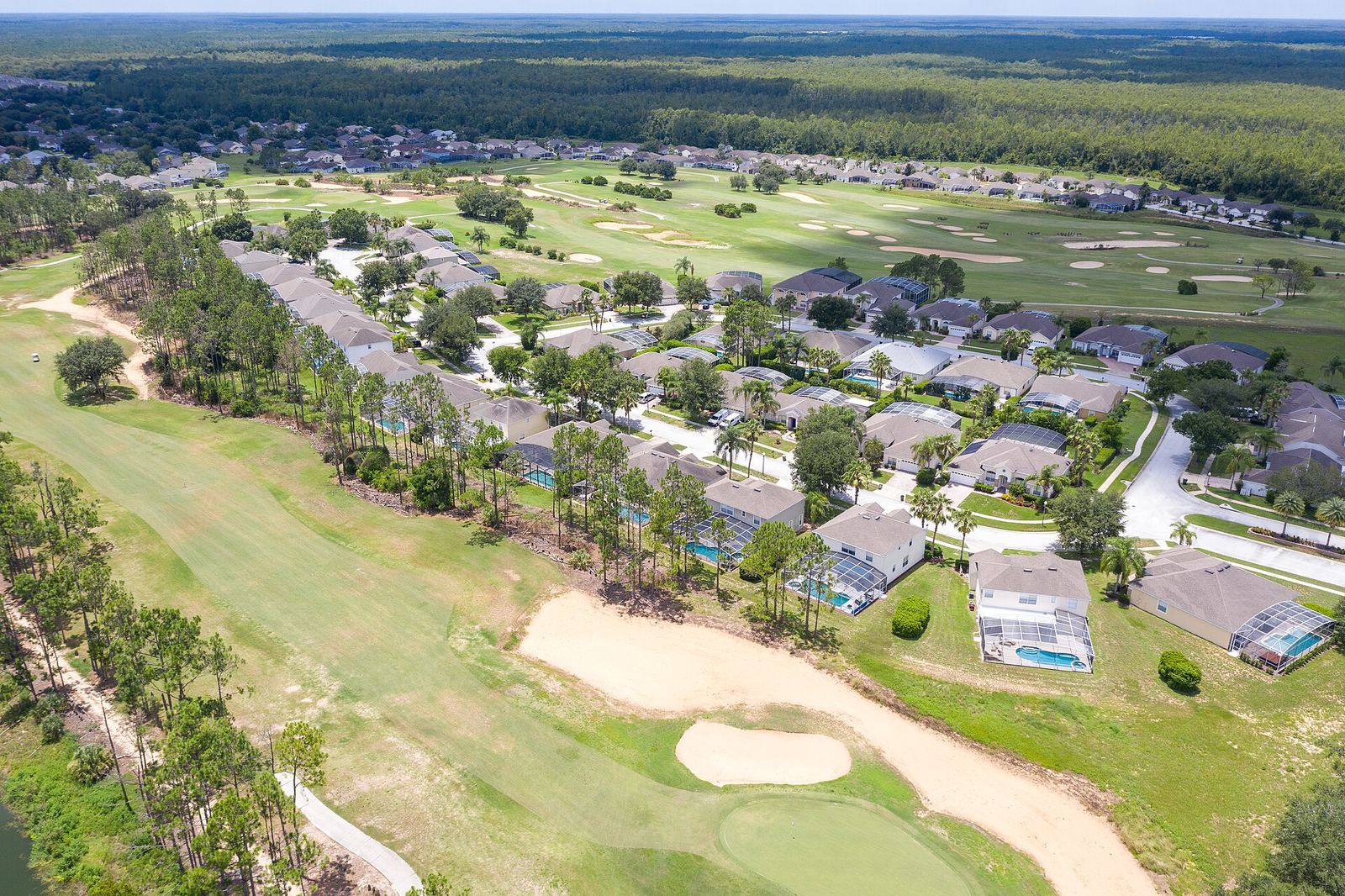
They come in every size and price. At one end are the huge retirement developments, The Villages in Florida and the Sun Cities in Arizona, where golf is one amenity among many and the courses are part of the community’s infrastructure, like the pools and the recreation centres. At the other end are private-club communities like Desert Mountain, Palmetto Bluff and Kiawah Island, where the golf is the main event and joining the club can cost more than many houses. In between are thousands of ordinary subdivisions built along a daily-fee course, like the homes that line the fairways at Highlands Reserve near Orlando, where you get the view but pay green fees like everyone else.
The distinction that matters most isn’t age or price. It’s how the golf is paid for.
The four ways golf works in a golf community
1. Golf included in the community fee. At The Villages in Florida, residents pay a monthly amenity fee ($189 in 2026) that covers the community’s executive courses, with a separate trail fee, from $21.77 a month or $143.70 a year, to drive your own golf cart on the paths. The championship courses charge per round. It’s the cheapest way to live with golf, and the golf is short, easy and plentiful.
2. Resident golf passes or pay-per-round. At Sun City, Arizona, Sun City Hilton Head, PebbleCreek, Robson Ranch in Texas and most other Del Webb and Robson-style 55+ communities, the courses are operated for residents (and sometimes the public), and you pay only if you play: a resident annual pass, a punch card or a green fee. Sun City, Arizona’s no-fee resident golf pass was reported at $2,800 for 2026; PebbleCreek sold a 10-round punch pass for $620 in 2025.
3. Optional private club membership. At Desert Mountain, Palmetto Bluff, The Landings, Reynolds Lake Oconee, Kiawah Island, Lakewood Ranch and the Pinehurst clubs, the courses belong to a private club that sells membership separately from the house. You can buy a home and never join, but if you want to play, you pay a joining fee (often five or six figures) and annual dues on top of your owners’ association fee.
4. Mandatory membership. At a few communities, joining the club is a condition of buying a home. Of the communities we checked, Dataw Island in South Carolina says it plainly: membership in the club and the owners’ association is mandatory. That makes the golf cheaper per round than at an optional club, because every household pays, but it also means you pay whether you play or not, and it affects resale. We explain how mandatory-membership communities work in a separate guide.
Is golf membership mandatory in a golf community?
Usually not, but sometimes. Of the communities we checked, Dataw Island in South Carolina states plainly that club and owners’ association membership are mandatory with a home. Kiawah Island Club ties membership to certain properties, while The Villages, Sun City and most 55+ communities include golf in a monthly fee or sell it by the round.
The only way to know for sure is to read the community’s governing documents and the club’s membership rules before you make an offer. Mandatory membership isn’t necessarily bad: it keeps the club financially stable and the courses well maintained, and the per-round cost can be low if you play a lot. But it’s a fixed cost that stays with the house, and some buyers who don’t play golf will walk away from it.
Florida’s golf communities
Florida has more golf communities than any other state, from giant retirement towns to small subdivisions on public courses. We cover the best golf communities in Florida, and Florida’s 55-and-over golf communities, in separate guides, and the courses themselves in our guide to Florida’s best courses.
The Villages
The Villages, Fla. · mostly 55+ · more than 50 courses, most of them executive (short) courses, plus about a dozen championship courses · golf access: executive courses covered by the monthly amenity fee; championship courses charged per round · amenity fee $189 a month; trail fee for using your own golf cart $21.77 a month, $107.77 for six months or $143.70 a year (official, September 2026)
The Villages, north of Orlando, is the largest golf community in America, a retirement town of more than 50 courses where the golf cart is the main form of transport. Most of its courses are executive courses, shorter than a regulation course, with more par 3s and par 4s, and they’re covered by the amenity fee every resident pays. The championship courses are longer and charge per round.
Verdict: the cheapest way to live with unlimited golf in America. The executive courses won’t challenge a low handicapper, but for a golfer who wants to play every day for the price of a monthly fee, nothing else comes close.
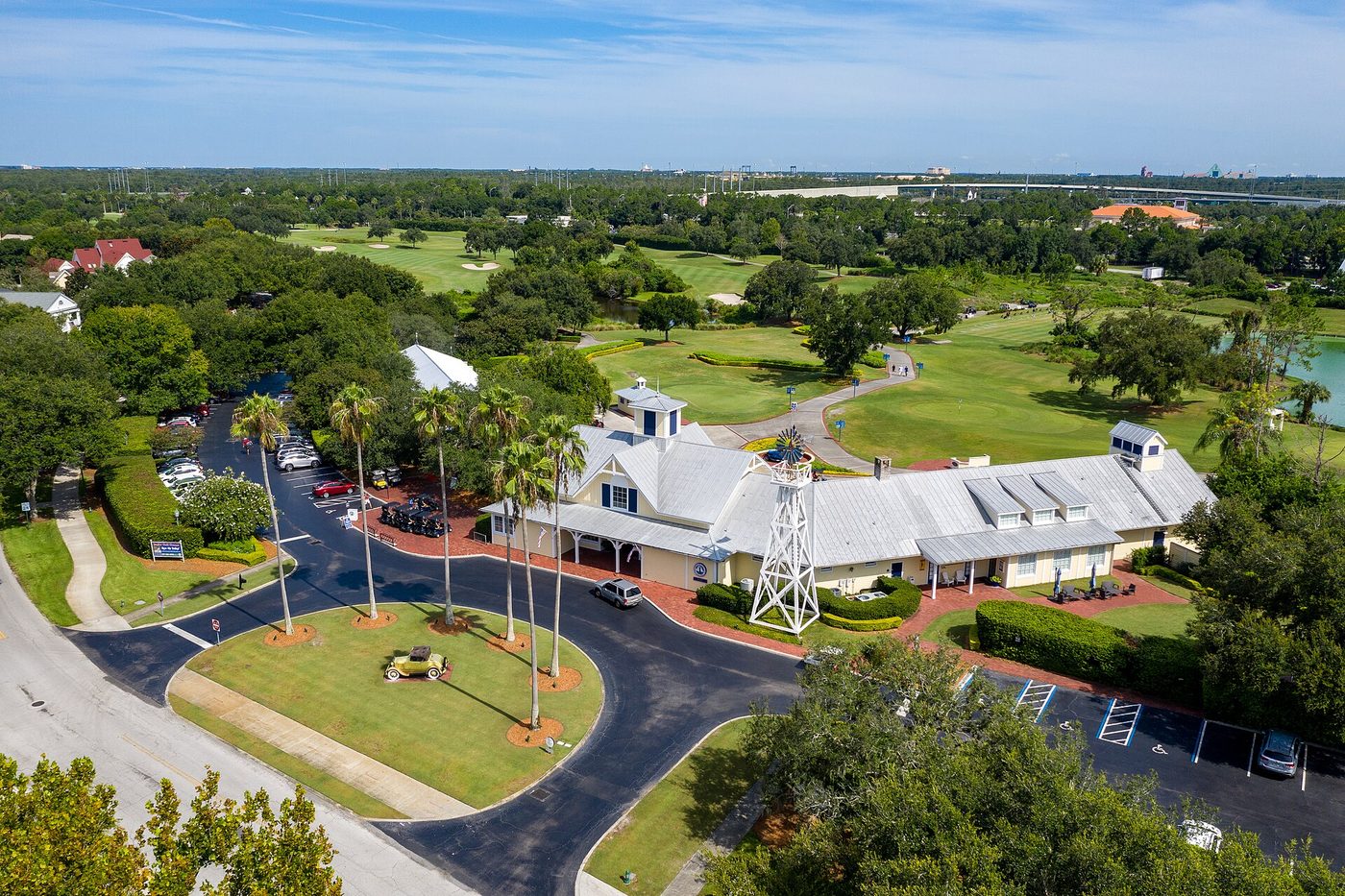
Florida’s other big model is the planned town with a public course at its centre, such as Celebration near Orlando, where the golf club sells tee times to residents and visitors alike. And along the Gulf Coast, Lakewood Ranch near Sarasota has a large private club, Lakewood Ranch Golf & Country Club, whose full golf membership was listed by a membership broker at about $95,000 to join and $14,400 a year; the club’s own fee schedule wasn’t available to us, so treat that as an estimate.
Arizona’s golf communities
Arizona’s golf communities are built around the desert courses in and around Phoenix, Scottsdale and Tucson, and they range from the original Del Webb retirement town to some of the most expensive private clubs in the West. We cover the best golf communities in Arizona separately, and the courses in our guide to Arizona’s best courses.
Sun City (Recreation Centers of Sun City)
Sun City, Ariz. · 55+ · courses run by the Recreation Centers of Sun City (RCSC) · golf access: optional resident golf pass or pay per round · no-fee resident golf pass $2,800 for 2026 (reported, 2026) · RCSC annual assessment on every property
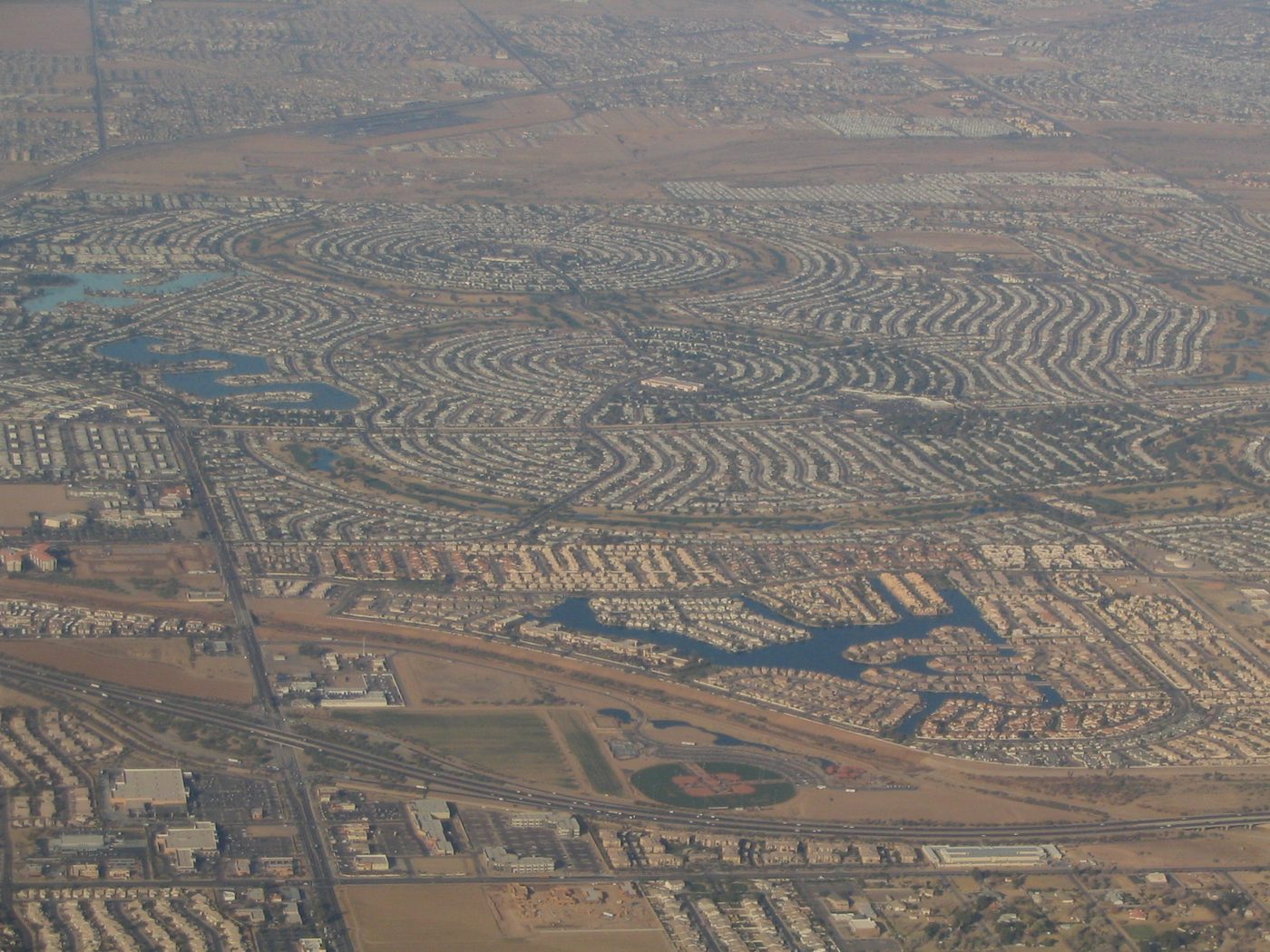
Sun City, west of Phoenix, is where the modern retirement golf community began: Del Webb opened it in 1960, with golf at the centre of its circular street plan. Its courses are run by the residents’ own Recreation Centers of Sun City, and residents choose between paying per round and buying an annual pass. A local report in 2026 put the resident no-fee pass at $2,800, raised to cover the courses’ operating costs.
Verdict: the classic affordable retirement golf town. The courses are flat and friendly rather than dramatic; the value is in the price.
PebbleCreek
Goodyear, Ariz. · 55+ · 2 courses, Eagle’s Nest and Tuscany Falls · golf access: not included in the owners’ association fee; residents buy passes or pay per round · 10-play punch pass $620 (2025, official fee sheet) · HOA about $1,761 every six months (estimate)
PebbleCreek, a Robson community west of Phoenix, is a good example of the pay-as-you-play model: the owners’ association fee covers the clubhouse, pools and grounds, and golf is extra. A 10-round punch pass cost $620 in 2025, or $62 a round.
Verdict: a sensible model for a golfer who plays a couple of times a week. The owners’ fee is the fixed cost; the golf flexes with how much you play.
Desert Mountain
Scottsdale, Ariz. · all ages · six 18-hole Jack Nicklaus Signature courses and a par-3 course · golf access: optional private club membership · full golf membership about $250,000 to join in 2026, with dues of about $2,472 a month plus a $2,500 annual food and beverage minimum (reported by a local real-estate blog; not confirmed on the club’s site)
Desert Mountain, in the high desert north of Scottsdale, has six Nicklaus courses, more than any other private club in the country, and three of them appear on GOLF’s Arizona ranking (Chiricahua, Renegade and Geronimo). It’s a private club with optional membership: you can buy a home and not join, but the golf is the reason most people come.
Verdict: for a serious golfer with a serious budget, the best private-club golf you can buy in Arizona. At a reported $250,000 to join, it’s also one of the most expensive.
SaddleBrooke near Tucson and Trilogy at Vistancia near Phoenix are other 55+ options, both with resident-access golf; local agents list SaddleBrooke’s owners’ fee at about $2,980 a year, which you should confirm with the association.
South Carolina and Georgia
The Lowcountry of South Carolina and the coast and lakes of Georgia have the widest range of golf communities in the Southeast, from a mandatory-membership island to some of the most expensive clubs in the region. We cover South Carolina’s golf communities separately, and the courses in our guide to South Carolina’s best courses.
Dataw Island
Dataw Island, S.C. (near Beaufort) · all ages · 2 courses · golf access: mandatory club and owners’ association membership with a home (official) · golf dues about $382 a month unlimited or $287 restricted; owners’ association fee about $1,184 a quarter plus a $1,100 annual special assessment (estimates from a local agent, September 2026)
Dataw Island is a gated island community near Beaufort, and the only community we checked where the club says membership is mandatory with a home. Using a local agent’s figures, a household playing unlimited golf would pay roughly $4,600 a year in golf dues and $5,800 a year in owners’ fees and assessments, about $10,400 in all, before food and drink.
Verdict: good value for a household that plays a lot, because every owner shares the cost of the club. Poor value for a household that doesn’t play, because you pay anyway.
Palmetto Bluff
Bluffton, S.C. · all ages · 3 private courses, including Jack Nicklaus’s May River Golf Club · golf access: optional private club membership · from May 1, 2026, Tier I $300,000 to join and $22,000 a year; Tier II $120,000 and $12,500 a year; sports membership $30,000 and $5,000 a year (reported by a local newspaper, 2026)
Palmetto Bluff, between Hilton Head and Savannah, is one of the most expensive golf communities in the Southeast. Its May River course, a Nicklaus design, is No. 13 on GOLF’s South Carolina list. The 2026 increase to $300,000 for the top tier was big enough to make local news.
Verdict: a luxury purchase, priced like one. For the same money, a golfer could join several very good clubs elsewhere.
Kiawah Island Club
Kiawah Island, S.C. · all ages · private club courses, including the Cassique and River courses on GOLF’s state list · golf access: optional, with membership sold in connection with certain properties (official) · golf membership about $150,000, partly refundable, with dues of about $2,175 a month (estimates from a local agent; not confirmed by the club)
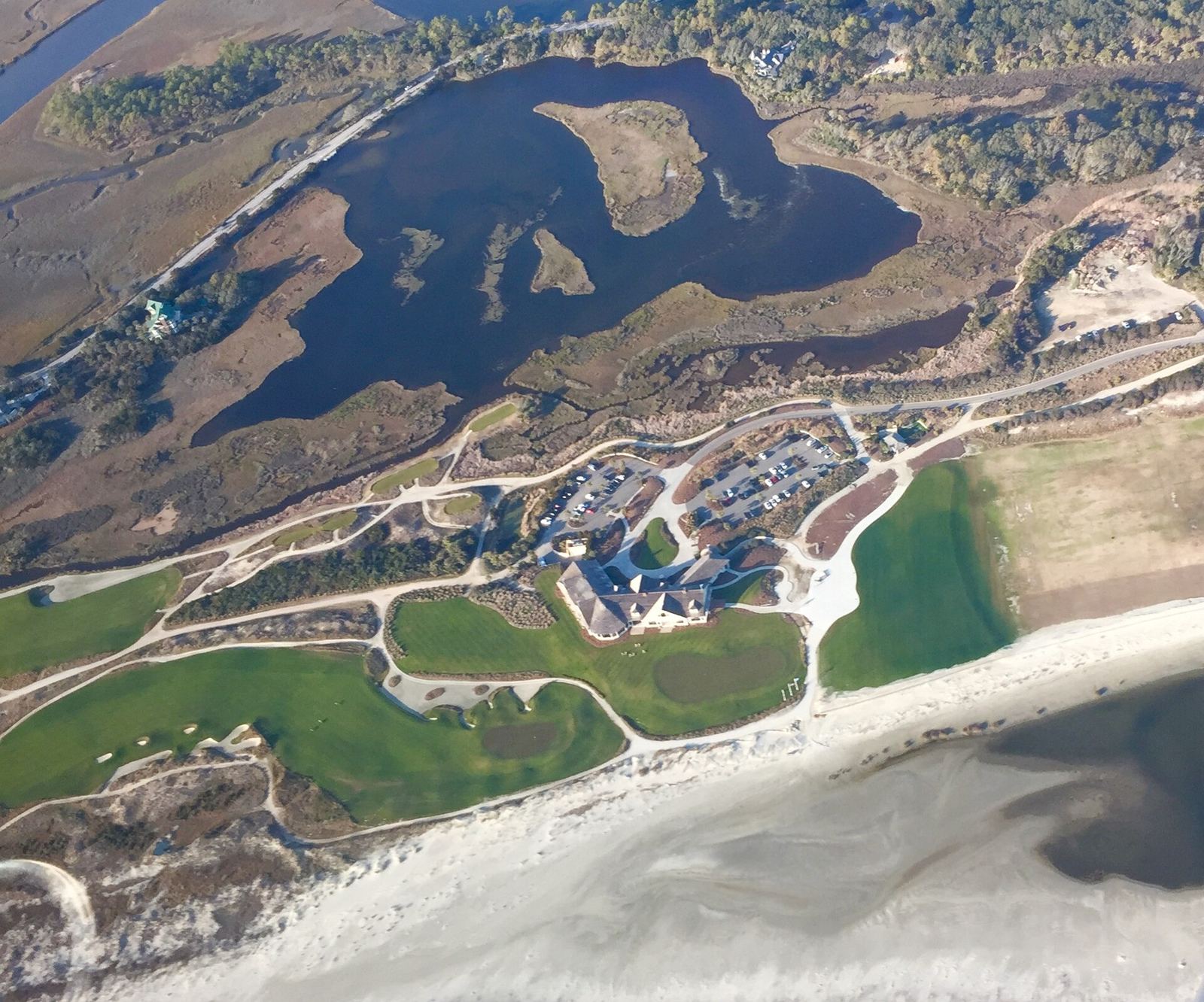
The Kiawah Island Club is the private club on Kiawah, separate from the resort that owns the Ocean Course. Membership is linked to real estate: it’s offered with certain homesites and homes, rather than to anyone who wants to join.
Verdict: for a buyer who wants island living and private golf, and can afford both. Check which properties carry membership rights before you shop.
Sun City Hilton Head
Bluffton, S.C. · 55+ · 3 courses (Hidden Cypress, Okatie Creek and the Argent Lakes executive course), operated by Troon · golf access: resident golf plans, no mandatory membership · resident plans from $335 (nine-hole single) to $4,481 (premium couple) in 2025; base community fee about $2,688 a year (estimates from a local agent)
Sun City Hilton Head is a large Del Webb community inland from Hilton Head, with resident golf plans rather than a private club. It’s a lower-cost way to live near the Lowcountry’s famous courses.
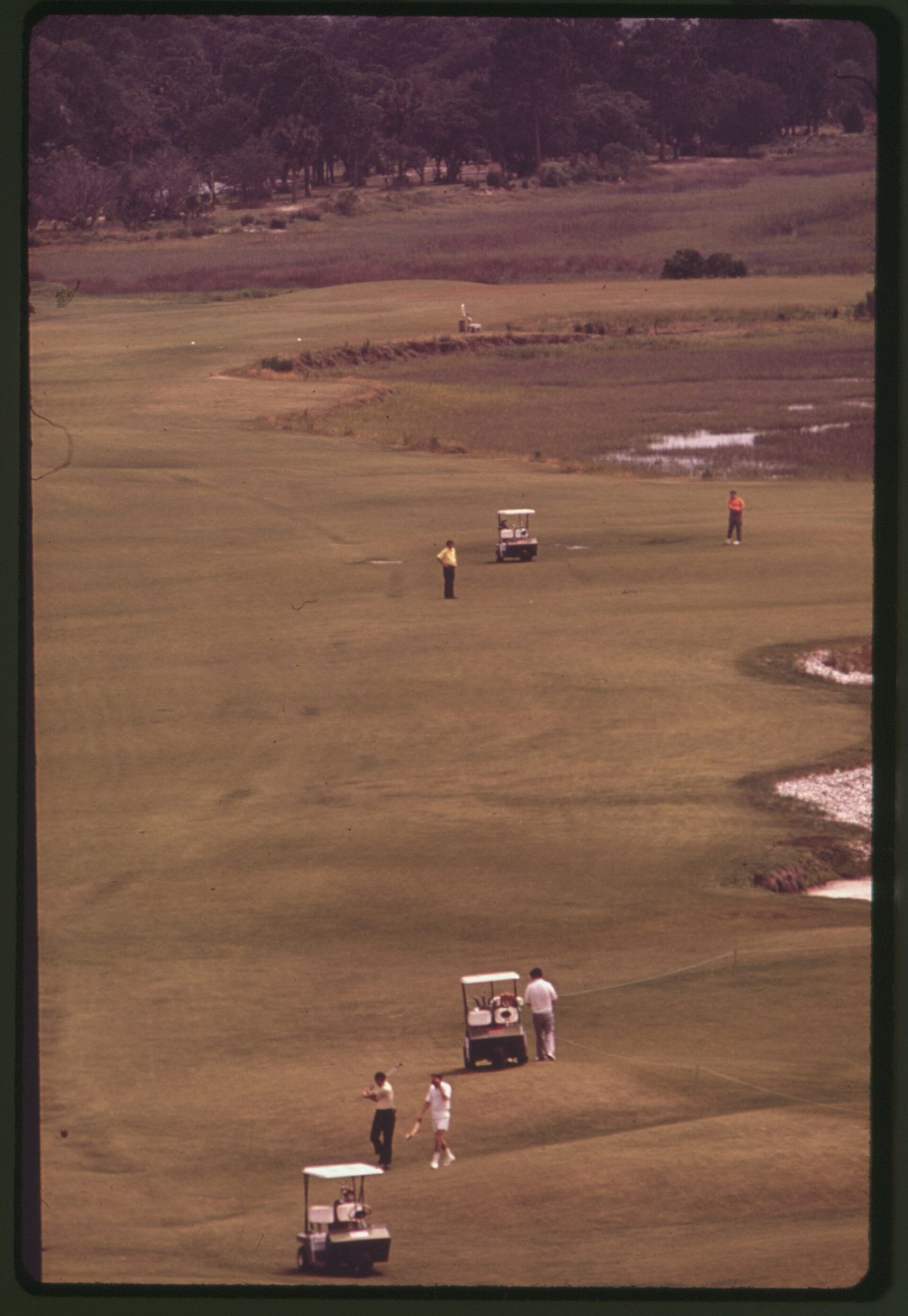
Verdict: good value for an active retiree who wants to play three or four times a week near Hilton Head without private-club costs.
The Landings
Savannah, Ga. (Skidaway Island) · all ages · 6 courses, including designs by Arnold Palmer, Tom Fazio and Arthur Hills · golf access: optional private club membership · full golf $80,000 to join; associate golf from $50,000; national golf $35,000; athletic $40,000 (reported, June 2026) · dues not published
The Landings, on Skidaway Island near Savannah, is one of the largest private golf communities in the South, with six courses in a single club.
Verdict: six courses in one club is unusual variety for the price of joining, and a strong option for a golfer who wants a big club.
Reynolds Lake Oconee
Greensboro, Ga. · all ages · 5 resort courses plus the private Creek Club, with designs by Jack Nicklaus (Great Waters), Tom Fazio (National), Rees Jones (Oconee), Bob Cupp and Jim Engh · golf access: optional club membership · Silver membership $30,000 and Platinum $60,000 in 2022 (club’s own blog); reported at $45,000 and $90,000 in 2026, with a Reserve tier at $135,000
Reynolds Lake Oconee, on a large lake between Atlanta and Augusta, is a resort and residential community with one of the best collections of courses in the South. It’s also a good illustration of how fast club prices can rise: the reported 2026 joining fees are 50% higher than the ones the club published in 2022.
Verdict: superb variety of courses. Get the current fee schedule directly from the club, because the published numbers online are years apart.
North Carolina: Pinehurst and the Sandhills
The Sandhills around Pinehurst, the “home of American golf”, have several private-club communities as well as the resort. We cover golf communities in North Carolina separately.
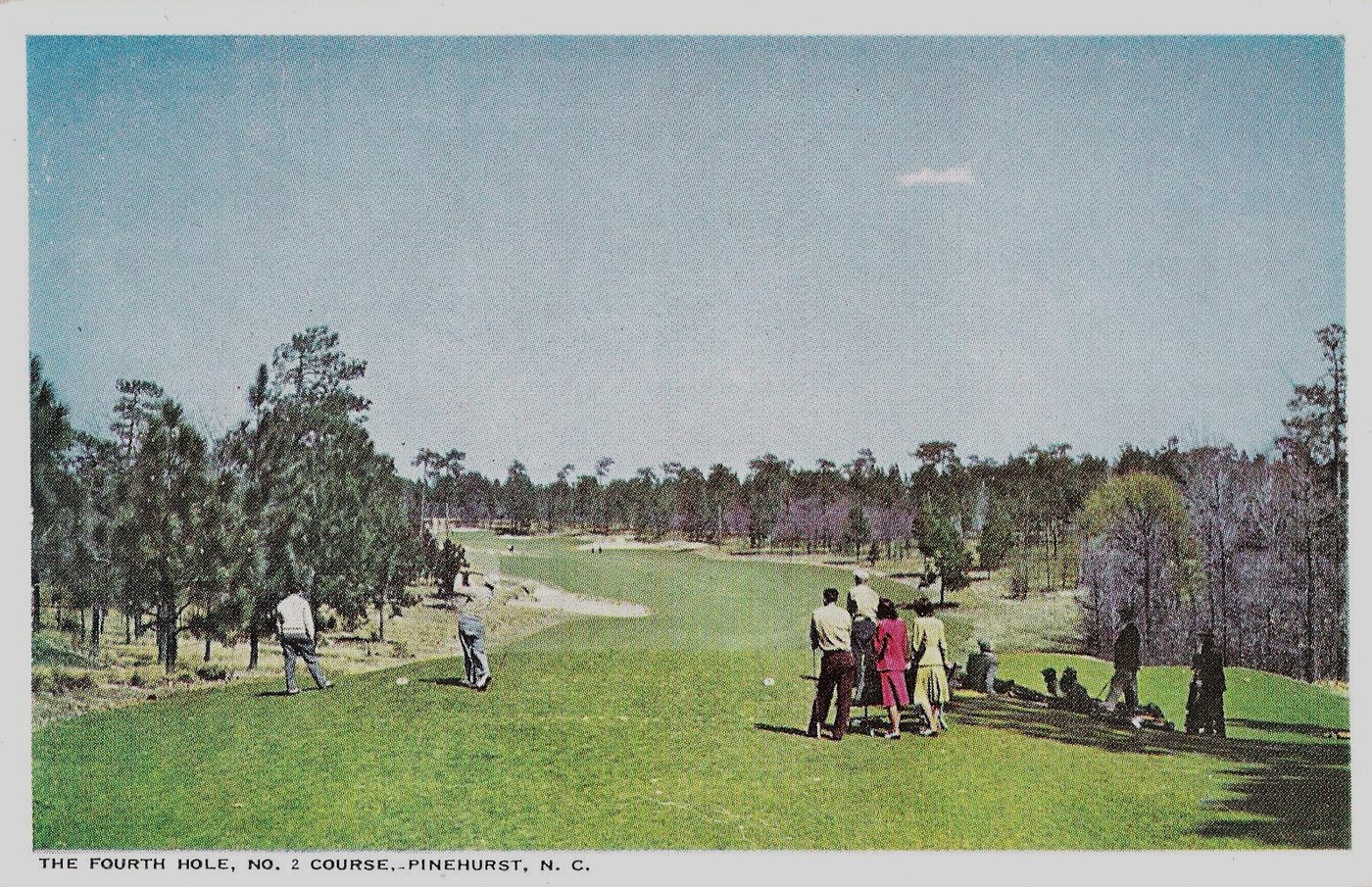
Country Club of North Carolina
Pinehurst, N.C. · all ages · 2 courses: Dogwood (Ellis Maples and Willard Byrd, 1963; later work by Arthur Hills and Kyle Spence) and Cardinal (Willard Byrd, 1970; later work by Robert Trent Jones and Arthur Hills) · golf access: optional private club membership · fees not publicly disclosed
CCNC is the best-known private club in the Pinehurst area, with two courses and a residential community around them. It doesn’t publish its fees; you’ll need to ask the club directly.
Verdict: a traditional private club in America’s most famous golf village. Nearby Pinewild Country Club, with three courses, is a lower-cost alternative; a membership broker lists its joining fee in the $25,000 to $50,000 range, an estimate the club hasn’t confirmed.
Texas and California
Beyond the Sunbelt heartland, two more models are worth knowing. Robson Ranch near Denton, Texas, is a 55+ community whose course, Wildhorse Golf Club, is open to the public, so residents pay green fees rather than club dues. PGA West in La Quinta, California, has nine courses, some private and some open to the public, and every owner pays an association fee that local agents put at about $300 to $981 a month depending on the sub-community, whether or not they join a club. Nearby, Sun City Palm Desert has two courses and pay-by-the-round golf. We cover Palm Springs golf communities separately.
How much does it cost to live in a golf community?
It ranges from a few thousand dollars a year to six figures to join. The Villages charges a $189 monthly amenity fee; Sun City, Arizona’s no-fee resident golf pass was reported at $2,800 for 2026; and Palmetto Bluff’s top club tier was reported at $300,000 to join plus $22,000 a year.
Here are the costs you’ll meet, and what they covered at the communities we checked:
| Cost | What it is | Examples (September 2026) |
|---|---|---|
| Owners’ association (HOA or POA) fee | Common areas, security, roads; due whether you play or not | The Villages amenity fee $189/month (official); PebbleCreek about $1,761 per six months (estimate); PGA West about $300-$981/month (estimate) |
| Club joining (initiation) fee | One-time fee to join a private club, sometimes partly refundable | The Landings full golf $80,000 (reported); Desert Mountain about $250,000 (reported); Palmetto Bluff Tier I $300,000 (reported) |
| Club dues | Annual or monthly fee for club membership | Palmetto Bluff Tier I $22,000/year (reported); Dataw golf about $287-$382/month (estimate) |
| Food and beverage minimum | Amount you must spend at the club each year | Desert Mountain about $2,500/year (reported) |
| Golf passes and green fees | Pay-as-you-play golf at resident or public courses | Sun City no-fee pass $2,800 (reported); PebbleCreek 10-play pass $620 (official) |
| Trail or cart fees | Using your own cart, or renting one | The Villages $143.70/year trail fee (official) |
| Assessments | Extra charges for capital projects | Dataw $1,100/year special assessment (estimate) |
Worked out for a year, the gap is enormous. A resident of The Villages who plays the executive courses pays about $2,268 in amenity fees and $144 in trail fees, about $2,400 a year. A Sun City, Arizona, resident with the no-fee golf pass pays $2,800 for golf on top of the community assessment. A Dataw Island household with unlimited golf pays roughly $10,400 a year in dues, owners’ fees and assessments, using a local agent’s figures. And a new Tier I member at Palmetto Bluff pays $300,000 to join and $22,000 a year before the owners’ fee and any food minimum.
For what private club membership costs outside golf communities, see our guide to country club membership costs.
55+ golf communities
Many of the best-known golf communities are age-restricted, meaning at least one resident in most homes must be 55 or older. The Villages, the Sun Cities in Arizona, South Carolina and California, PebbleCreek, SaddleBrooke, Trilogy at Vistancia and Robson Ranch are all 55+ communities, and most of them use the pay-as-you-play or bundled model rather than an expensive private club. They’re usually the cheapest way to live with golf, but check the age rules, the rental rules and the resale market before you buy. We cover 55+ golf communities across the country, and affordable golf communities of every kind, in separate guides.
What should you check before buying in a golf community?
Find out how the golf works, what every fee costs, who owns the course and whether it’s financially healthy. Ask for the club’s fee schedule, the HOA budget and any planned assessments in writing, and check whether membership transfers with the home or has a waitlist.
A checklist before you make an offer:
- Find out which of the four models applies. Bundled, pay-as-you-play, optional club or mandatory membership: it decides most of your costs.
- Get every fee in writing. The owners’ fee, the club’s joining fee and dues, the food and beverage minimum, capital dues and any planned assessments.
- Ask who owns the course. A course owned by the residents’ association or an equity club is more secure than one owned by a developer who might sell the land.
- Check the course’s financial health. Ask for the club’s budget and membership numbers; a shrinking membership means rising dues.
- Check how membership transfers. Some clubs sell memberships with the house; others have waitlists or transfer fees.
- Check tee-time availability. A community with too many golfers for its courses means crowded tee sheets.
- Look at the course’s quality. Architect, rating and slope, and conditioning all matter, especially if you’re paying for it.
- Check the age and rental rules in 55+ communities, and how they affect resale.
We cover how to buy a golf course home, the pros and cons of living on a golf course, and what happens to home values when a course closes, in separate guides.
Do golf course homes hold their value?
It depends mostly on the course. A well-run club or a busy public course supports home values, and a view of a healthy fairway is an asset. A course that closes can leave homeowners facing empty land and uncertainty about what’s built there. Find out who owns the course and whether it pays its way.
That’s the risk most sellers don’t mention. Across the country, some golf courses built with housing developments in the boom years have closed as golf participation fell and land became more valuable for housing. When that happens, owners who paid a premium for a golf view can lose it. The best protection is a course that’s owned by the residents or a member-owned club, or one that’s clearly profitable, and governing documents that restrict what can be built on the course land.
The pros and cons of golf course living
The pros: a view of open, green space; easy access to golf, often at a discount; clubhouse, pools and social life; and, in a well-run community, well-kept common areas.
The cons: errant golf balls, especially on the right side of a fairway where most slices end up; early-morning mowing and maintenance noise; less privacy, with golfers passing your garden; fees that apply whether you play or not; and the risk that the course closes or changes.
If you’re buying a home on a fairway, walk the hole from the tee and see where the balls land before you make an offer. A house on the inside of a dogleg or behind a green is usually safer than one on the right side of a landing zone.
Frequently asked questions
What is a golf course community?
A neighbourhood built around one or more golf courses. The golf may be public, included in the community fee (as at The Villages), sold as resident passes (as at Sun City, Arizona), offered through an optional private club (as at Desert Mountain), or required with the home (as at Dataw Island).
What is the cheapest golf community?
Among those we checked, The Villages in Florida, where a $189 monthly amenity fee covers resident access to its executive courses, plus a trail fee from $143.70 a year for using your own cart. Sun City, Arizona, where the no-fee resident golf pass was reported at $2,800 for 2026, is also good value.
What is the most expensive golf community to join?
Of those we checked, Palmetto Bluff in South Carolina, where the top club tier was reported at $300,000 to join and $22,000 a year from May 2026. Desert Mountain in Scottsdale was reported at about $250,000 for full golf membership.
Do you have to join the golf club if you live in a golf community?
Usually not. Most golf communities sell club membership separately or charge per round. Some, like Dataw Island in South Carolina, make club membership mandatory with a home, and some tie membership to specific properties, as the Kiawah Island Club does. Check the governing documents before you buy.
What is the best golf community for serious golfers?
For course quality, Desert Mountain (six Jack Nicklaus courses), Reynolds Lake Oconee (courses by Nicklaus, Tom Fazio and Rees Jones) and The Landings (six courses) stand out among those we checked. All three have optional private clubs with five- or six-figure joining fees.
What is the best 55+ golf community?
It depends on your budget. The Villages offers the most golf for the least money. Sun City, Arizona, and Sun City Hilton Head offer resident golf plans near famous golf regions. PebbleCreek and SaddleBrooke in Arizona combine resident golf with desert scenery.
Are golf course homes a good investment?
They can be, if the course is healthy. A well-run course supports home values; a course that closes can hurt them. Before buying, find out who owns the course, whether it’s profitable, and what can legally be built on the land if it closes.
Do golf communities have HOA fees?
Almost all of them. The owners’ association fee is due whether you play golf or not, and it’s separate from any club dues. At The Villages it’s a $189 monthly amenity fee; at PGA West, local agents put it at about $300 to $981 a month, depending on the sub-community.
Our verdict
Golf course communities are worth it for golfers who’ll use the golf, and a costly mistake for those who won’t. The first question is always how the golf works. If it’s bundled into a community fee, as at The Villages, living with golf can cost less than a country club’s monthly dues. If it’s a private club, the joining fee and dues can dwarf the price difference between one house and another.
If you want the most golf for the least money, look at The Villages and the Sun Cities. If you want great courses and a private club, look at Desert Mountain, Reynolds Lake Oconee and The Landings, and get the fee schedule in writing. And whatever you choose, find out who owns the course, because a golf community is only as good as the golf in the middle of it.
Sources
- Golf rates, The Villages
- Trail fees, Village Community Development Districts
- RCSC raises resident golf no-fee pass to $2,800, Citizen Portal, 2026
- Golf, PebbleCreek Homeowners Association
- How much is a Desert Mountain golf membership?, Unrivaled Mountain Views, December 2025
- Membership, Dataw Island Club
- Dataw Island membership and HOA fees explained, Mitchell Coastal Collective (estimates)
- Luxury Bluffton community now $300K to join, Yahoo News (local newspaper report), 2026
- Island Club membership, Kiawah Island Club
- Sun City Hilton Head fees and amenities explained, local agent (estimates)
- The Landings golf community, Golfing Georgia, June 2026
- The Platinum membership, Reynolds Lake Oconee, 2022; How much does it cost to join Reynolds Lake Oconee?, The Brassie, 2026
- Country Club of North Carolina, Wikipedia
- Membership, Pinewild Country Club
- The La Quinta golf fee the listing price never mentions, local agent (estimates)
- Best Golf Courses in South Carolina for 2024-25 and Best golf courses in Arizona for 2024-25, GOLF
Image credits
| Image | Photographer | Licence | Source |
|---|---|---|---|
| Homes along Highlands Reserve Golf Course, near Orlando (featured image) | ReunionVacationHomes.com | CC BY-SA 4.0 | Wikimedia Commons |
| Celebration Golf Club, Florida | ReunionVacationHomes.com | CC BY-SA 4.0 | Wikimedia Commons |
| Sun City, Arizona, from the air | Ken Lund from Reno, Nevada, USA | CC BY-SA 2.0 | Wikimedia Commons |
| The Ocean Course at Kiawah Island from the air | Pammymags | CC BY-SA 4.0 | Wikimedia Commons |
| A golf course on Hilton Head Island, 1970s | Paul Conklin | public domain | Wikimedia Commons |
| The fourth hole, Pinehurst No. 2 (postcard) | State Archives of North Carolina | no known restrictions | Wikimedia Commons |