The best 55+ golf communities for most golfers are The Villages in Florida, where a $189 monthly fee makes the executive courses free; Sun City West in Arizona, where residents paid $25 to $47 for 18 holes in 2025-26; SaddleBrooke near Tucson for scenery; and Rossmoor in California for Bay Area golf at $30 a round. Almost all of them charge by the round or sell an optional pass.
That’s the quiet secret of age-restricted golf communities: they’re the cheapest way in America to live with golf. They’re a different animal from the private-club communities of Palm Beach and Naples, where joining can cost six figures, and they deserve to be judged on their own terms. For how golf communities work in general, including private clubs and mandatory memberships, start with our guide to golf course communities.
This guide compares 15 of the best-known 55+ golf communities across Florida, Arizona, South Carolina, Texas, Illinois, California and Nevada. For each one we give the courses, how residents pay for golf, what that cost in 2025 or 2026, and our verdict on who it suits. Most of the communities here were built by Del Webb, whose Sun City brand practically invented the idea, or by its imitators, so you’ll see the same model again and again; the differences are in the price, the climate and the quality of the courses.
How we built this. We used each community’s own golf rate sheets, membership schedules and fee pages wherever they publish them, checked in October 2026, and named news reports where they don’t. Where a number comes only from a real-estate agent, we label it an estimate. Rates in these communities change every year, usually on July 1 or January 1, so treat every figure as dated and get the current sheet before you decide anything. We haven’t lived in these communities or played every course; the notes on the golf lean on the architecture, the published data and the model, and we say where information wasn’t available.
At a glance
- Cheapest golf: The Villages, Florida, where the $189 monthly amenity fee makes the nine-hole executive courses free to residents, plus a trail fee from $143.70 a year if you drive your own cart (official, 2026)
- Best value for 18-hole golf: Sun City West, Arizona: seven courses, resident rounds from $25 in summer to $47 in winter, or $3,900 for an unlimited card (official, 2025-26)
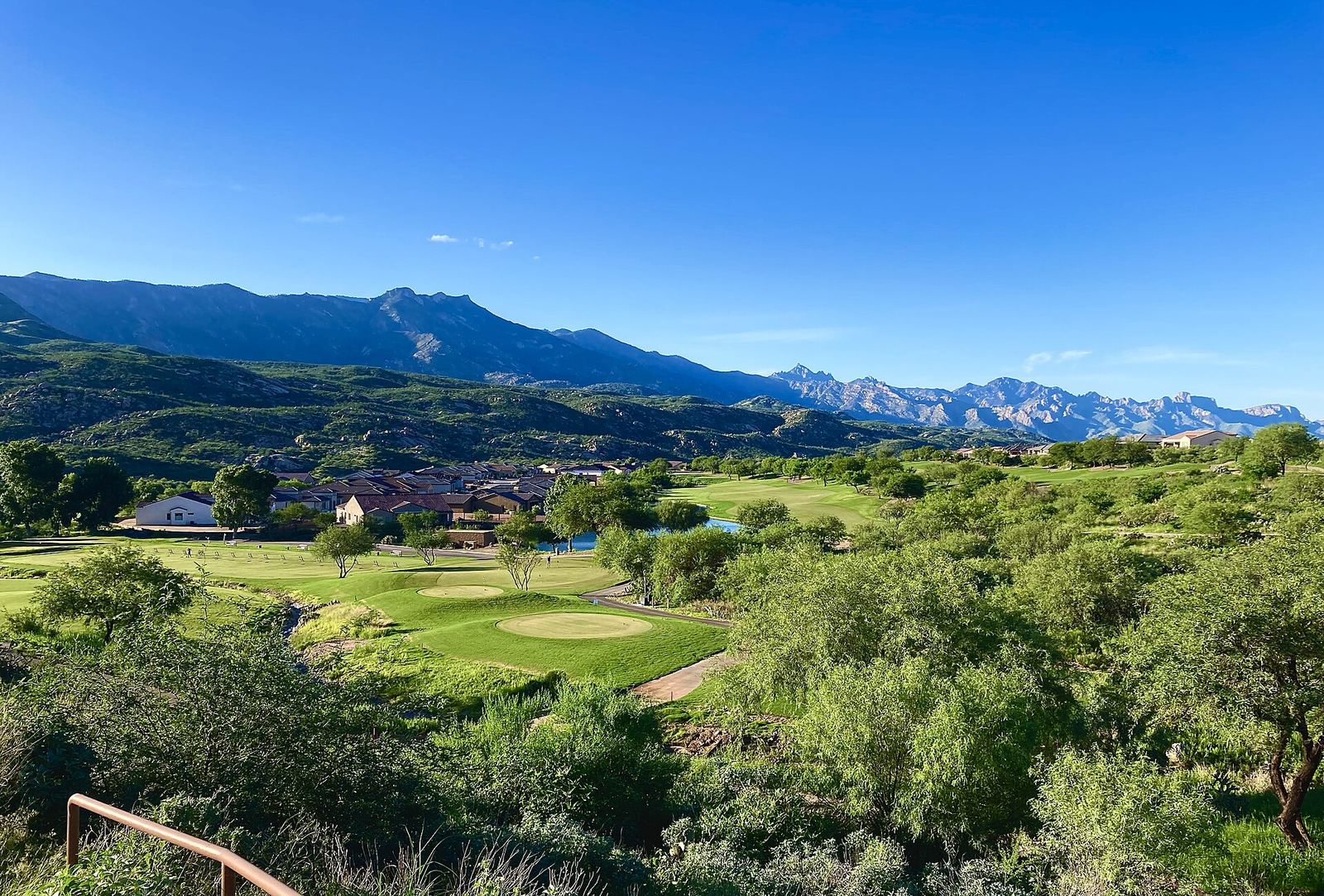
- Best scenery: SaddleBrooke, north of Tucson, below the Santa Catalina Mountains
- Best in California: Rossmoor, Walnut Creek: $30 for 18 holes or $2,400 for an annual membership in 2026 (official)
- Best outside the Sunbelt: Sun City Huntley, Illinois, where an unlimited membership cost $1,900 for a single golfer in 2025 (official)
- Most courses: The Villages, with more than 50; Sun City West has seven
- The fee people forget: one-time charges on purchase, such as Sun City West’s $5,400 Asset Preservation Fee (official)
55+ golf communities compared
“Official” means the community or its golf operation published the figure; “reported” means a named news outlet; “estimate” means a local real-estate agent.
| Community | State | Golf | How residents pay | Key golf cost (source) | Best for |
|---|---|---|---|---|---|
| The Villages | FL | 50+ courses, mostly nine-hole executive | Executive golf free in amenity fee; championship by the round | $189/month amenity fee; trail fee $143.70/year (official) | Daily golf for almost nothing |
| On Top of the World | FL | Private club courses plus semi-private Candler Hills | Optional membership | $6,235 single, $9,395 couple a year (official) | 18-hole golf in Ocala |
| Solivita | FL | 2 courses at Stonegate | Optional membership | Unlimited about $2,000-$2,400/year (estimate) | Value near Orlando |
| Sun City | AZ | Recreation Centers courses | Optional no-fee pass or per round | No-fee pass $2,800 for 2026 (reported) | The original, still cheap |
| Sun City West | AZ | 7 courses | Optional card or per round | 18 holes $25-$47; unlimited card $3,900 (official) | The best-value 18-hole golf |
| Sun City Grand | AZ | 4 Casper/Nash courses | Optional membership | Not published online | Newer homes, four courses |
| PebbleCreek | AZ | 2 courses | Punch pass or per round | 10-play pass $620 in 2025 (official) | Pay only when you play |
| SaddleBrooke | AZ | Courses in two HOAs | Optional pass or per round | Preserve annual pass from about $4,400 for 2026 (official) | Mountain scenery |
| Sun City Hilton Head | SC | 3 courses | Resident golf plans | $335-$4,481 a year (2025, estimate) | Lowcountry golf on a budget |
| Robson Ranch | TX | 27 holes | Optional membership or per round | Annual $4,575; rounds $44-$75 for 2026 (official) | Dallas-Fort Worth |
| Sun City Huntley | IL | 1 course | Resident rates or membership | Unlimited $1,900 single, $3,100 couple (2025, official) | A short season, cheaply |
| Rossmoor | CA | 27 holes | Optional membership or per round; no public play | $30 a round; $2,400 a year (official) | Bay Area golf at muni prices |
| Laguna Woods Village | CA | 27 holes plus a par-3 course | Per round | Not checked | Coastal climate |
| Sun City Summerlin | NV | 3 courses | Membership tiers | Unlimited $4,200 a year (official) | Las Vegas winters |
| Sun City Shadow Hills | CA | 2 courses | Resident rates; open to the public | Residents $61-$90 for 18 holes (official) | The Coachella Valley |
Checked October 2026. Rates change every season; get the current sheet from the community.
How does golf work in a 55+ community?
Usually you pay only for the golf you play. Most 55+ communities run their courses for residents and charge by the round, sell an optional annual pass, or include short courses in the monthly fee. Very few require a private club membership, which is why they’re the cheapest way to live with golf.
That’s the big difference between an age-restricted community and the private-club golf communities in Palm Beach or Naples. A private club spreads its costs across members who pay five- or six-figure joining fees. A 55+ community spreads the cost of the clubhouse, pools and grounds across thousands of households in a modest monthly assessment, and then charges the golfers for the golf. The non-golfer next door isn’t paying for your Tuesday round.
There are four common set-ups:
Golf included in the monthly fee. The Villages in Florida is the famous example: its nine-hole executive courses are free to residents, covered by the amenity fee.
An optional resident pass. The recreation centres of Sun City and Sun City West in Arizona sell annual cards to residents who play a lot; everyone else pays per round at a resident rate. This is the most common model in the big Del Webb towns, and the cards usually pay for themselves somewhere around 80 to 100 rounds a year.
Pay per round or punch card. PebbleCreek near Phoenix sells punch passes, and residents of many newer communities simply book tee times at a resident rate.
A course that’s also open to the public. Robson Ranch in Texas, Whisper Creek at Sun City Huntley and Shadow Hills in the Coachella Valley all take outside golfers, with lower rates for residents. It keeps the courses busy and solvent, but it means sharing the tee sheet.
The model matters more than the age rules or the price of the house, so ask which one applies before you look at a single floor plan. One more distinction is worth knowing: who owns the courses. At Sun City and Sun City West, the residents’ own recreation corporations do. At others, a developer or a private company owns the golf, as the Sun City Lincoln Hills association notes of its club near Sacramento, and an owner who loses money can raise prices or sell.
What are the age rules in a 55+ golf community?
Under federal fair-housing law, a 55+ community must have at least one resident aged 55 or older in at least 80% of its occupied homes, publish policies showing it’s intended for older residents, and verify ages. The community sets its own rules for the rest, including younger spouses and visiting grandchildren.
The rule comes from the Housing for Older Persons Act of 1995, which amended the Fair Housing Act and is written into federal regulations. It’s what allows these communities to turn away families with children, which would otherwise be discrimination on the basis of familial status. The 80% threshold is a floor, not a target, and communities write stricter rules on top of it. Robson’s published rules for SaddleBrooke and Robson Ranch, for example, require at least one occupant of every home to be 55 or older and don’t allow permanent residents under 19.
In practice, check four things in the governing documents before you buy:
- Younger spouses and partners. Most communities allow a younger spouse or partner to live with a qualifying resident, and many set a minimum age for anyone else in the home.
- Children and grandchildren. Many limit how many days a year anyone under 18 or 19 can stay. Grandparents who want the grandchildren for a whole summer should read this clause first.
- What happens if the qualifying resident dies. A younger surviving spouse can usually stay, but the rules vary, and it’s worth knowing before it matters.
- Rentals. Many 55+ communities restrict leasing, set minimum lease terms or require tenants to meet the age rule, which affects your options if you ever want to rent the house out.
Florida’s 55+ golf communities
Florida has the biggest 55+ golf community in the country and dozens of smaller ones. We compare the state’s golf communities of every kind, private clubs included, in our guide to the best golf communities in Florida, and go deeper on Florida’s 55-and-over golf communities in a separate guide.
The Villages
The Villages, Fla. (north of Orlando) · mostly 55+ · more than 50 courses: dozens of nine-hole executive courses plus 18- and 27-hole championship courses · golf model: executive golf free to residents in the amenity fee; championship golf by the round or with an optional championship membership · amenity fee $189 a month; trail fee to use your own cart on the executive courses $21.77 a month, $107.77 for six months or $143.70 a year (official, 2026)
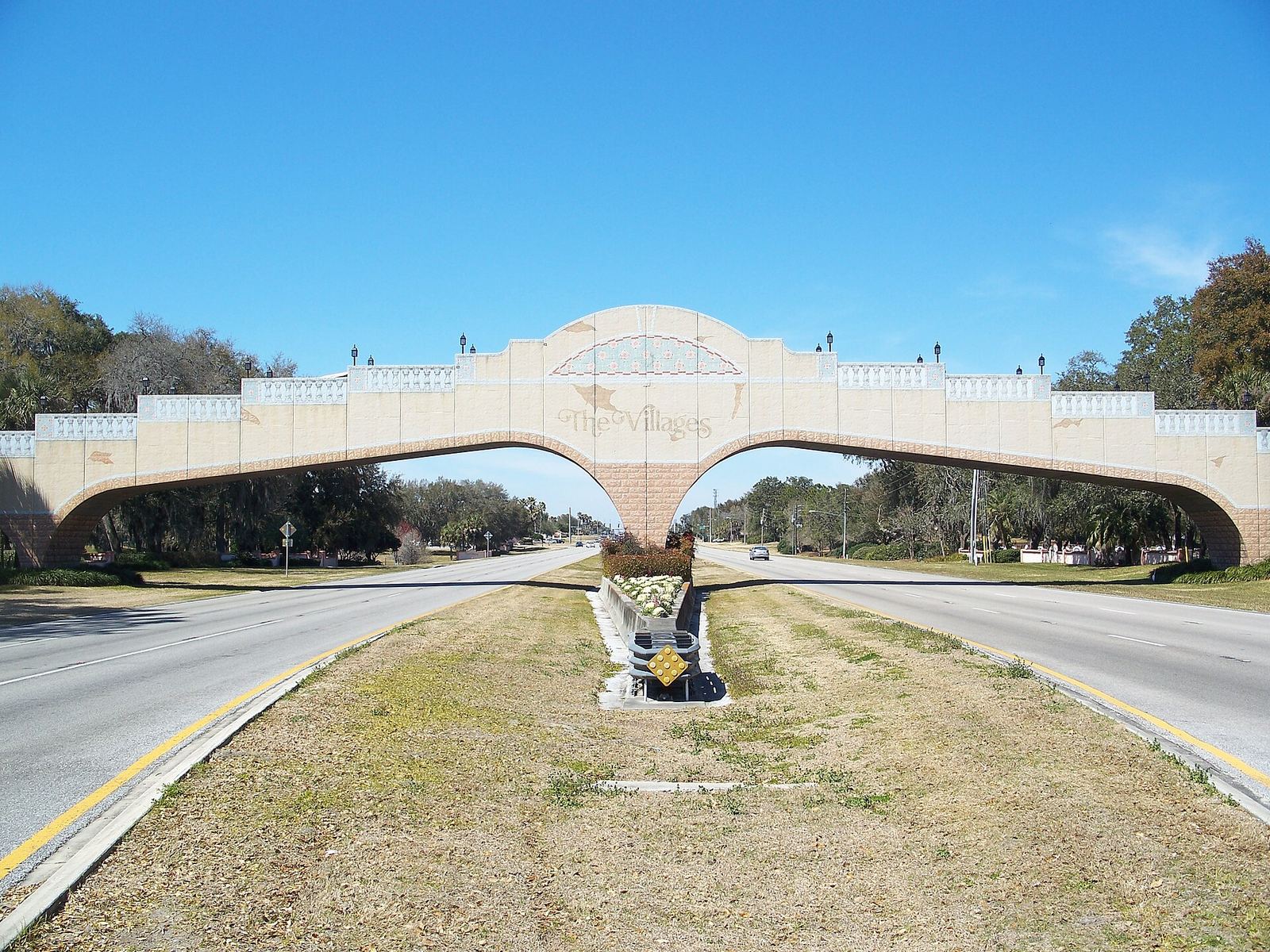
For a retired golfer, The Villages’ executive courses aren’t the consolation prize; they’re the point. They’re nine-hole layouts built mostly from par 3s and short par 4s, free to every resident, and there are dozens of them, so a morning game of nine holes with the same three friends, followed by lunch, costs nothing but the trail fee. A golfer who plays every day pays $2,268 a year in amenity fees and $143.70 to drive their own cart, about $2,400 in all, and the fee also covers the pools and recreation centres.
The championship courses, at 18 and 27 holes, are where you go for a full round, and they charge by the round or through an optional membership. They’re busy in winter. The cart is the car here, and you’ll use it for the shops as well as the golf, on paths, bridges and tunnels built for the purpose. For more on short courses and why they suit older golfers so well, see our guide to par-3 golf courses.
Verdict: the best value in American retirement golf, by a distance. If your idea of the perfect week is five rounds of nine holes with friends, nothing else is close.
On Top of the World
Ocala, Fla. · 55+ · On Top of the World Golf Club (private; the Tortoise and Hare and the Links) and Candler Hills (semi-private), all par 72 · golf model: optional membership; the community says golf membership isn’t required · World Golf Membership $6,235 a year single or $9,395 a couple; golf-cart lease $1,125 or $1,705 a year (official, undated, checked October 2026)
On Top of the World is a large 55+ community in Ocala’s horse country, north-west of Orlando, and its golf is the opposite of The Villages’ model: 18-hole courses, an annual membership and no free executive golf. The World Golf Membership cost $6,235 for a single golfer or $9,395 for a couple when we checked, with a golf-cart lease on top, and membership is optional.
That’s more than twice what a Villages resident pays, but it buys full-length courses and a private club atmosphere at a fraction of private-club prices. Candler Hills, the semi-private course, also takes outside play.
Verdict: for a golfer who wants 18 holes every day and a proper club, it’s fair value. For a nine-holes-and-lunch golfer, The Villages is cheaper.
Solivita
Poinciana, Fla. (south of Kissimmee) · 55+ · Stonegate Golf Club, 2 courses: the Oaks (Ron Garl, 2000) and the Cypress · Cypress par 72, 6,741 yards, 72.6/137, and Oaks par 72, 6,812 yards, 72.3/128 (both from the Gold tees, 2025 scorecard, official) · golf model: optional membership, not in the owners’ fee · unlimited golf about $2,000 to $2,400 a year (estimate, 2026)
Solivita’s two courses are better than retirement-golf stereotypes suggest. The Cypress, at 137 slope from the Gold tees, is a proper test; the Oaks, at 128, is kinder. Golf isn’t in the owners’ fee, and local estimates put unlimited golf at about $2,000 to $2,400 a year, which makes it one of the cheaper ways to play 18-hole golf every day in Central Florida.
Verdict: a strong value pick near Orlando. Get the current membership price from the club, because estimates vary.
Arizona’s 55+ golf communities
Arizona invented the modern retirement golf town. Del Webb opened Sun City, west of Phoenix, in 1960, and the model he built there, with courses run for residents, priced for residents and threaded through the neighbourhoods, is still how most of the state’s 55+ communities work. We cover the best golf communities in Arizona of every kind separately, and the state’s courses in our guide to Arizona’s best golf courses.
Sun City (Recreation Centers of Sun City)
Sun City, Ariz. · 55+ · courses owned and run by the residents’ Recreation Centers of Sun City (RCSC) · golf model: optional no-fee resident pass or pay per round · no-fee resident golf pass $2,800 for 2026 (reported, 2026) · RCSC annual assessment on every property
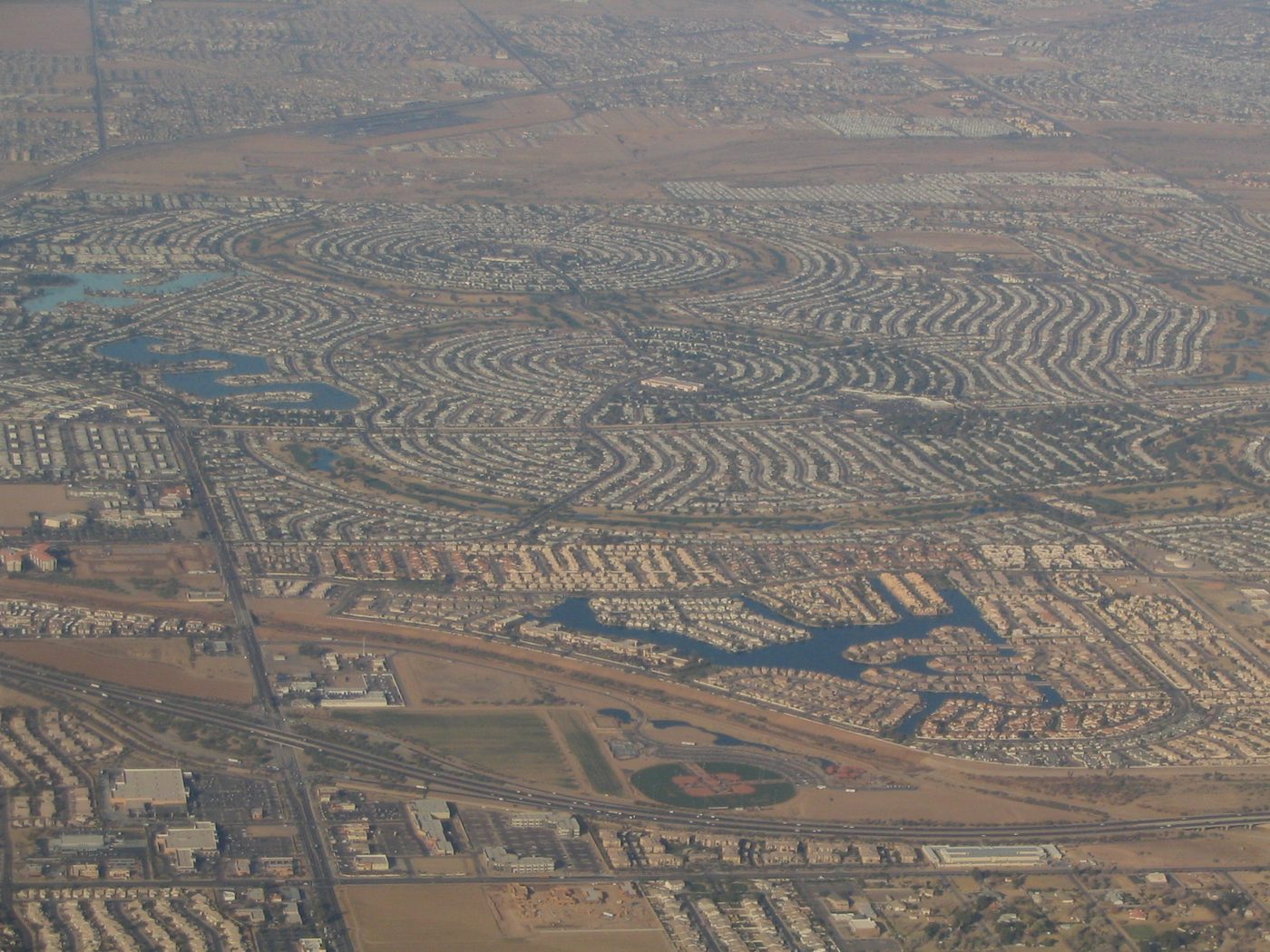
Sun City is where it all began, and it still works the way Webb designed it. The courses belong to the residents’ own recreation corporation, so the prices are set to cover costs rather than to make a profit. In 2026 a local report put the resident no-fee pass, which removes green fees for the year, at $2,800, raised to cover the courses’ operating costs. Residents who play less pay by the round.
The courses are flat and friendly, built in the 1960s and 1970s for golfers who wanted a game rather than a test. That’s no criticism: a 75-year-old with a 20 handicap will enjoy them more than any course in a golf magazine’s top 100.
Verdict: the original retirement golf town, and still one of the cheapest. The houses are older and smaller than in the newer Sun Cities, which is part of why the whole package costs less.
Sun City West
Sun City West, Ariz. · 55+ · 7 courses run by the Recreation Centers of Sun City West, 4 regulation and 3 executive (Deer Valley, Desert Trails, Echo Mesa, Grandview, Pebblebrook, Stardust and Trail Ridge) · golf model: optional annual card or pay per round · resident 18 holes on a regulation course $25 (July to September) to $47 (November to April); Unlimited Annual Golf Card $3,900; Kachina card $895 and Coyote card $325, which cut the green fee; public 18 holes $35 to $78 (official, July 2025 to June 2026) · membership dues $598 a person a year; one-time Asset Preservation Fee $5,400 on purchase (official)
Sun City West, a few miles further west, is Webb’s second act in Arizona, and its golf fee sheet is a model of clarity. A resident paid $47 for 18 holes on a regulation course in the winter of 2025-26 and $25 in the summer; the public paid $78 and $35. There are three ways to cut that. The Unlimited Annual Golf Card cost $3,900 and covers your green fees for the year. The Kachina card, at $895, cuts a winter regulation round from $47 to $28. And the Coyote card, at $325, cuts it to $37.
Do the arithmetic for your own game. At winter rates, the Kachina card pays for itself after about 47 regulation rounds, and the unlimited card beats the Kachina card at somewhere around 107 rounds a year. A resident who plays four times a week from November to April and less in summer will usually be better off unlimited; a twice-a-week golfer won’t. Carts are extra, at $16 a person for 18 holes.
Verdict: the best-value 18-hole golf in any 55+ community we checked. Budget for the $5,400 Asset Preservation Fee when you buy.
Sun City Grand
Surprise, Ariz. · 55+ · 4 courses by Billy Casper and Greg Nash: Desert Springs (1996), Granite Falls South (1997) and North (1999), and Cimarron (2002) · golf model: optional resident membership with resident discounts · rates not published on the pages we could read
Sun City Grand is the 1990s version of the idea: bigger houses, newer courses and a little more polish, a short drive from Sun City West. Its four courses were all designed by Billy Casper and Greg Nash, the partnership behind many Del Webb courses, and opened between 1996 and 2002.
The community offers resident memberships and discounts, but we couldn’t find a published rate sheet, so ask for one before you compare it with its neighbours.
Verdict: worth a look if you want newer homes and four courses close together. Get the golf rates in writing; we couldn’t verify them.
PebbleCreek
Goodyear, Ariz. · 55+ · 2 courses, Eagle’s Nest and Tuscany Falls · golf model: golf isn’t in the owners’ fee; residents buy punch passes or pay per round · 10-play punch pass $620 (2025, official fee sheet) · owners’ fee about $1,761 every six months (estimate)
PebbleCreek, a Robson community in the West Valley, is the cleanest example of pay-as-you-play. The owners’ fee covers the clubhouse, pools and grounds; golf is extra, and a 10-round punch pass cost $620 in 2025, or $62 a round. For a couple where one plays twice a week and the other plays pickleball, that’s the fairest arrangement there is.
Verdict: sensible for a golfer who plays a couple of times a week. A daily golfer will find Sun City West’s unlimited card cheaper.
SaddleBrooke
SaddleBrooke, Ariz. (north of Tucson) · 55+ · courses in two homeowners’ associations: SaddleBrooke Country Club (HOA 1) and The Preserve Golf Club (HOA 2) · golf model: optional annual pass or daily rates · Preserve (HOA 2) resident annual pass from about $4,400, seasonal unlimited from about $3,700 and afternoon pass from about $3,500 for 2026; non-residents $49 to $109 a round (official 2026 fee sheet) · owners’ fee about $2,980 a year (estimate, 2025)
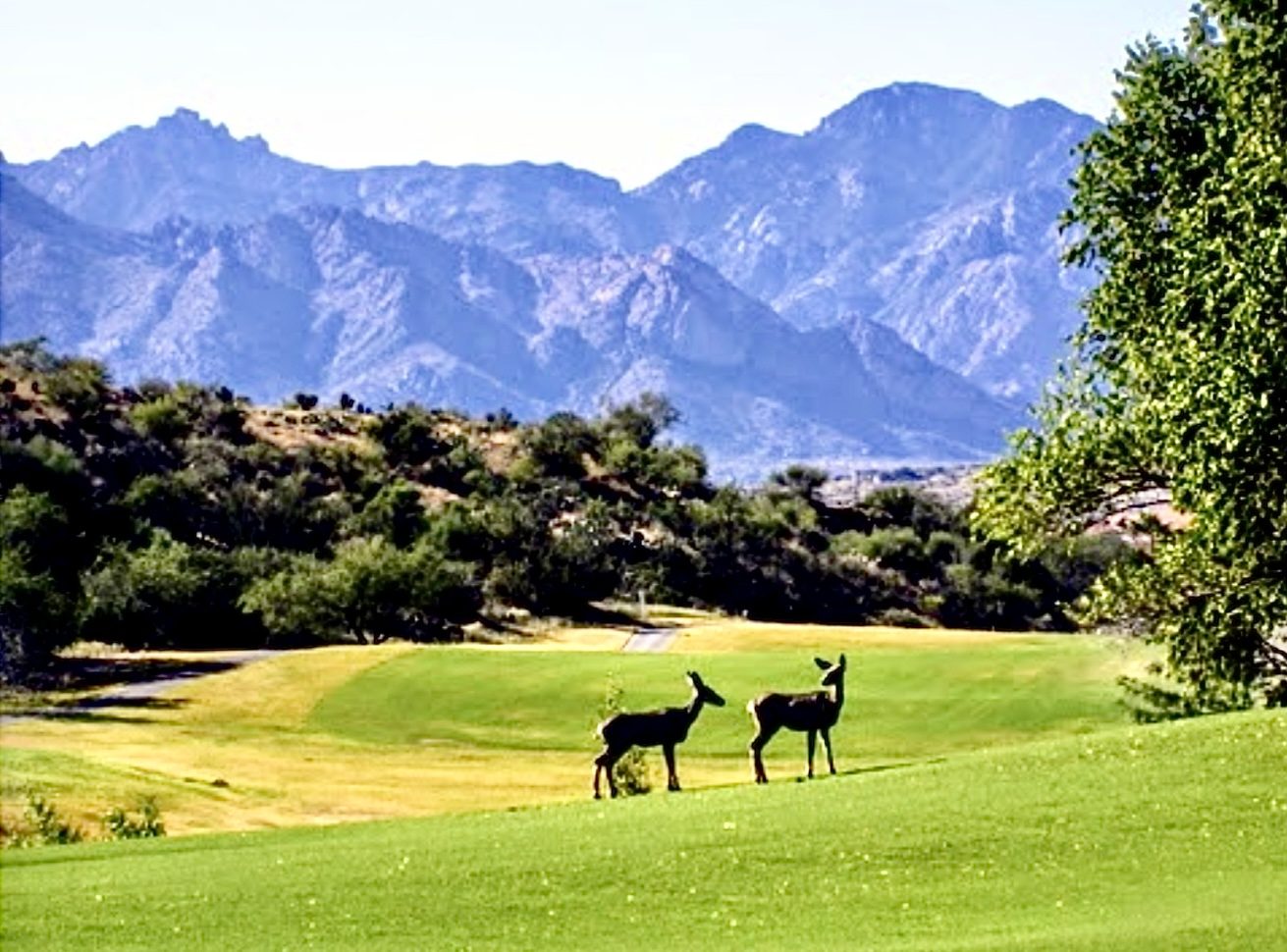
SaddleBrooke is the best-looking 55+ golf community in this guide: a Robson community in the high desert north of Tucson, with the Santa Catalina Mountains rising behind the fairways and deer on the course at dawn. The golf is split between two homeowners’ associations, each with its own club, and the newer of them, The Preserve, publishes its 2026 rates: an annual resident pass from about $4,400, with cheaper seasonal and afternoon options.
That’s more than Sun City West’s unlimited card, and Tucson is quieter than Phoenix, with fewer restaurants and a smaller airport. But nobody moves here for the airport.
Verdict: the one to visit if scenery matters as much as price. Compare the two associations’ golf rates before you choose a house, because they’re separate clubs.
The Carolinas, Texas and the Midwest
Del Webb and its rivals took the Sun City model well beyond the desert. The three below show the range: a big Lowcountry community near Hilton Head, a 27-hole Robson community north of Dallas, and a single-course Sun City in the Chicago suburbs.
Sun City Hilton Head
Bluffton, S.C. · 55+ · 3 courses, Hidden Cypress, Okatie Creek and the Argent Lakes executive course, operated by Troon · golf model: resident golf plans; no mandatory membership · resident plans from $335 (nine-hole single) to $4,481 (premium couple) in 2025; base community fee about $2,688 a year (estimates from a local agent)
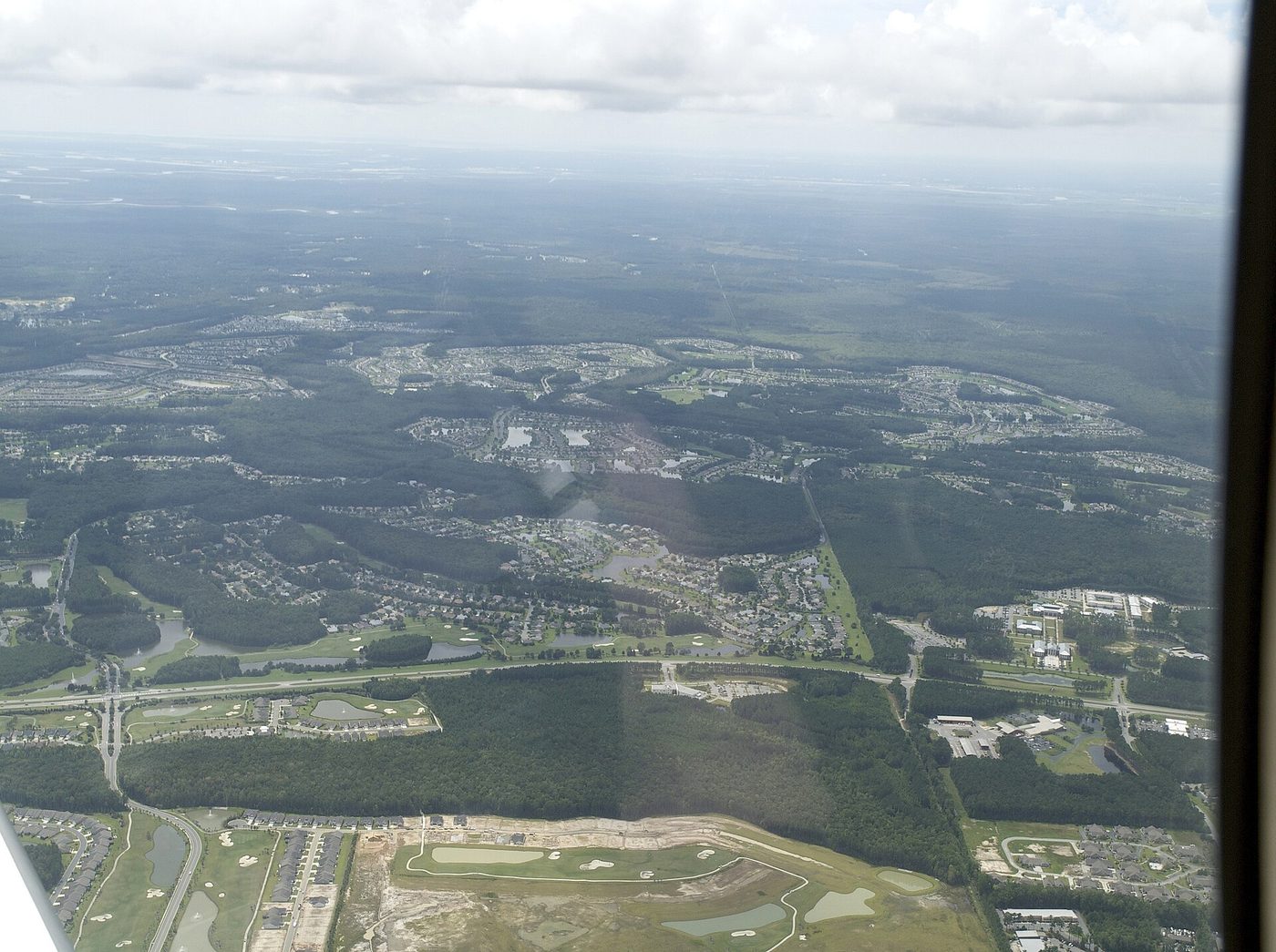
Sun City Hilton Head is a large Del Webb community inland from Hilton Head Island, with two 18-hole courses, an executive course and resident golf plans priced from a few hundred dollars for a nine-hole single to about $4,500 for a premium couple, using a local agent’s 2025 figures. It’s the cheapest way to live near the Lowcountry’s famous courses, and the executive course is a real asset for golfers who prefer nine holes. For the region’s courses, see our guide to South Carolina’s best golf courses, and we compare South Carolina’s golf communities separately.
Verdict: good value for an active retiree who wants to play three or four times a week near Hilton Head without private-club costs. Confirm the current plans with the club.
Robson Ranch
Denton, Texas (north of Dallas-Fort Worth) · 55+ · Wildhorse Golf Club, 27 holes (Gary Stephenson) · golf model: optional resident membership or pay per round; the course is open to the public · 2026: annual membership $4,575 (a second golfer in the household $4,175), lower tiers from $1,375, 10-round card $600; resident daily rates $44 to $75 for 18 holes by time of day, cart extra; non-residents $69 to $133 with cart (official)
Robson Ranch is a large 55+ golf community north of Dallas-Fort Worth, and Wildhorse, its 27-hole course, is open to the public, which keeps it busy and gives residents a decent course at a resident rate. The 2026 fee sheet offers a full menu: an annual membership at $4,575, cheaper tiers down to $1,375 for golfers who play less, a 10-round card at $600, and daily resident rates from $44 to $75 depending on the time of day.
Texas summers are hot, but the winters are mild enough to play year-round, and Dallas-Fort Worth’s airport and hospitals are close. For the state’s best courses, see our guide to Texas golf courses.
Verdict: the most flexible fee structure we found, and a good choice for a golfer who wants to stay near family in North Texas.
Sun City Huntley
Huntley, Ill. (north-west of Chicago) · 55+ · Whisper Creek Golf Club, 18 holes (Billy Casper and Greg Nash, 2000, reported) · golf model: Del Webb resident rates plus optional memberships; open to the public · resident 18 holes $29 to $59 by day and time; 2025 memberships: unlimited $1,900 single or $3,100 a couple, limited $1,300 or $2,300; public 18 holes $59 Monday to Thursday and $79 Friday to Sunday (official)
Sun City Huntley is proof that 55+ golf communities aren’t only a Sunbelt thing. Whisper Creek is a single 18-hole course in the Chicago suburbs, open to the public, with resident rates from $29 and an unlimited membership that cost $1,900 for a single golfer in 2025. That’s the cheapest unlimited 18-hole membership in this guide, and it should be: the season runs from spring to late autumn, not all year.
Plenty of residents spend the winter somewhere warmer, and that’s the appeal: stay near children and grandchildren in the Midwest, play cheaply all summer, and head south in January.
Verdict: excellent value for a golfer who wants to stay in the Midwest. Just don’t expect to play in February.
Two more worth knowing about: Sun City Texas in Georgetown, north of Austin, has three courses, Legacy Hills, White Wing and Cowan Creek, but we couldn’t find a clear published rate sheet; and Trilogy at Vistancia in Peoria, Arizona, has a Gary Panks course that welcomes the public, with resident memberships sold by the club’s owner.
California and Nevada
The West’s 55+ golf communities split into two kinds: the older coastal retirement communities, where golf is a modest amenity and the climate is the attraction, and the newer desert Sun Cities, where golf is the centre of life all winter. We cover Palm Springs golf communities, and the Coachella Valley’s private clubs, separately.
Rossmoor
Walnut Creek, Calif. (east of San Francisco Bay) · 55+ · 27 holes: Dollar Ranch (18 holes) and Creekside (9 holes) · golf model: optional annual membership or daily fees; no public play · 2026: annual membership $2,400 for all 27 holes or $1,200 for Creekside; daily fee $30 for 18 holes at Dollar Ranch and $15 for nine at Creekside; guests $50 on weekdays and $60 at weekends (official) · a one-time transfer fee listed on the community’s site at $18,000 from April 2026 (official site; not read in full)
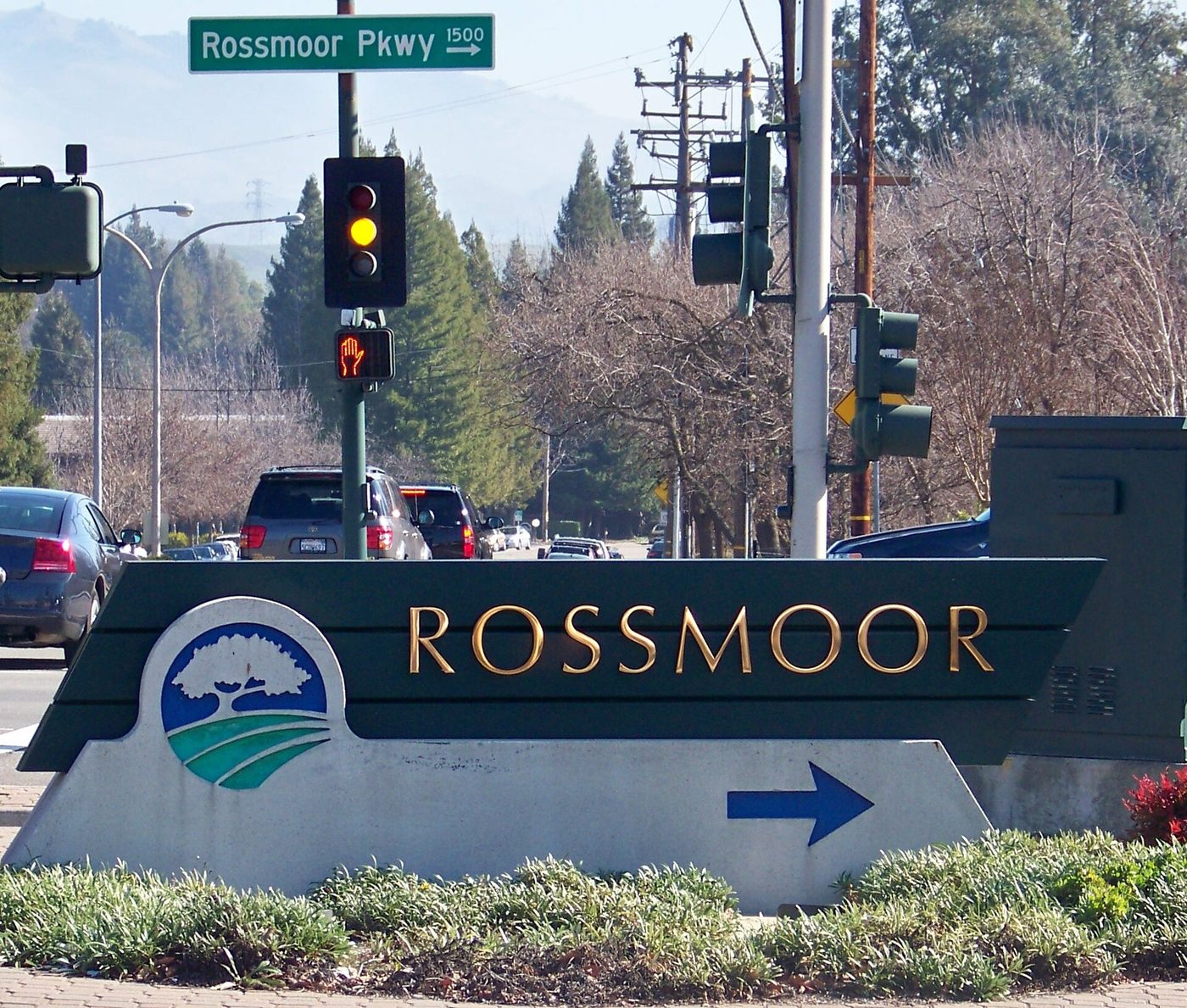
Rossmoor is the Bay Area’s big retirement community, on the edge of Walnut Creek, and its golf is priced like a 1970s muni: $30 for 18 holes on Dollar Ranch in 2026, or $2,400 for a year’s membership on both courses. The courses are for residents and their guests only, so there’s no competition from the public for tee times.
It’s not a championship test, and nobody pretends it is. But in a region where a round at a decent public course can cost several times that, it’s remarkable value. Budget for the transfer fee, which was listed at $18,000 from April 2026.
Verdict: the best golf value in Northern California for anyone over 55. Check the transfer fee and the monthly coop or condo charges before you buy.
Laguna Woods Village
Laguna Woods, Calif. (Orange County) · 55+ · a 27-hole course of three nines and a nine-hole par-3 executive course · golf model: residents pay per round; the village posts resident and guest fee schedules for 2026 · fees not checked
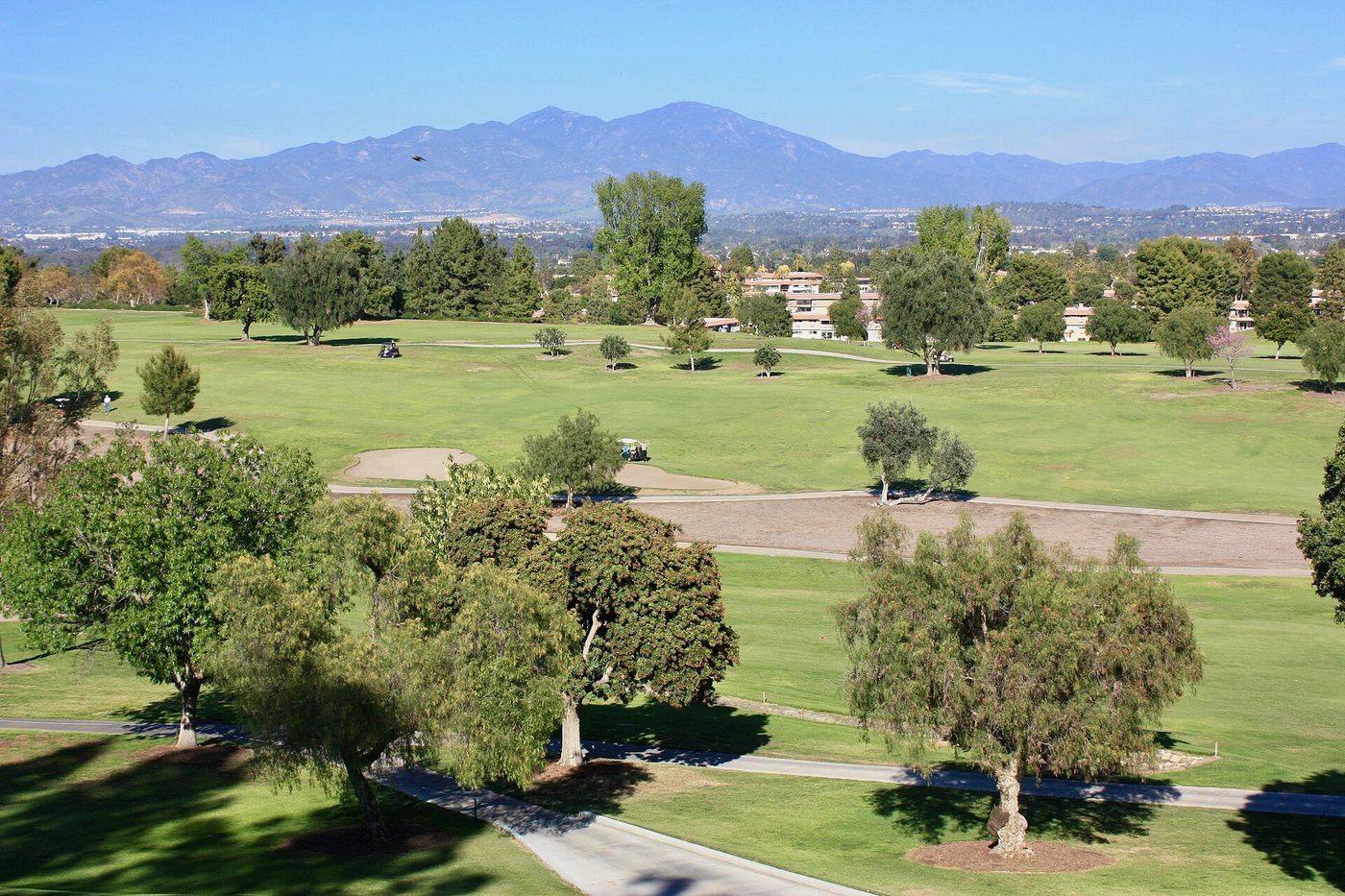
Laguna Woods Village, a few miles inland from Laguna Beach, is one of the largest retirement communities in California, and its golf is a gentle, tree-lined 27 holes plus a par-3 course. It’s the kind of golf you play three times a week with friends, in a climate where you can do it every week of the year.
The village posts its golf fees for residents, but we couldn’t read the 2026 amounts, so we haven’t quoted them. The golf isn’t the reason to live here; the coastal weather is.
Verdict: for a golfer who values climate over course quality, few places in America are better. Ask for the resident rate sheet.
Sun City Summerlin
Las Vegas, Nev. · 55+ · 3 courses by Billy Casper and Greg Nash: Highland Falls, Palm Valley and the shorter Eagle Crest · golf model: optional resident membership tiers · Diamond (unlimited) $4,200 a year; Half-Karat $2,310 for six months; Platinum $1,100 a year plus $30 a round ($25 at Eagle Crest); Silver $500 plus $44 a round ($35 at Eagle Crest); Eagle Executive $650 (official, 2026)
Sun City Summerlin is Del Webb’s Las Vegas community, on the west side of the valley, with two full-length courses and the shorter Eagle Crest. Its membership tiers are a good example of how 55+ golf is priced: pay $4,200 for unlimited golf, or pay less up front and more per round. The Platinum tier, at $1,100 plus $30 a round, beats the Diamond for anyone playing fewer than about 100 rounds a year.
Las Vegas winters are mild and dry, which makes this a strong winter golf base, and the summers are brutally hot, which is when residents play at dawn or go elsewhere.
Verdict: a well-priced desert alternative to Arizona, with a big city on the doorstep. Pick your tier carefully; the maths is easy.
Sun City Shadow Hills
Indio, Calif. (Coachella Valley) · 55+ · Shadow Hills Golf Club, North and South courses of 18 holes each · golf model: resident per-round rates, with an optional Players Card; the courses are open to the public · 2025-26 season: residents $61 (North) and $90 (South) for 18 holes, or $57 and $79 at the loyalty rate; public $72 and $120 (official)
Sun City Shadow Hills is the Coachella Valley’s newer Del Webb community, east of Palm Springs, and its two courses are open to the public, with residents paying less than visitors. In the 2025-26 season, residents paid $61 to $90 for 18 holes and the public $72 to $120. That’s reasonable for the desert in winter, but it isn’t the near-free golf of the Arizona Sun Cities.
Verdict: a good base for golf in the desert, with the valley’s resort courses close by. For unlimited golf at a flat price, Arizona is cheaper.
How much does golf cost in a 55+ community?
Far less than at a private club. Among those we checked, an unlimited resident golf card cost $2,800 a year at Sun City, Arizona (reported), $3,900 at Sun City West and $4,200 at Sun City Summerlin, and resident green fees at Sun City West were $25 to $47. The Villages’ executive courses are free.
Here’s how the main options compare, using each community’s own figures:
| Community | Annual or unlimited option | Resident round (18 holes) | Public or guest round | Source, date |
|---|---|---|---|---|
| The Villages | Executive golf free; trail fee $143.70/year | Executive courses free | Not applicable | Official, 2026 |
| Sun City West | Unlimited $3,900; Kachina $895; Coyote $325 | $25 (summer) to $47 (winter) | Public $35 to $78 | Official, 2025-26 |
| Sun City | No-fee pass $2,800 | Not published | Not published | Reported, 2026 |
| SaddleBrooke (Preserve) | Annual from about $4,400 | Not clearly published | Non-residents $49 to $109 | Official, 2026 |
| PebbleCreek | 10-play pass $620 | $62 on the pass | Not published | Official, 2025 |
| Robson Ranch | Annual $4,575; 10-round card $600 | $44 to $75, cart extra | Non-residents $69 to $133 with cart | Official, 2026 |
| Sun City Summerlin | Diamond $4,200 unlimited; Platinum $1,100 + $30 a round | $30 to $44 with a membership | Not published | Official, 2026 |
| Sun City Huntley | Unlimited $1,900 single, $3,100 couple | $29 to $59 | Public $59 to $79 | Official, 2025 |
| Rossmoor | $2,400 for 27 holes | $30 | Guests $50 to $60; no public play | Official, 2026 |
| Sun City Shadow Hills | Players Card $99 (discounts) | $61 (North) to $90 (South) | Public $72 to $120 | Official, 2025-26 |
| On Top of the World | $6,235 single, $9,395 couple | Not published | Candler Hills semi-private | Official |
For perspective, a private country club membership costs tens of thousands of dollars to join and several thousand a year in dues; see our guide to country club membership costs. Even the most expensive unlimited pass in this table costs less than many private clubs charge in a year’s dues alone.
The fees to watch aren’t the golf fees. They’re the one-time charges when you buy, such as the $5,400 Asset Preservation Fee at Sun City West and the $18,000 transfer fee listed at Rossmoor, and the monthly assessments, which pay for the clubhouses, pools and grounds whether you use them or not. Add them up before you compare one community with another.
Which tees should older golfers play?
Play the tees your driver can reach, not the ones you played at 45. The PGA of America and USGA’s Tee It Forward guidance put a golfer who drives it 225 yards at about 5,800 to 6,000 yards, and a 200-yard driver at 5,200 to 5,400. Most 55+ courses have forward sets built for that.
Distance falls off with age, gradually and then suddenly, and the golfers who enjoy retirement golf most are the ones who move up a set before their scores force them to. The courses in this guide make it easy: almost all of them have four or five sets of tees, many have combination tees that mix two sets, and resident leagues usually play from the middle or forward tees anyway.
As a rule of thumb:
| Your average drive | Course length to play | What that means at a typical 55+ course |
|---|---|---|
| 250 yards | About 6,200 to 6,400 yards | The second set from the back; a 10-handicap in good form |
| 225 yards | About 5,800 to 6,000 yards | The middle tees; the right choice for most 15-to-20 handicappers |
| 200 yards | About 5,200 to 5,400 yards | The forward or combination tees; most 25-handicappers |
| 175 yards | About 4,400 to 4,600 yards | The most forward set, or the community’s executive course |
Course lengths follow the PGA of America and USGA’s Tee It Forward chart (2011); the right-hand column is our own guidance.
Two things are specific to 55+ golf. First, the executive courses at places like The Villages and Sun City West aren’t a lesser option; they’re often the most fun golf in the community for a player who no longer carries the ball 200 yards. Second, desert courses play longer than their yardage in winter, when overseeded ryegrass takes the roll out of the fairways, so move up a set from November to March if your drives stop running out.
What should you check before buying in a 55+ golf community?
Find out how the golf is paid for, what a resident actually pays to play, and how crowded the tee sheet gets in season. Then check the age rules, the rental rules, the owners’ fees and any one-time charges, and who owns the courses.
A checklist before you make an offer:
- Which golf model applies. Included, optional pass, pay per round or public course: it decides what golf costs you every year.
- The resident rates, in writing. Ask for this year’s rate sheet, not the brochure, and ask what rates have done over the last five years.
- Who owns and runs the courses. Courses owned by a residents’ recreation corporation or association answer to residents. Courses owned by a developer or an outside company may not, and a course that loses money can close.
- Tee-time access. How far ahead residents can book, whether the public also plays, and what happens in high season. In Arizona and Florida, February is the test.
- Every fee, not just the HOA. Monthly assessments, one-time capital or transfer fees on purchase, special assessments, and in Florida any community development district bonds on the tax bill.
- The age, visitor and rental rules. Read them before you fall in love with the house.
- Summer and overseeding. Desert courses close for a few weeks each autumn for overseeding, and summer heat changes when and how often you’ll play. Visit in July as well as February; our guide to golf course grass explains why the courses change with the seasons.
- Resale. A 55+ house can only be sold to buyers who meet the age rule, which narrows the market. Ask a local agent how long homes take to sell.
We cover how to buy a golf course home, affordable golf communities without an age limit, and what happens to home values when a course closes, in separate guides.
Frequently asked questions
What is a 55+ golf community?
An age-restricted community, usually built around one or more golf courses, where at least 80% of occupied homes have a resident aged 55 or older. Residents typically pay for golf by the round or with an optional annual pass, rather than through a private club membership.
What is the best 55+ golf community?
It depends on how you play. For the cheapest daily golf, The Villages in Florida. For the best-value 18-hole golf, Sun City West in Arizona. For scenery, SaddleBrooke near Tucson. For a big-city base, Sun City Summerlin in Las Vegas or Robson Ranch near Dallas.
What is the cheapest 55+ golf community?
Among those we checked, The Villages, where a $189 monthly amenity fee makes golf on the executive courses free to residents. For 18-hole golf, Sun City West’s resident rate of $25 to $47 a round in 2025-26, and Sun City Huntley’s $1,900 unlimited membership in 2025, are the best value.
Do you have to be 55 to live in a 55+ golf community?
At least one resident in at least 80% of occupied homes must be 55 or older, and many communities require it of every home. A younger spouse or partner can usually live with a qualifying resident, but many communities don’t allow permanent residents under 19.
Can grandchildren visit a 55+ community?
Yes, but most communities limit how long anyone under 18 or 19 can stay, often to a set number of days a year. Read the visitor rules in the governing documents before you buy if you plan to host grandchildren for long summer visits.
Is golf included in the HOA fee in a 55+ community?
Usually not. The Villages includes its executive courses in the amenity fee, but most 55+ communities, including the Sun Cities in Arizona, PebbleCreek and Robson Ranch, charge for golf separately through a resident pass or per-round rate.
Are 55+ community golf courses open to the public?
Some are. Robson Ranch’s Wildhorse, Whisper Creek at Sun City Huntley and Shadow Hills in Indio all take public play at higher rates, and Sun City West sells public rounds too. Rossmoor’s courses are for residents and their guests only.
Where is the best place to retire for golf?
For year-round golf at the lowest cost, the Phoenix area, where Sun City and Sun City West sell resident golf for a few thousand dollars a year, and Central Florida, where The Villages makes executive golf free. Las Vegas and the Coachella Valley are strong winter alternatives.
Our verdict
For most retiring golfers, a 55+ community is the best value in American golf. Sun City West’s resident rate of $25 to $47 a round, or The Villages’ free executive courses, would be unthinkable at a private club. The trade-off is the course quality: most 55+ courses are built for the average resident rather than the scratch golfer, and that’s exactly what most retired golfers want.
Pick by the way you play. If you want nine holes every morning, go to The Villages. If you want 18 holes at a resident rate on a choice of courses, look at Sun City West, Robson Ranch or Sun City Summerlin. If scenery matters, SaddleBrooke. And whichever you choose, read the age rules and the fee schedule before the brochure. For how these communities compare with private clubs and mandatory-membership communities, see our guide to how golf communities work, from 55+ towns to private clubs.
Sources
- Golf and golf rates, The Villages; trail fees, Village Community Development Districts
- Golf, On Top of the World Communities
- 2025 scorecard, Stonegate Golf Club at Solivita; Solivita’s true cost in 2026, Nova55Living (estimates)
- RCSC raises resident golf no-fee pass to $2,800, Citizen Portal, 2026
- Golf fees, July 2025 to June 2026 and membership fee schedule, Recreation Centers of Sun City West
- About golf, Sun City Grand
- Golf, PebbleCreek Homeowners Association
- 2026 golf fees, The Preserve Golf Club, SaddleBrooke (HOA 2)
- Sun City Hilton Head fees and amenities explained, local agent (estimates)
- 2026 golf fees, Wildhorse Golf Club at Robson Ranch
- Course rates and golf memberships, Whisper Creek Golf Club, Sun City Huntley
- Golf course fees 2026, Golden Rain Foundation of Rossmoor
- Golf courses, Laguna Woods Village
- Memberships, Golf Summerlin (Sun City Summerlin)
- Greens fees and membership, Shadow Hills Golf Club
- Amenities, Sun City Lincoln Hills Community Association
- Golf, Sun City Texas Community Association
- Trilogy at Vistancia, Shea Homes
- Housing for older persons, 24 CFR part 100, subpart E, Electronic Code of Federal Regulations
- Tee It Forward guidelines, Massachusetts Golf Association; USGA, PGA: golfers are playing the wrong tees, Golf Digest, 2011
Image credits
| Image | Photographer | Licence | Source |
|---|---|---|---|
| The Preserve Golf Club, SaddleBrooke (featured image) | Phxtuc1 | CC BY-SA 4.0 | Wikimedia Commons |
| Golf-cart bridge over US 27/441, The Villages | Ebyabe | CC BY-SA 3.0 | Wikimedia Commons |
| Sun City, Arizona, from the air | Ken Lund from Reno, Nevada, USA | CC BY-SA 2.0 | Wikimedia Commons |
| Deer on The Preserve course, SaddleBrooke | Sbariz | CC BY-SA 4.0 | Wikimedia Commons |
| Sun City Hilton Head from the air | Methaz | CC BY-SA 3.0 | Wikimedia Commons |
| Rossmoor entrance sign, Walnut Creek | Coro | CC BY-SA 3.0 | Wikimedia Commons |
| Laguna Woods Village golf course | Dolly442 | CC BY-SA 4.0 | Wikimedia Commons |