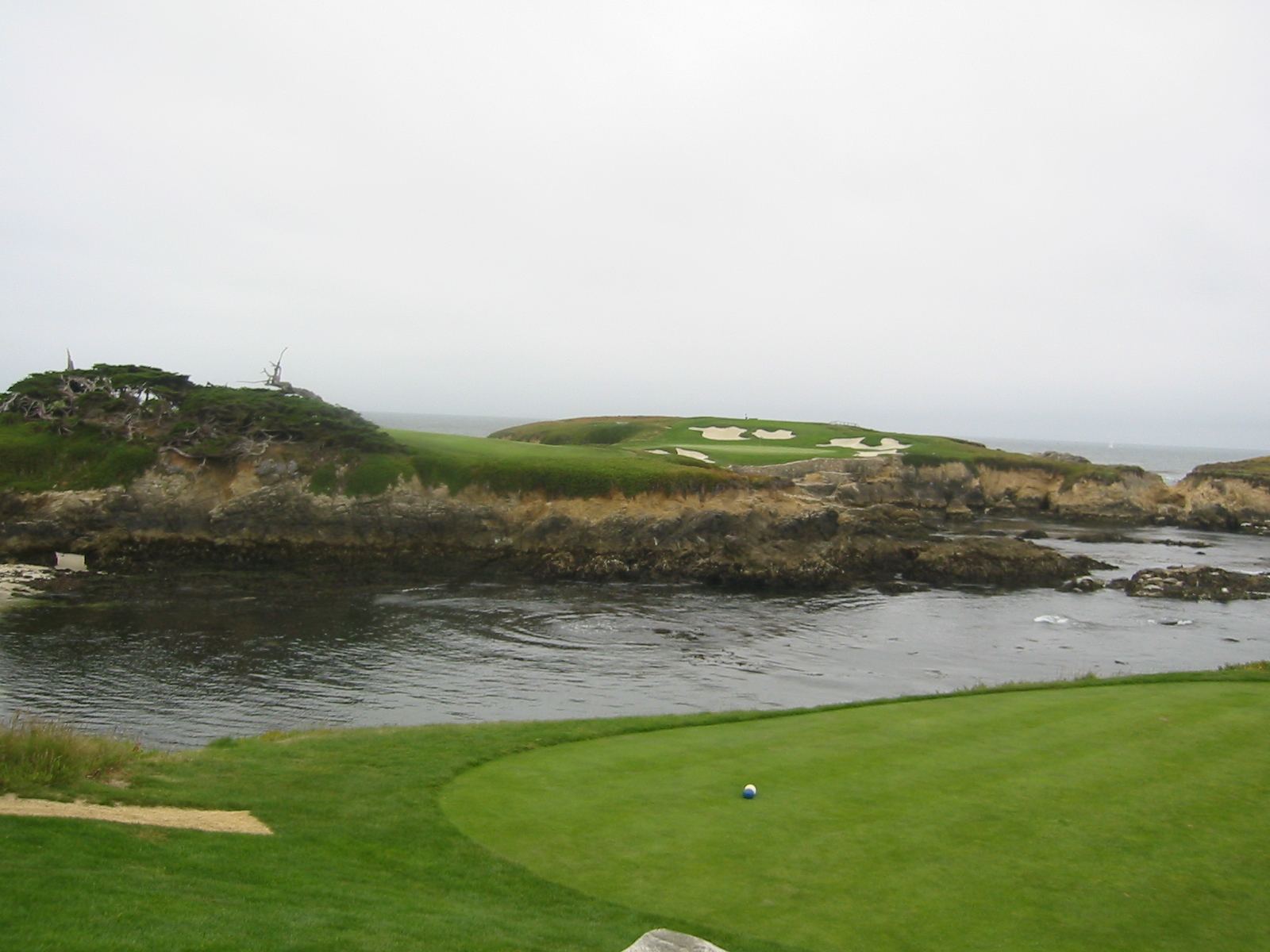
Golf course architects design a course’s routing, holes, greens and bunkers. The most influential in America are the Golden Age masters, Donald Ross, Alister MacKenzie, A.W. Tillinghast, Charles Blair Macdonald and Seth Raynor; then Robert Trent Jones Sr., Pete Dye, Jack Nicklaus and Tom Fazio; and today’s minimalists, Coore and Crenshaw, Tom Doak and Gil Hanse.
Most lists of famous architects stop there, with a paragraph each and a photo of a course you’ll never set foot on. That’s not much use if you actually want to play their work. So this guide does the other half of the job: for every architect, it tells you what to look for on the ground and which of their courses you can book, with the green fee and the date we checked it. You’ll find the work of almost every great name for less than you’d guess. A Pete Dye course owned by a Connecticut town costs state residents $35 to walk on a weekday. A Gil Hanse course in Southern California is $65. A Donald Ross course owned by the City of Detroit is $38.
How we built this. Architect credits follow the clubs’ own histories and the major rankings. To show who built America’s best courses, we use Golf Digest’s 2025-26 list of America’s 100 Greatest, which we compare with the other national lists in our guide to the best golf courses in America. Green fees come from our cache of course rate pages, checked between September and October 2026; where a figure comes from a third party we say “reported”. Many famous courses have been altered since they opened, and we say so where it matters. We haven’t played every course here, and where a note leans on published data and the architecture rather than our own rounds, we say so.
At a glance
- The most important American architect: Donald Ross, who built Pinehurst No. 2 and somewhere between 300 and 400 courses, many of them public
- The best by the rankings: Alister MacKenzie, with two of Golf Digest’s top three, Augusta National and Cypress Point, and Crystal Downs at No. 15
- The best-value way in: Wintonbury Hills (Pete Dye), $35 for Connecticut residents walking; Rackham (Donald Ross), $38; Rustic Canyon (Gil Hanse), from $45 at twilight
- The most expensive: Shadow Creek (Tom Fazio), reported at $1,250 for MGM hotel guests; TPC Sawgrass (Pete Dye), from $775 in season
- The modern name to know: Tom Doak, whose public courses include Pacific Dunes, The Loop and Pinehurst No. 10
- Where to see the most: Pinehurst, with Ross’s No. 2, Gil Hanse’s No. 4 and Tom Doak’s No. 10 at one resort
What does a golf course architect do?
A golf course architect plans how a course fits its land: the routing of the holes, where the tees, fairways and greens go, the shape and contour of the greens, and the bunkers and hazards that create strategy. Builders and “shapers” then move the earth, usually with the architect on site.
The routing is the big decision, and good architects will tell you it’s most of the job. A great routing uses the natural ground, the ridges, hollows, streams and views, so the holes feel found rather than built, and it puts the most dramatic land where it does the most good. After that comes strategy: the angle a bunker forces you to choose, the side of the fairway that opens up the green, the slope that kicks a good shot close and a poor one away. The greens carry the architect’s signature more than anything else. You can recognise a Ross green, a MacKenzie green or a Doak green from a hundred yards once you know what to look for, which is why this guide has a section on exactly that. Our guide to the parts of a golf course explains the terms.
There’s no separate state licence for golf course design in the US. Most architects come through landscape architecture, agronomy or years as a construction shaper, and the profession’s main body is the American Society of Golf Course Architects (ASGCA), founded in 1946. Donald Ross was elected its honorary president and hosted its first annual meeting at Pinehurst in December 1947. Decades later, Alice Dye, Pete Dye’s wife and design partner, became its first female president.
You’ll see three words used a lot, and they mean different things:
- Restoration puts back what the original architect built, often using old photographs and aerial images, as Coore and Crenshaw did at Pinehurst No. 2 in 2011 and Gil Hanse at Oakland Hills in 2021.
- Renovation updates a course, with new bunkers, irrigation or grass, while keeping its design largely intact.
- Redesign changes the holes themselves. Robert Trent Jones Sr.’s 1951 remake of Oakland Hills for the U.S. Open is the famous example.
Our guide to how golf courses are designed goes through the process step by step, from first site visit to opening day.
Golf course architects at a glance
The table lists the architects who matter most to an American public golfer, roughly in order of when they did their best work, with one course of theirs you can actually book.
| Architect | Era | Signature traits | Most famous course | A course you can play | Green fee (Oct 2026) |
|---|---|---|---|---|---|
| Charles Blair Macdonald | 1890s-1920s | Template holes copied from Britain’s best | National Golf Links of America (1911) | Yale (with Seth Raynor and Charles Banks), public since April 2026 | Up to about $350 (reported) |
| Seth Raynor | 1910s-1926 | Bold, squared-off templates; steep bunkers | Fishers Island (1926) | Yale | Up to about $350 (reported) |
| Donald Ross | 1900-1948 | Crowned greens, short-grass run-offs, natural routings | Pinehurst No. 2 | Mid Pines (Southern Pines, NC) | $115-$285 with cart |
| A.W. Tillinghast | 1900s-1930s | Huge, varied bunkers; bold greens | Winged Foot (West) | Bethpage Black (NY) | $70-$160 |
| Alister MacKenzie | 1900s-1934 | Camouflage bunkers, big contoured greens, illusions | Augusta National, Cypress Point | Pasatiempo (Santa Cruz, CA) | $465 walking, $515 riding |
| George Thomas | 1910s-1920s | Strategic options, barranca hazards | Riviera | Ojai Valley Inn (with Billy Bell) | $190 for 18 holes |
| Langford and Moreau | 1920s-1930s | Steep, raised greens; huge mounds | Lawsonia Links | Lawsonia Links (Green Lake, WI) | $70-$140 |
| Robert Trent Jones Sr. | 1930s-1990s | Runway tees, big tiered greens, water | Oakland Hills remodel (1951); Spyglass Hill | Spyglass Hill (CA) | $525 plus $50 cart (reported, to March 2026) |
| Pete Dye | 1960s-2010s | Railroad ties, pot bunkers, island greens | TPC Sawgrass (Players Stadium) | Wintonbury Hills (Bloomfield, CT) | $35-$62 for Connecticut residents |
| Jack Nicklaus | 1970s on | Elevated greens built for a high approach | Muirfield Village | Harbor Shores (Benton Harbor, MI) | $135-$245 with cart |
| Tom Fazio | 1970s on | Beauty, framing, playability | Shadow Creek | Butterfield Trail (El Paso, TX) | $39.95-$49.95 |
| Coore and Crenshaw | 1980s on | Ragged natural bunkers, width, ground game | Sand Hills | Talking Stick O’odham (Scottsdale, AZ) | $25-$261 by season (reported) |
| Tom Doak | 1980s on | Wild greens, minimal earthmoving | Pacific Dunes | The Loop at Forest Dunes (MI) | $145-$215; cart $30 |
| Gil Hanse | 1990s on | Rugged bunkers; restorations | Pinehurst No. 4; LACC North restoration | Rustic Canyon (Moorpark, CA) | $45-$90 |
| David McLay Kidd | 1990s on | Width, fun, big contours | Bandon Dunes | Gamble Sands (Brewster, WA) | $200-$295 with cart |
| Mike Strantz | 1990s-2005 | Artistic, dramatic, blind shots | Tobacco Road | Caledonia (Pawleys Island, SC) | $79-$129 (summer 2026) |
Fees from each course’s official rate page as of September-October 2026, except where marked “reported”.
Who are the most famous golf course architects?
By the rankings, Alister MacKenzie, Charles Blair Macdonald and Seth Raynor, Donald Ross, George Thomas and Coore and Crenshaw: between them they built 12 of the top 20 courses on Golf Digest’s 2025-26 list of America’s 100 Greatest. Add A.W. Tillinghast, William Flynn and Jack Nicklaus and you cover 15.
Here’s who built the top 20, which tells you more about American architecture than any list of names:
| GD rank | Course | Architect (year) | Can you play it? |
|---|---|---|---|
| 1 | Pine Valley | George Crump, with H.S. Colt (1918) | Private |
| 2 | Augusta National | Alister MacKenzie and Bobby Jones (1933) | Private |
| 3 | Cypress Point | Alister MacKenzie (1928) | Private |
| 4 | Shinnecock Hills | William Flynn (1931) | Private |
| 5 | Oakmont | Henry Fownes (1903) | Private |
| 6 | Merion (East) | Hugh Wilson (1912) | Private |
| 7 | National Golf Links of America | Charles Blair Macdonald (1911) | Private |
| 8 | Sand Hills | Bill Coore and Ben Crenshaw (1995) | Private |
| 9 | Pebble Beach | Jack Neville and Douglas Grant (1919) | Yes, $695 (2026) |
| 10 | Fishers Island | Seth Raynor (1926) | Private |
| 11 | Chicago Golf Club | Charles Blair Macdonald (1895); Seth Raynor (1923) | Private |
| 12 | Seminole | Donald Ross (1929) | Private |
| 13 | Winged Foot (West) | A.W. Tillinghast (1923) | Private |
| 14 | Friar’s Head | Bill Coore and Ben Crenshaw (2003) | Private |
| 15 | Crystal Downs | Alister MacKenzie and Perry Maxwell (late 1920s) | Private |
| 16 | Los Angeles CC (North) | George Thomas (1921) | Private |
| 17 | The Country Club | Several architects from the 1890s on | Private |
| 18 | Riviera | George Thomas, with Billy Bell (1926) | Private |
| 19 | Muirfield Village | Jack Nicklaus, with Desmond Muirhead (1974) | Private |
| 20 | Oakland Hills (South) | Donald Ross (1918) | Private |
Ranks from Golf Digest’s America’s 100 Greatest Golf Courses, 2025-26. Pebble Beach fee from its own FAQ.
Two things leap out. Seventeen of the 20 were built before the Second World War; the only modern courses are Coore and Crenshaw’s Sand Hills and Friar’s Head and Nicklaus’s Muirfield Village. And only one of the 20, Pebble Beach, sells a tee time to the public. That’s the gap this guide tries to close: the architects at the top of the rankings nearly all have courses you can play, just not those ones. Several were designed by gifted amateurs who built little else, Crump, Wilson and Fownes among them, which is one of the odd charms of American golf. For more on the famous courses themselves, see our guide to famous golf courses.
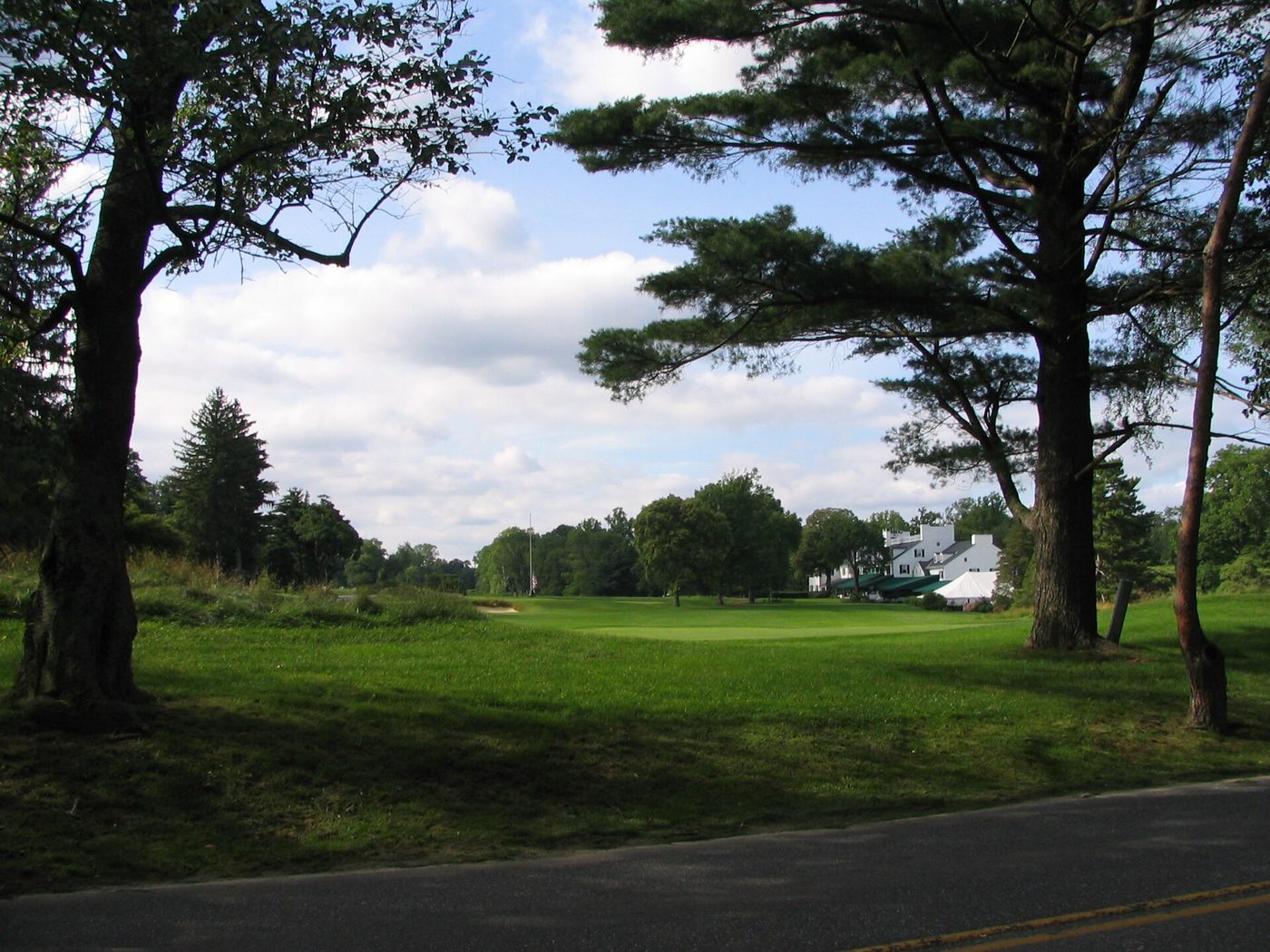
The founders: Charles Blair Macdonald and Seth Raynor
American golf architecture starts with a wealthy, opinionated Chicagoan who went to university at St Andrews and came home determined to give America the great holes of Scotland and England.
Charles Blair Macdonald
Active 1890s-1920s · Best known for: National Golf Links of America (1911), Chicago Golf Club, Yale (with Raynor and Banks) · Best course you can book: Yale Golf Course, open to the public since April 28, 2026, up to about $350 (reported)
Macdonald built the Chicago Golf Club, won the first U.S. Amateur in 1895 and helped found the USGA, but his real legacy is the National Golf Links of America on Long Island. He studied the best holes in Britain and rebuilt their strategies, not their exact shapes, on new ground: the Redan from North Berwick, the Road Hole from St Andrews, the Alps from Prestwick, the Eden. These “template holes” became a design language that his partner Seth Raynor, and later Charles Banks, used across the country.
A template hole borrows the strategy of a famous original. The Redan is a par 3 with a green that slopes away from the golfer, behind a deep front bunker, so the smart shot lands short and runs in; the Biarritz is a long par 3 with a deep swale through the middle of the green; the Cape asks you to bite off as much of a hazard as you dare from the tee. Our guide to template holes goes through every one.
Where to see it: most Macdonald courses are private, which makes Yale’s decision to open its course to the public in April 2026 a big deal: non-affiliated golfers can book 10 days ahead, walking with free push carts. The other option is The Lido at Sand Valley in Wisconsin, Tom Doak’s 2023 recreation of Macdonald’s lost 1917 masterpiece, which is for resort guests only.
Seth Raynor
Active 1910s-1926 · Best known for: Fishers Island, Camargo, Shoreacres, Yale (with Macdonald) · Best course you can book: Yale, as above
Raynor was a Long Island surveyor whom Macdonald hired to build the National, and he became the more prolific of the two, building courses from Wisconsin to Hawaii before his death in 1926. His templates are bolder and more geometric than Macdonald’s: squared-off greens, steep-faced bunkers and big, flat green surfaces split by deep internal ridges and swales. He was hired to design Cypress Point and died before he could build it, which is how Alister MacKenzie got the job.
Verdict on the founders: if you care about architecture, playing a template course is the single most educational round you can have. Yale is the only real public option, and it’s worth the price for that reason alone.
The Golden Age masters: Ross, Tillinghast, MacKenzie and Thomas
The 1910s and 1920s were American golf design’s Golden Age: money was plentiful, golf was booming, and earthmoving was done with horses and scoops, so architects had to work with the land instead of against it. Our guide to the Golden Age of golf course architecture covers the period in full.
Donald Ross
Active 1900-1948 · Somewhere between 300 and 400 courses, depending on how remodels are counted · Best known for: Pinehurst No. 2, Seminole, Oakland Hills, Oak Hill · Best course you can book: Mid Pines, $115-$285 with cart (2026); Pinehurst No. 2 with a resort stay
Ross grew up in Dornoch in the far north of Scotland, learned the game and the craft under Old Tom Morris at St Andrews, and emigrated to the US in 1899. A year later he was at Pinehurst, where he lived and worked for the rest of his life. Pinehurst No. 2, which he tinkered with for four decades, is his masterpiece, and its domed, “turtleback” greens, which shed any approach that’s slightly off, have become his signature (decades of topdressing exaggerated them, but the idea was his). Ross courses are walkable and natural, with the hazards concentrated around the greens and lots of short grass to recover from.
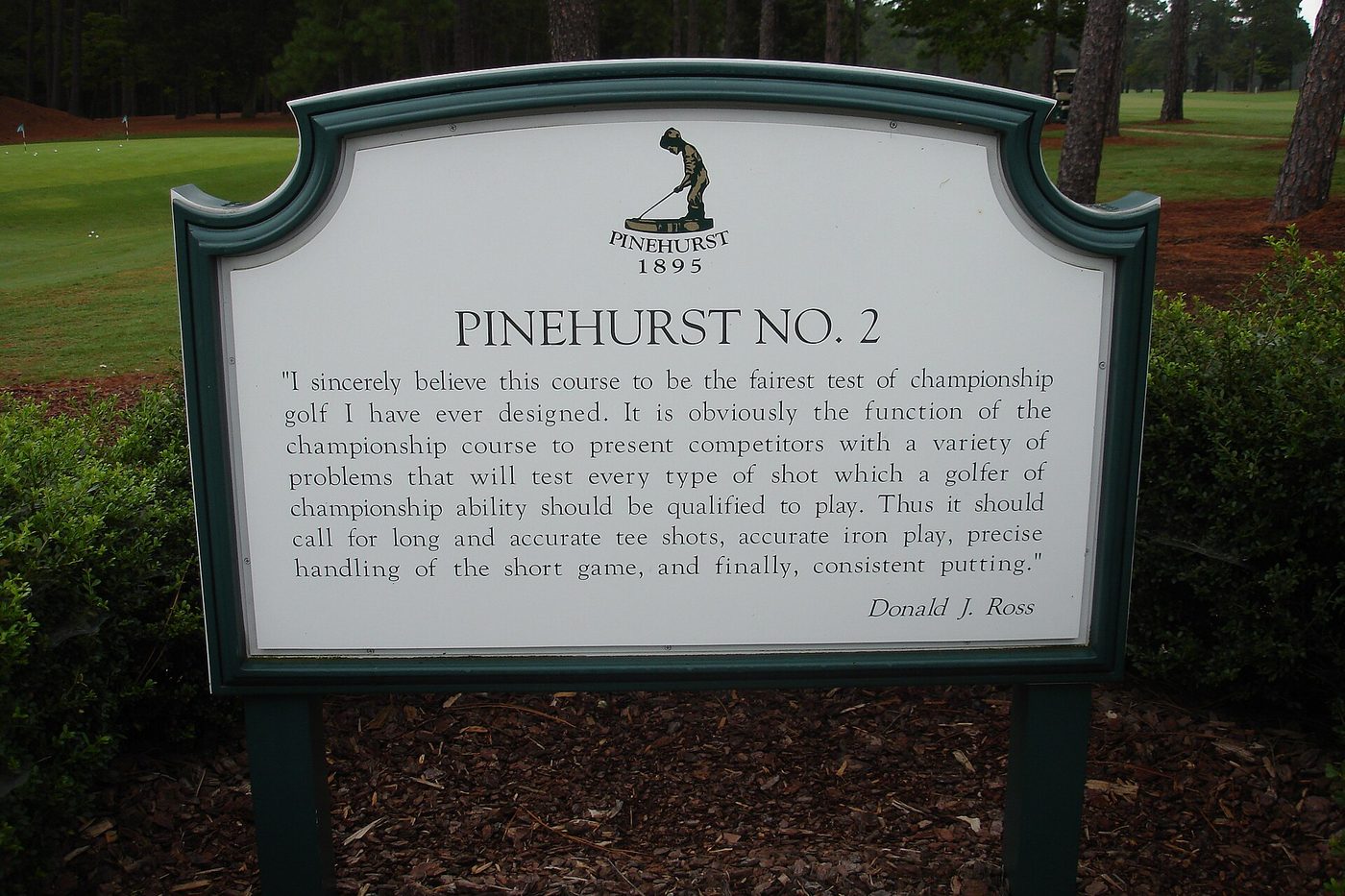
The great news for public golfers is how many of his courses you can play. Mid Pines and Southern Pines in North Carolina, restored by Kyle Franz, are the purest Ross you can book without a resort package; our North Carolina course guide has both. And because Ross built so many city courses, some of the best-value golf in America is his: Rackham in Detroit ($38 walking on weekdays), George Wright in Boston ($61 to $70 for non-residents), Wilmington Municipal in North Carolina ($45 walking for visitors) and Triggs Memorial in Providence ($55 to $65 walking). Our guide to Donald Ross golf courses lists them, and the Pinehurst No. 2 green fee guide explains how to get on his masterpiece.
Verdict: start your architecture education with Ross. His courses are fun at any handicap, and you can play one for under $50 in a dozen cities.
A.W. Tillinghast
Active 1900s-1930s · Best known for: Winged Foot, Baltusrol, San Francisco Golf Club, Bethpage Black · Best course you can book: Bethpage Black, $70-$80 for New York residents, $140-$160 for non-residents, plus a $5 booking fee (2026, official)
Albert Warren Tillinghast was a wealthy Philadelphian, a flamboyant writer and, by most accounts, a hard-living one, and he built some of the toughest championship courses in the country. His trademarks are big, bold greens and huge, varied bunkering, including the vast fairway-crossing hazards he called “great hazards”. Winged Foot, Baltusrol and Somerset Hills are private, but Bethpage Black, the public course on Long Island credited to him and built in the 1930s, has held two U.S. Opens, the 2019 PGA Championship and the 2025 Ryder Cup.
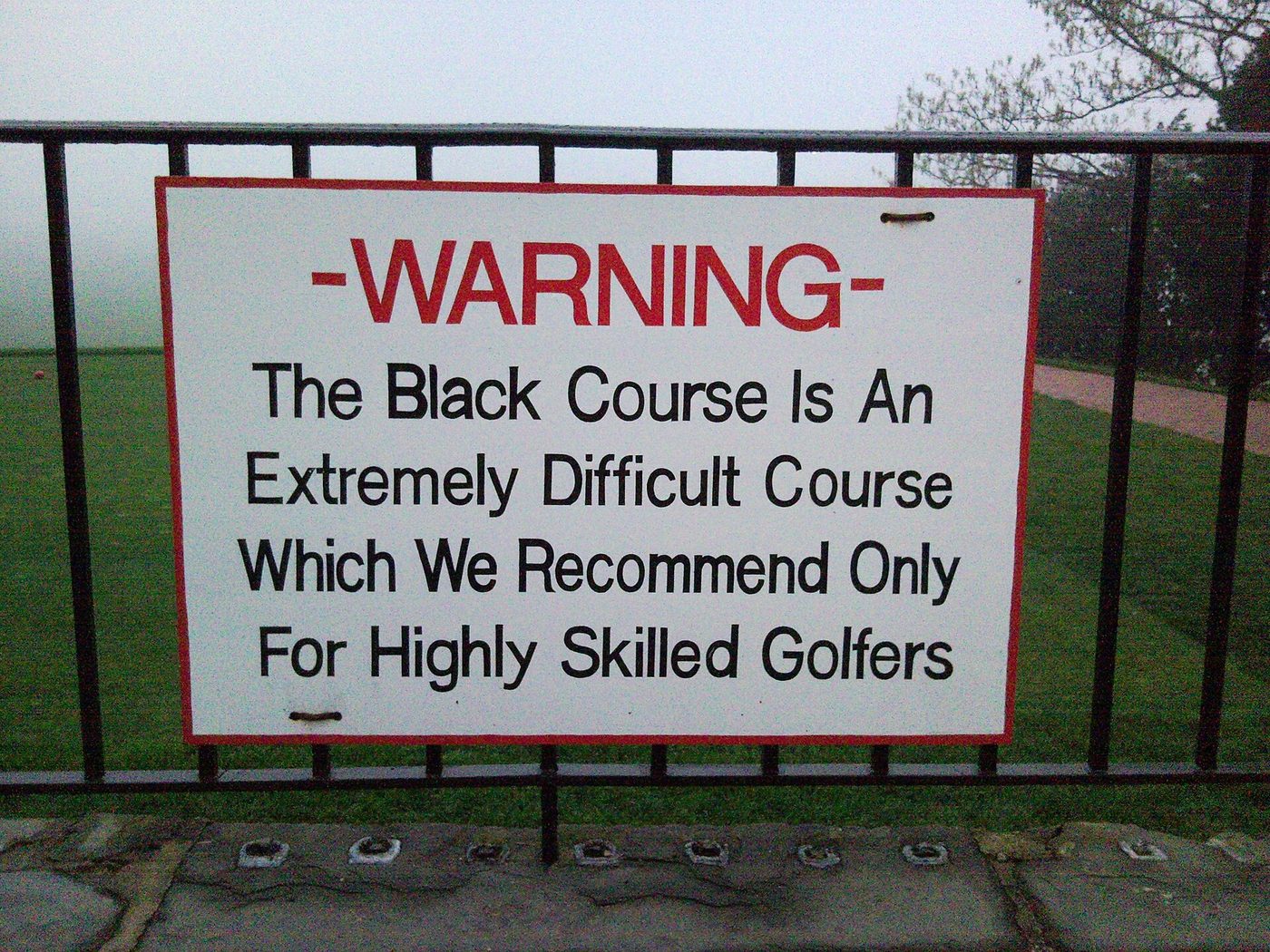
Bethpage Black is walking only, with one round per golfer every 28 days. Its sister, Bethpage Red, another Tillinghast course, costs $43 to $48 for residents and $90 to $100 for non-residents. In San Antonio, Brackenridge Park, a 1916 Tillinghast course, costs $56 to $87. Our guide to Tillinghast golf courses covers the rest.
Verdict: Bethpage Black is the best-value championship course in America for a New Yorker. For everyone else it’s still a bargain by major-venue standards.
Alister MacKenzie
Active 1900s-1934 · Best known for: Augusta National (with Bobby Jones), Cypress Point, Crystal Downs, Royal Melbourne · Best course you can book: Pasatiempo, $465 walking or $515 riding; book 7 days ahead, or up to a year ahead for a $50 priority fee (official)
MacKenzie was a doctor from Leeds who studied military camouflage, and you can see both habits in his work: a diagnostic eye for the land, and bunkers with jagged, irregular edges that blend into the landscape and make distances hard to judge. His greens are big, bold and full of contour, often with false fronts that roll short approaches back down the hill. He set out his principles in a 1920 book, Golf Architecture, and he built Cypress Point in 1928 and Augusta National, with Bobby Jones, in 1933.
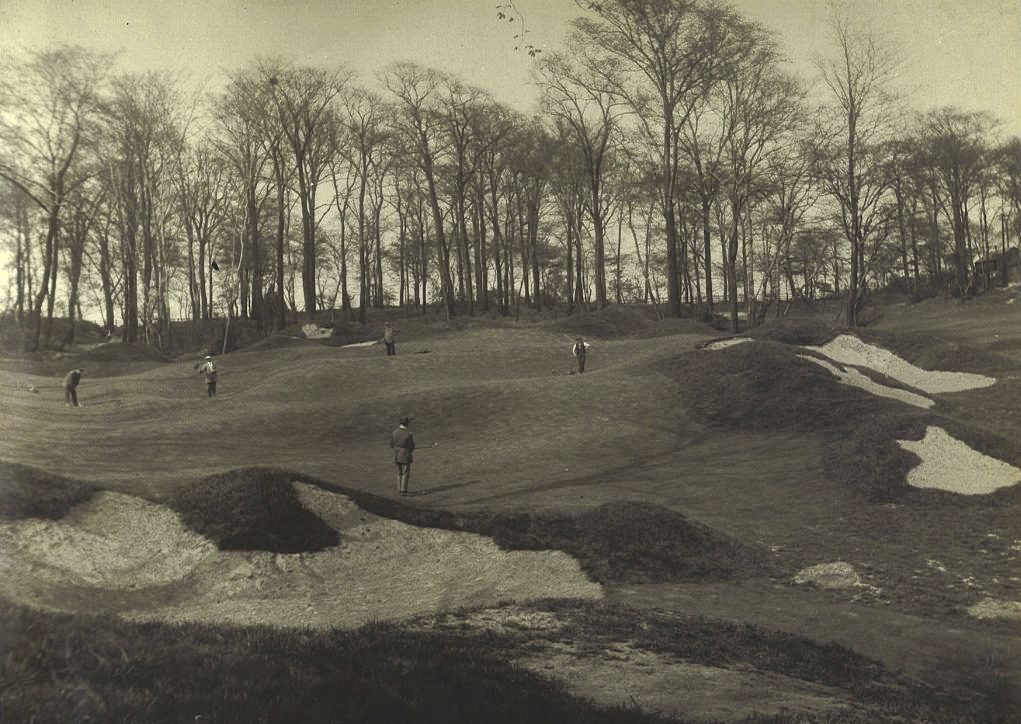
The best MacKenzie course you can play is Pasatiempo in Santa Cruz, where he lived the last years of his life; his house sits beside the course. The University of Michigan Golf Course, built with Perry Maxwell in 1931, is open to outsiders through a package reported at $185, and two city courses he designed in 1932, Sharp Park south of San Francisco and Haggin Oaks in Sacramento, are municipal golf. Our guide to Alister MacKenzie golf courses sorts the public ones from the private.
Verdict: Pasatiempo is expensive, but it’s the closest a public golfer can get to the architect of Augusta and Cypress Point. Play it once. Our guide to California’s best courses puts it in context.
George Thomas
Active 1910s-1920s · Best known for: Riviera, Los Angeles Country Club (North), Bel-Air · Best course you can book: Ojai Valley Inn (with Billy Bell, 1923), $190 for 18 holes or $119 for nine (official)
Thomas was a Philadelphia gentleman who moved to Los Angeles and designed its three great private clubs, usually with Billy Bell building them. His book, Golf Architecture in America (1927), is still read by architects, and his courses are full of options: alternate routes, strategic bunkers in the middle of fairways and dry creek beds, or barrancas, that cross the holes. Riviera’s 18th, a natural amphitheatre below the clubhouse, is his most famous finish.
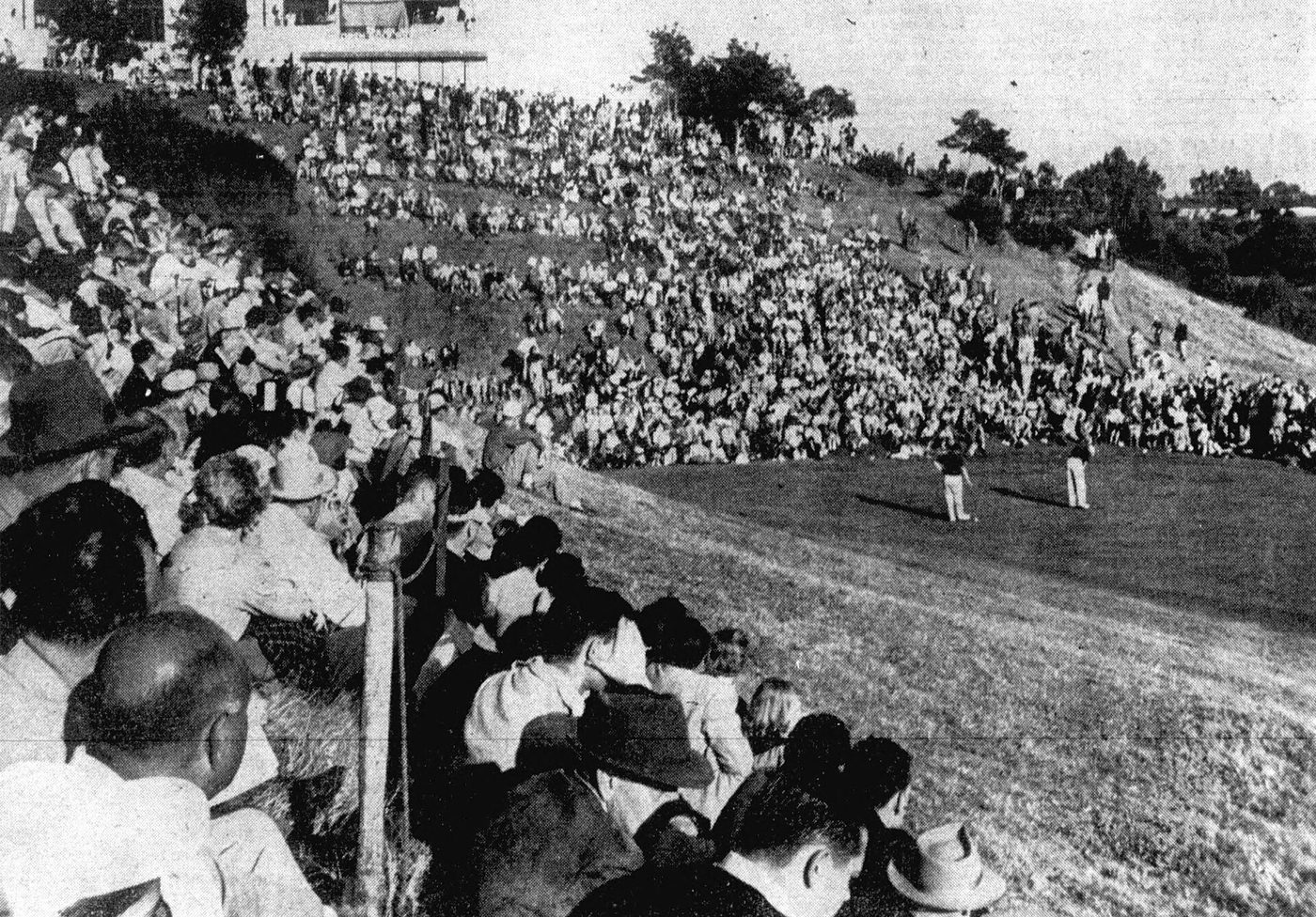
Verdict: you won’t get on Riviera without a member, but Ojai is a charming, short Thomas-and-Bell resort course and a fair price for the history.
The rest of the Golden Age roll call is just as rich. Perry Maxwell built Southern Hills and Prairie Dunes and finished Crystal Downs with MacKenzie; William Flynn built Shinnecock Hills; Hugh Wilson, an amateur, designed Merion; and George Crump built Pine Valley, with advice from the English architect H.S. Colt. For public golfers, two more names matter: William Langford and Theodore Moreau, whose Lawsonia Links in Wisconsin, with its steep, raised greens, costs $70 to $140, and William Watson, whose Belvedere in Michigan is $75 to $150 walking.
Robert Trent Jones Sr. and the post-war boom
After the Second World War, bulldozers replaced horse-drawn scoops, golf boomed again, and one man came to dominate American design.
Robert Trent Jones Sr.
Active 1930s-1990s · Around 500 courses worldwide, by the usual count · Best known for: the 1951 remake of Oakland Hills, Spyglass Hill, Hazeltine, Peachtree, Mauna Kea · Best course you can book: Spyglass Hill, reported at $525 plus a $50 cart for non-guests through March 2026; Ka’anapali Royal on Maui, $228 (2026, official)
Jones was the first celebrity golf architect. He designed his own course of study at Cornell, where a course now carries his name, and he went on to build or remodel courses across America and around the world. His philosophy was “hard par, easy bogey”: a course should be very difficult to par but fair to an average player who plays sensibly. You recognise his work by its long “runway” tees, big, tiered greens and water close to the putting surfaces. His 1951 remake of Oakland Hills for the U.S. Open, which Ben Hogan won and famously compared to a monster, made his name.
Plenty of his courses are public. Spyglass Hill at Pebble Beach is the famous one; others include Mauna Kea on Hawaii’s Big Island, Ka’anapali’s Royal course on Maui, Duke University’s course in Durham (reported at about $105 on weekdays) and Tanglewood in North Carolina (reported at about $68), host of the 1974 PGA Championship. The Robert Trent Jones Golf Trail in Alabama, built in the 1990s under his name by his longtime associate Roger Rulewich, is the biggest collection of public Jones-branded courses anywhere. Our guide to Robert Trent Jones Sr. golf courses covers his career.
Verdict: Jones courses can be long and repetitive, but the best of them, Spyglass above all, are great tests. His sons, Robert Trent Jones Jr. and Rees Jones, both became leading architects too.
Jones’s contemporary Dick Wilson built Doral’s Blue Monster and Bay Hill, both in 1961. Doral was redesigned by Gil Hanse in 2014 and was reported at $566 to $714 in 2026; Bay Hill is for lodge guests and members, reported at about $285 in high season.
Pete Dye and the modern era
Pete Dye
Active 1960s-2010s · Best known for: TPC Sawgrass, Whistling Straits, Kiawah Island’s Ocean Course, Harbour Town, PGA West Stadium · Best course you can book: Wintonbury Hills, a town-owned course in Connecticut, $35 to $62 for Connecticut residents (official); TPC Sawgrass from $775 (September to May) or $550 (June to August), with cart, forecaddie and range (official)
Pete Dye changed American golf more than anyone since Robert Trent Jones. After a trip to Scotland in the early 1960s, he and his wife Alice came home and started building small greens, pot bunkers and railroad-tie bulkheads, and over the next 50 years he made golf courses that play tricks on your eyes: holes that look harder than they are, and holes that look easy and aren’t. The island-green 17th at TPC Sawgrass, which opened in 1980, is the most famous par 3 in America; our guide to Florida’s best courses covers Sawgrass and its neighbours.
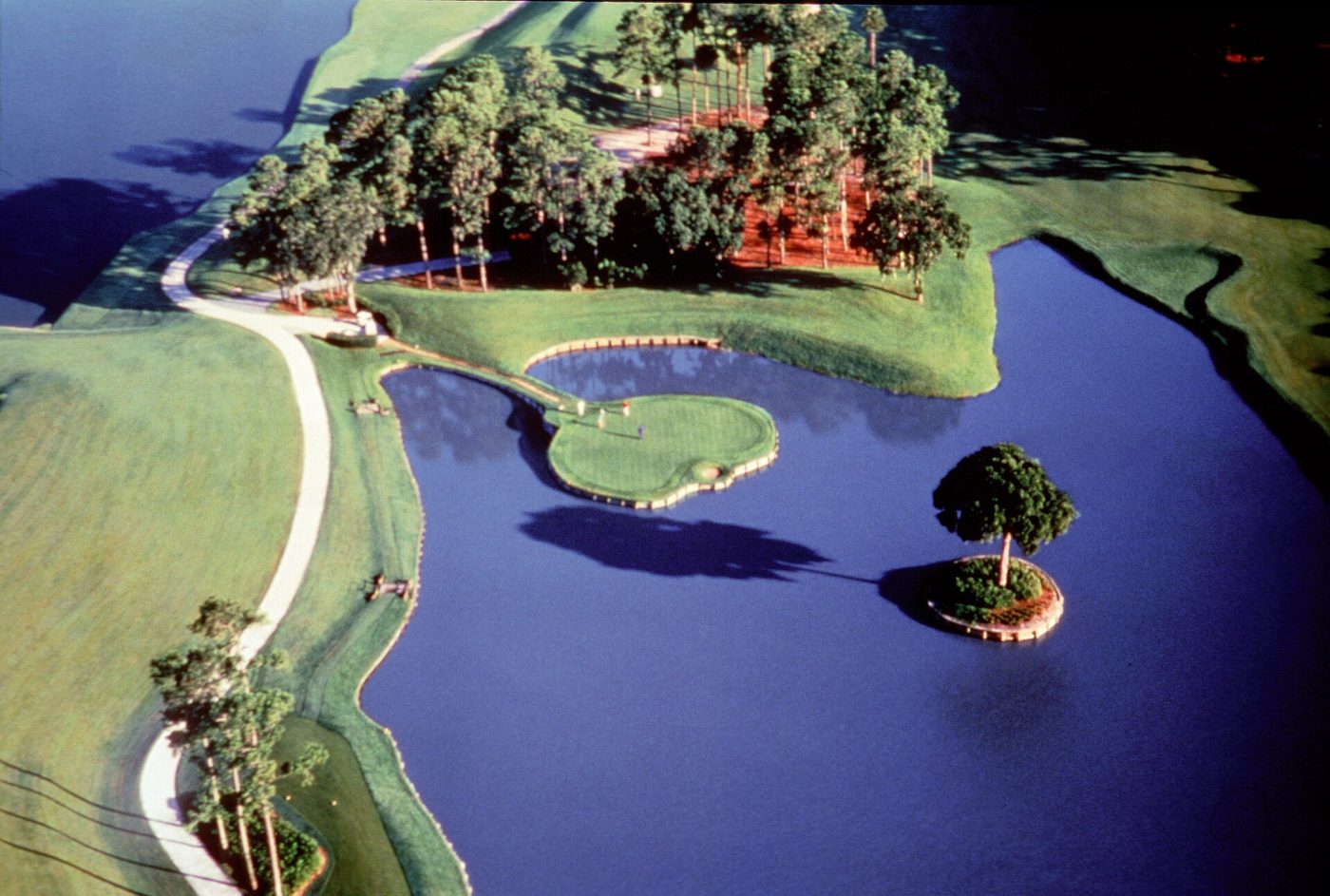
Almost all of Dye’s famous courses are public. Beyond Sawgrass: Kiawah’s Ocean Course (about $480 for resort guests, reported), Harbour Town (dynamic pricing, sample 2026 dates $378 to $651), French Lick’s Pete Dye Course in Indiana ($450 to $500 with a cart and a mandatory $50 forecaddie), PGA West’s Stadium Course in California (reported at $146 to $264) and Whistling Straits in Wisconsin (rates not published). At the other end of the scale, Wintonbury Hills in Bloomfield, Connecticut, which Dye designed for the town in 2003, is one of the best bargains in golf. Our guide to Pete Dye golf courses lists every public one.
Verdict: play at least one Dye course in your life, and play it from the right tees. Dye was merciless to golfers who overestimated themselves.
The tour-pro designers: Nicklaus, Palmer and Weiskopf
Jack Nicklaus
Active 1960s on · Best known for: Muirfield Village (with Desmond Muirhead), Harbour Town (as consultant to Pete Dye), Castle Pines, Valhalla · Best course you can book: Harbor Shores in Benton Harbor, Michigan, $135 to $245 with a cart (2026, official); Ferry Point in New York City, $193 to $283 (official)
Nicklaus started out consulting for Pete Dye at Harbour Town in 1969, and Muirfield Village, the Ohio club he built in 1974 to host the Memorial Tournament, is still his best course. His designs tend to favour a high, soft approach, the shot he hit better than anyone, with elevated greens and deep bunkers in front. Critics say they can be hard on average players; the best of them are superb. Public Nicklaus courses include Harbor Shores, Ferry Point in the Bronx, the Bear at Grand Traverse Resort in Michigan ($95 to $200), Manele on Lanai (resort guests, reported at about $550) and the 2014 redesign of PGA National’s Champion Course in Florida. Our guide to Jack Nicklaus golf courses covers the US public ones.
Verdict: Nicklaus courses are built for good players. Pick the tees carefully and enjoy the greens.
Arnold Palmer’s design firm built Bay Hill’s current form, the Palmer course at Turtle Bay on Oahu ($220 to $250), Aviara near San Diego (reported at $200 to $350) and The Bog in Wisconsin. Tom Weiskopf, with Jay Morrish, built TPC Scottsdale’s Stadium Course and Troon North in Arizona; on his own, he built Forest Dunes in Michigan ($145 to $215) and, as his final design, Black Desert in Utah, which opened in 2023 and costs non-guests $325 to $450 (2026).
Tom Fazio, Rees Jones and Robert Trent Jones Jr.
Tom Fazio
Active 1970s on · Best known for: Shadow Creek, Wade Hampton, Pinehurst No. 8, Pelican Hill · Best course you can book: Butterfield Trail in El Paso, a city-owned course, $39.95 on weekdays and $49.95 at weekends (official); Pelican Hill’s Ocean South, $340 to $415 (official)
Fazio, nephew of the tour pro and architect George Fazio, was the most sought-after American architect of the 1980s, 1990s and 2000s, and he’s the master of the beautiful, playable, expensive course. His work is lush and dramatically framed, with mounding and planting that make every hole look like a postcard, and it’s generous to average players. Shadow Creek in Las Vegas, built in the desert in 1989 for Steve Wynn, is the extreme example, reported at $1,250 for MGM Resorts hotel guests. Most of his best work is private, Wade Hampton in North Carolina above all, but Butterfield Trail in El Paso is a Fazio design that costs under $50. Our guide to Tom Fazio golf courses lists the public ones.
Verdict: Fazio courses are a pleasure to play and a delight to look at. They rarely surprise you, which is either the point or the problem, depending on your taste.
Rees Jones and Robert Trent Jones Jr.
Rees Jones: best known for U.S. Open renovations, Torrey Pines South (2001 redesign), Bethpage Black’s preparation for the 2002 U.S. Open · Robert Trent Jones Jr.: best known for Chambers Bay, Poppy Hills, SentryWorld · Best courses you can book: Torrey Pines South, $258 to $322 for non-residents (2026, official); Chambers Bay, $149 to $325 for non-residents (official)
Robert Trent Jones Sr.’s sons both followed him into the business. Rees Jones became known as “the Open Doctor” for preparing championship venues for the U.S. Open, and his public work includes the Torrey Pines South redesign, Talamore in Southern Pines, Black Lake in Michigan ($64 to $96) and the Currituck Club on the Outer Banks. Robert Trent Jones Jr. built Chambers Bay, the Tacoma course on an old sand quarry that held the 2015 U.S. Open, plus Poppy Hills at Pebble Beach ($95 to $350), SentryWorld in Wisconsin ($375) and University Ridge in Madison ($75 to $145).
The minimalists: Coore and Crenshaw, Tom Doak and Gil Hanse
From the 1990s, a group of architects rebelled against the expensive, heavily shaped courses of the previous decades and went back to Golden Age ideas: find great natural ground, move as little earth as possible, and let the ball run along the ground. They now dominate the rankings of new courses, and our guide to minimalist golf course architects goes deeper into their work.
Bill Coore and Ben Crenshaw
Active 1980s on · Best known for: Sand Hills, Friar’s Head, Bandon Trails, Sheep Ranch, the 2011 restoration of Pinehurst No. 2 · Best courses you can book: Talking Stick O’odham in Scottsdale, reported at $25 in summer to $261 in peak season; We-Ko-Pa Saguaro, about $99 in summer to $309 in winter (rate page); Bandon Trails, $180 to $425 for day guests (official)
Coore, a quiet former Pete Dye associate, and Crenshaw, the two-time Masters champion, have built the best modern course in America, Sand Hills in Nebraska, which opened in 1995 and sits at No. 8 on Golf Digest’s list. Their style is so natural it can look unfinished: ragged, wind-blown bunkers, wide fairways and greens that accept running shots. Their public work includes Bandon Trails and Sheep Ranch at Bandon Dunes, Sand Valley in Wisconsin (about $295 to $325 in peak season), Streamsong Red in Florida, and two of the best-value modern courses in Arizona, Talking Stick O’odham and We-Ko-Pa Saguaro.
Verdict: if you think golf should be played on the ground and enjoyed by everyone, these are your architects. Talking Stick in summer is the cheapest way to find out.
Tom Doak
Active 1980s on · Best known for: Pacific Dunes, Ballyneal, Old Macdonald (with Jim Urbina), The Loop, Pinehurst No. 10, The Lido recreation · Best courses you can book: The Loop at Forest Dunes, $145 to $215 plus a $30 cart (2026, official); Pacific Dunes, $180 to $425 for day guests (official)
Doak worked for Pete Dye, studied the great courses of Britain on a scholarship, wrote a famously blunt guidebook to the world’s courses, and then built Pacific Dunes at Bandon, which opened in 2001 and is No. 2 on Golf Digest’s public list. His greens are among the boldest in modern golf, and he’s unusually willing to try new ideas: The Loop in Michigan is a reversible course, played clockwise one day and counter-clockwise the next. His firm, Renaissance Golf Design, also rebuilt Houston’s municipal Memorial Park in 2020, and he built The Rawls Course at Texas Tech (reported at $48 to $79).
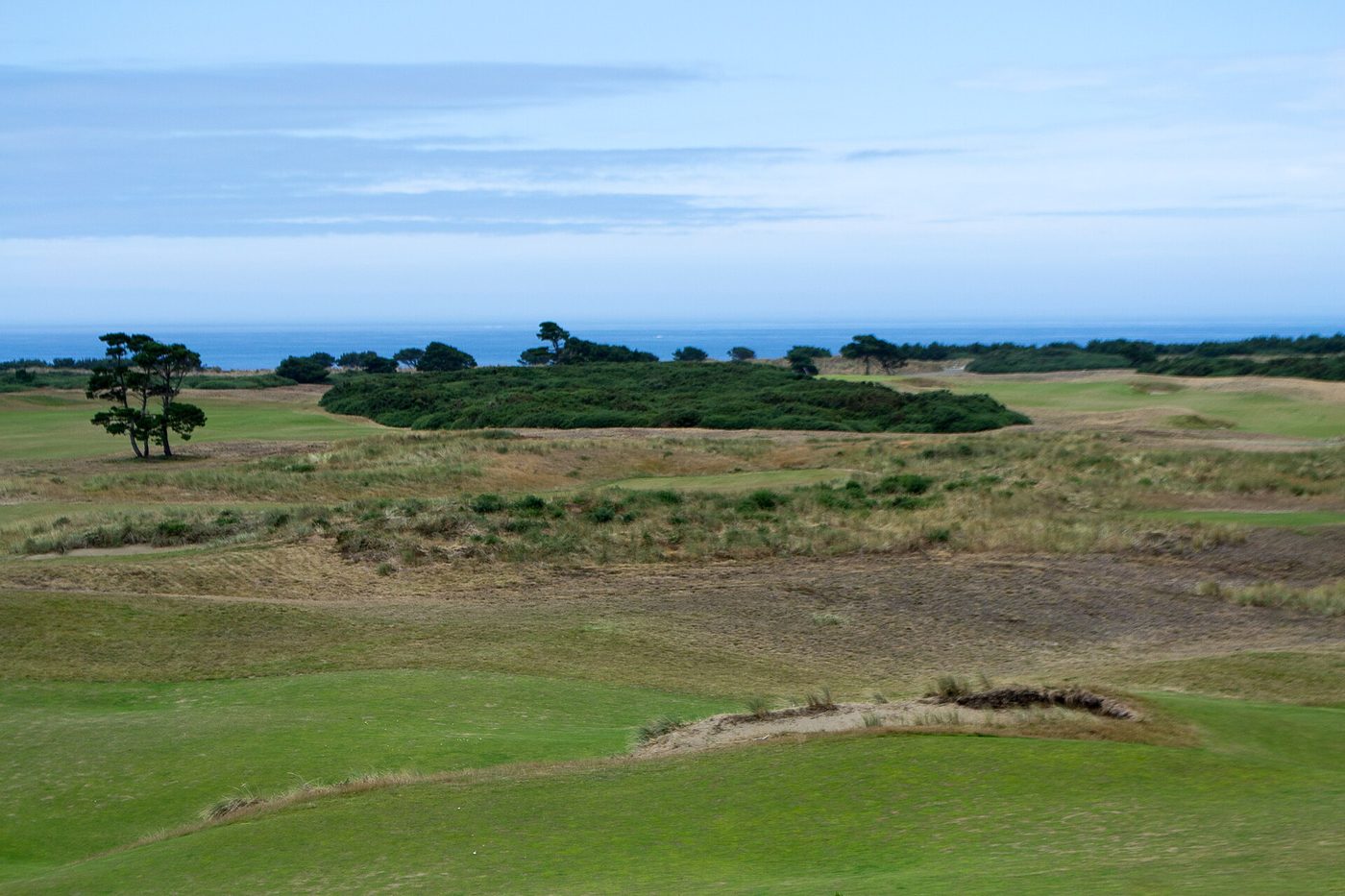
Verdict: Bandon Dunes is the place to start, with Pacific Dunes by Doak, Bandon Trails and Sheep Ranch by Coore and Crenshaw, and Bandon Dunes itself by David McLay Kidd. We have the Bandon Dunes courses ranked, one by one, in a separate guide.
Gil Hanse
Active 1990s on · Best known for: the Olympic course in Rio, restorations at Los Angeles Country Club, Oakland Hills and Southern Hills, Pinehurst No. 4 · Best course you can book: Rustic Canyon in Moorpark, California, $65 to $90 in prime time and $45 to $55 at twilight (official); The Park in West Palm Beach, $180 to $248 (official)
Hanse, usually working with his design partner Jim Wagner, is the restorer of choice for America’s great old clubs, and his new courses have the same rugged, old-fashioned look: shaggy-edged bunkers, bold greens and lots of width. His public work is surprisingly accessible. Rustic Canyon, built in 2002 with Wagner and Geoff Shackelford, is one of the best-value courses in America. The Park, West Palm Beach’s rebuilt municipal course from 2023, costs much less for city residents. PGA Frisco’s Fields Ranch East in Texas, reported at about $277 to $330, is his newest championship course, and at Pinehurst he built No. 4 and The Cradle, the nine-hole short course reported at $50 to $65.
Verdict: Rustic Canyon at $65 is the best deal in this entire guide.
Other modern names worth knowing. David McLay Kidd, a Scot, built Bandon Dunes, the course that launched the resort in 1999, then Gamble Sands in Washington ($200 to $295) and Mammoth Dunes in Wisconsin, both designed to be fun first. Mike Strantz, who died in 2005 at 50, was the artist of the group, a designer who sketched his holes in detail before he built them: Caledonia ($79 to $129 in summer) and True Blue ($59 to $109) in South Carolina, and Tobacco Road and Tot Hill Farm in North Carolina, are among the most dramatic courses in America. Mike DeVries built the Kingsley Club and Greywalls in Michigan, and Kyle Franz restored Mid Pines and Southern Pines.
How can you recognise a golf course architect’s work?
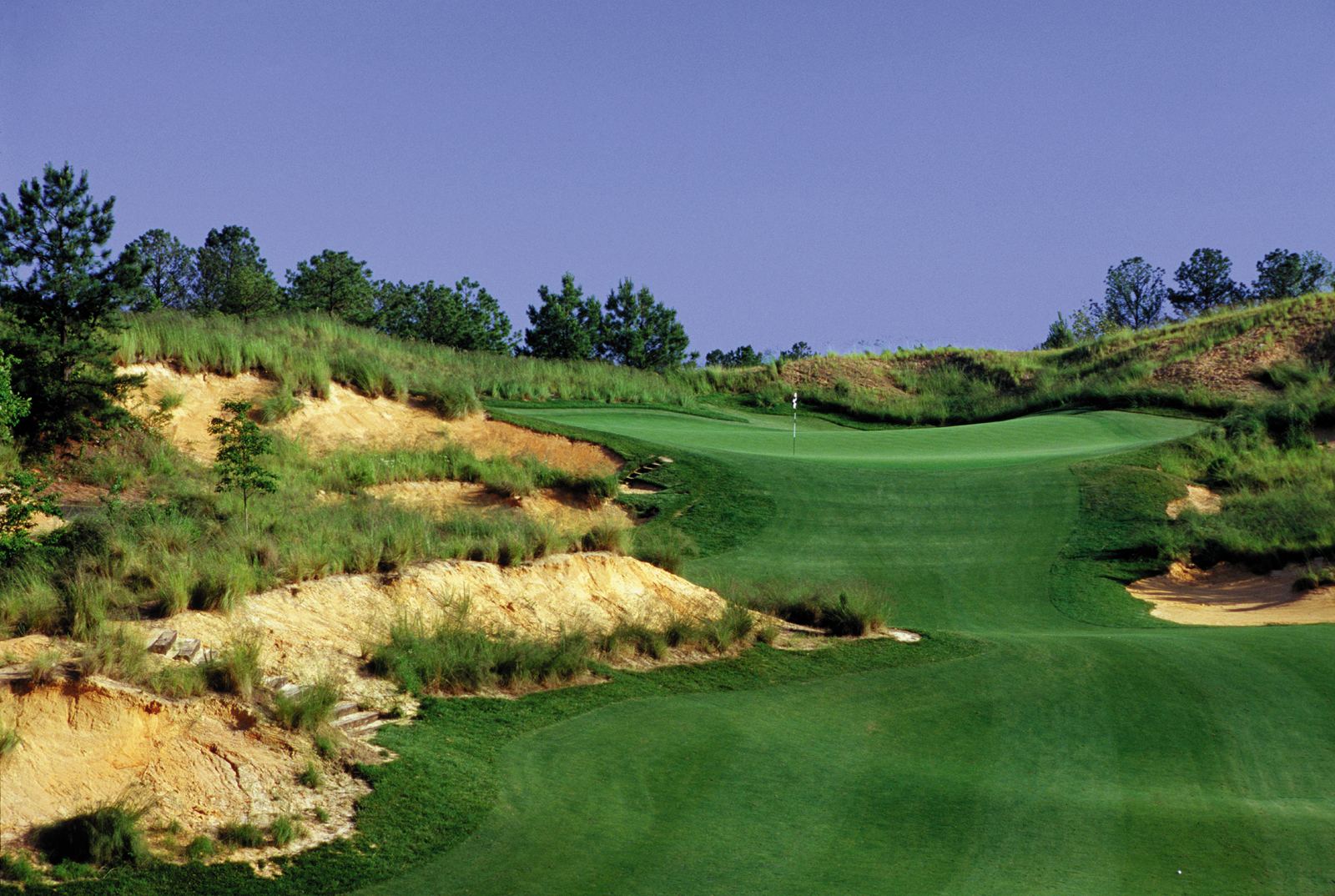
Look at the greens and bunkers first. Ross greens are domed and shed shots; MacKenzie bunkers have jagged, camouflaged edges; Raynor greens are square with deep swales; Dye uses railroad ties and pot bunkers; Coore and Crenshaw bunkers look wind-blown; Doak greens are wild.
| Architect | What to look for | Where to see it in public |
|---|---|---|
| Macdonald and Raynor | Template holes; squared-off greens; deep internal swales; steep, flat-bottomed bunkers | Yale; The Lido (Sand Valley guests) |
| Donald Ross | Domed or tilted greens; short-grass run-offs; hazards near the greens, not the tees | Pinehurst No. 2, Mid Pines, Rackham |
| A.W. Tillinghast | Huge, varied bunkers, including fairway-crossing “great hazards”; big greens | Bethpage Black and Red |
| Alister MacKenzie | Jagged, camouflaged bunkers; false fronts; big internal contours; optical illusions | Pasatiempo, Sharp Park |
| George Thomas | Bunkers in the middle of fairways; barrancas; alternate routes | Ojai Valley Inn |
| Robert Trent Jones Sr. | Long runway tees; large, tiered greens; water close to the green | Spyglass Hill, Ka’anapali Royal |
| Pete Dye | Railroad ties; pot bunkers; waste areas; island greens; visual tricks | TPC Sawgrass, Wintonbury Hills |
| Jack Nicklaus | Elevated greens built for a high, soft approach; deep front bunkers | Harbor Shores, Ferry Point |
| Tom Fazio | Dramatic framing and mounding; lush, generous playing corridors | Butterfield Trail, Pelican Hill |
| Coore and Crenshaw | Ragged, natural-looking bunkers; width; greens that welcome running shots | Talking Stick, Sand Valley |
| Tom Doak | Very bold greens; minimal earthmoving; unusual routings | The Loop, Pacific Dunes |
| Gil Hanse | Shaggy-edged bunkers; restored classic features; short courses | Rustic Canyon, The Cradle |
A few habits help. Walk onto a green and look at how it’s tilted and where the short grass runs off; that’s usually where the architect hid the challenge. Look at a bunker from the tee and again from beside it, especially on a MacKenzie course, where a bunker that seems to sit beside the green is often well short of it. And notice what the architect wants from your second shot. Most great holes are designed backwards from the green, and the “right” side of the fairway is whichever one gives the easiest look at the flag.
Which famous golf course architects’ courses can you actually play?
Almost all of them have something public. Ross, Tillinghast, Dye, Nicklaus, Fazio, Doak, Hanse and Coore and Crenshaw all have courses you can book directly. MacKenzie’s best public course is Pasatiempo; Macdonald and Raynor’s is Yale, open to the public since April 2026.
| Architect | Public courses | Green fee (Sept-Oct 2026) |
|---|---|---|
| Donald Ross | Pinehurst No. 2 (resort stay; $250 premium); Mid Pines; Southern Pines; Rackham; George Wright; Wilmington Municipal | $38 (Rackham) to $285 (Mid Pines peak) |
| A.W. Tillinghast | Bethpage Black; Bethpage Red; Brackenridge Park | $43 (Red, residents) to $160 (Black, non-residents) |
| Alister MacKenzie | Pasatiempo; University of Michigan (package); Sharp Park; Haggin Oaks | $185 (Michigan, reported) to $515 (Pasatiempo riding) |
| Macdonald and Raynor | Yale; The Lido (Sand Valley guests only) | Up to about $350 at Yale (reported) |
| Robert Trent Jones Sr. | Spyglass Hill; Mauna Kea; Ka’anapali Royal; Duke; Tanglewood | About $68 (Tanglewood, reported) to $575 (Spyglass with cart, reported) |
| Pete Dye | TPC Sawgrass; Kiawah Ocean; Harbour Town; French Lick; Whistling Straits; Wintonbury Hills | $35 (Wintonbury, residents) to $775 (Sawgrass) |
| Jack Nicklaus | Harbor Shores; Ferry Point; the Bear; Manele | $95 (the Bear) to about $550 (Manele, reported) |
| Tom Fazio | Shadow Creek; Pelican Hill; Butterfield Trail; Pinehurst No. 8 | $39.95 (Butterfield Trail) to $1,250 (Shadow Creek, reported) |
| Coore and Crenshaw | Bandon Trails; Sheep Ranch; Sand Valley; Talking Stick; We-Ko-Pa Saguaro | $25 (Talking Stick summer, reported) to $425 (Bandon day guests) |
| Tom Doak | Pacific Dunes; Old Macdonald; The Loop; Pinehurst No. 10; The Rawls | $48 (The Rawls, reported) to $425 (Bandon day guests) |
| Gil Hanse | Rustic Canyon; The Park; Pinehurst No. 4; The Cradle; PGA Frisco East | $45 (Rustic Canyon twilight) to about $330 (Frisco, reported) |
| Mike Strantz | Caledonia; True Blue; Tobacco Road; Tot Hill Farm | $59 (True Blue twilight) to about $170 (Tot Hill, reported) |
Fees from the courses’ own rate pages, cached September-October 2026, except where marked “reported”.
The pattern is clear: the Golden Age architects’ best courses are private, but their public and municipal work is often cheap, while the modern architects build mostly public courses at resort prices. The best deal usually sits in between: a Ross or Tillinghast muni, or a modern minimalist course built for a city or a small owner rather than a resort. Our guide to the best municipal golf courses in America lists many of them.
How much does it cost to play a famous architect’s course?
From $35 to more than $1,000. Wintonbury Hills, a Pete Dye town course, costs Connecticut residents $35 to walk on a weekday; Rackham (Ross) is $38 and Rustic Canyon (Hanse) $45 to $90. At the top, TPC Sawgrass starts at $775 in season and Shadow Creek is reported at $1,250.
| Price band | Courses and architects (Sept-Oct 2026) |
|---|---|
| Under $75 | Wintonbury Hills (Dye), $35-$62 residents; Rackham (Ross), $38-$63; Butterfield Trail (Fazio), $39.95-$49.95; Rustic Canyon (Hanse), $45-$90; Wilmington Municipal (Ross), $35-$60; George Wright (Ross), $46-$70; Bethpage Red (Tillinghast), $43-$48 residents |
| $75-$200 | Bethpage Black (Tillinghast), $70-$160; Caledonia and True Blue (Strantz), $59-$129; Lawsonia Links (Langford and Moreau), $70-$140; Southern Pines (Ross), $105-$245; Ojai Valley Inn (Thomas), $190 |
| $200-$500 | Pasatiempo (MacKenzie), $465-$515; Sand Valley (Coore and Crenshaw), about $295-$325; Bandon Dunes courses (Doak, Coore and Crenshaw, Kidd), $180-$425 for day guests; Pelican Hill (Fazio), $340-$415; Torrey Pines South (Rees Jones redesign), $258-$322; French Lick (Dye), $450-$500 |
| Over $500 | TPC Sawgrass (Dye), from $775 in season; Pebble Beach (Neville and Grant), $695; Spyglass Hill (Trent Jones Sr.), $525 plus cart (reported); Shadow Creek (Fazio), about $1,250 (reported); Pinehurst No. 2 (Ross), resort stay plus $250 premium |
Fees from each course’s own rate page, except where marked “reported”.
For context, the typical American round costs far less than any of the famous names; our guide to how much a round of golf costs has the national numbers. The lesson for an architecture fan on a budget is simple: the architect’s name doesn’t set the price, the owner does. A Ross course owned by a city costs a tenth of a Ross course owned by a resort.
How to plan your golf around an architect
- Pick the architect, then the place. Pinehurst has Ross, Hanse and Doak side by side; Bandon has Doak, Coore and Crenshaw, and Kidd; the Monterey Peninsula has Pebble Beach and Spyglass Hill, with Pasatiempo an hour up the coast in Santa Cruz; Long Island has Bethpage; Kohler has four Pete Dye courses.
- Start with the city courses. Ross, Tillinghast, MacKenzie and Dye all built municipal courses that cost under $100, and they teach you the architect’s style as well as the famous ones.
- Check whether the course is original, restored or altered. Many Golden Age courses were changed beyond recognition in the 1950s and 1960s. Recent restorations, like Mid Pines and Pinehurst No. 2, are the closest you’ll get to the original.
- Mind the booking windows. TPC Sawgrass sells tee times 14 days ahead (12 months with lodging), Pasatiempo 7 days (365 with a $50 fee), Bethpage Black 5 to 7 days depending on residency, and Pebble Beach 24 hours for non-guests.
- Take a caddie at the walking-only courses. At Bandon, Bethpage Black, Pinehurst and Sand Valley, a caddie will show you lines and features you’d miss on your own.
- Play the right tees. Dye, Tillinghast and Trent Jones courses punish golfers who play too far back. Pick tees that leave you mid-irons into most greens.
- Look before you play. Walk to the edge of a few greens before your round, and notice how they tilt. It will change how you play every approach.
Our guide to how to book a tee time explains booking windows at more than 50 courses.
Frequently asked questions
Who is the most famous golf course architect?
Donald Ross and Alister MacKenzie are the usual answers. Ross built Pinehurst No. 2 and hundreds of other American courses, many of them public; MacKenzie built Augusta National and Cypress Point, two of Golf Digest’s top three courses in America. Pete Dye is the most influential modern architect.
Who designed Augusta National?
Alister MacKenzie and Bobby Jones designed Augusta National, which opened in 1933 and has hosted the Masters since 1934. It’s private. The best MacKenzie course the public can play is Pasatiempo in Santa Cruz, California, at $465 walking or $515 riding.
What is the difference between a golf course architect and a golf course designer?
None in practice: they’re two names for the same job. “Golf course architect” is the traditional title, used by the American Society of Golf Course Architects, founded in 1946. There’s no separate state licence for golf course design in the US.
Who are the best golf course architects working today?
By the rankings of new courses, Bill Coore and Ben Crenshaw, Tom Doak and Gil Hanse, with David McLay Kidd close behind. Tom Fazio and Jack Nicklaus’s firm are still building, mostly at private clubs and resorts.
Can you play a Donald Ross course?
Yes, easily. Pinehurst No. 2 needs a resort stay, but Mid Pines and Southern Pines in North Carolina take outside bookings, and Ross city courses cost under $75: Rackham in Detroit, George Wright in Boston, Wilmington Municipal and Triggs Memorial in Providence among them.
What is a template hole?
A hole that copies the strategy, not the exact shape, of a famous original, a practice started by Charles Blair Macdonald and Seth Raynor. The Redan, a par 3 with a green that falls away behind a deep bunker, is the best known; others include the Biarritz, Cape, Eden and Road.
What is the difference between restoring and renovating a golf course?
Restoration puts back what the original architect built, usually from old photographs, as at Pinehurst No. 2 in 2011. Renovation updates a course, with new bunkers, grass or irrigation, while keeping its design. Redesign changes the holes themselves.
What is the cheapest way to play a famous architect’s course?
Play the municipal courses. Wintonbury Hills, Pete Dye’s town course in Connecticut, costs residents $35; Rackham, a Donald Ross course owned by Detroit, is $38; Butterfield Trail, a Tom Fazio course owned by El Paso, is under $50; and Rustic Canyon, by Gil Hanse, is $45 at twilight.
Our verdict
The great golf course architects aren’t just names in rankings. Their work is out there, much of it public, and some of the best of it is cheap. You’ll never play Pine Valley, Cypress Point or Seminole. You can play Mid Pines, Pasatiempo, Bethpage Black, Rustic Canyon and Wintonbury Hills this year, and learn far more about architecture from them than from any list.
If you want one place to start, go to Pinehurst, where Ross, Hanse and Doak sit side by side. If you want one round, make it Pasatiempo or Pacific Dunes. If you’re on a budget, find the nearest Ross or Tillinghast muni and walk it with your eyes open. And if you want to understand why architects argue about all this so passionately, play The Loop in both directions on consecutive days. You’ll see the same 18 greens and play two completely different courses, which is the whole art in one weekend.
Sources
- Who we are, American Society of Golf Course Architects
- American Society of Golf Course Architects, Wikipedia
- Alice Dye, ASGCA Fellow, dies at 91, ASGCA
- America’s 100 Greatest Golf Courses, 2025-26, Golf Digest
- Top 100 public golf courses: state breakdown, GOLF
- Pinehurst No. 2: The Same But Different, USGA Green Section Record
- FAQs, Pinehurst Resort
- Courses, Mid Pines Inn and Golf Club
- Golf course fees, New York State Parks (Bethpage)
- Golf rates, Pasatiempo Golf Club
- Golf, Ojai Valley Inn
- Rates, Lawsonia
- FAQ, TPC Sawgrass
- Pete Dye Course, French Lick Resort
- Wintonbury Hills Golf Course, Town of Bloomfield
- Public tee times, Harbor Shores
- Bally’s Golf Links at Ferry Point, Bally’s
- Butterfield Trail Golf Club, City of El Paso
- Golf rates, Pelican Hill
- Golf course rates, City of San Diego (Torrey Pines)
- Rates, Chambers Bay
- Green fees, Bandon Dunes Golf Resort
- FAQ, Sand Valley
- Rates, Forest Dunes Golf Club
- Fees, Rustic Canyon Golf Course
- Golf, The Park, West Palm Beach
- Rates, Gamble Sands
- Rates and specials, Caledonia Golf and Fish Club
- Course rates, Rackham Golf Course
- Rates, City of Boston Golf (George Wright)
- Golf course FAQ, Yale Athletics
- Ka’anapali Golf Courses
- FAQ, Pebble Beach Resorts
Image credits
| Image | Photographer | Licence | Source |
|---|---|---|---|
| Cypress Point Club, 16th hole from the tee (featured image) | schnaars from San Jose, CA | CC BY-SA 2.0 | Wikimedia Commons |
| Merion Golf Club, Ardmore | Mark E. Wangerin on English Wikipedia | public domain | Wikimedia Commons |
| Alister MacKenzie green at Sitwell Park, early photograph | R. Broadhead, Leeds | public domain | Wikimedia Commons |
| Riviera Country Club, 18th hole, 1951 Los Angeles Open | unknown photographer | public domain | Wikimedia Commons |
| Pinehurst No. 2 sign | Zhans33 | public domain | Wikimedia Commons |
| Bethpage Black warning sign | E S Lee | CC BY 2.0 | Wikimedia Commons |
| TPC Sawgrass 17th hole from the air | unknown photographer | public domain | Wikimedia Commons |
| Bandon Dunes Golf Resort | Visitor7 | CC BY-SA 3.0 | Wikimedia Commons |
| Tobacco Road Golf Club, 16th hole | Joe Gay | CC BY-SA 3.0 | Wikimedia Commons |